Software
Houzz Logo Print
ruthj98

My poor Cerveza has root and crown rot!

6 years ago
last modified: 6 years ago
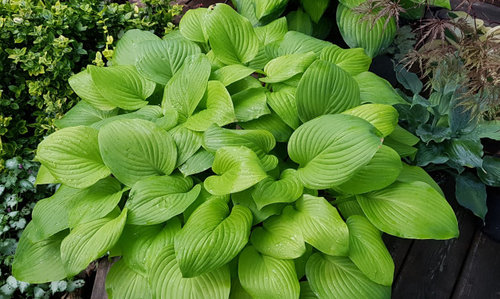
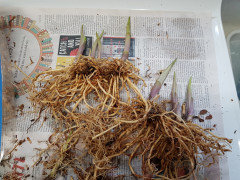
My once beautiful potted Cerveza has bad rot. I've used a hose to wash off the media and cut off a lot of rot. I also bleached it. There doesn't seem to be an end to all the cutting off of rot. I think the reason this happened is because I didn't change the media since 2017,; the media didn't have proper drainage and the pot was too big.

So now what do I do? The only plan I can come up with is: Dry the roots and crown for a day or so. Repot pieces in several different pots. Use better media (I do have some 511 media now)---and hope for the best?


More photos in next post.

Comments (12)

  • 6 years ago

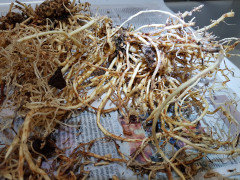
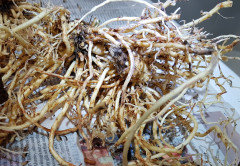
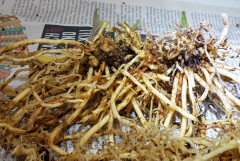
    Here are photos of some of the rot. This is not even half of the plant but all pieces look the same.


  • 6 years ago
    last modified: 6 years ago

    Were these roots slimy? Smelly? I'm just double-checking that you are really dealing with rot.

    I've dealt with crown and root rot several times over the years. The damaged roots I dealt with looked dark brown and were shriveled up. They were not white and light tan with thick substance as yours are. Plus, my rotted roots were slimy and stank.

    newhostalady Z6 ON, Canada thanked liquidfeet Z6 Boston
  • 6 years ago

    isnt the answer obvious??? ... what do you expect me to say ...


    those look like common wholesale divisions ... very common size .. etc ...


    just jam them all in one pot ... maybe one in a different pot ...


    ken


    newhostalady Z6 ON, Canada thanked ken_adrian Adrian MI cold Z5
  • 6 years ago
    last modified: 6 years ago

    liquidfeet, the roots were not slimy or smelly. The smell they had would be like when you smell something that is very damp. I did notice though a growth like fuzz on some of the roots. I didn't think that was a good thing!

    I'm accustom to seeing white roots with no black on the crown and that is what I consider healthy. I just divided Undulata Erromena last week. I divided it last year in order to sell at my garage sale. Unfortunately, I did it too late and the plants were limp. I just had them in regular used potting soil. So I kept them in pots over the winter when I divided them this year---great roots and crown! Go figure! (I know, I know. Can't compare with an old workhorse).

    "isnt the answer obvious???". I didn't think so Ken. But you're saying just pot them now and see how it goes. I guess I can't do anything else?

  • 6 years ago

    You've done well. Put them in seedling plant media that is not fertilized, just a 1-3 eyes in a pot, with good drainage. Douse the lot of them with antifungal now and every 1-2 weeks for about 1 month. Ensure good light as morning sun only, dappled light to shade for rest of day. I think they will be fine. I have had plants recover from far worse. If they do not survive, Cerveza is easy to replace. Aside from all of the work, the only disappointment is that Cerveza will probably not be beautiful this year. On the good side of things, I think you will find that your early recognition of the problem and prompt intervention will pay off. Well done!

    newhostalady Z6 ON, Canada thanked undertheoaksgardener7b
  • 6 years ago

    Thanks for your encouraging words undertheoaksgardener. I have heard of spraying the roots and crown with a fungicide, but not dousing it again every week or two for a month. Sounds like it's worth trying. I only have one fungicide, maybe not the best one. It gives directions for strength of solution for the leaves, but not for roots. I could spray the roots before planting. And then I just water a weak solution into the soil? Could you give me further details? Is there any particular fungicide you would recommend?

  • 6 years ago
    last modified: 6 years ago

    I don't put the fungicide on the roots, but I have done the dilute bleach soak for entire plant. Then I pot it in a soil-less media like seed starter potting media. Then I essentially water the plant thoroughly with an antifungal from Lowes. I dilute it as instructed, but aim for the more concentrated preparation if given a range of dilutions. And I douse the antifungal solution on the sad plant weekly for about a month. By that time, I have either succeeded in killing the plant or in saving it. Be warned that the plant gets worse before it gets better. By a couple weeks, you either see some new growth or you don't. Raulston said something about gardening involves killing plants along the way.

    Found the quote by J.C. Raulston, "If you are not killing plants, you are not really stretching yourself as a gardener."

    newhostalady Z6 ON, Canada thanked undertheoaksgardener7b
  • 6 years ago

    Newhostalady, I am no expert, but I do agree that the roots look healthy. As far as the crown goes, it looks like the crown from my June when I separated the Halcyon leaves from the June. I planted it and it had leaves within a week. Good luck. Give us updates about what you do and how it works out!

    newhostalady Z6 ON, Canada thanked djacob Z6a SE WI
  • 6 years ago

    I had crown rot on a Liberty last season. I doused the leaves and roots with full strength fungicide after regular strength repeats did nothing. The full strength shower and soak finally saved the plant. I should have dug it up, but didn't. The plant is coming up just fine right now. I'll douse it again this season, before any problems start showing up.

    newhostalady Z6 ON, Canada thanked liquidfeet Z6 Boston
  • 6 years ago

    undertheoaksgardener, I really like the idea of watering the hosta with fungicide. I see in the Hosta Library (Pests and Diseases section) that Cleary 3335 is recommended. Unfortunately, being in Canada, many powerful pesticides and fungicides are not available anymore. I travel to the States now and then, I will put fungicide on the list to purchase. Also, we are in lock down. A nearby nursery is only offering curbside pickup. So I can't investigate what products they have available. But I will persevere and purchase a good product later this year.

    Love the quote by J.C. Raulston! It is so very true!

    Thanks for the encouragement djacobz and liquidfeet. I am glad that your June and Liberty have made a come back.

    If I coud get the fungicide, I would apply it to the leaves and roots of plants that I suspect have some rot. Our spring can be very wet and with our clay type soil and tree roots that compact the soil, I get rot on some of my hosta. I know it because plant growth can be terribly slow (and depressing). Years ago I suspected rot on my F. Hyacinthina. I dug it out, cut off the rot and bleached it (Bruce Banyai's method). I separated it into 5 or 6 section. All grew well. But that's a lot of work!

    So my plan now: try doing a weak bleach soak for the second time. Allow the roots and crown to dry somewhat. I'll plant a few pots----and cross my fingers.

    I've discovered that I really love large hostas and large potted hostas. I do love smaller hosta---they are so cute! But the large leaved hostas are my ultimate favorite! So it's disappointing to have to separate this hosta into smaller pots. But in this case, it's probably the best thing to do.

  • 6 years ago

    Good luck! It sounds like I have similar soil as you do, and similar problems. I agree with everyone that overall the roots look healthy. However, on close inspection, I could see areas of scattered rust-colored infection on the roots in your photos. That looks exactly like the sclerotia and root/crown rot that has infected my hostas in early to mid-spring. Warm, wet weather, with poor drainage. I assume you saw the plant either start to wilt or seem grow very slowly, much slower than related plants. Again, well done for early recognition and prompt action.

    newhostalady Z6 ON, Canada thanked undertheoaksgardener7b