Software
Houzz Logo Print
crazycjj3

Acephate / Vegtable Garden

6 years ago
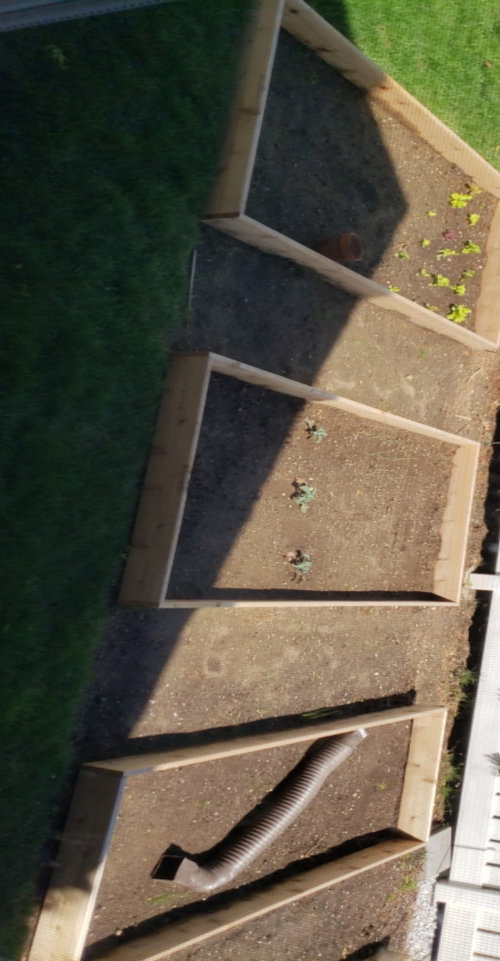
My arborvitae were sprayed with Acephate today for leaf miners. my issue is I have vegtables growing right on the other side of my arborvitae.

I quickly hosed them down with water. should I just pull these? does anyone know how readily soil amd vegtables absorb and hold this pesticide? Can i plant mew veggies there or is this soil ruined for a little?

Comments (19)

  • 6 years ago

    based on how you phrased it.. it sounds like someone else did the job ....who sprayed them .. and what did they tell you???


  • 6 years ago

    yes, someone else, a certified arborist from a local tree/shrub company. He told me I should be fine, but not sure I really buy into that. Pretty sure he is happy charging me and wants to spray 3 more times by the end of fall.

  • 6 years ago

    You don't seem to have so much going on at this stage that it wouldn't be possible to just start over with the vegetable production somewhere farther away from the hedge.

  • 6 years ago

    agreed, just wondering if this acephate stuff is dangerous. pretty certian i am going to start over, but was wondering if anyone was familaor with this pesticide amd getting their input first

  • 6 years ago

    The half-life of acephate in soil is a week or two. It is absorbed by plants. Heavy doses of it are toxic, and it is considered a "possible" human carcinogen (as are many many things). I'd be inclined to believe that your exposure to it through veggies nearby is minimal.

  • 6 years ago

    If you google for a bit I think you'll find that your veggies are most likely safe. The veggies weren't even sprayed, right? Acephate is used on crops (since 1973) so I don't really see an issue. Here's one source that has a good overview. Remember, this information discusses the direct ingestion of the product, not ingestion of vegetables that had the product sprayed in the same general vicinity of the veggies a couple of months before harvest.


    http://npic.orst.edu/factsheets/acephagen.html


  • 6 years ago
    last modified: 6 years ago

    It's interesting, that plants themselves produce natural pesticides (plants are smart about not wanting to get eaten!) It is estimated that humans consume several thousand times more of these natural pesticides than they do artificial synthetic ones. I believe something like half of those natural pesticides were tested and found to be "possible carcinogens" (Class C), like acephate.

    That's not to say that we shouldn't be smart about what we consume, but just because that something is a pesticide doesn't mean it is necessarily awful.

  • 6 years ago

    Google "organophosphate". That's what acephate is. A potential carcinogen would be the least of my worries. These are neurotoxins and affect brain functioning. I would not want this sprayed anywhere close to my garden, let alone in it. And I would not be happy eating any vegetables that might have been exposed to it.

    btw, many (most?) organophosphate pesticides have been removed from residential usage.

  • 6 years ago

    Some organophosphates are worse then others. I think the most serious issue is from what is termed "repeated or prolonged" exposure. The stuff gets cleared out of your system pretty quickly, and tiny amounts won't have any noticeable effect. I hope the folks that sprayed that stuff are being careful. You'll probably consume a lot more organophosphates as residues in the foods that you purchase than from one-time overspray onto your own immature vegetable plants.

  • 6 years ago

    Better, directly go with the CDC: https://www.cdc.gov/biomonitoring/Acephate_BiomonitoringSummary.html


    If health effects from low exposures are "unknown," it means they can't find any.

    And a one- to two-week half-life means it's undetectable in ten weeks, maximum. Overspray should be low exposure from the get-go by definition.


    By all means, if removing the existing couple of veggies currently planted makes you more comfortable, go ahead and do so. And if letting those boxes lie fallow for the season makes you more comfortable, again, go right ahead and do so.

    For the particulars and recommendations of that particular application, contact the company that applied that particular application. Only they know the amounts and directions in which they sprayed the plants, and the extent to which your beds may have been gently wafted...or drenched.


    Keep in mind, organophosphates are still extensively used in industrial agriculture and professional applications, and even "organic" (I bloody hate the term) food growers use "organic" pesticides that, half the time, are more toxic than allegedly "toxic" pesticides with shorter half-lives and fewer side effects. As always, caveat emptor.

  • 6 years ago

    >>>" Well, the half-life is in the soil. Once taken up by plants, I'm not sure how long it lasts. "

    Same, 7 to 14 days, with the same metabolites: http://npic.orst.edu/factsheets/archive/acephatech.html

    ...which also has about the same half life in soils, but about 6 days in plants.

    Et cetera.


    I have no objection to OP being safe over sorry, but looking at the decay chain and timing, this being May with--I assume--an August/September harvest? Assuming a call shows the soil wasn't drenched by accident, I would have no objection to simply forgetting this ever happened and moving on with my life.


    >>>" The word "organic" is strangely used to imply "safe". "

    Yeah, don't get me started. :-) Seriously, just don't. Plants produce toxins. It's war out there. I've seen things. I've done things. I don't recommend it. :-)

    Even as a hobbyist painter, it irks me that the State of California apparently considers even Titanium White acrylic paint toxic, along with everything else, due to the fact that I might be dumb enough to sand it off and huff it for thirty years straight--at a cost of $5 an ounce for the good stuff, I might add.

    Now, don't try that with Cadmium Red, but you actually can eat the stuff, within limits. Don't try that with most "organic" pesticides.

  • 6 years ago
    last modified: 6 years ago

    Yes, 7-14 days when taken up by tomatoes. Thank you. I didn't see that. Of course, that makes any such concern largely unfounded. By the time these uber tiny plants are harvested, or have fruit that can be harvested, the stuff is COMPLETELY GONE. Except for the memory. For some people, however, the memory is what's important. The MSDS's don't consider that.

  • 6 years ago
    last modified: 6 years ago

    Then there's the practice of dumping, wherein excess stocks of active ingredients not mentioned on the label are mixed into pesticide products in order to dispose of those excess stocks.

  • 6 years ago

    Pesticide labeling is one of the most violated aspects of the Federal Insecticide, Fungicide, and Rodenticide Act (FIFRA). The Environmental Protection Agency (EPA) does not hesitate to prosecute. Of course, that's not what we're talking about here.

  • 6 years ago

    that's not what we're talking about

    Actually it is, or should be part of it. Because based on a situation that has been reported for years I would never count on a given purchased container absolutely always having in it only what was supposed to be there. And with the "official" characteristics of a product always being the only factors involved with its use.

  • 6 years ago

    Could say that for milk and soda pop as well. Could say that for Neem extract, Bt, or any organic fertilizer. When we start fearing that all products are fake, we're done.

  • 6 years ago

    Or, when finding a product that is fake, provably, make sure people know that, publish the results, and cease to use it. But otherwise? Labeling laws do exist. So far I've never personally experienced a problem with it, as long as one is attentive.

    As a soap maker, I can tell you stories (we're allowed to use initial or reaction resultant ingredients, which leads to some user confusion), but more often than not, that's simple confusion on the part of the user, not some Grand Conspiracy fostered by Big Soap on the Innocent Skin Of The Consumer.

    And sometimes it is a Grand Conspiracy, "My Soap Does Not Have Lye" being the big one. Yeah, it does use it, it's just not in the resultant list because it reacts out. Mine uses it as well, but it also wouldn't have it in the resultant list--however, I list by initial ingredients for greater accuracy.

  • 6 years ago

    Actually, those tiny vegetables might have been fake. Whoa. Deadly nightshade berries! You thought they were tomatoes, eh? Yep, if you don't know for sure, rip 'em out!