Software
Houzz Logo Print
jiggette7

Please Help Date a Dresser

5 years ago
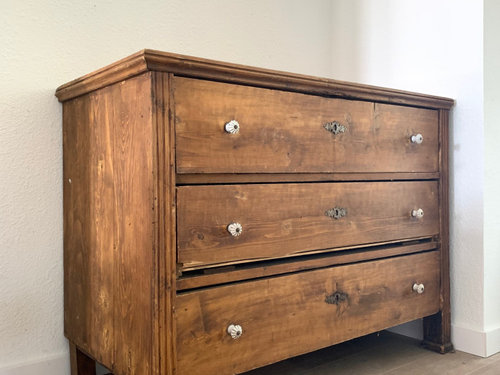
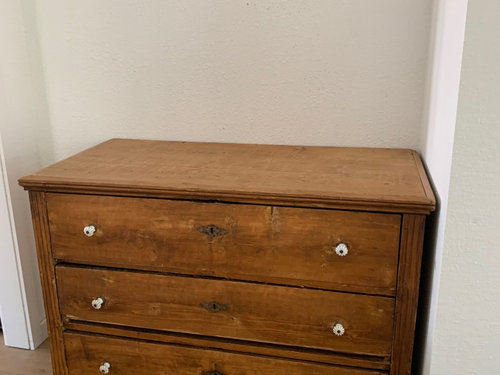
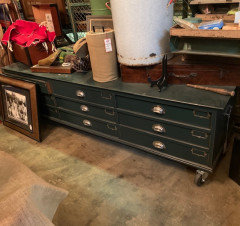
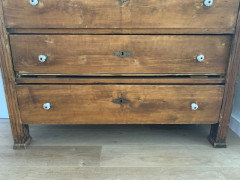
Hi! I just bought this 3-drawer dresser off of Facebook marketplace for $$ in Dallas, TX. I'm hoping someone can tell me around how old it is, and any other interesting info you might have. Thank you!


Comments (32)

  • 5 years ago
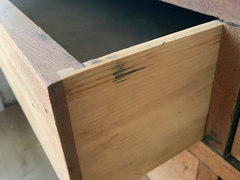
    It's a puzzle for sure......the style is odd, nothing that speaks to a period.....BUT it's hand made wide board white pine....hand made dovetails......

    I would like to see the drawer bottoms but it could very well be pre 1830.
    What part of the country did it come from? It's great....please don't paint it or "refinish".....just wipe it with mineral spirits and call it good!

  • 5 years ago
    last modified: 5 years ago
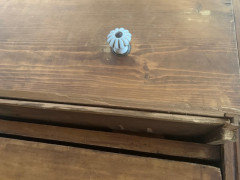
    Wow, thank you for the insight! Yes, I haven't found anything like it selling online so I couldn't quite work out the era. I figured it might be handmade and I thought the nail heads appear to be handmade but I wasn't sure. I'm certainly no expert. I just knew it was pretty old and gorgeous.


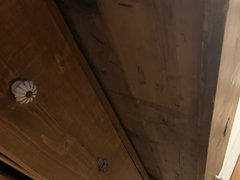
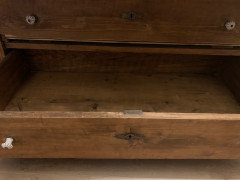
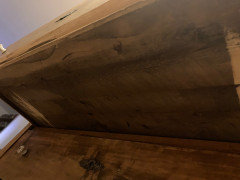
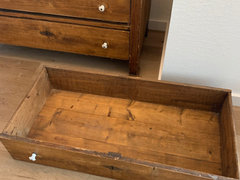
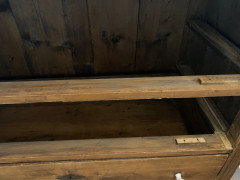
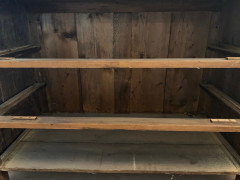
    I purchased it in Dallas, TX but I'm not sure of its origin. I'm waiting to hear back from the seller. I've added pictures of the inside and bottom of drawers if that gives you any more clues. Thanks again for your insight!


    Also, no worries, I won't refinish this beauty. All the wear and imperfections are what I love. I just can't stop looking at it. Like you say, a swipe of mineral spirits and it'll be good to go!


  • 5 years ago

    The seller got back to me and said he doesn't know the history. He picked it up off a guy right outside Dallas who was going to toss it. Can you imagine?!

  • 5 years ago
    I get an impression that it had a finish on it at one time that was removed. Along with the shop idea. One of my reasons is that the bottoms of the drawers do not show the lightening that drawers have which is caused by light not doing natural bleaching. If you remove a couple of the knobs the original finish may be under them.

    jiggette7 thanked maifleur03
  • 5 years ago
    last modified: 5 years ago
    That's no shop project.....unless someone had some access to old growth wide yellow pine boards.
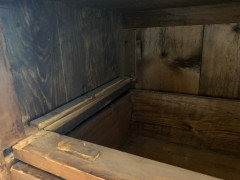
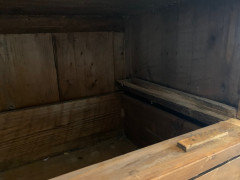
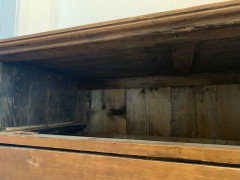
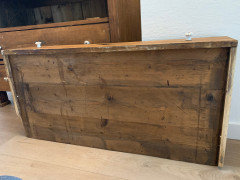
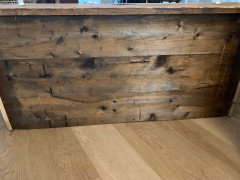
    would love to see the whole bottom of a drawer....and a picture of the inside with the drawers out......and a picture of the whole of the back.
    I am looking for evidence of the kind of saw used to make the planks.....and if the bottom of the drawers are chamfered. Also how thick is the wood on the drawer fronts?
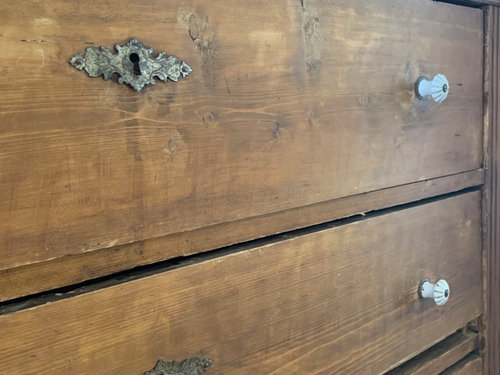
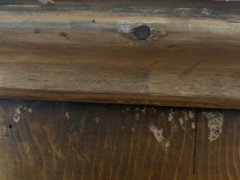
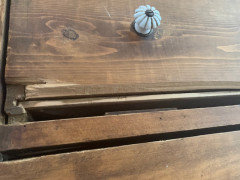
    That first picture you posted, head on showing the gaps between the drawers and the rails indicates lots of age....wear and shrinkage if the boards..
    And those nails in the sides of the drawers were added long after it was built.
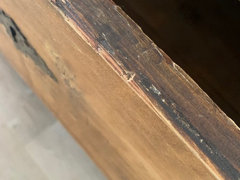
    It might have had paint at one time....do I see evidence of some at the edges of the drawers?

  • 5 years ago

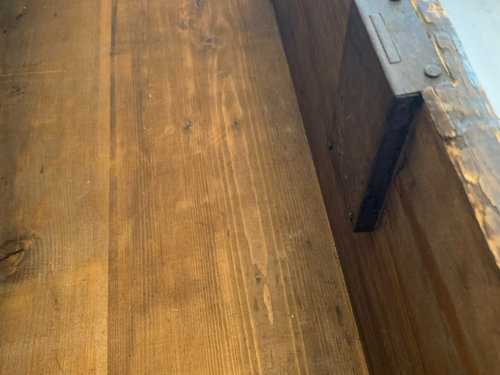
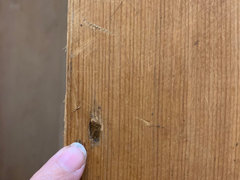
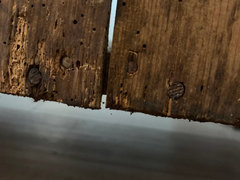
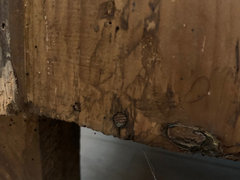
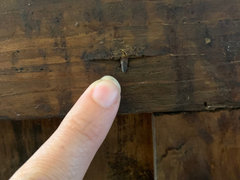
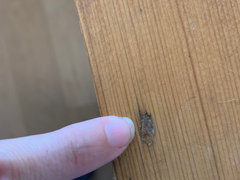
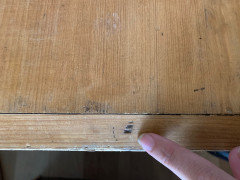
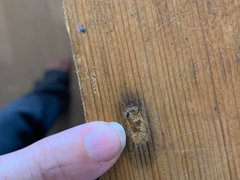
    Hi Linda, thanks for the input again! I'm adding a lot of additional pics. While taking these pictures, I noticed there are several types of nails used on this piece. That would indicate they are from different periods right? There are nails with long rectangular heads securing the top to the body. The area around these nail heads is pretty worn, crusty and the heads are rusty. The tip of one of these nails pierced the back of the dresser. I took a close-up pic. It doesn't look machine made to me, but I'm no expert. I'm just learning about this stuff because of this piece, which I love! There are other nails with irregular circle heads, some with ridges going across the heads that attach the back panel at the bottom. That would indicate they were handmade and hammered correct? Other nails are perfectly round and seem newer. There's even 2 philips head screws securing a bottom piece. I've included close-up pics of the different nail heads I could find.

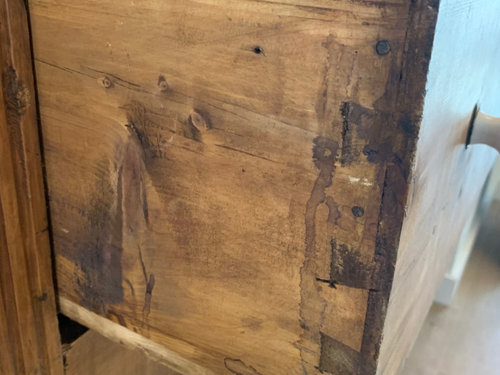
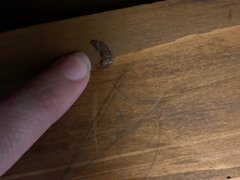
    I'm also attaching the pics you requested. Each drawer is labeled in pencil with the numbers 4, 5 and 6 and corresponds to handwritten pencil writing on the horizontal pieces of the body. I also found a very large, very dead (for a long time) spider in a crevice. He can stay there. When we brought it home I was pretty worried a texas-sized live spider would come crawling out, but dead I can handle, just about! Anyway, in person you really get a sense that this piece is old. Worn edges, rusted nails, old cobwebs, dusty, etc. As far as paint, I can't see any evidence of that. The only white coloring I see is bird poop haha! Well, I hope these pics give you more clues! Please let me know if you need any more. Thanks again for sharing your knowledge!


  • 5 years ago


    BIG DEAD SPIDER!


  • 5 years ago


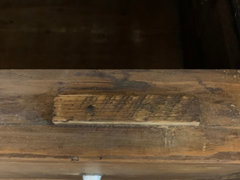
    Rectangular nailhead at top back


    Circular nailhead securing trim to side


  • 5 years ago


    Nailheads with ridges found at back at the bottom

    More ridged nailheads at back


    Nail tip of a nail with rectangular head securing top to body. Looks forged??


    Another rectangular nailhead


    Smaller rectangular nail hole at top side

  • 5 years ago


    Another rectangular nailhead securing top to body at back

  • 5 years ago

    Here are 3 more pics!


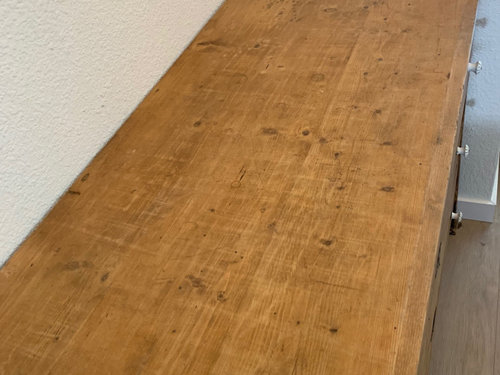
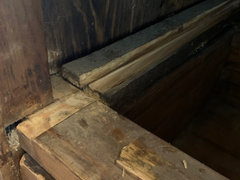
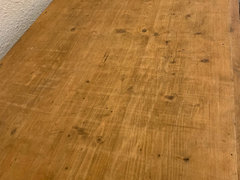
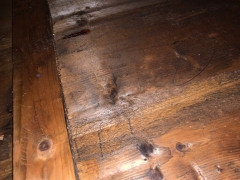
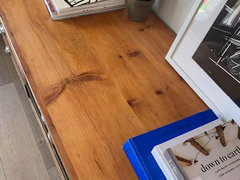
    There are striations on the top, which might tell how the boards were planed?


    This is a nail tip that had been hammered down into the wood. Hard for me to tell its original shape but maybe someone could.


    This is the inside top, handwritten "2" in pencil.

  • 5 years ago

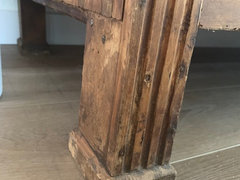
    I don't know anything but I do like the feet!


    (I've learned the hard way to number drawers when I take them out of something...)

    jiggette7 thanked Fori
  • 5 years ago

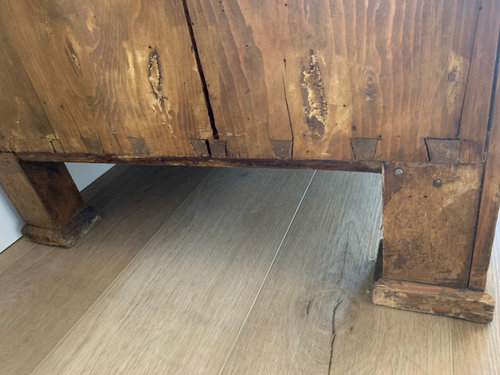
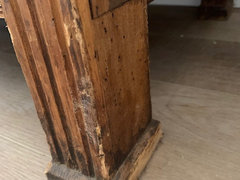
    There's a lot going on there.....the feet still puzzle me.....especially the way the back ones are fastened,,,,,and I see several places that show the straight saw marks maybe from a pit sawmill? But certainly not the newer circular saw.
    It's been "worked on" a bit....I think those cletes on the rails where the drawers go are a later addition....I see how one drawer drug when opened and is showing lots of wear on the bottom. I see cut nails....and some wire nails....check out this link for all about dating by the nails.
    https://inspectapedia.com/interiors/Nails_Hardware_Age.php

    I also see worm holes......and am hoping it's not powder post beetles. if you start seeing like wood dust around the bottom, you need to fix it or it will eventually crumble away to nothing..... You will need to wrap the whole thing in plastic and spray with something.....look on the web how to get rid of powder post beetles.
    It's old for sure......the construction and the wood and all look pre 1830 to me. But know that there were a lot of "old guys" using the old methods to make stuff after there were more modern methods.
    The fact that the drawers are different sizes in nice.....and are their locks on all the drawers or just the top one.....I see where the lock has torn at the top some.
    I love it!!

    jiggette7 thanked lindac92
  • 5 years ago

    I think a few of the 'rectangular nail heads" are actually staples.

    jiggette7 thanked colleenoz
  • 5 years ago

    Except for the width of the boards when I first saw it my mind said Jackalope. However with the width of the boards it was probably "ranch built". Texas was fairly rural other than for the coast and a few larger cities until the late 1950s. The ranches were huge, look up XIT Ranch as an example. They made almost everything that was needed.

    Things that puzzle me besides that one leg. The lack of shrinkage on those dovetails. Then the nails into the side of the dovetails where they appear to be tight. The bottom two drawers appear to have been switched however in most pieces of furniture the top drawer is smaller than the bottom and on this piece reversed. Lack of color difference both on bottom and inside of the drawers. No drawer slide in the middle with lack of bowing on the drawers.

    As mentioned above I think if you remove some of the knobs you may find what it was originally painted/finished with.

    jiggette7 thanked maifleur03
  • 5 years ago

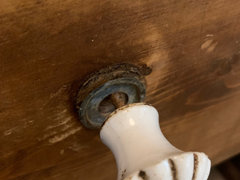
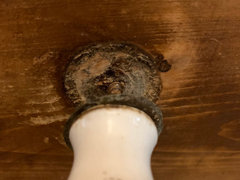
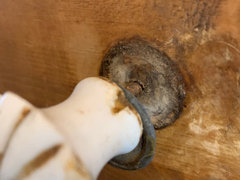
    Here are some pics of the area underneath two of the knobs. It's hard to tell if there was finish there at one point, it's pretty crusty. I get the sense that these knobs haven't been removed for quite a while. I tried removing another but the screw was rusted and started stripping immediately. I don't want to force it since I'm scared I won't be able to get it back in.


  • 5 years ago

    And to answer your question lindac92, yes there are locks on all 3 drawers. And thank you for the powder post beetles heads up! I'll be watching it like a hawk now!


    Thank you maifleur03for the Texas ranch info. So interesting! I wish I could tell what was originally behind the knobs. To my very untrained eyes, it looks like the original unstained wood but I could be wrong.


    And yes Fori, I love the feet too! They're actually what first caught my eye when I was going through FB marketplace. Most antique dressers I see have decorative or ornate trim]. For the most part, I like straight lines and simple details so this got my attention right away.


    I truly love this dresser. It's my favorite piece of furniture. It's the first thing you see now when you enter our house. Every time I walk downstairs in the morning and see it in our entryway, it makes me smile. :)


  • 5 years ago

    Looks to me like just "crud" behind the knobs.
    I have several pieces.....thinking off the top of my head at least 6....
    2 of them are family pieces and I KNOW how old they are.....one dated to about 1860 or before.....and no dovetail shrinkage. The other likely 1800 or even a little before....and again no shrinkage. I do have a couple of little tables with shrunken dovetails stabalized after the fact with nails. But perhaps the dovetails are not shrunken but simply poorly made.


    jiggette7 thanked lindac92
  • 5 years ago

    There is no one who loves primitive furniture more than me. I posted on this forum about them HERE

    We look for proportion, original finish, condition, condition, condition.

    I pretty much agree with Izzy Mn's comments. Workshop project, maybe salvaged wood, nails & pulls. Overall look clumsy especially legs, was this made in Mexico? Is the middle drawer damaged? Why is there such a gap there, try switching middle & bottom drawers, I'm guessing the drawers stick? This dresser spent the last 50 years in someone's barn.

    Was it skinned? Lack of finish heightens the multiple surface defects. I would have passed on this one.

  • 5 years ago

    Hi Sam,


    Thank you for your input! The middle drawer is damaged. A section of the bottom snapped off at some point. Looks like it happened recently since the exposed wood is pretty clean.


    And how do you mean the legs look clumsy exactly? In how they are attached? Their craftsmanship? They seem pretty straight and solid to me, and I like the simple design.


    I paid $75 for it, so even if it was built in the last 50 years in somebody's workshop (however, based on Linda's feedback regarding tools used, holes and rust around nailheads, etc. and my own feeling seeing it in person, I'm still not totally convinced of that), I still love it.


    I also misread the dimensions of the original listing and thought I was buying something more like a large bedside table/end table size. When my husband brought it home I was shocked and pleasantly surprised that it was a full-size dresser. So regardless of age, origin, Mexican made or not, I still think it's a win :)


  • 5 years ago

    Yeah....a strip of wood broke off that middle drawer. Perhaps what the guy in Maryland comparing this dresser with a Pennsylvania piece doesn't realize that this is a very big country and a primitive piece hand made by someone who is not a fine cabinet maker in one area will have a very different look from that made in another part of the country.....to whit the difference in a New Jersey piece and a more southern Maryland piece.

  • PRO
    5 years ago
    last modified: 5 years ago

    Pine, late 1800’s, simply made and the original finish (whatever was used) has been stripped.

    My great grandmother had something similar and used in it her kitchen.

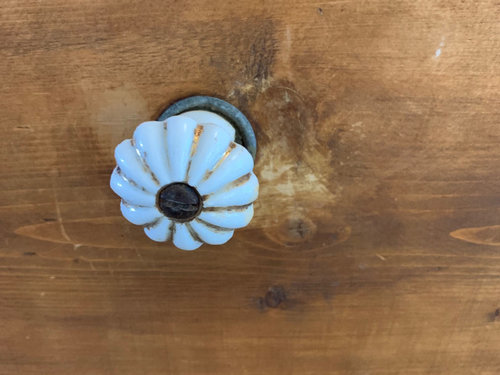
    Glad you love it because beauty is in the eye of the beholder. The antique flower porcelain knobs likely are more valuable than the dresser, in its present condition.

    Google 19th century pine dresser with porcelain knobs and you will see many similar pieces and the original finish.

  • 5 years ago

    Not sure why you think the chests that showed when I googled what you suggested are original finish......But I also noticed the asking price.
    I will stand firm on my opinion, based on the construction details....very early 19th century. It's a shame the one drawer has been broken, but I believe it can be mended. A major plus is the fact that there are no big bad stains on the top...

  • 5 years ago

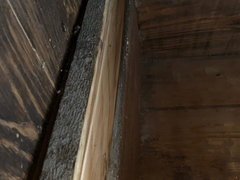
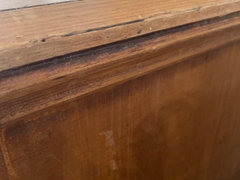
    I've stripped several pieces of furniture using both a chemical stripper and sandpaper (both together and separately). In my experience, it's pretty difficult to strip finish in small cracks and grooves, or along edges where two pieces meet. It obviously can be done, it just takes more work and may not be done perfectly depending on who is doing it and why. From what I can tell, the original finish on this piece may have been more of a mahogany or walnut stain. It looks like the exterior draw fronts, sides, top and trim were stripped. I can see a much darker stain on the bottom of the legs in between the grooves, where the legs and bottom feet meet where it may have been difficult to remove completely, in between trim grooves along the top, on all inner legs, and on the top of the drawer fronts. It would have been easy enough to remove from inner legs and top of drawers though, so not sure why those would have been left other than they are not very visible. I'm just assuming the top was also stripped, though I see no evidence to my eye of the original stain. There's just a thin stain coating now. Below are some pics.


    Another big thanks to everyone giving their input and sharing their knowledge! I've inspected this piece way more than I would have otherwise. Hopefully, I can get around to cleaning it this week!


  • 5 years ago

    Please don't ever use sand paper to remove finish from an antique....you remove any patina as well. A solvent works best to remove the finish and leave the patina.


  • 5 years ago

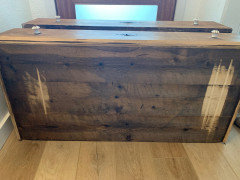
    Oh right, agreed! I actually haven't used sandpaper on any antiques yet, more 80's stuff onwards, and none of them had nice patina. Just surface scratches really. Unless this drawer was an antique? I bought it at an antique store and they had it labeled as a "painted map case on wheels" but I tried stripper on it and whoever painted it wanted the paint to stay for a loooonnnggg time. I used the strongest stuff I could and still couldnt get it all off without sanding. I would've had to spend a ridiculous amount of time getting the green paint out of all the nooks and crannies, so just left it, which I prefer actually. I like things perfectly imperfect.


  • 5 years ago

    That's nifty....wish you hadn't sanded it. Actually the front and fronts of the drawers looks like butternut or walnut. Nicely made....may at one time have been part of something else. Maybe the paint was milk paint....notably hard to remove with stripper....but ammonia works fairly well. Actually I love the original green paint.

  • 5 years ago

    Linda thanks for the hint about using ammonia on milk paint. Back when I was looking for furniture I have passed over milk painted chairs because while the chairs looked really nice I knew the paint was almost impossible to remove by any method that I knew other than sanding.

  • 5 years ago

    Yes definitely could have been milk paint, good point. The top and sides were much harder to remove than the drawer fronts. I also didn’t know about ammonia for milk paint so thanks!


    I thought I was going to love the green too but after having it in our space for a week or so it didn’t fit with everything else and felt very dark so I got to stripping. I love the pine top and yes, I believe the drawer fronts are walnut. When I tried applying tung oil they went really dark and reddish which I didn’t love for it.

  • 5 years ago

    Neat chest. I wonder if it could have had an inlaid top (and sides?) and that's why it's just pine there. As office furniture I could totally see it with a laminate or linoleum--if it's old enough--top.


  • 5 years ago

    I think there was another piece stacked on top.
    I found about the ammonia trick by accident.....went to an auction at a house that was filthy beyond belief....bed bug droppings etc....and bought a shelf and a bed headboard. Put it all on my drive way and scrubbed with ammonia a brush and a stiff spray from the hose....and most of the paint washed off!!
    Then I read about ammonia removing milk paint.