

Hybrid Heat Pump questions
Hello,
So my wife and I have recently began working on getting everything ready to build our dream home. After talking to our builder about heating options he reccomend a hybrid heat pump with propane backup. I initially thought a geothermal type heat pump would be better, but he reccomend this one. He said the geothermal unit would take longer to see return on investment. So here are my questions
1. Is this that efficient? Can anyone share roughly how much per month they're seeing?
2. Builder wants to install a 1000 gallon tank in the ground. This seems like a excessive size tank to me can anyone chime in?
Thanks in advance
Comments (58)
 6 years agolast modified: 6 years ago
Re: tigerdunes
It might be your 'bad' - but you're still GOOD!
IMPO
SR
- 6 years ago
SR
yes a senior moment. The 9.5 I referred to was HSPF , another HP heating measurement.. Without getting myself in more trouble, there is a mathematical relationship between HSPF and COP but that gets down into the HVAC weeds so I better stay away from that. LOL..
as for the OP, you do want to know the AHRI matching number for the dual fuel or hybrid system you are considering. It is important also for you to know the SEER rating for cooling and the HSPF or COP heating rating for the Heat Pump.
if you give me your electric rate and propane cost, I will be glad to run the fuel operating cost comparison for you.
TD Related Professionals
Cumberland General Contractors · Lewiston General Contractors · Lansing General Contractors · Brainerd General Contractors · Hempstead General Contractors · Marinette General Contractors · Show Low General Contractors · Vancouver General Contractors · Washington Home Remodeling · Rochester Home Remodeling · Sterling Home Remodeling · Springfield Bathroom Remodelers · New Orleans Bathroom Remodelers · Williamsburg Bathroom Remodelers · South Bend Bathroom Remodelers- 6 years ago
We built our home in 2006 and installed a geothermal ground loop system looking for efficiency and lower operating costs. Great install, quality unit, great experience. Then natural gas prices dropped, big time. Gas heat is now cheapest around here (Indianapolis). A geothermal unit w/gas furnace would be the ultimate in flexible energy choice (at higher install cost) but electric A/C with a gas furnace would be the cheaper to install and operate. I suggest you get your local fuel and electricity cost numbers and plug them into an online energy comparison.
 6 years ago
Hybrid (dual fuel) systems are very expensive, especially when combined with propane gas prices. I suspect you won't recoup your investment over a simple air-to-air heatpump with electric strip backup.
- 6 years agolast modified: 6 years ago
This is not true in an existing home. Electric Strip heaters being used to replace NG , Propane, or oil will require additional electric infrastructure - likely to include street service upgrade. The infrastructure increase is nil in the case of existing oil, NG, or propane. Also, Electric Strip heaters are not necessarily cheap to operate compared to the others.
- 6 years ago
have to know electric rate and propane gas cost to know for certain....and if propane will be used for other type reasons like cooktop, perhaps backup generator, clothes dryer, etc..
jgpolishing
Original Author6 years agoSorry I haven't been able to keep up with this thread work has been crazy. I'm going to try to reply to everyone here. Mike_home yes there are some tax credits that can be applied I believe. Yes an inground tank is a common practice to get rid of the eyesore of tanks outside the home. Also no gas stove but possibly the dryer and propane fireplace are attractive options as well which we are likely to install. Tiger dunes the current electric rate is 7.449 cents per kilowatt hour. I think propane is right around $3.25 a gallon delivered right now. Here is the heat pump I believe. https://www.carrier.com/residential/en/us/products/packaged-products/48vr/ The only reason I haven't gone to a ground source heat pump is the extra cost at this point. From everything I've seen and read a hybrid ground source heat pump with propane backup is the way to go but the cost is steep. So an air source heat pump with the propane backup, I was told would be the next best bet. I'd love to hear from someone with one of these systems chime jn.
 6 years ago
I am in the same boat (considering the switching to a hybrid system), so I'll be following your thread for now.
Hybrids are expensive, yes, but from what I found they can run on resistive heat if the heat pump dies and have a tank for power outages. A big plus for me. Overall they are cheaper than pure resistive heating units for almost all cases/regions, but not cheaper than gas for some.
Savings in our area seems good for me comparing to an electric unit I have now. But if your monthly saves will be under $25 per month - your return is years down the road.
Another thing to keep in mind, since you've noticed colder winters - keep in mind that in colder climate these heaters could actually cost you more to run as they rob heat from the room air (which is ideal if you want to remove heat from the home). But not such a great idea when you are heating that space. Still, it's not a big deal if you're going to place it in a basement.- 6 years ago
H: Im not sure what your definition of 'hybrid' is. OP is talking about a air-source heat pump with propane as the backup heat source. There is no need for resistive heat. If the temp4erature gets too low for the HP to function, the propane takes over. Don't know what you mean by a HP removing heat from the inside space in winter.
OP: Are you sure $0.075 / kWh is the total cost? It seems very low.
 PRO6 years agolast modified: 6 years ago
Hybrids are expensive, yes, but from what I found they can run on resistive heat if the heat pump dies and have a tank for power outages.
Resistive heat is electric heat. Tank for power outages? l don't think so. (Sure you could use a battery, but that won't last long for resistive heat.)
Even a HVAC system that uses gas as the fuel still requires electricity to run. Electrical energy opens the gas valve, powers the combustion fan, blower fan etc.Another thing to keep in mind, since you've noticed colder winters - keep in mind that in colder climate these heaters could actually cost you more to run as they rob heat from the room air (which is ideal if you want to remove heat from the home). But not such a great idea when you are heating that space. Still, it's not a big deal if you're going to place it in a basement.
What? --- Who ever is feeding you information, you should fire them immediately.
jgpolishing
Original Author6 years agoWeedmeister that's the rate that PPl is currently advertising till the end of May. According to google I see the yearly average st $0.1147.
- 6 years ago
The Carrier package system your builder is recommending has an AFUE (heating efficiency) of 81%. That is low when you consider you will be dealing with winters in Pennsylvania burning propane at $3.25 per gallon. I recommend you spend a little more money and install a split system with a 95%+ furnace and heat pump. I would think a split system would be more reliable than a packaged system, but I have no experience with this.
- 6 years ago
For OP...
please recheck your fuel costs. A Package system using propane for fuel is ridiculous.
here below are the fuel cost comparison. I used 3 COP eff for heat pump and 95% eff for propane furnace. The results speak for themselves.
Cost per 100,000 btu of useable heat
electric baseboard $1.98
heat Pump $0.73
propane $3.73
TD  6 years ago
Your post caught my attention because I recently built a two-story 2000 sq. ft. house in central PA and struggled with HVAC decisions. Most people were telling me to go propane, with the big ole' tank buried and all that. I finally decided on an air-source Mitsubishi heat pump and an A. O. Smith hybrid water heater. The latest cold climate air-source heat pumps are truly amazing. With the exception of an issue in the summer with the thermostat, I have been completely happy with the system and my electric bills!!! If you don't mind only cooling to 67 degrees in the summer, I would 100% recommend this system. Please let me know if you have any questions, or need more information!!!
- 6 years agolast modified: 6 years ago
Also, for figuring your electric costs, don't forget the distribution charges!!! That rate PPL states is only for electricity -- distribution is in addition per KWH. I just looked at my bill, and it's 4.45 cents right now.
 6 years ago
@simmtalker how well does your heat pump work for heating your place on cold days in winter? Do you have a backup system of any kind? I live in NY and an HVAC company recommended a heat pump to me but said I would probably need to keep my oil-burning furnace as backup on cold days. I'm interested in a heat pump because I want to get rid of my oil system, so that was a bit disheartening to hear.
- 6 years ago
@Travis Hunter It does great!!!! Never had a single issue, stayed toasty even on the coldest day, which was in February 2019, it went below -10 degrees (I think -12 or -13, but right around there). The backup system are heat strips. I am very happy with this system, and wouldn't hesitate to get an air-source heat pump again. When this one dies, unless something drastic changes in the market, I will be buying another air-source heat pump to replace it. I never have to think about fuel deliveries, which is very nice, too :) If I were you, I would definitely look into a HP....sad to say, but I encountered many people in the HVAC circles who very little (or nothing) about the cold climate HPs.
jgpolishing thanked simmtalker - 6 years ago
Here's a screen shot of the model numbers of the major components from the system contract. This was over two years ago, so I am sure technology with these systems has gotten even better.

- 6 years ago
@jgpolishing Sorry, I forgot to mention, if you decide to go with propane, you'll want that freaky huge tank so you can buy bulk deliveries....it makes a HUGE difference in price (at least around here it does!). Call your local suppliers to check prices -- ask what their bulk delivery price is. How much volume you must buy for bulk depends upon the supplier, but the prices are much cheaper than regular "home delivery" prices.
- 6 years ago
@simmtalker that's really encouraging to hear! How often do the heat strips kick in though? I've heard that when they do, you're looking at about 5x electricity usage so your cost savings can plummet. Is that something you've experienced?
- 6 years ago
I am not quite sure if the heat strips have ever kicked on. The installer who did the final setup on the system, said the heat strips would never turn on. To give you an idea, January-February 2019 electricity bill (my billing date is the 19th), which was the highest bill I have had, was $197 (I have an all electric house, so that's for everything). That was during a Polar vortex, so our temps for that time were well below normal. After talking with other people in this area and what their heating costs were during that time, I felt great and that I made the right decision going with the HP :)
jgpolishing
Original Author6 years ago@simmtalker that's reassuring up until now all I heard from everyone was that I was crazy for not spending the extra on a ground source heat pump. I will call around tomorrow and check into some pricing options on propane. The price between a 1000 gallon tank and a 500 gallon tank isn't much. From what I understand the heat pump will do most of the heating and propane will be for stuff less than 40 degrees or something like that, and for hot water. Your comment really makes me happy because I've been going back and forth on the heating system every which way to decide what's best.
- 6 years ago
So you got a Mitsubishi Zuba? I'm looking into one of those when the Carrier in my house needs to be replaced. Supposedly will put out 100% heating down to -15C. Said to be not great at cooling but good for those who need heating more.
In my climate, I wouldn't even need heat strips. - 6 years ago
To complicate issues. Instead of using propane for hot water, consider an electric Heat Pump hot water heater and do the math. That is what I have - coupled with an oil hybrid Carrier Heat Pump. All electric for hot water, electric heat pump for all cooling, electric hybrid for heating down to outside temp of +25 Degrees F, oil for heating only below +25 degrees F. (Wee bit of oil during defrost.)
I have no NG available and do not want propane infrastructure as oil was previously in place. Absolutely love the hybrid hot water heater energy savings vs all electric!
- 6 years ago
Re: Stax
Glad someone at least mentioned defrost cycle. Any HVAC pro that says the heat strips will never turn “ON” in a cold climate is likely misleading you (I’m being polite). They turn “ON” during defrost cycles that might be anywhere between 45min to 90min during cold weather. You also need them in case the compressor develops a problem and gets locked out.
Carrier Greenspeed still has much better cold climate specs than the Mitsubishi Zuba. I recommend comparing specs.
Depending what climate you live in and the cost of an alternate fuel source, the defrost mode and cold weather backup can become a serious factor. I see that on our street with neighbours that have dual fuel; NG is not available. I’m in a cold climate!
YMMV
IMPO
SR - 6 years ago
Time Defrost is the worse type....I prefer HPs that have demand defrost feature only when it‘s needed. Trane/AmStd pioneered this feature. It is well worth it. Keep in mind that time defrost adds a lot of wear and tear to condenser not to mention the expensive and unnecessary defrost calls.
TD - 6 years agolast modified: 6 years ago
Here we go again. I tried to describe a neutral approach to considering alternative fuel usage in a hybrid heat pump.
My usage of oil is not a choice that is easy to defend - I did it because it was my existing heating infrastructure - oil tank in basement, etc. NG is simply not available, and I did not want propane tanks, etc, nor was the expense of connecting propane to a new kitchen range acceptable.
However, I am tired of hearing folks suggesting that using oil or any other fuel source is significant if one does not have demand defrost. It is difficult to accurately determine the expense of burning oil during defrost as compared to using, say, electricity, or say using less energy due to defrosting less often. That said, I am using maybe five gallons (maximum) of heating oil per heating season during defrost. If I do not use backup/emergency heating I can not see a change in tank level over a 12 month cycle due to the tiny, tiny amount used.
BTW, my defrost cycles are not 45 minutes long... more like 20 minutes.
- 6 years agolast modified: 6 years ago
I should clarify my previous post. 45-min to 90-min represents the time intervals between defrost cycles - not duration! Duration might be between 5min to 10min and does cause increased wear.
I agree with ‘tiger’ that some form of 'Demand Defrost' is better than 'Timed Defrost'.
Just for informative and comparative reasons, geothermal never has defrost cycles, as with a properly designed earth loop and functioning system there is nothing to ever freeze up. Backup only comes on to assist the heat pump (not instead of the HP) because the heat loss of the envelope (house) exceeds the capacity of the HP. With the combined output of the HP and the backup together, the system very quickly satisfies the demand of the thermostat and then the entire system goes “OFF”. Operation resumes with only the geothermal HP, no backup – until backup is called for again.
Air-source HP’s generally have the backup activated either because defrost mode is actually air-conditioning mode to defrost the condenser with heat strips “ON” to ameliorate the cooling effect of AC. The other reasons for a backup call are that an air-source HP is programmed to not function below a set temperature primarily due to the loss of efficiency that would not make sense to keep operating that equipment.
The other reason for backup operation is to provide heat during HP failure, such as when the compressor might be in ‘Lockout’ mode.
Re: Stax
You don’t have to defend your use of oil. I’m sure it’s fine in your case.
YMMV
IMPO
SR
- 6 years agolast modified: 6 years ago
Not so much defending, OK, maybe a little. lol
I am refuting any argument that energy use to heat home during defrost is really a justification to make Time Defrost as opposed to Demand Defrost an issue.
Wear and tear, maybe, bit highly unlikely in my considered experience with machinery operations.
- 6 years ago
@zneret No, not a Mitsubishi Zuba (I never heard of the Zuba before), but maybe they are giving new names to lines since two years ago. The specs on my system were 80% capacity output at -13 F, which would be -25 C. So I am sure it would probably be 100% at -15 C. If you are in the market for a HP, I would definitely recommend the Mitsubishi!
- 6 years agolast modified: 6 years ago
As far as defrost cycles/heat strips, I can comment on REAL WORLD USAGE of Mitsubishi cold climate heat pumps as the sole source of heating/cooling. As I said before, I don't know if the heat strips ever turned on or not, but I don't really care if they did, you are missing the point. Heat strips = money spent. I don't identify my self-worth on heat strip usage :P. I care about the ELECTRICITY BILL. I am not aware of any technology Mitsubishi has that powers heat strips from fibers in the universe, so chances are, heat strip power consumption will turn up in the electricity bills. I have an ALL electric house (hot water, clothes dryer, range, well pump, Christmas lights for longer than I care to admit, etc.) and this is my billing history:
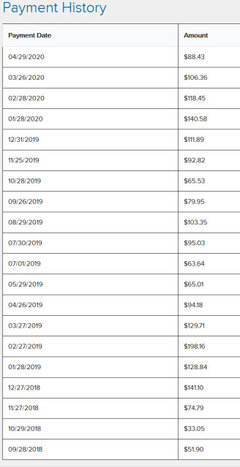
P.S. I lied...the Feb. 2019 bill was $198, not $197 :) - 6 years ago
Re: simmtalker
Your energy audit would be more useful if it contained kWh & geographical location.
SR - 6 years agolast modified: 6 years ago
Zuba might be a brand name they use in certain geographic locations but perhaps not the U.S. I am looking into a Zuba, and maybe an Amana as that brand has been purchased by Daikin which also makes reputedly good and reliable heat pumps (and A/Cs).
FWIW, the inverter technology used by the Japanese HP makers means auxiliary heat does not need to be used to defrost. (Edit:) The Mitsubishi dealers here tell me that heat strips are optional in my region as it doesn't get anywhere near cold enough to require them (except for emergencies) and they're not needed for defrosting.
Simmtalker says heshe is in central Pennsylvania and PPL is the utility. Rates there are mid 7 centss per KWh.My Carrier will use up to 80-100 KWh a day when it's cold(for where I am average of -5C or mid 20s F) and my house is only heated to 19C/66-67F. The Mitsubishi Zuba is said to be very usable even in Québec (that's saying something).
- 6 years ago
@fsq4cw It's not an audit. It's an example of real world usage because there are some on this thread making it sound as though defrost cycles have significant heat strip usage. I will not comment on any other brand, but that is not the case with the Mitsubishi system.
As previous stated, I am in central PA (I have not moved in the 24 hours since posting that). And one more screen shot.....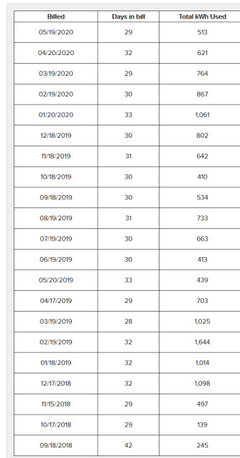
- PRO6 years ago
Slimmtalker,
If anything your light bill shows defrost of yesteryear problems are a thing of the past. Obviously this depends on equipment chosen and climate in which it is installed.
Technology moves on, Trane still relying on gimmicks to sell something.
I've got a Bosch Inverter at my all electric house, to my knowledge it's never entered defrost either. It can heat clear down to 5F.Avg temps where I live in the 40's.
- 6 years ago
I hope the OP (jgpolishing) doesn't mind my sort of hijacking this thread, but the answers to my issue may interest him. When I built my house in northern NY in 2015, I went through many of the decisions he is now considering. I didn't want oil (too messy), NG is unavailable, didn't want wood (too much trouble), so I was stuck with electricity (a recent survey showed that propane is very similar in cost to electricity). I essentially rejected a heat pump because of initial cost and I really don't like refrigeration systems, because they are noisy. So I have a hydronic resistance heating system, the only motors are the small distribution pumps.
Fast forward to this year. I didn't install any cooling because who needs air conditioning in the Adirondacks? Well, after a few 90+ and 2 100+ days, maybe that was a mistake (the forecast for today is 90). I was thinking about getting an air-sourced, cold-weather heat pump. It would provide the desired cooling and, perhaps, reduce my electric heating bill. I'm just starting my investigation. Last year, I contacted the only local contractor. He was about to go on vacation, but said that he would get back to me; I'm going to re-contact him today. He carried Fujitsu last year and he claims their cold climate performance is good. He is, however, a commercial refrigeration contractor and doesn't know too much about residential applications; do you think that's a problem? Based on our initial conversation, he guestimated a cost of about $7000. The design I have in mind is two units in the walls of my loft, which overlooks the main floor. This would provide easy installation, because nothing would have to run through existing walls (except the openings for the conditioned air).
- 6 years ago
Re: mtvhike
Sounds like you’re on the right track and that your contractor is up to the task. Besides, he’s the ‘only game in town’. If you do install a Fujitsu unit, I’d recommend the inverter HP for efficiency, variable capacity and being very quiet.
Seeing that you already have a hydronic electric boiler system installed you might not need the best (expensive) ‘Cold Climate’ HP, particularly if your boiler has ‘Staged’ electrical heating elements and ‘Outdoor Reset’ capabilities.
I am aware that your electrical rate is quite high and am familiar with the Adirondacks.
IMPOSR
- 6 years ago
Actually, fsq4cw, our rate is $.10 per kwh, which, when compared with my previous location (Long Island), is low!
By staged heating elements, I assume you mean that as more heat is needed, more (of the 4) elements come on. I don't know what Outdoor Reset means
- 6 years ago
If anything your light bill shows defrost of yesteryear problems are a thing of the past. Obviously this depends on equipment chosen and climate in which it is installed.
Technology moves on, Trane still relying on gimmicks to sell something.
I've got a Bosch Inverter at my all electric house, to my knowledge it's never entered defrost either. It can heat clear down to 5F.
Avg temps where I live in the 40's.
Bosch was on my short list when deciding on a system - they have some great options!
It really is about choosing the right equipment. In my area, I know a couple people who have "traditional" heat pumps (that's my term for heat pumps that are only able to produce heat down to around freezing) and their monthly winter electricity bills are $500+ for regular weather, and $600+ for colder than normal. The salesman from the HVAC company was trying his hardest to sell me one of those "traditional" type HP's, because it had a lifetime warranty on its compressor, or something like that....so glad I did my own research! - 6 years ago
Re: mtvhike
I might have been confusing the NY rate with VT, both states being close to where we live.
Your understanding of ‘Staging Elements’ is correct.
Outdoor reset is adjusting the boiler output temperature base on a remote boiler control thermometer that is placed outdoors so that as the outdoor temperature rises, the thermostat can be more efficiently satisfied with cooler water circulated by the boiler and accompanying circulators; lower water temperature equals money and kWh saved.
You might want to have a look at these links just to know that there are hydronic heat pump options for both heating and cooling that are air-source. Your existing electric boiler would be configured as a backup. Cooling would be done hydronically with either floor mounted or identical looking ‘Hi-Wall’ split fan coils, DHW could also be produced by this type of HP.
It would be a premium setup but at least worth exploring.
Nordic Air-to-Water HP Brochure
Nordic Air-To-Water HP Full Specs
IMPO
SR - 6 years agolast modified: 6 years ago
" their monthly winter electricity bills are $500+ for regular weather, and $600+ for colder than normal. .. .so glad I did my own research!"
Wow! Something is wrong. My annual Electric cost for my 2100 Sq Ft Home with a Hybrid Heat Pump is about: $2400.
2016 $2403
2017 $2235
2018 $2294
2019 $2360
Winter time Electric is $160-$250 monthly. That includes heat down to plus 25 Degrees F with my Heat Pump ...
Also, " oil (too messy)" You gotta be kidding. Guy pumps it into your tank once a year and they mail a bill for $150. Servicing,including changing filter, maybe $60 per year. Not a drop of oil on floor or equipment out of place.
- 6 years ago
Dollar amounts for electricity are meaningless - without region, city or state/prov., cost per kWh and how many kWh!
SR - 6 years ago
Wow! Something is wrong. My annual Electric cost for my 2100 Sq Ft Home with a Hybrid Heat Pump is about: $2400.
There's nothing necessarily wrong, other than poor choices of systems. Your hybrid will be MUCH cheaper to run than a "traditional" HP in a cold climate. Any heating when outdoor temps are below low 30's, or so, is done with the heat strips, which is one of the, if not the most, expensive heat source in this region. - 6 years ago
@simmtalker I assume your system is ducted, is that correct? My home is from 1925 and currently has steam heat with radiators, so that's another variable I'm trying to factor in.
- 6 years ago
@Travis Hunter Yes, full regular duct work throughout. This was a new build, and my thinking was I'd be crazy not to have duct work put in, because I, or future people living in the house, could change the heating/cooling system to ANY forced air system. One of the HVAC companies I talked to was trying to sell me a mini split system, which I just think new house construction should have duct work for flexibility. Without it, one is very limited in future choices.
Great news for mini splits are they have even BETTER specs than the whole house HP systems...at least they did two years ago, and I'm sure that's stayed the same!! - 6 years ago
Where I am, builders have been installing mini-splits to save on duct installation expense. I hope they hide the compressors and blower units well!
- 6 years ago
I'd like advice on hybrid air heat pumps. I'm in the Bay Area (San Jose CA) and thinking to add A/C using a heat pump with my existing natural gas furnace as a backup (80% efficient, 10 years old). Gas is relatively cheap here (~$1.50/therm) and electricity not so (~$0.30/kWh), but I have solar so any electricity is almost free.
I'm estimating the payback period for the heat pump vs. just an A/C. Cost of a 3-ton 14.5 SEER A/C is $5500 vs. heat pump $7500. I assume I could use the heat pump almost all year round, for A/C in the summer and heat in the winter (winters are mild here with lows of 40-50 degrees). If I can save $400 in gas heating costs/year, payback is an OK 5 years.$400 is a guestimate of 100 therms/month * 4 months * $1.50/therm * heating usage 2/3 total
Is there any disadvantage of heat pumps, other than the initial cost? Where is a good source of comparisons of air heat pumps? Sounds like Mitsubishi and Amana are good ones - how about brands like Bryant or Rheem? Do I need a special thermostat that will kick over to the furnace? - 6 years ago
It doesn't get that cold in the SF Bay area so you don't need a Mitsubishi HP. It's said the Japanese HPs are not as good at cooling as U.S.-designed heat pumps. You have to figure out what your likely heating and more likely, cooling requirements are.


fsq4cw