Software
Houzz Logo Print
sywells25

Yet another question about brown patches

5 years ago

My lawn is 30 miles south of Albany and a few miles west of the Hudson river. It’s a weekend place, so we’re not there on a daily basis. I have a guy who mows, spreads seed and fertilizer, but basically I handle all the other lawn care. It‘s a big lawn, over 26,000 square feet, bordered on two sides by water — a creek and a brook that feeds into the creek. We get our water from a well. When we bought the place five years ago, the guy who took care of the lawn was pretty full service. He seemed to be doing that was needed, when it was needed and the lawn looked fine. Then he retired. Within two seasons, the lawn was 75% weeds. Since then, I have worked hard to establish a healthy lawn to address the weed problem without extensive use of pesticides. Also, I have always told the lawn guy to mow on the highest setting.


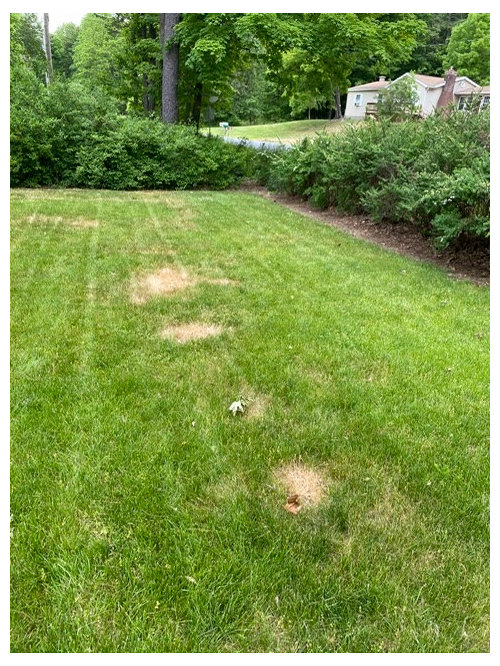
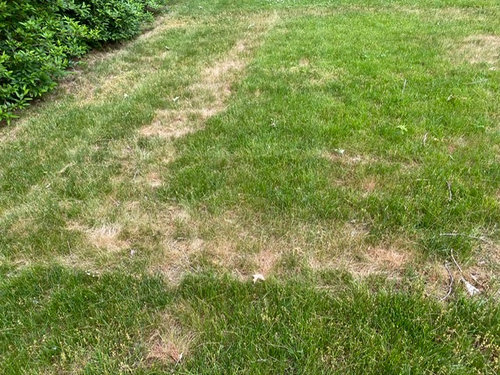
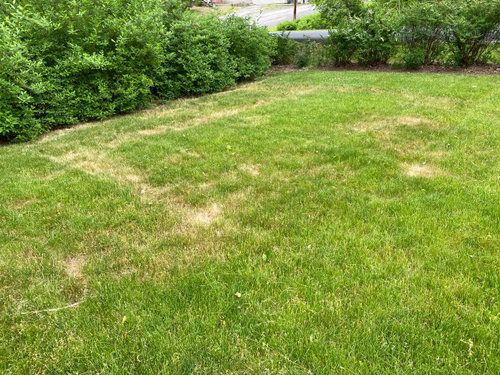
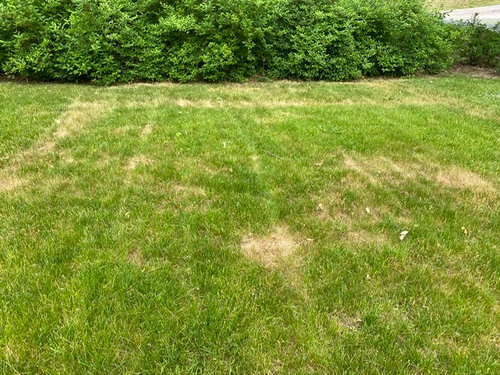
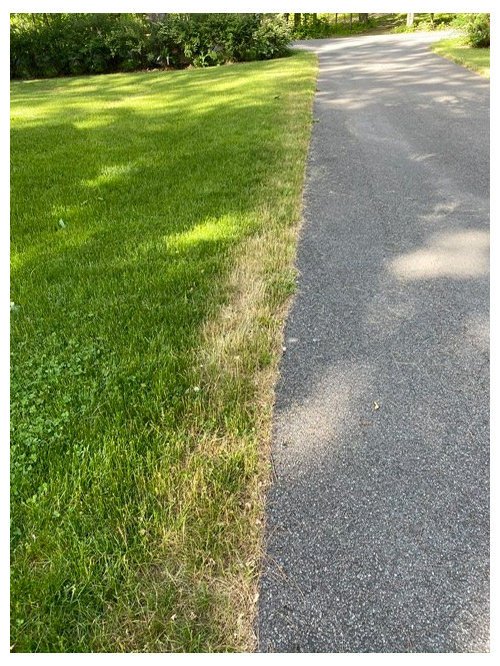
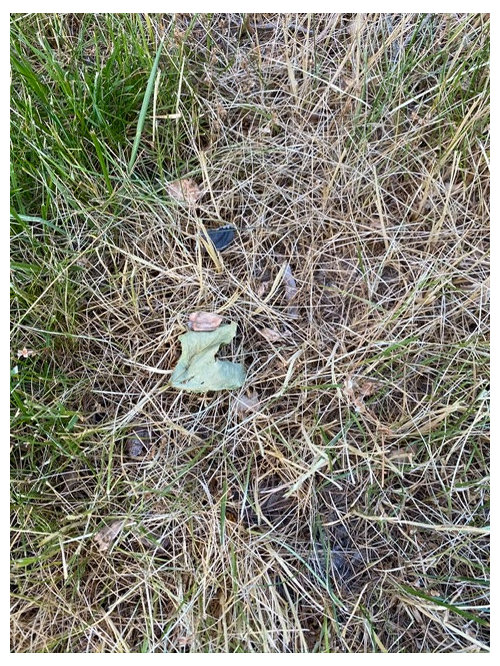
The grass is primarily TTTF. In 2017 and 2019 I overseeded with Scott’s Turf Builder Sun and Shade. For 2018, I used seed from a supplier in Buffalo, NY. I fertilized in 2017 and 2018, but I have not been able to this year. I had the soil tested at the local extension office and it too acidic. Lime was applied and it’s fine now. I planned to be present for the first mowing which was scheduled for May 12th, but the lawn guy had an emergency and couldn’t mow until a few days later and by that time we had returned home. On the 12th, the grass was long, but the lawn looked good especially considering the amount of damage the deer had done over the winter because there had been virtually no snow all season. So he cut the grass and texted me after the fact that he “cut it twice” because it was so long. I can’t imagine that was good for the lawn, but it couldn’t be undone. The next time I saw lawn was last weekend. The front lawn had several large brown areas. The lawn guy said they were there when they mowed on May 28th. I checked for grubs, but the grass is firmly rooted. Lawn guy volunteered that his mowers weren‘t leaking. The patterns of the dry patches are odd. In some places it looks like something was lying on the lawn for long time. This problem is only in the front yard. The back yard is ok with one exception where I think they actually left something on the lawn (a large fence panel that had been leaning against the deck) then put it back the last time they mowed.


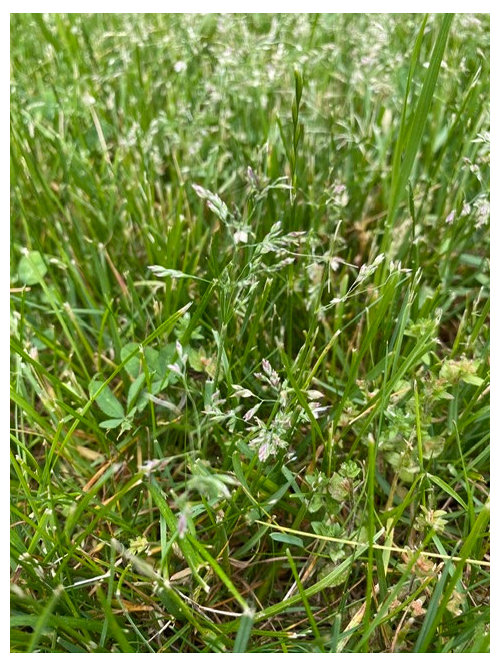
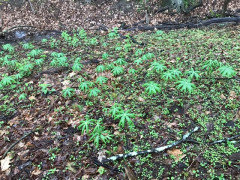
Also, I noticed there was a lot of grass with seed heads. The grass in those areas was much taller a few weeks ago and hadn’t developed seed heads. I’ve included a picture.


There has been very little rain, but lots of cloudy and partly cloud days. The temperature seems more variable than usual. There have been days starting in early May that reached the high ‘70s followed by days in the 40s and 50s.


Well, that’s it. I’d really appreciate your thoughts on next steps. Thanks!


Comments (11)

  • 5 years ago

    I have to rely on rain and, unfortunately, it has been fairly dry. The lawn hasn’t been fertilized this year. Salt wasn’t used on the driveway and in any event, I assume that kind of damage would been evident when I was there on May 12th. The lawn looked great then, albeit a little overgrown.


    Initially, I thought the seed heads might be poa annua too, but am hoping they are not. I have enough noxious weeds to contend with as it is. As noted in my post, the grass was substantially longer several weeks ago. While some grasses in the lawn were definitely going to seed, they weren’t the same grass, at the same height, or in the same spots as where I’m currently seeing the grass with those seed heads. I did some looking online. Could it just be TTTF going to seed? Not ideal, but way better than PA. Also, the grass isn’t light green the way PA is supposed to be.


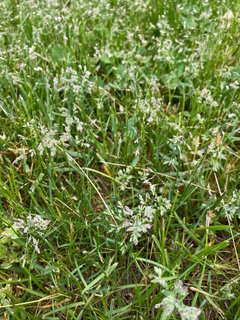
    Here’s a slightly better picture of the grass.


  • 5 years ago

    We’re heading up this weekend. Does anyone else have any thoughts on how to handle the issues I described?

  • 5 years ago

    seedheads look like kentucky bluegrass to me. I wouldn't worry about it. If most of your lawn is TTTF (I am not sure it is), brown patch is certainly a risk. Could just be something like fertilizer burn if you happened to slow down/stop in that area. Could be grass clippings that were left there after the double mowing and smothering the grass. That rectangular shaped browning is suspicious for being caused by man. At this point, I am not sure I would do anything.

  • 5 years ago

    The lawn hasn’t been fertilized since early last fall and I’m pretty sure we used milorganite. The grass is what I think is a pretty standard northeastern mix of TTTF (around 75%), PR, maybe a little fescue and a a little KBG. My instructions were to bag clippings and based on the pics they’ve been sending, that’s what they’ve been doing. I would think that even if they hadn’t, given the number of times they mowed in the last 3 or 4 weeks, any clumps should have been been dispersed within five days. But, I guess that could be a possibility - that’s the problem with not being there.


    Interesting about the KBG, I know it’s in the seed mixes I use, but I assumed since it’s in such small quantities (5%) and it requires more care than I can provide to germinate, that it never survives.


    I agree that the rectangular dry spot is suspiciously man-made, but it’s definitely not caused by fertilizer as noted above. That area has been difficult from the start and, compared to the rest of that area of the lawn, hasn’t been as responsive to cultivation. Based on looking around this forum and others, I’m beginning to think that there might be something underneath that’s preventing the grass from forming deep roots. I asked DH where the sceptic tank is located - it’s where the dry spot is in the back which I thought was caused by something being left there. That’s another area where I’ve had a tough time growing grass.


    When you say that you wouldn’t do anything, do you mean do nothing at all? Because here’s what I’ve been thinking about doing (though I might choose a different path based on what I see when I get there). I’ll check for new growth and water the rectangular brown areas. I’ll try to figure out whether the rounder spots were caused by a fungus and address that accordingly.


    As I said, I have not fertilized the lawn this year. I’d planned to do a winter fertilization, but I missed the window. However, I have the fertilizer. I don’t remember the brands or the numbers except that it may have been something like 29 or 30-0-4. As a general question, is it ok to fertilize the unaffected parts of the yard now with what I have or should I wait? Unfortunately I only have one bag of milorganite, which is my go-to, my experience has been that the local stores run out by now.


    Thanks!


  • 5 years ago

    Northeastern mixes are NOT predominantly TTTF. That is more transitional zone but is gaining popularity northward. If I could do it all over again, I would strongly consider TTTF/KBG. Regardless, KBG as seen in your pics have more green to the seedheads than poa annua which are usually more white andextremely abundant. The seedheads are totally unlike what tall fescue, fine fescue or perennial ryegrass look like.


    The reason I wouldn't do much is that looks to me that the brown spots are either by the road--which is understandable, made-made, or localized. It's summer so things like overseeding are out of the question. I'm also not one to get crazy with fungicides for such a relatively small area being affected. You probably can put down an application of Milorganite but if you are dealing with fungus, that may hurt more than it helps and summer dormancy may be less than a month away.

  • 5 years ago

    Thanks for the explanation and clarification. Your response prompted me to remember a couple of things. First, the seed I used that was 75% TTTF was recommended by the grass seed company I bought it from based on location, the condition of lawn, the fact that I cannot irrigate and other issues. I checked my notes and saw that I didn’t have any info on the composition of the Scott’s mix I used. As it turns out, it’s not on the bag (and it’s about 10% KBG) So for that, the primary considerations were that it was appropriate for the location, got good reviews, and had the least amount of weeds among the available choices. A nice plus was that it was on sale because I needed a lot.


    I’ll definitely try TTTF/KBG for the next overseed which, except for a little dormant sowing last winter, I’ve always done in the fall. I know it’s best to start mid-August but for various reasons I always had a late start.


    Sooo, why couldn’t I overseed with KBG come August and use TTTF/KBG on any bare spots? My parents have a Zoysia lawn in CT and the fact that it spreads has ensured that they’ve been able to have a great looking (most of the year), low-maintenance lawn.


    As for the fertilizing, sorry if I wasn’t clear. I didn’t mean the area of lawn were the problem is which is a 5000sq ft area separate from the other areas of the yard. The question was whether it’s ok to fertilize the rest of my lawn at this point in the season with the fertilizer I currently have which is super high in nitrogen. If I had milorganite I’d apply it because it’s still pretty close to end of May, but that’s not what’s in my garage. That said, having one thing less to do would be a good thing and would let me take off my groundskeeper hat and put on my gardener hat this weekend.


    Sorry for being so long winded! I really, really appreciate the advice. Thanks in advance.

  • 5 years ago

    For synthetic fertilizer, I'd put down no more than 1/2lb of N per 1000 sq ft. But if you lawn is mainly TTTF, you can certain get away with nothing right now and just waiting until fall. I don't think it really matters what you overseed with. TTTF requires overseeding every 2-3 years generally. If you want some KBG in there, you can certainly throw some in there--I bet it does well in your area, at least in full sun. I still love Midnight KBG, and had great results with overseeding with Rendition TTTF in a mixed part of my yard.

  • 5 years ago

    Thanks mishmosh, I’ll look into those grasses. It actually does matter what I overseed with. I’ve had to overseed every year for the past three to address the weed issue. I’ve spot sprayed the broad leaf weeds (that takes at least 6 hours - it’s a big lawn) and pulled up countless contractor garbage bags of plate-sized crab grass to limit the critter carnage. Because of my desire to limit the use of pesticides, my grampa’s weeder and cobra are my 2 best friends. Having more spreading grass in the lawn would be great for potentially filling in the bare spots (because you know what nature abhors) so I can spend more time protecting stuff like this from the relentless spread of garlic mustard.


  • 4 years ago

    Update: I just wanted to let you know how things turned out. I’ve concluded that the brown spots are attributable to conditions just below the surface that prevented the grass from rooting deeply in those areas - large rocks, stumps from trees that been removed decades ago and a large stump that I had had ground down 4 or 5 years ago. The lack of rain last June created the perfect conditions for those sections of the lawn not to thrive. Based on the advice given I let things be. I started overseeding in August. Also, I have asked the lawn guys to set their mowers at the highest setting which is 5”. Due, I assume, to the combined weight of the mower and the guy on it, the end result is a height of a bit less than 4”. This June hasn’t been as dry as last which helps a lot.

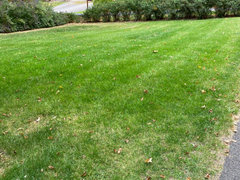
    End of September 2020 - already considerable improvement.


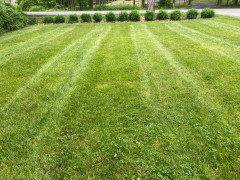
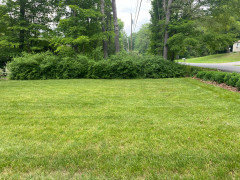
    June 2021


    Thanks again!

  • 4 years ago

    Good detective work.

    Years ago we had members here who were having problems with lawns installed after brand new construction. It seems some contractors would bury their construction waste including wood, bricks, and concrete, underneath the landscaping fill dirt. What a mess that was. We don't see that much anymore.