Software
Houzz Logo Print
c_a_anderson

Everybody’s painting brick!

6 years ago
last modified: 6 years ago

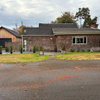
This 50’s ranch has brick on one side of garage and I think I should clad the left side of the garage with more brick or paint the column on the right side. My DH would be ever so grateful if I would just make up my mind! does It add to street appeal to add brick?

Front entry and sidewalk · More Info


Comments (16)

  • PRO
    6 years ago

    It would look better if both sides of garage were the same. We're too far away to see much.

  • 6 years ago

    If you can find a good mason to imitate the brick, then yes.

  • 6 years ago

    Measure the amount of siding showing above the bush/shrub/tree on the left side. 3 feet? With time (and growth) I doubt you will even notice the discrepancy between the two sides of the garage. Seriously! Your home is lovely!

  • 6 years ago

    Thank you for the sketch! We were told NOT to prune a magnoliA.

  • 6 years ago
    last modified: 6 years ago

    I love the magnolia as it is. Natural.

  • PRO
    6 years ago

    "We were told NOT to prune a magnolia." If you like the magnolia smothering the right end of your house and being unable to walk below it, then don't prune it.

    Carol thanked Yardvaark
  • 6 years ago

    A common guide is to remove anything hanging below eight feet from the ground.

  • 6 years ago

    Who's 'common guide'? I would love to know where some of these strange concepts come from!!

    There are some very good reasons why one is instructed not to prune a magnolia or to prune as little as possible. They do not heal well from pruning cuts, making them more susceptible to diseases. The older and more established the tree, the longer it takes to bounce back....if it can. And because deciduous magnolias flower on old wood, you should limit any pruning to immediately after the bloom period. And because pruning stimulates additional growth, pruning cuts can stimulate epicormic shoots that are unsightly and out of character with the rest of the growth habit of the tree.

    I think what we have here is a contretemps between gardening/landscaping solely for a visual appeal from the street or following the best practices for the health of the plant(s) in question. They are not always compatible motivations.

    Carol thanked gardengal48 (PNW Z8/9)
  • 6 years ago
    last modified: 6 years ago

    Sorry I hadn't seen GG's post when I started typing this, now see it upon reloading. Agree with her points. You have to be very careful pruning magnolias.


    Not meaning to challenge Yardvaark per se, but for a "bog standard" M. x soulangeana, that actually isn't too bad a form. I've seen worse...GG,Embo, don't many cultivars of that cross just tend to grow that way? OTOH my "Gresham style" hybrids that cross Soulange magnolia with larger, taller growing species like M. sargentiana and M. campbellii or hybrids thereof, do want to be more upright.

    Carol thanked UpperBayGardener (zone 7)
  • 6 years ago

    Yes, david, that is a very typical form for a saucer magnolia - low branching, usually multi-trunked and with a loose, broadly spreading and somewhat uneven crown. This is not something that should be pruned into a high canopy, precisely rounded and completely artificial form.

    Carol thanked gardengal48 (PNW Z8/9)
  • PRO
    6 years ago

    "... what we have here is a contretemps between gardening/landscaping solely for a visual appeal from the street or following the best practices for the health of the plant(s) in question." What you're describing with caution is a general truth about the pruning of all trees: the longer one waits to prune, the larger the wound will be and longer it takes to heal. There is nothing particularly problematic about pruning Magnolia ... certainly not to the point that one should not do it. And the caution about flowering has more to do with pruning the top of the tree, not the bottom. And as long as one catches it within a reasonable time of bloom finish, they are going to be OK with next year's flowering. Nevertheless, how one views the tree from the street is certainly not the main or only consideration. Here's a tree in a grass lawn, which means that one needs to mow below it. What a pain to do as one would need to stoop or crouch for most of the job! And the tree's not enhancing architecture when it's obscuring it! There are no trees that we bring into our yards without deciding that some of their bottom limbs must be removed in order that their structural form comply with our needs (that there is space below them) unless we intentionally leave them in the shrub form, which we commonly don't because most yards are not large enough to have such monsters.

    The trunk system of a multi-trunk tree forms a cone-shaped trunk structure. It can be a wide spreading, flattish cone (as in the Magnolia here), it can be a tallish, narrow cone (as how many new crape myrtles come from the "factory") or it can be anywhere in between. The fact is, that it's up to the tree owners to create the spread and it is far better to do when the tree is young. It's not different than training a child or a puppy. One cultivates out the bad habits in youth so they do not carry on to adulthood where they are much harder to fix, and at some point, impossible. (I would not consider this tree impossible yet, but it's certainly approaching it.)


    Carol thanked Yardvaark
  • 6 years ago

    Well, we seem to have a bit of a philosophical impasse here. On the one hand, those that favor the notion that any tree can/should be manipulated, barbered, even mangled or somehow contorted into the form and shape the homeowner wants or what a designer thinks is appropriate. And on the other hand, those that recognize the form and habit of the tree in question and work to enhance it rather than disfigure it. And it may even be as simple as a design focus viewpoint versus a horticultural focus viewpoint but there should be some sort of accepted middle ground between the two.

    "There is nothing particularly problematic about pruning Magnolia ... certainly not to the point that one should not do it."

    Errr......yes, there actually IS something "particularly problematic" about pruning deciduous magnolias, especially mature, established ones. Removal of any large limbs, like the lower hanging ones with the OP's tree, could potentially kill it. And pruning can cause unnecessary stress on even young mags. And will guarantee the development of a copious amount of water shoots (that epicormic growth I mentioned previously) on both young and old trees. Not only is this growth unsightly but it is weakly attached and makes the tree prone to wind and snow damage.

    Virtually every pruning website that addresses magnolias will state the same thing........prune the deciduous forms as little and as infrequently as you can possibly get away with. And avoid pruning mature specimens at all.

    So you pays your money and you takes your picks. Significantly alter the appearance and possibly seriously comprise the health and welfare of the tree just to suit some preconceived design expectation or revel in the beauty of what the tree in its current state offers to your garden.

    That would be a no-brainer for me.

    Carol thanked gardengal48 (PNW Z8/9)
  • PRO
    6 years ago
    last modified: 6 years ago

    Gardengal you are describing a philosophical impasse much greater than what is actual. As a devotee of the 'straw man' argument, attributing claims to opposing viewpoints that were never part of them -- "... barbered, even mangled or somehow contorted into the form and shape the homeowner wants or what a designer thinks is appropriate." -- makes is seem like you are speaking with a reasoned voice. But in actuality, you are creating an altogether new and different argument. Against whom ...? We do not know. My argument is that the homeowner would have been much better off to create a narrower V-shape to the trunk system, than to have allowed a wide spread to it. This is a question of massaging a nuance, not of a radical form change. I see that your host of sources for what pruning is allowed or not, are various forms of literature. Book learnin' as we call it. Mine is actual field experience, which is often better than endlessly repeated anecdotal evidence.

    Carol thanked Yardvaark
  • 6 years ago

    i Am glad I got in on this discussion because these are the kind of things DH and I have said to each other since we bought the house 14 years ago - but not quite as well as you have said it ... trim it up, I can’t see the house, nah, leave it natural ... our tree happens to be about 60 years old and there aren’t a lot of them in our neck of the woods, so the neighbors anticipate every spring blooming. It was just starting to bloom this year when a cold spell killed the blossoms. Now I need to design a new sidewalk / planting area so the poor Magnolia can be relieved of having To carry the load in this yard.

    Everybody is busy until September - a short season and I got started late.


  • PRO
    6 years ago

    While plants may have beauty and status, at the end of the day, they are here to serve us. Usually, they need a little help to make sure that's what they do.