Software
Houzz Logo Print
zacharys

Disaster Déjà Vu

6 years ago
last modified: 6 years ago

Last year, as you all well know by now, almost my entire garden fell victim to what I am 99.99% certain was pyradine herbicide poisoning (pyradine herbicides include aminopyralid and picloram, which are widely used in both rangeland and grain production). These persistent herbicides can last for years in soil, compost, and mulches that have been contaminated with them and basically render your garden useless. So, I moved the entire garden to the complete opposite side of the yard, over 130 feet away, this year.

When my peas sprouted and grew I was excited. One of the first indications of pyradines last year was that not single pea lived a day or two past germination, and most never broke the soil surface. Legumes are highly sensitive to these chemicals. Then I planted two rows of potatoes, one about two weeks after the other. Those came up fine and looked okay (not the biggest or best looking potatoes I have ever grown, but compared to last year, they look fabulous). Carrots and chard and beets grew, again not amazing, but not poisoned either. Uneven germination rates are common with carrots for me, but the ones that come up, despite being off to a slooow start, are looking pretty good. I thought I was out of the woods....

Yesterday I noticed a few odd looking leaves on the second row of potatoes, my heart started to race, and not in a good way, but a few off-leaves isn't the end of the world. I began to investigate further my heart sank. The entire row is showing the same early symptoms of pyradine poisoning as they were last year and further inspection is showing a lot of the tomatoes are as well. This year I added NOTHING to the soil, no compost, no amendments. Nothing. Last year I attributed the source to the compost I used which was made from sheep manure that I'm all but certain were grazed in a pasture where aminopyralid was used and once bitten, twice shy. I did use straw as mulch but I used the same straw on both rows of potatoes and also the peas and neither the peas nor the other potato row are exhibiting any symptoms. Regardless I am conducting a bioassay on the straw as well as some soil from an area in the garden where is no mulch (but I planted beans there almost two weeks ago and not a single one has emerged, another disastrous sign).

In the end it really doesn't matter where this came from, what matter is that it is apparently here. I could have been applied on purpose, it could have come in with the mulch, or some other soil amendment/compost that was used before I moved in, it could even be coming in on the wind, either as drift or wind-blown soil particles, from the neighboring corn fields. It really doesn't matter because it doesn't change the fact there is seemingly nowhere on this entire 400 acres that I can grow a garden without being plagued by this.

Comments (10)

  • 6 years ago

    Ugh! I'm so, so sorry that this has been happening to you Zach.


    Let us know how the bioassay goes....


  • 6 years ago
    last modified: 6 years ago

    Yeah, I’ll post the results once I get them.

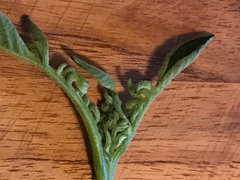
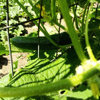
    Just for reference, this is what all the new growth on my potatos looks like:

    All the new leaves are extremely tightly rolled and curled typical of synthetic auxin/plant growth regulator herbicides. The growing tips will eventually curl so tightly as to form a round ball of leaves then the plant will die.

  • 6 years ago

    Zach,

    Try building a small raised planter. Pick your favorites and see if they grow in the raised bed. That will tell you if it is coming in on the wind. You could make sure it starts with clean soil.

  • 6 years ago

    That's a punch in the gut.


    I get a lighter version of that leaf roll in the tomato positon next to my $*)@&)#&@^ "neighbor" who uses Roundup 365 that drains down the hill into that area.

  • 6 years ago
    last modified: 6 years ago

    I would build raised beds filled with purchased soil, but it's SOOOO expensive. It's nearly $5.00/cuft by the bag and buying it in bulk isn't substantially cheaper. In the end, I simply can't afford to garden in anything but my native soil and so it's looking like I can't garden at all.

    I have nowhere else to move to that is A. close enough to a water source or B. somewhere the owners won't mind (one of the very first things they had me do when I moved in was "bulldoze" the tomato garden the previous resident had. They said "We have no idea why he would put that where we have to stare it every time we come up here, especially without asking us, first!" They were not happy...).

    I'm shocked you get anything to grow in the spot, Jerry, Roundup 365 is a mix of Glyphosate, Imazapic, and Diquat. The Glyphosate is pretty harmless once it's in contact with the soil but Imazapic is pretty potent for up to a year after application (we use it for pre-emergent cheatgrass control at the Arsenal, but it also works well as a post-emergent herbicide). I am not familiar with Diquat other than that is is a photosynthetic disruptor and contact herbicide, but that imazapic is fairly worrisome to have in your garden. I REALLY wish herbicides weren't as widely available as they are. I believe that they serve a purpose, but when I see people AERIAL SPRAYING herbicides over agricultural fields in 15-20 MPH winds or during inversions, and suburban dip-wads spraying chemicals willy nilly that they have NO CLUE what they are or what they do (most of whom have probably never bothered to read a single line on the label) it SERIOUSLY pisses me off.


    I have taken multiple pesticide courses, carry a state qualified supervisor applicators license and spend most of my day-to-day working with and researching herbicides. I can recite numerous labels from memory and I still make mistakes. The fact people can walk into any HD or Tractor Supply and buy jugs of pre-mixed herbicide and concentrates to use however they want without ANY background knowledge is absolute insanity.

  • 6 years ago

    That is just so disheartening! I hope it improves for you soon

  • 6 years ago

    Zach, that sucks. I think you'd be surprised what you can get for free to fill your raised bed. I regularly see 'used but still good' potting soil advertised on Craigslist for free from grow houses. It would probably need some amending if it has been used, but one bag of compost or new raised bed soil would probably be enough. Next time I see one, I can shoot you a message.

  • 6 years ago

    Well, I started the bioassay today. I planted three starter pots with beans and they all sprouted. I soaked the straw and soil in separate jars and now that the beans are up I am watering one pot with the “straw water” one with the “soil water” and one with regular water. We will see what happens. It should only take about a week-10 days.

    We got some new directives this month at work regarding the use of Dicamba herbicides. While not as long lived as pyradines, Dicamba is highly volatile at (relatively) low temperatures, around 80-85 degrees and this volatility increases the risk of drift from applications which is a major issue that has resulted in numerous lawsuits and some states may have even banned it’s use due to damage to agricultural lands not planted with Dicamba resistant crops. Again Dicamba herbicides are very common and their use is not restricted in Colorado. Dicamba damage can be similar to pyradines with both them being synthetic auxins. I have been trying to find evidence of drift outside my garden and there isn’t much but I have found a few random weeds showing odd signs. I.E there will be a big patch of lambs quarters and right in the middle will be one plant showing damage. The bioassay will help determine if it’s in the soil or is a drift issue.

    The good news is that whatever this is it doesn’t seem as widespread as last year where I am still convinced the problem came from the compost. Many of the weeds that have popped up in last years garden are showing damage and in places out in the pastures where I hauled it out and dumped whatever was left in the pile also have a lot of damaged weeds around them. This year it’s only affecting about 1/3-1/2 of the garden so it hopefully won’t be a total loss.

    All the land around me is farmed, there’s not many people in the area who would be looking to “lease” garden space. Looking out for free soil to make framed raised beds and fill them would be a good solution.

  • 6 years ago

    Zach,

    I just pm'd you.

Sponsored
Peabody Landscape Group
Average rating: 3.5 out of 5 stars8 Reviews
Columbus' Reliable Landscape Design & Contracting