Software
Houzz Logo Print
kay_russo

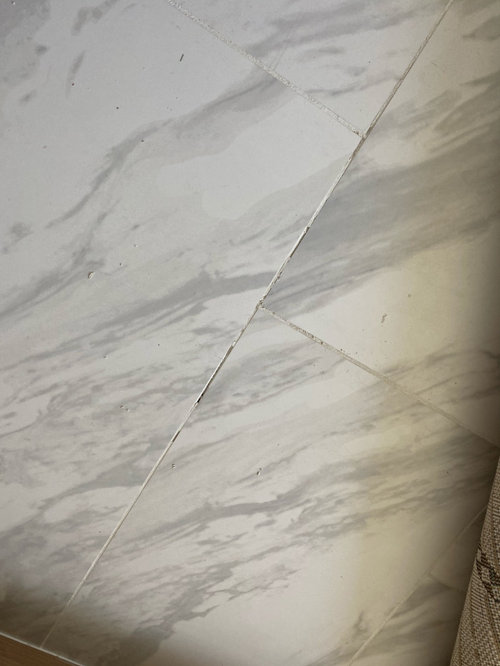
cracking grout newly installed tile

6 years ago
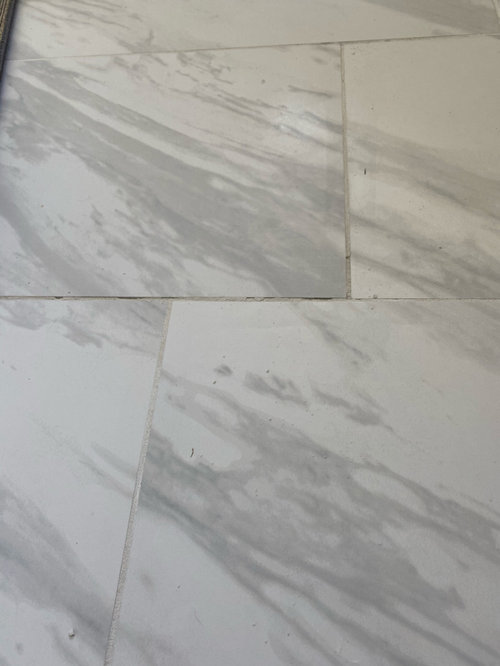
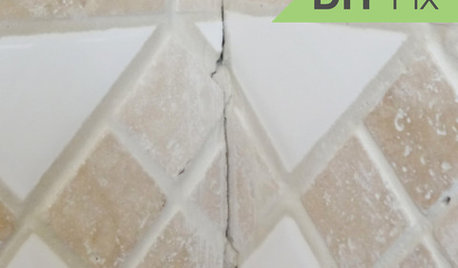
Hello! Our contractor installed tile in our new bathroom but the grout is cracking between a few of the tiles. They removed and replaced but it did it again immediately. What’s the fix? Pull and reset tiles?

Comments (19)

  • PRO
    6 years ago

    Too much water in the grout mix. Rookie mistake.

  • 6 years ago

    It almost feels like some of the tiles are crunching when I walk on them... could that just be the grout that is loose?

  • 6 years ago

    I just hope to hell it’s not the tile that’s moving..

  • 6 years ago

    I have a few tiles that do the exact same thing. Turns out the brilliant mind that tiled that bathroom just put backer board over a section of floor with a lot of flex. So yeah, that section of floor flexes more than it should and the tiles move and feel crunchy.

    My floor needs to come up when I get around to it.

  • PRO
    6 years ago

    If they feel crunchy the installation is a failure. Movement is the end of a tile installation. There is no repair. Cause of the movement needs to be addressed prior to new installation.

  • 6 years ago

    @Creative Tile Eastern CT Do you think they'll have to pull up the whole floor or just the tiles that appear to have cracking in the grout? I want my bathroom back :(

  • 6 years ago

    I would definitely think the entire floor. If their are issues with several tile you can be sure it will be to the rest shortly or at the very least you would want to eliminate the chance of anymore becoming loose. Poor install on some will be poor install all the way around.

  • 6 years ago

    Too bad. That burden should fall on the installer? I feel bad for them but I also can’t look at cracked grout constantly...

  • PRO
    6 years ago

    @Kay You should not feel bad. This is a situation that will determine what kind of contractor you have. What should happen at this point is a replacement without hesitation While presenting to you the factual reason for failure. A rapid solution speaks volumes. We have all learned from mistakes. Stuff happens. It's how you react when it does. If you get excuses and offers for band-aids that also speaks volumes.

    The above scenarios will also determine how you react. Post photos of tiles being removed. Bottom of tiles, underlayment , subfloor etc. Good luck.


  • 6 years ago

    @Creative Tile Eastern CT I'll let you know what he says. It's my impression they just want to be done with my project but it makes me sad the floor turned out as it did.

  • 6 years ago

    Well they drilled holes and injected some stuff that’s meant to help with shifting tiles. He said if that doesn’t work they’ll rip everything out and do it again. So frustrating. They laid backer board over the subfloor originally so I’m not sure where it went wrong.

  • PRO
    6 years ago

    "They laid backer board over the subfloor originally"

    Was it set in mortar as required? If it were to be just screwed or nailed down without the mortar bed beneath it will crumble as you're describing.

    "Well they drilled holes and injected some stuff that’s meant to help with shifting tiles".

    That is just ridiculous. Never say you've heard it all:)

    We now know which group your contractor falls into.

  • 6 years ago

    @Creative Tile Eastern CT Yeah, I assume it won't help and they'll have to tear it out, which they are willing to do. I don't believe they put mortar beneath the backer board but I wasn't standing their watching them either... Sounds like that is the issue though.

  • PRO
    6 years ago
    last modified: 6 years ago

    Tile FACTS:

    CBU(backerboard) is rare rare rarely an approved method for a tile floor assembly. You first MUST meet structural deflection standards for the tile and structure. ONLY then can you use a backer. Its rare it works that way. Sure tilers will do it all the time and some get lucky but fact is even with proper mortar bedding and screw schedules it (Backer CBU) adds absolutely zero to the structural deflection.

    TIPS :Any homeowners reading and learning? you want to see the TCNA method number that relates to your homes structure /tile selections to verify the intended approach the tile installer CAN take. Ask them to document your deflection rating before and after the prep work is done. Request in your work order/contract that you see a tcna method number. Hire wisely america

    Good luck @ OP


    Almost always You want to see A double layer of exp1 B grade plywood and a sheet membrane under your tile, anyone putting cement board down on a floor gives cause to look closer.


  • PRO
    6 years ago
    last modified: 6 years ago

    @Kay If they do rip it out be present and take photos. Also photos of the replacement while in progress.

    I get it. You just want your bathroom back. You are not the only one going through this. I feel for you.

    I second Mint's comment. Spot on.

  • 6 years ago

    So what is the best method for laying it when they redo it?

  • PRO
    6 years ago
    last modified: 6 years ago

    The best way is the Tile council of America way. Again you want the method number that relates to your homes structure. If they cant give you that info quickly you should have them demo and then let them go.

  • 3 years ago

    Hi Kay! Do you remember where you got this tile/what it is called? I believe we have the same tile in our bathroom & need some more to repair an area