Software
Houzz Logo Print
wilhaines

Azalea Questions - Central Indiana Zone 5-6

6 years ago
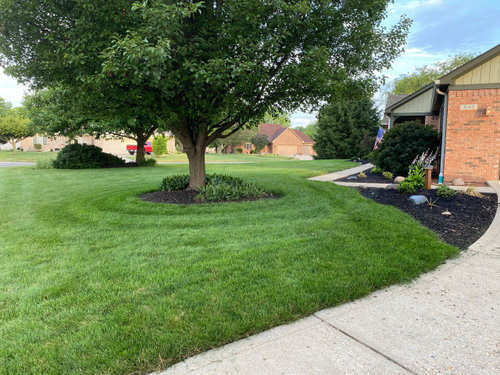
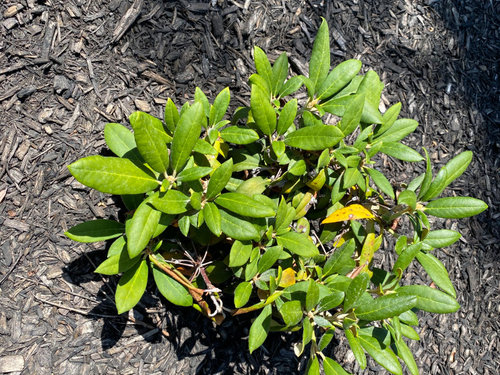
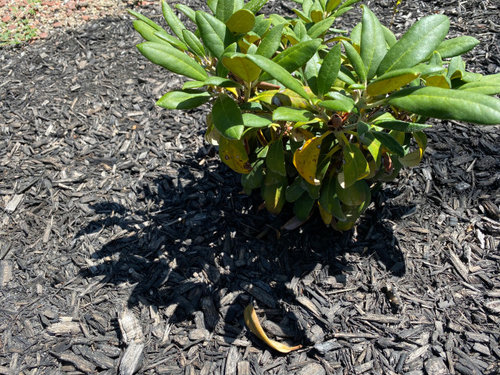
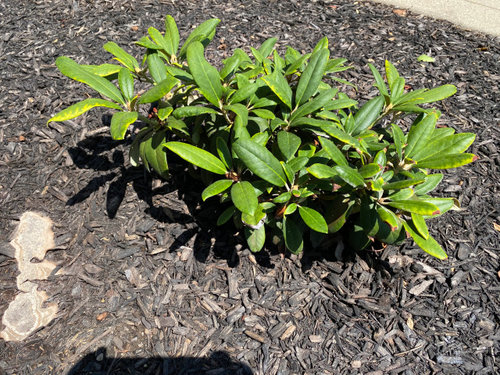
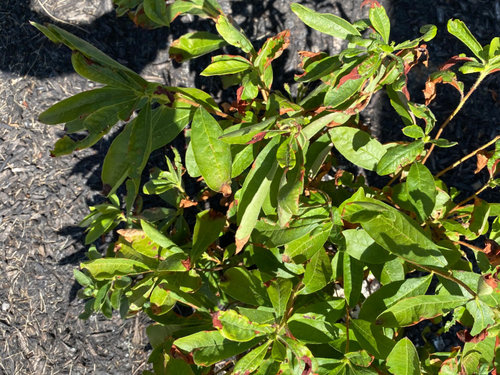
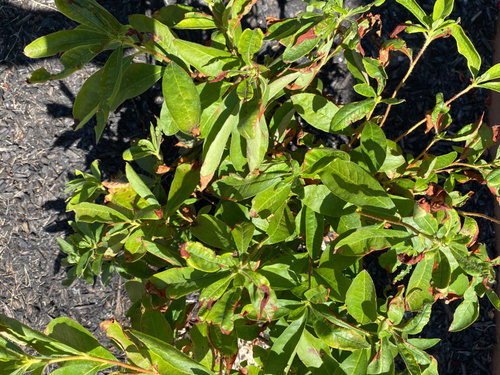
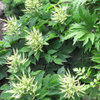
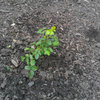
Hello. I'm new to azalea's and rhododendrons. The questions that I have are how much to water, fertilize, etc. The 1st and 2nd photo show a rhododendron that is yellowing on the lower part of the plant. The 3rd photo is another of the same plant, but seems to be doing much better although I'm beginning to see some minor (at this point) yellowing of this plant as well. The 1st and 2nd photos (same plant) are in a flat mulched area 4-5 feet away from the foundation. The 3rd is 10' away and is located on the top of a mounded area. I've only added azalea food in the spring, but have faithfully watered the plants all spring and summer. I water around each plant and try to keep water off of the plant as I water. Is the yellowing due to too much water, too little water, or something else, i.e., lack of fertilizer. The 4th photo is an azalea that was planted this late spring and appears to be thriving, but not without the brown spots on the leaves most of the summer.

The 4th photo (azalea) seems to thrive best when it is watered thoroughly, but I thought maybe it was being watered too much and this might be causing the brown spots on the leaves. The 5th photo is the same plant and I couldn't figure out how to delete it. All the plants get 80% sunlight and face toward the south, south-east. I also have an irrigation system and when the Kentucky bluegrass lawn is watered, these plants get watered as well. I usually water late in the afternoon, early evening, or at night. I try to deep water the lawn once a week and fill-in otherwise as it seems to need water. We had two hard damaging frosts this spring and I was surprised that the plants survived. We have also had a very hot period during the past 3-4 weeks with only an occasional light or medium-light rain. I've also attached a photo showing the 1st, 2nd (Same plant), and the 3rd rhododendron. The 4th is not visible and it in the front of the home. Thank you for any suggestions.


Comments (6)

  • 6 years ago
    last modified: 6 years ago

    I am not getting a clear idea of how much water they are getting now in the hot summer (where are you located?) or how much sun.

    Their roots are usually on the top 4" of the soil (mulch not included) so try to water when this area feels dry or almost dry. Depending on soil type, weather, etc, you may need to water anywhere from a few gallons to twice as much. After you water, wait for the soil to drain and then test the soil in multiple places to a depth of about 8".

    If the plants are getting too much sun (leaf damage is concentrated on leaves in direct contact with the sun) temporarily add some more shade.

    Azaleas and rhodies are not heavy feeders like roses so if they already came with those round fertilizer pellets, I would not fertilize again until Spring 2021. Besides, they do not require much fertilizer during these hot times. After they become established, they can feed off decomposing mulch if you maintain 2-4" of organic mulch (no rocks) year around.

    Wil Haines thanked luis_pr
  • 6 years ago

    I also have an irrigation system and when the Kentucky bluegrass lawn is watered, these plants get watered as well. I usually water late in the afternoon, early evening, or at night.


    ==>>> you can not waer deeply.. into the root mss by relying on lawn irrigation .. as lawn roots are not as deep as shrub roots ...


    i also would not be wetting foliage every dy. especially when nights and mornings are so dewy ...


    if it were me.. i would remove them from lawn spraying ... and i would insure proper watering by digging some small holes.. and FINDING OUT ABOUT MOISTURE at depth ...


    i would also suggest a soil test to determine pH and then adjust such accordingly with soil amendments .. and not rely on fertilizer for such ...


    imo .. once the pH is proper... well established shrubs most likely will not need any further fert ...


    it takes a year or two.. or proper watering.. to get a shrub fully established ... perhaps it is a sign.. that the recently planted shrub is struggling ...


    lack of proper water.. will lead to leaf damage ... which then can cause other problems... but unless you solve the base or primary issue.. then attacking secondary issues.. wont help ...


    ken


    Wil Haines thanked ken_adrian Adrian MI cold Z5
  • 6 years ago

    Laceyvail, what is the minimum acidic number for azaleas and rhodies that a gardener could prudently start with? In other words, if the soil is above this number, it's probably best to find a non-ericaceous plant. Lilac?

    Wil Haines thanked maackia
  • 6 years ago

    Rhododendrons and azaleas need an acid soil with a pH of around 4.5 to 6.0 (ball park) and well mulched soils with organic material. They thrive in an evenly moist, well-drained, humus-filled soil, enriched with leaf mold. But they tolerate alkalinity... up to a point, of course. In my alkaline 7.6 pH clay soil, I use a lot of organic matter and they tolerate it with annual Spring amendments of garden sulfur. You need to get a soil test done to see what your soil pH is. If you do not want to annually amend the soils, you could switch to lilacs (different height for starters though, and incredible fragrance!). Hee, hee, hee. If you get a lilac, try one of the rebloomers.

    Wil Haines thanked luis_pr
  • 6 years ago

    It’s often stated to always plant in native soil (i.e. no amending), but I don’t think it applies with azaleas. Otherwise, wouldn’t success with azaleas be limited to very few gardeners?

    For what it’s worth, I recently planted three azaleas from the Northern Lights series. Since azalea roots are very shallow, I dug the hole about three times as wide as the root ball, but angled so it was only slightly wider at the bottom. It was then filled with an equal mix of native soil, compost, and commercially obtained garden soil. I did a soil test, which appeared to be between 5.5 - 6.

    Wil Haines thanked maackia