Software
Houzz Logo Print
mlee1976

36” Professional Rangetop Help!!!

6 years ago

I need a 36” professional range top. I have planned our appliance purchase out for months but, there is now low availability of all brands due to the pandemic. I originally was going to purchase a Wolf. Then a was steered towards Bluestar. My husband loves to cook and likes to sear steaks. I also like the idea of being able to to get summer extra low. The salesman has been talking up Dacor. I’m so confused. Could someone help me narrow down this choice between 36” Wolf (best looking), BlueStar (most expensive and potentially hard for me to service after warranty), and Dacor (best price, higher BTU range than Wolf, scares me because I read it’s made by Samsung). I’m planning to pair it with a 40” Ventahood.

Comments (17)

  • 6 years ago
    last modified: 6 years ago

    We have an open burner Capital Culinarian range top made in CA. It is very powerful and has been problem-free. We ordered ours from Designer Home Surplus and it shipped to us without any issues. Paired it with a Wolf hood with warming lights and Miele ovens. We have a tool from Capital that adjusts the simmer but haven't had to use it. Ours was fine out of the crate.

    https://capital-cooking.com/capital-rangetop/

  • PRO
    6 years ago

    So IMO if you love to cook then an all gas range and electric wall ovens would be my choice. IMO wolf is overrated and over priced. I run a catering biz from my home and have found that simmer is a lacking item if you do real delicate sauces , I use an portable induction burner for that purpose and I use it to melt chocolate too. I have a Bertazzoni 36” 6 burner range it has a simmer burner which works for most things but not those delicate sauces. mine also has a wok burner which was a must for me. I have KA all electric double wall ovens . The reason for the 2 different ovens is there are things I like best baked in a gas oven . like bread and pizza. I can sear a steak on any of the burners and if I want real power I use the wok burner . I have $35 griddle that spans 2 burners and works well so IMO no need to buy the one that goes with your range or cooktop. I think I would go Blue star my clients like them and IMO a better choice than Wolf. I donot have ahood larger tah my range but I did up the CFM . I have never liked Dacor appliances and BTW please do not get sucked into buying all the appliances from one maker.

  • 6 years ago

    There are advantages and disadvantages to Wolf and BlueStar. I had Dacor appliances but I felt like they were made cheaply. The knob on the range was really cheap plastic and broke before it went back. I found that all the Dacor recommendations tend to come from higher bonuses or commission. When I was looking/buying, the recommendation from a couple of sales people suddenly changed, both to Dacor at the same time.


    The Wolf and BS star burner are completely different burners.

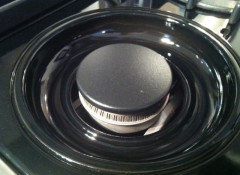
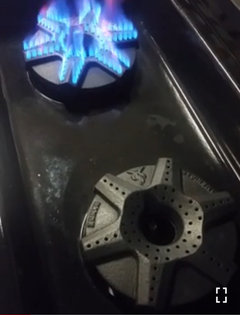
    Wolf burners are capped and have a sealed burner tray. This was an innovation to make burners easier to clean because nothing can go down in the burner. This is very subjective though as some feel like the open burner tray is easier to clean because it disassembles. Wolf used to have a capped burner and the tray disassembled but they discontinued that.


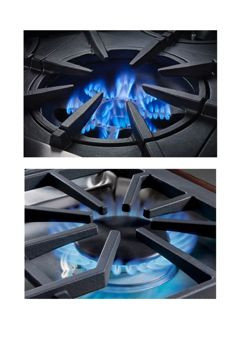
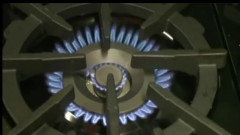
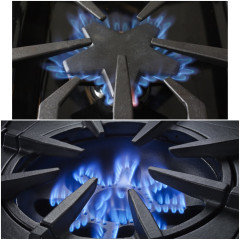
    The big problem with the burner cap is that it causes the flame to flare more as you turn up the heat. This may be ok for some who use wide cookware but not as good for someone who uses a Wok. BS is designed to keep the flame more to the middle. The flame from the ports along the sides of the Star rays keep the heat in a given area.


    This is video that shows what the burners look like.


    https://youtu.be/MZdZxyOUX58


    He also has a video on cleaning BS burners.

    https://youtu.be/3K2DR2ub1sA


    The BS star burner also disperses the heat better under the pan compared to ring burners. If you have cookware that allows heat to be conducted well(heavy copper or aluminum), the cookware will disperse it. If you have cast iron, steel or stainless steel, which are poor conductors, the BS burners will heat more evenly. Many pans now are layered and these can vary a lot in how well they conduct heat. CenturyLife.org has done quite a bit of testing of cookware.


    The next thing to look at is BTUs. For simmer you can compare the BTUs Just like you would for the high end of heat. Wolf has a very low BTU rating for simmer. I have Wolf burners and I have not used a double boiler since I bought it. I’m not really a fan of Wolf because of issues with my oven but they do have an excellent simmer. BlueStar for some reason has never released the BTU rating for its simmer over the years. Thermador also has a simmer that is just about as low but it clicks on and off to get that low. Wolf has a dual burner so each burner has a simmer burner. They also have very fine control through the range of heat with the way the knob turns.

    On the high end of BTUs, for searing a steak, I use a big cast iron skillet and heat it well. It does great. The cast iron holds heat so can get very hot but just takes longer to preheat. The BS keeps heat more to the middle if you have a wide pan so it might depend on the size of the pan you use. If you are heating big pots of water, the BS would probably be faster. For stirfry BS would keep more heat to the bottom of the wok.


    I would be careful about Capital. The design of the burner is’t bad but they have gone through a really rough place. They were recently sold. I don’t know if that will be a good or bad thing. Trevor Lawson that used to sell them hasn‘t been active for awhile. He could get service from them when no one else could.

  • 6 years ago

    I have a Wolf range and the simmer settings are a dream, I just love the range.

  • 6 years ago

    This is incredibly helpful. I feel comfortable taking the Dacor out of the mix (I did feel an unusual pressure to buy that one from the salesman now that you mention it 🤔). Based on what has been said here, it sounds like both Wolf and Bluestar both have good points but, I think for us, the Bluestar may be the winner.

    I’m planning to pair it with a 42” Vent-a-hood. I just liked this one based on the ease of being able to clean it. The salesman (which I now question because of the Dacor issue) was pointing me towards a 600 CFM. He said I could go down a bit on the CFM because of the way that I’m planning to vent it straight to the outside with no turns. Does this sound correct? The other hood that I was considering was a Zephyr which would be about half the price. Thoughts on ventilation?

  • 6 years ago

    No with the BS you want a lot of ventilation. kaseki is the expert here. Search his name. There is a post not too far down. Then if you have questions do a separate post with his name.


    You didn’t say if you were looking at the RNB or the platinum or if you were looking at all burners , griddle or grill.

  • 6 years ago

    BlueStar and Capital are the only ones that give you the option of sealed or open burners. If you haven’t read about open burners or aren’t sure you want them, do some Googleing! I would choose the Capital Culinarian in a heart beat! But whichever option you choose, I hope you find something you love. Choosing appliances can be a bear!

  • 6 years ago

    I hope I picked right 😬 I just ordered the Bluestar RNB 36” Rangetop

  • 6 years ago

    I think you will be happy. The main difference would have been if you wanted a built in griddle. The Platinum just has an overlay while the RNB has a thermostatically controlled griddle. The Platinum has a few more BTUs but most people are not that happy with the add on grill.

    You can always get an overlay from Royal Industries. It is aluminum which would heat much more evenly.

  • 6 years ago

    eam44,

    You have to be careful with the term “open” as it can be ambiguous. Burners are pretty sophisticated and have several design features that contribute to performance. You have to consider all of them together.

    “Sealed“ just refers to the burner tray and some people have a preference about what is easier to clean.


    You can buy this “open” burner now.


    Viking came out with the first prostyle burners and called this “open”. The burner tray is open but it still has a cap. The cap is what causes the flare of the burner flame on high heat and impacts performance. When you are looking at high BTUs, the uncapped burner keeps the heat to the center.


    Wolf also had a “semi open“ burner because the tray broke down for cleaning but still has caps.


    American has called its Performer burner both “semi open”, because the burner tray lifts off in one piece for cleaning and “open“ because it has no burner cap. Because it is high BTU, uncapped and star shaped, it is the closest in performance to the BS star burner yet almost has the cleaning like a sealed burner tray. Hard to recommend it though because the company seems to be non responsive to any service issues.


    Thermador also has a star shape but a cap so not the same.


    Wolf, Monogram and others have dual stacked burner which helps with the flare and gives you a very low simmer.


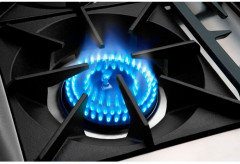
    Many gas burners are ring burners and Capital has the triple ring to disperse the burner ports and no cap.


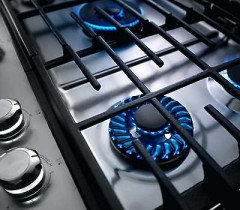
    Kitchenaid has this.


  • 6 years ago

    @Patricia Colwell Consulting, I appreciate your insights. Thanks for sharing. I'm curious to know how you overall like the Bertazzoni 36" - it is in my top 3 right now and an excellent price point in its class. Thanks!

  • 6 years ago

    So I started looking at the posts you all recommended regarding ventilation. My construction hasn’t started (starts next week) and I’m thinking I need to get more specific information about the duct and measurements before I can ask proper ventilation questions.

  • 6 years ago

    Ventilation requirements vary by state/ municipality. in my state, any pro range requires greater than 300 CFM, which automatically triggers makeup air. it doesn't depend on how I might use the range, it's all based on the total maximum output of the range. Wolf has a ventilation guide on all their range options to give you an idea if what's required. you can use theirs to estimate other ranges (based on total BTU). my builder told me that for a 36 inch range I'll need a small blower that will run about 4k. if I go to the 48 inch, the blower will cost about 6k. this doesn't include the hood.
    if this is codified in your state, it will likely be similar (some states go to 400 cfm before requiring makeup air, but most pro ranges are in the 500-600 range minimum).

  • PRO
    6 years ago

    The IRC is the code that all states adopt to create their own local applicable codes. Their alterations to that code can be stricter, but not more lenient. The 2012 IRC adopted the provision to require that all exhaust hoods greater than 300 CFM have a make up air system for the home, and it’s been a part of code since then. Any builder unfamiliar with an 8 year old requirement might need a bit of looking at for other “we’ve always done it this way” things.

  • 6 years ago

    The national code for make up air is in place for safety and is not something to be taken lightly. For any venting, gases from combustion (like heating systems), plumbing and other vents, anything going up a chimney, it can all be pulled back into the environment by cooking ventilation and can pose a danger.


    You can probably find an appliance salesperson who will tell you what you want to hear. Personally, I will seek out Kaseki's vent posts here on Houzz and find an HVAC person who can do serious calculations. There are options in the equipment, including a 'passive' make up air adaptation, so while there are no low cost alternatives, there is some range. Please search for the posts where those with an engineering background discuss the options.


    Here's a discussion to introduce some issues

    Here's where they start calculating

  • 6 years ago

    @User Thanks for actually indicating where the requirements are from! I've been trying to find them, and the way people talk about pricing out 36" and 48" gas ranges - without mentioning the huge ventilation costs - made me feel like either it's not getting installed to code or some areas are less stringent than others. In my own research I read articles where 400 CFM was mentioned as the limit, so I assumed my state was just more strict. People on this forum have responded to ventilation questions with "it all depends on how you cook" instead of saying "You need makeup air if you buy any pro gas range." Even the 30" wolf ranges start at 500 CFM. Because of this, I'm probably going to be doing an induction cooktop.