Software
Houzz Logo Print
webuser_218670965

Help please - grass looks rubbish!

6 years ago
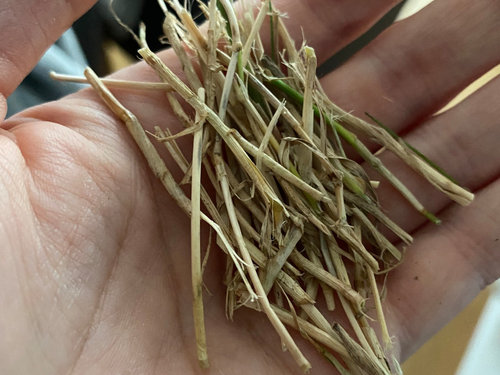


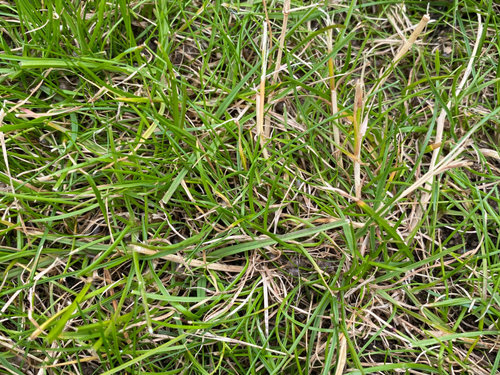
Any ideas of how to deal with this?


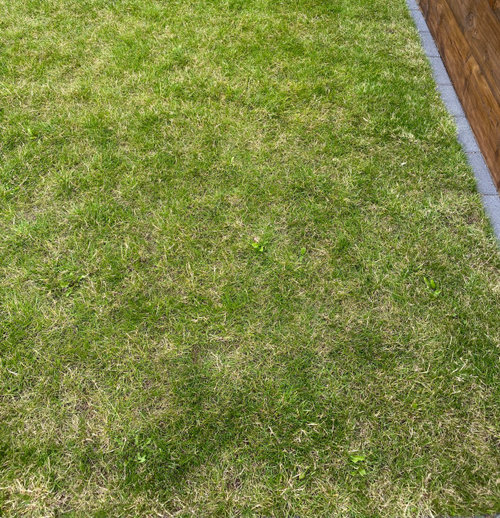
Turf was laid in May 2019 and we now have these thick brown straw like pieces of grass that completely ruin it. Picture included of some I cut off, close up, and further out picture of the grass.


thanks!

Comments (15)

  • 6 years ago

    Hi,


    I’m in the midlands in the UK!


    Essentially all was well with the grass and then sometime last year we think we cut too much off it in one go and also whilst it was a bit wet, which is what we think started the problems. It then went patchy and light brown, but we didnt do much to it other than try and put some seed down. Left it all through winter hoping it’d sort itself out but it didnt. Last month we then raked it and got loads of (what looked like) dead stuff up and put some more seed down. We have just yesterday put some “weed and feed” on it so yet to see any effects of that but getting so fed up with these straw like bits.


    In terms of watering we have a sprinkler and if it’s not rained for a while (say a week) we’ll put that on for maybe 30 minutes.


    Tbh we have no idea what we’re doing so help is appreciated!

  • 6 years ago

    Fungal infection, but it's so late stage that I wasn't completely sure. The discolored grasses in the second shot were a tip-off, but there weren't enough of them for me to call it right off. When you said this has been going on for a while, that's why--all susceptible grasses are already infected and dying as they grow.

    I'm not sure of the disease (they're usually easy to identify when young), and I'm not sure of your setup in the UK. Around here, we have local cooperative extensions to most of our universities that will happily identify plant diseases very, very cheaply or for free to train students and keep the professors in practice (and are subsidized by government to keep the local corn and tomato diseases from spreading into crop land and killing a couple billion dollars worth of farm produce).

    If you can't get it identified, I'd try a wide-spectrum fungal disease cure from the local hardware store or Big Box store (I'm not, again, sure of your business setup around your area; I have both). In this case, I can't make a specific recommendation because I can't get a good ID on the disease.


    The weed and feed was technically a mistake, but not one of severe consequence. It actually looks like the fungus has destroyed your weeds, which is always nice. It's too early to feed, and with a fungus, the last thing you want to do is set off a lot of young, fresh, juicy growth. Which is what feeding the lawn does.

    So I'd treat the disease as soon as you can.


    It's also the wrong time to feed the lawn, even in the very temperate UK. This covers your September first feeding, so you can now ignore that one if you want (or do it again if you like). The usual list is:


    May 30th, September 1, October 1, November 1 (or whenever your last mow is for the year).


    Given your climate, you may not make that last mow until much later. If earlier than November first, but the grass is still green on November 1, feed it on that date or so. Mine is actually much closer to November 25th. :-)

    HU-218670965 thanked User
  • 6 years ago

    Thank you! Oh, so we’ve effectively fed the fungus haha.


    Is there any product you could recommend off say UK Amazon? Here we have places like Wickes and Homebase but if I search fungicide on there it just seems to come up with solutions for cleaning external walls or just solutions for plants rather than grass. Hmm.


  • 6 years ago

    Azoxystrobin at the curative rate would be the most common suggestion here, but I don't see a lot of results when I search for much on Amazon UK. It may be detecting where I am and locking me out of things.

    I know Bayer sells over there, so that's a company to investigate; as a general rule, look for something with a long, long list of diseases on the label and that's used for lawns (garden fungicides will, as a general rule, be of different strength).

    HU-218670965 thanked User
  • 6 years ago

    Thank you! Yeah the few that I found only named a few diseases; I will keep looking.


    Thanks for your help :)

  • 6 years ago

    My first thought was that you were watering every day. Is that what you meant by 30 minutes if it didn't rain?

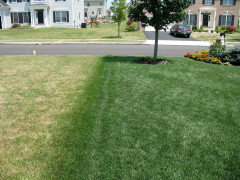
    Here's a picture for you to contemplate.


    The green lawn belongs to morpheuspa, the previous poster. All the rest of the lawns look like yours. All these are the same type of grass. Back when this picture was taken, morph was watering deeply once per week. All the neighbors watered every day.

    Deeply for you means 2cm all at one time. Place some tuna or cat food cans around your yard and turn on the sprinklers. Time how long it takes to fill all the cans. It takes my sprinkler 8 hours, but yours will probably fill faster. That time will become your normal watering time from now on. The once per week timing was based on the summer heat of Eastern Pennsylvania that summer with temps above 30 C. If your temps are lower than 30, you can probably deep water once every 10 days to 2 weeks. But if you're currently watering daily, you'll have to wean your lawn off of that frequency. Start by doing the tuna can test. Then don't water until the grass starts to look dry. Hopefully that won't be for a few days. Then water deeply again and watch for the grass to turn dry. Hopefully, again, it will be a day or two longer than the previous time. Keep doing that until the lawn is going the week to 2 weeks without watering.

    Also if you are not mowing at the mower's highest setting, try changing that. All this is to develop deeper roots which bring up moisture and nutrients from deeper in the soil.

    HU-218670965 thanked dchall8 .
  • 6 years ago

    Hi,


    Thanks for your help. Sorry I perhaps wasn’t clear. What we currently do is that we don’t really water it as we’re bound to get some rain in the UK. If it doesn't rain for say a week and therefore the grass hasn’t had any water for that long, we will water in the evening for 30 mins (as a one off) and then repeat the process, seeing if it rains etc. So on average it is only being watered once a week. If it’s hotter then we might water every couple of days.


    I’m confused about the comment that some cans would take 8 hours to fill? I’m pretty sure if we did that they’d be full in a matter of minutes haha (we do have a small lawn) unless I’ve misunderstood?

  • 6 years ago

    Could just be browned out perennial ryegrass seedhead stalks. Did you get a lot of seeding early summer/late spring? Roughstalk bluegrass seedhead stalks can look similarly. Has it been hot? To me, it looks like summer conditions, not disease.

    HU-218670965 thanked mishmosh
  • 6 years ago

    With my oscillating type sprinkler on full sweep, my hose, and my water pressure, it takes 8 hours for the cans to fill.


    A high flow in-ground system might take only 20 minutes to fill the cans. Everyone has to do the test for themselves.

  • 6 years ago

    Interesting! We put quite a bit of seed down last year / this year and the problem has been throughout that whole time (Including winter). Assuming it is ryegrass what would your solution be?


    I wouldn‘t say it’s been crazy hot (we’re in the UK after all) but we had quite a hot May/June

  • 6 years ago

    Please define hot. Is it temps in the high 20's?

  • 6 years ago

    Hot for cool season grass is anything above 80 degrees F...more or less.

  • 6 years ago

    Sorry, when I said hot I would say hot for us is mid to high 20s, say 25-28 degrees, with the odd occasion of it getting to 30.

  • 6 years ago

    So for us Colonialists, that means temps up to 80 are considered hot in central UK.

    For your hottest months, I would be deep watering once every 3 weeks once the grass was acclimated to the deep and infrequent type of schedule. Given what you've said about watering and rainfall, I think you are not getting 2 cm in your 30-minute watering sessions. Try the can test and see what you get. We talk about deep watering being 1 inch, so that would be roughly 2.5 cm for you, but the tuna cans are a fine measure.

    Try sticking a screwdriver into your sod and see how hard it is to poke in. If you cannot get it down to the hilt easily, then you are not watering deeply enough.

Sponsored