Software
Houzz Logo Print
raymondo17

Three Different Dahlia Issues

6 years ago
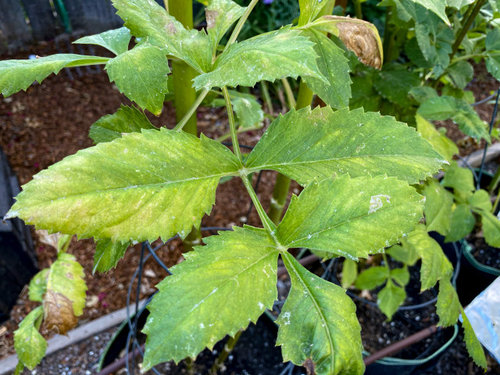
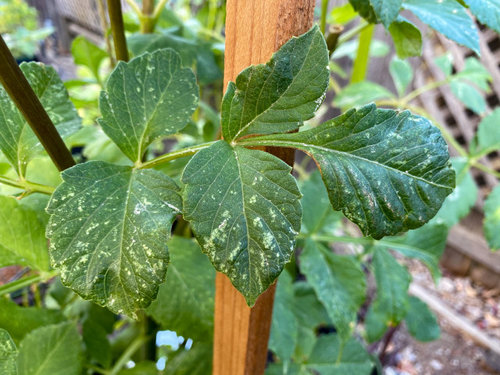
I'm having issues in my dahlia bed. As an example, I've got three dahlias being grown in grow bags that are a foot apart from each other, yet each one has what appears to be a different issue. One has mottled, yellowing leaves with traces of grainy white flecks.


The next has leaves with light spots affecting the top of the leaves.


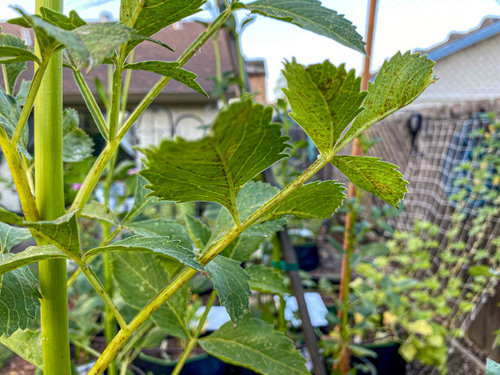
The third has some sort of damage on the stems and underside of the leaves -- brown blotches that almost look like aphids at first glance but are not.


My entire dahlia garden has been affected by leaf miners, and over the past several weeks I've sprayed an insecticide containing Spinosad on them, as well as Safer's EndAll spray, which contains Neem Oil, Pyrethrin, and fatty salts. I'm surprised I'm still having so many issues after applying these sprays as directed. :/


Any ideas of what could be affecting my cherished dahlias?

Comments (9)

  • 6 years ago

    what did you fill the grow bags with ...


    loction.. big city name... weather since planting ... watering schedule ... what if any fert etc ...


    you have to figure out the cause of the problems .. rather than deal with the effect of the problem...


    severely stressed plants can end up with all kinds of problems ... but if you dont solve the stress ... then you arent much further ahead ...


    and perhaps that is why you seem to have 3 different problems ...


    why are they cherished. ... have you had them many years .. if so ... what has changed that this year they have problems ???


    ken


  • 6 years ago

    Thanks for the reply.


    >what did you fill the grow bags with ...<


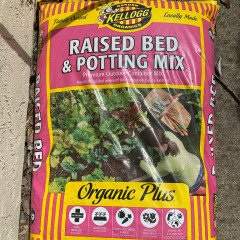
    Kellogg Garden Organics' Raised Bed & Potting Mix.


    >loction.. big city name... weather since planting ... watering schedule ... what if any fert etc ...<


    Zone 9, Northern California, Sacramento region. Typical Sacramento summer with highs in the upper 90s, occasionally tipping into the lower 100s.


    I've been experimenting with the watering. They're on a drip line with 1-gallon-per-hour emitters. I have two emitters positioned above each bag. I started out the summer by giving them 3 hours of watering time every other day. I then went to 1 hour of watering time every day. I'm currently dividing that 1 hour into two sessions, one early morning, one mid-day.


    As for fertilizer, every other week or so I've been giving a combination of fish emulsion and molasses. I recently tried Tomato-Tone fertilizer (NPK 3-4-6), first as a tea, then this past weekend digging it into the top layer of soil.


    >why are they cherished<


    They are cherished because my dahlias are just about the only thing in my garden this year doing even half-way decently. I used to have very good success in the garden, but for several years now I've been having terrible results. My tomatoes (which are in the next raised bed and on the same watering line) used to tower over me at 11' tall, and now they barely come up to my waist. I attribute this to the fact that we have a huge tree (that keeps getting bigger) which shadows the garden. I'd estimate the garden gets about 5 hours of direct sun a day. Perhaps that's the underlying issue?


    The huge tree also sends up feeder roots into the raised beds, which is why I tried growing in grow bags this season, so the feeder roots wouldn't suck all the moisture from the plants.


    So light? Watering? Fertilization? I hope my novel here provides some insight on why my garden has been doing so poorly the past couple of years.


  • 5 years ago

    Suggestions anyone? The summer is fleeting and I'd like to try take any recommendations folks would be willing to offer to remedy this.

  • 5 years ago

    Dahlias grown in containers will have higher fertilizer requirements than those grown in the ground, each time you water and the water drips out the base of the bag the nutrients from the soil are lost, so you may need to fertilize weekly or even 3 times every 2 weeks. The fish emulsion I have (Alaska Fish Emulsion) has an N-P-K ratio of 5-1-1 which is too high in nitrogen to be the primary fertilizer. You can feed them occasionally with Fish Emulsion but should use something else in addition more frequently. My favorite is Dr. Earth Flower Girl fertilizer. It has an N-P-K ratio of 3-9-4. The optimum Fertilizer is usually one with the nitrogen being half the other 2 numbers but it can be difficult to find one like that, usually tomato fertilizers will suffice. I notice that my potted dahlias usually have way more issues than the dahlias I plant in my garden beds, I have 3 in pots this year and about 100 planted in raised beds and regular garden beds. The 3 in pots have constant bug infestations with aphids despite regular applications of neem oil. My only real suggestions are more frequent fertilizer applications and to google the issues with the plants to find whats causing them as I can’t see the photos clearly enough to tell. The American Dahlia Society has a websire with common bugs, viruses and such that affect dahlias listed. If you can work on a different area to put the Dahlias in a raised bed or other garden bed next year I’d do that and avoid the fish emulsion in the future. it can cause difficulties with tuber storing. you should also consider having a soil test done so you can amend your garden however necessary. Healthy plants will be less prone to problems with bugs and fungus or virus so work on amending your garden as necessary for planting next year. Sorry I can’t be more helpful. I also spray neem oil all summer even if theres no issue as I grow my dahlias quite close together and they get powdery mildew very easily. You can also try an application of 3 tbs of baking soda, 1 Tbs oil and a few drops of dish soap in a gallon of water and spray heavily on all affected plants.

    raymondo17 thanked HU-461092274
  • 5 years ago

    Wow, Hu, where have you been all my life, er, growing season? :P


    Thanks for the excellent advice. This is my first time growing in grow bags, and I'm finding that their requirements are quite different than just growing in the ground. For one thing, I've been experimenting with hand-watering them every day in addition to the 70 minutes of drip irrigation they get most days, and they seem to have responded favorably. I'm seeing new leaves appear near the bottom where I had cut diseased leaves off, and flower production seems to have picked up. I wasn't sure whether they needed more water or less, but it appears as if more water is the winner.


    And I will certainly up my fertilizer game to once a week with something besides fish emulsion. would you suggest a water-soluble fertilizer? I have one on hand that's 20-20-20, along with the TomatoTone that's 3-4-6, but the TomatoTone is granular. I've only got about a month left to squeeze out some more flowers before the frost arrives, which is why I'm wondering if water-soluble is the way to go?


    Neem oil is certainly a popular recommendation, and I will adopt a regular application plan of that as well. How often do you apply the Neem oil?


    I truly appreciate the input.


  • 5 years ago
    last modified: 5 years ago

    Raymondo, my 2 cents on fertilizer:

    Use both.

    Your plants in grow bags are container plants and need to be treated accordingly. Many on the container gardening forum follow the advice of a very experienced and knowledgeable user named Al (tapla) and use both granular slow-release and water-soluble fertilizer. The slow-release gives constant feeding as it breaks down gradually, and then diluted water-soluble food is used at every watering for immediately available nutrients. I've been trying it myself. With the right dosing there's no fertilizer burn and the plants grow steadily rather than in spurts. Helpful for hungry flowering annuals. I've been using 1/4 strength.

  • 5 years ago

    Oh and neem oil is just something you’ll spray over the plant. You can either buy pure neem oil and dilute it (may be less expensive this way) or you can buy one made for gardening though I don’t know what else they add and it can be a bit expensive, I go through many bottles every season so i mix my own and also do the baking soda/dish soap/oil in water as a preventative treatment. I have chickens that free range and try to avoid using pesticides in my yard and the neem oil is a natural option which is normal quite effective if you apply it regularly against most critters/bugs and things like powdery mildew which I get all the time if I’m not careful.

  • 5 years ago

    A belated thank you for the replies. 🙂