Software
Houzz Logo Print
erin_luke97

old house electrical... which option?

6 years ago

Hi there!

We have a 1906 home with plaster walls. The electrical hasn’t been updated and the inspector noted that it should as well as a new panel. The walls are plaster. One electrician recommended removing the plaster walls (which definitely have lead paint and may have asbestos) so that he has a clear space to rewire the whole house. Ok, that sounds great but $$$. Could we for a less expensive option keep the walls (but abate the lead paint bc there’s wallpaper on top of it that needs to go) and just update each outlet/ground each outlet? Obviously it would be better to just get it all done the right way but I don’t know if it fits within our budget. That being said we have two young kids and I’m a bit in uncomfortable going the less expensive route and having a lot of I know electrical in the walls.

Thanks!

Comments (41)

  • 6 years ago

    The electrician suggested that because it makes his job easy, but it's a ridiculous suggestion. He doesn't care about the huge amount of work and cost for the other trades. :)

    Rewiring can be done without that much damage. You just need to find an electrician that has that type of experience.

  • 6 years ago

    Lead paint just means you need to be careful. If asbestos is present, he'd be smart to decline the job. I had some employees of mine drill into asbestos once and it wasn't a pleasant thing to have to deal with.

  • 6 years ago

    One more thing... from a safety standpoint totally rewiring the house can be a good idea. In a house that age the original wiring is likely knob and tube, and it has likely been added to over the years by people who may not have done so safely. Some insurance companies may not underwrite new policies for houses with this type of wiring or may change higher premiums

  • 6 years ago

    A house built in 1906 with electrical behind walls....where?

    I suspect electrical was added after the House was built.

  • 6 years ago

    I agree - lazy electrician. This is so turning a molehill into a mountain, there is no need to remove the plaster, that’s just crazy talk.

  • 6 years ago

    A house built in 1906 with electrical behind walls....where?|


    Sure it was added later, but that doesn't mean it wasn't pulled up into the walls (at least as far as the baseboards). I lived in a house that still had the vestiges of gas lighting but had been retrofitted over the years with K&T, BX, and NM cabling.

  • 6 years ago

    This is all so helpful, thank you. I don’t know anything about electrical so I’m trying to understand the process. There is an Unfinished basement that will most likely stay that way and an unfinished attic that we will finish out eventually. The electrician said something like “working with plaster walls would triple the cost, bc they crack and are hard to break through”. So he quoted 3300 for the whole house to be rewired and 4500 for a new panel. But even if that 3300 was tripled I think that would still be a lot less than taking the house down to the studs and replacing every wall with drywall. Thanks for your input I welcome anymore advice and knowledge!

  • 6 years ago

    Oh and the inspector said he didn’t see any knob and tube wiring but suspects there is some. There are still switches that are push bottom but the owners insist the wiring was updated b it they left the switches. Other switches in the house are the mixer flip kind. Inspector also noted that there was conduit, but I’m not very clear on what that means for us.

  • 6 years ago

    Have you gotten other quotes? Don't believe that this electrician's quote is correct. If he doesn't want the job with the plaster intact, he'll quote really high instead of turning down the job.


    Before you do anything though, you need to find out if you actually have asbestos in your plaster. That can change the situation big time.


    Have you already purchased this home?

  • 6 years ago

    If your plaster walls are in good shape, don't tear them out. Drywall is softer and is easily damaged and transmits sound easily. Once you live in a house with plaster walls, drywall just doesn't match up.

    You need to find an old house electrician. Ask around, talk to the local historic preservation group, historical society, or just leave a note for the owner if you know of a recent remodeling in an older house. Especially if you have unfinished basement access, rewiring is a reasonable task. There will be a few difficult places to rewire like porch roof lights, but a good electrician will find a way without being a major disaster scene

  • 6 years ago

    Also, asbestos wasn’t really seen in plaster until the 1940’s, so I think it’s unlikely that will be an issue in your much older home.

  • 6 years ago

    There may be no need to cut into plaster. I lived in a house built in 1912 and there were very tall baseboards... the electricians used the baseboards when they rewired the house.

  • 6 years ago

    Get another electrician: the one you are talking with is lazy, incompetent, or has too much other work...or maybe all three. My daughter just had her two-story house with plaster walls fully re-wired by a competent electrician and there was only one place -- a wall in a closet -- that had to be opened up as part of a new panel installation. The electrician had to spend time in the crawl space under the house and had to fish a lot of wires through walls, but he never suggested the interior had to be destroyed to take care of the re-wire.

  • 6 years ago

    Push button switches are still available today so don't count on them to signal the presence of K&T.

  • 6 years ago

    So, $4500 plus $3300 x 3? So $14,400? Not out of line really... Electrical work is expensive..


    I get the impression this electrician is painting an ugly picture so your expectations are lower. Easy to out-perform a low expectation than a high one. This guy might be just fine, but knows from experience that these things take awhile and customers get upset about it.


    I wouldn't put too much into the suggestion to do full demo. There are a lot of other benefits to getting rid of everything that has nothing to do with electrical. He's probably been on multiple jobs where the end result was really great and feels all of these old houses should do this. I personally agree with the previous posters that you can avoid this massive project and re-wire the house without demo. And given your budget, this is the correct decision.


    Lastly, getting a second opinion can be helpful. Considering that they are bidding an essentially open-ended contract due to unknowns it is important to value their communication skills over the price given. Choose the tradesperson that you feel will be the most organized and will communicate with you best. Although price is important, it is about the least important of the values needed when doing a large project.


    Hope all goes well.


  • 6 years ago

    Push button switches are still available today so don't count on them to signal the presence of K&T.


    Not even in the day, either. Push button switches were still in vogue long after other wiring methods were developed. Also, the converse is also a fallacy: modern decora switches don't mean there's not knob and tube lurking.


  • 6 years ago

    If you have access to the tops of the walls from the attic and to the bottoms from the basement, then running new wiring is relatively easy.

  • 6 years ago

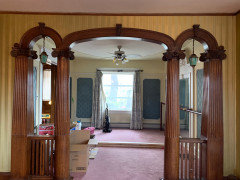
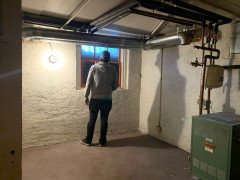
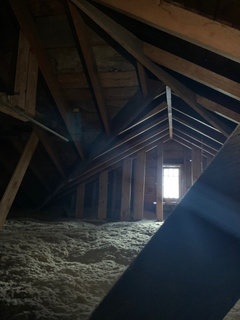
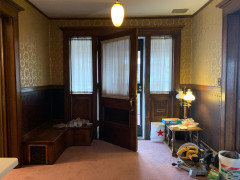
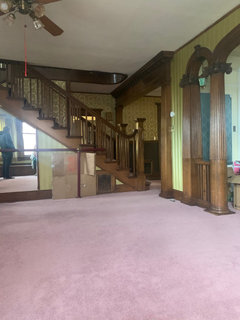
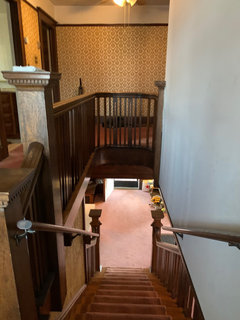
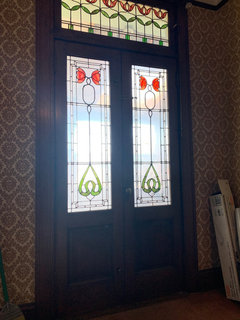
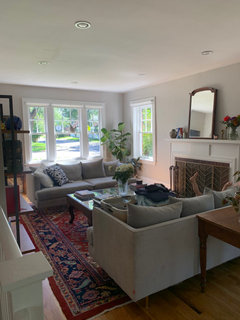
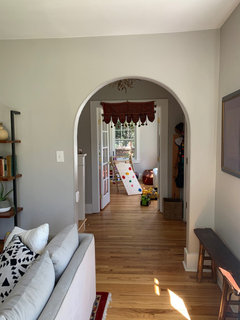
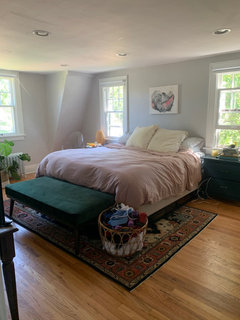
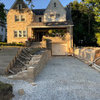
    Thanks everyone. This is really helpful, and some areas of the house have been updated in the last twenty years or so so it’s not all super old. Here’s a few photos of light fixtures, the two within the arches are the ones controlled by the push button. But I have never noticed any exposed wiring. We’re under contract now but I am getting nervous about things like the lead paint under the wallpaper: I have no idea where to start to remove that, I’ve called and people will remove the lead paint but not the wallpaper or vice versa. And I’m unsure about asbestos but realize that could be a problem if we need to cut into any walls. I’m pretty sure our current home as asbestos walls, it was built in 1929 and I just patched an area where the plaster fell off. The plaster wasn’t on any lathe board, it looked like concrete almost and when I thought about it it looked similar to the wrapping on the pipe in our utility room which I know is asbestos. The basement has high ceilings and would be an easy place to work although it doesn’t cover the whole area of the main level, a small crawl space is how an electrician would need to get to the two front rooms. The attic is unfinished but has blown in insulation. Pics attached for reference

  • 6 years ago

    That looks like a beautiful house. I love those pendant fixtures between the columns. Where are you located? That must be a well known house and there are surely some electricians who know how to do old house work,

    Don't be suckered into removing the plaster as that will just lead you into more issues. Removing plaster makes rooms bigger and then you need to shim out the studs or use two layers of drywall or your trim will be too short. You need to be appropriately careful with environmental hazards but millions of people have been raised in houses with those issues and still survived.

  • 6 years ago

    I had some knob and tube replaced, other areas had already been changed before I purchased, added a larger circuit panel and upgraded from 80 to 200 amp and added outlets to code in bathes and kitchen with zero impact to my plaster walls. They snake wiring through plaster walls all the time. Your quote seems reasonable to me for the upgrades you are seeking.

  • 6 years ago
    last modified: 6 years ago

    That looks like a truly historic house. You definitely shouldn't remove the plaster!

    Lead paint on walls behind wallpaper is nothing to be concerned about. There's no way that's going to be ingested.

    You can't identify asbestos by looking at it. Even if something looks like something else that contained asbestos, it means nothing. The only way to tell is from testing.

  • 6 years ago

    Oh wow..... This house is awesome!!! Those arches and posts alone would be $10k plus to replace.


    Wiring is no big deal.


    Asbestos is no big deal. Get it inspected by someone with experience and find out if you have much of a problem.


    Lead paint is on ALL of these old houses. Again find someone with experience and you will be fine.


    Best part is the house is just amazing!! FYI, if you did gut it, none of the old trim would fit. Plaster isn't the same thickness as drywall. It'd be a nightmare to try to reuse everything.

  • 6 years ago

    No, lead paint isn't in all old homes. My house is almost 200 years old and none. Lead paint was more common in cheap brands of paint.

  • 6 years ago

    Didn't know that!

  • 6 years ago

    Well ... not ALL old homes. But 87% of homes built before 1940 have lead paint. :)

    EPA website

  • 6 years ago

    Take a deep breath. It's a lovely home with many amazing details.


    Just echoing what others have said, find another quote. DH has re-wired a lot of our house (and re-plumbed the whole thing!) and we've left all the plaster intact. If the electrician is going to do that much damage, he may just be more accustomed to new construction. We did pay to have an old-house electrician put in a new 200a panel. I think that was $2k, 13 years ago.


    Also I am a parent to two kids 10 and under. With the supervision of my MD, we actually stripped old paint from windows when I was pregnant. I'm not cavalier, but we were advised as to how to take proper precautions, using the right PPE and methods for keeping the work space kid-safe. My kids are fine, and we get routine lead tests (just a quick blood stick) and they have never showed high readings.

  • 6 years ago

    My husband and I purchased an old house, circa 1890. We had it completely re wired and re plumbed when we moved into it. No plaster was damaged in the process. The new wiring was pulled through the existing outlets, etc. We did add new outlets in each room to bring it up to code. My BIGGEST regret was that we removed the push button switches and replaced them with modern switches. Ours had brass plates...AND mother of pearl white buttons. DAMN! I wish I had kept them. An additional comment about lead paint, here. The place that you have to be most concerned in old houses regarding lead paint isn’t so much on the walls. But it IS the wooden windows and the woodwork around them. If there is lead paint on the window frames and surrounds, Opening and closing windows can lead to paint chips flaking off. And that can be dangerous. The only place that we found ANY asbestos in our old house was around some parts of the old furnace in the unfinished basement. Get in touch with experienced electricians, older ones (!) who have worked on old homes. Plumbers, too. And experienced painters who have worked on period homes in your community. If you remove wallpaper and need to repair the plaster, there ARE plasterers out there, too. Contact any historic home in your area that is open for tourism. They will help you find qualified people. Will they cost a bit more? Perhaps. But with a home as beautiful as yours...it will be worth it. Good luck!

  • 6 years ago

    From my experience with hiring a contractor find one that loves old homes. When interviewing a contractor if all their interested in is open concept, stainless appliance and replacing windows cross them off the list. When the contractor I used saw the house he started talking about restoring old family homes and wanted to do period word, plus he uses a real plasterer.

  • 6 years ago

    Erin- I worked for much of my career as an environmental engineer and regulator in the area of toxic substances, including lead and asbestos. I want to reassure you that, although you may have asbestos in your house (most likely as wrap on old heating system pipes and vinyl or seamless floor covering), if it is intact and you don’t disturb it, it is not going to be a problem unless you damage it or rip it out improperly. As for it being in the walls, asbestos was mainly added to plaster walls from the 1940’s until its use was phased out in the late 1970’s. As others have correctly pointed out, you can’t tell if you have asbestos anywhere in any material without having it tested, but I wouldn’t automatically assume there’s a problem with the walls. As for lead, it would be a problem mainly on old, painted woodwork that was painted, and so chipped that it had to be sanded or stripped. If it is under the wallpaper it won’t be a concern unless you strip the paper... and there are ways of dealing with that. I’m posting this simply so you don’t become too paranoid about the home you’re living in, and I’ve seen people do that. Many of us grew up in homes that had lead and asbestos — and tens of millions of homes still do — but that didn’t necessarily make them unsafe. As long as you make thoughtful decisions about renovations, you won’t have a problem.

    Enjoy your beautiful home.

  • 6 years ago

    There’s also this old light which I’m obsessed it

  • 6 years ago

    The good news is that you don't have to strip any of that woodwork! Can we get a full tour via pics or video, pretty please! :D

  • 6 years ago

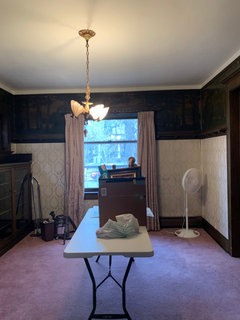
    Whatever you do, don’t strip the wallpaper above the picture rail in your dining room! It is fabulous. It may be something that can be cleaned to lighten it up. But only by a professional.

  • 6 years ago

    Yeah that paper is staying! It’s a Bradbury Bradbury frieze and n think it’s original

  • 6 years ago

    Give the people what they want....more pics! Such a beautiful house for your family. Congrats!

  • 6 years ago

    Thanks everyone... we had a hard time making the jump because our current home is really nice, it’s a colonial and it’s bright and light but lacks the historic character (I’ll post a photo in the next comment) but this one has so much potential, IF you can look past the shag carpet and dated wallpaper ;)

  • 6 years ago

    Our current home

  • 6 years ago

    Erin, your new house is beautiful. That electrician is telling you he does not want your job or he doesn’t have the skills/patience to deal with plaster. Either way, I’d look for a different electrician. Rewiring an old house is dusty enough that I’d do it before moving in if possible. But a gut job? If it’s conventional framing, no way. If it’s balloon framed you might not even have to find a closet or a chase to get wires to the second floor. Enjoy your new home.

  • 6 years ago

    I'd just echo the comments about keeping the plaster and finding a different electrician, and add that it's a beautiful Victorian!!! It has obviously been loved and well cared for!

  • 6 years ago

    Plaster is wonderful for a number of reasons. When I lived in old REAL plaster over lath apartments and houses they were WAY quieter than those with drywall. Plaster was a skilled trade back in the day, unfortunately hanging drywall these days often is not. Gutting plaster walls that are in reasonable shape to do wiring is stupid and unnecessary.


    If you do need to cut holes in the plaster to accommodate new wiring, get someone who knows how to do it to fix it. If a guy doesn't know what brown coat is, move along.

  • 6 years ago

    My 1895 house has plaster and lath walls and I love them. At one point, the ceiling of the living room was getting cracked and sagging in places, so we found a real plasterer to come in fix it. He put expanded metal lath over the entire ceiling, then used wet plaster over that. It's a beautiful job, eliminating all the irregularities in the old ceiling.

Sponsored
CHC & Family Developments
Average rating: 5 out of 5 stars5 Reviews
Industry Leading General Contractors in Franklin County, Ohio