Software
Houzz Logo Print
kathleen_marineau

Safe charging of multiple devices

Had no concerns when all we had was a couple of cell phones, but now we have a school issued ipad with external keyboard (2 cords), plus granddaughter's tablet, plus Hubby's e-reader, our 2 cell phones, and my Samsung tablet which is used to communicate with the school.

Currently Hubby uses the master bath outlet to charge his devices and I am using an outlet in the kitchen for the rest. I plug and unplug multiple times a day to keep everything charged for remote school use. Once in a while I forget and leave something plugged in overnight.

Our home is a modular house built in 1976 and the panel is maxed out although it passed inspection in 2013.

I was considering buying a high quality surge protector so the cords (at least 4) could stay plugged in at a single location.


Am I creating an electrical hazard?

Comments (28)

  • 5 years ago

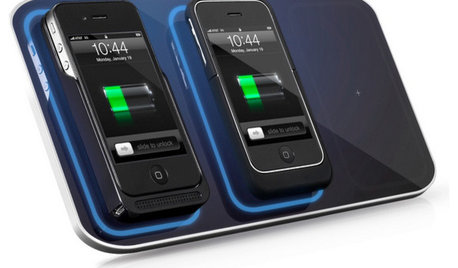
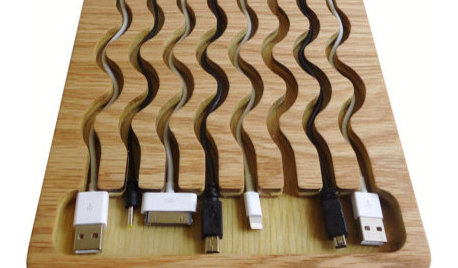
    There are many kinds of changing stations available. Find one that suits your needs.


    Kathleen Marineau thanked res2architect
  • 5 years ago

    I have a surge protector with seven outlets where six of the outlets have their own on/off switch. I leave the charging devices plugged in and turn the appropriate outlet on when I want to use one of them.

    Kathleen Marineau thanked socalgal_gw Zone USDA 10b Sunset 24
  • 5 years ago

    Have en electrician install a whole home surge protector in your breaker panel.


    Your circuit breaker will prevent damage to your home, I would only worry about cables and cords around young children.

    Kathleen Marineau thanked cobalty2004
  • 5 years ago

    If you're worried about the "amount" of electricity being a problem, don't worry. Even the higher rate iPad chargers are consuming a very small amount of electricity and then only while it is needed. Once the device is charged (or when it is unplugged), these things draw a negligible amount of power, in fact, so small that most devices can't measure it (we're talking less than a tenth of a watt).

    Kathleen Marineau thanked Ron Natalie
  • 5 years ago

    I'm more concerned with the amperage and overheating the outlet wiring, than the voltage or watts consumed. I realize it is a very small portion of our monthly usage, especially compared to 2 TVs with Dish and Bluray in use several hours, plus the ambient electrical use.

  • 5 years ago

    Here is what I had installed for only $165, I had no idea these things existed until recently:


    https://www.se.com/us/en/product-range-presentation/64328-square-d-qo250pspd-qo-plug-on-neutral-whole-home-spd/

    Kathleen Marineau thanked cobalty2004
  • 5 years ago

    More research on my part.

    I wonder if a nearly 50yr old house has "Use with QO Plug-on Neutral ready load centers".

  • 5 years ago

    The Load Center in your house may or may not be a QO one; if you're interested, have an electrician look at it. I think QO load centers are all Square D (I have one).

    Kathleen Marineau thanked mtvhike
  • 5 years ago

    The current in amps is equal to the power in watts divided by the voltage so its all relative.

    I see no way a low voltage charging station could overload a typical house circuit. If you think you're going to have power surges see if the charging station is protected or use a power strip that has protection.


    Kathleen Marineau thanked res2architect
  • 5 years ago
    • I'm more concerned with the amperage and overheating the outlet wiring,

    You can compute the maximum amperage from the sum of the power supplies - but it they are something like 15 watts each you should be able to plug in a hundred of them on a 15 amp circuit without concern.

    • I wonder if a nearly 50yr old house has "Use with QO Plug-on Neutral ready load centers".

    Probably not - but I'm not sure what a whole home surge protector would help with overheating the wiring?

    Kathleen Marineau thanked dennisgli
  • 5 years ago

    I am familiar with square D. It's what we plugged ventilators into from 1967 into the 1980s. This house doesn't have a square D receptacle, there is a 220 outlet where the original owners had a chest freezer.

    One option eliminated.

  • 5 years ago

    I missed one. There is a 30amp 220 outlet in the original laundry space. I left it there when we converted the space to a walk-in pantry.

    Hmmm, I wonder if there is something similar to what cobalty2004 bought for a 220 outlet.

  • 5 years ago

    My comment about Square D was for the load center (breaker box), not receptacles. I don't think it matters what brand the receptacle is, as long as it's good quality.

    Kathleen Marineau thanked mtvhike
  • 5 years ago

    Our breaker box is full and has a sub-breaker box in the garage for the attached wood shop.

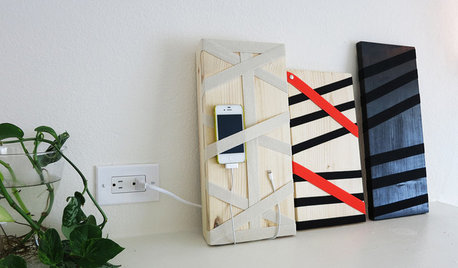
    I am hoping for something that looks better than devices and cords on the kitchen counter that is still where I can monitor them so one isn't forgotten overnight or all weekend.

    I experienced several electrical problems including 1 fire in my 25 years of ICU nursing. I don't want a repeat at home.

  • 5 years ago
    last modified: 5 years ago

    Kathleen-

    1. An iPhone uses about 5 watts charging. An iPad, about 10 watts.

    2. A standard residential receptacle can deliver about 1800 watts.

    3. That means you could safely be charging about 360 iPhones simultaneously or about 180 iPads from one receptacle.

    Bottomline: nothing to worry about.

    Kathleen Marineau thanked kudzu9
  • 5 years ago

    Buy a multi slot charging station and a pack of short cords. The key for us was getting the short cords which won't tangle. Some of the commercially available products can be mounted on the wall or underneath upper cabinets, but we just designated a hallway cabinet as electronics central.

    Kathleen Marineau thanked Lyndee Lee
  • 5 years ago

    Fears allayed, thank you.

    I will order a wood look surge protector.

    If you haven't seen them, Amazon is a good place to search and view several different brands. I can set it on my antique sewing machine cabinet next to a house plant. Nothing else is plugged into the outlet and it is near the front door.

  • 5 years ago

    BTW, in case it wasn't clear: a surge protector doesn't protect against drawing too much power from the outlet. That's not the kind of 'surge' they protect against. The breaker protects against drawing too many amps/watts. Surge protectors are supposed to protect against voltage spikes coming from the power lines due to equipment failure, lightning strikes, etc. It's a good idea to have one for electronic devices, although the power-strip kind are not much defense in the case of a nearby lightning strike.

  • 5 years ago

    That's what I'm after, protection from the surges that come in. In the 1970s I was replacing circuit boards on our bedside monitors in the ICU at least monthly until administration finally convinced the utility to intall a line voltage meter. It showed multiple 20-40 volt swings per day. Only then did they replace and upgrade the transformers feeding into the hospital. I don't have that much clout as a homeowner.

  • 5 years ago

    A surge device won't do much to fix a 40 Volt swing (especially downward).

  • 5 years ago

    You are correct, but it will help with the smaller surges when the power blinks or comes on after a prolonged outage.

  • 5 years ago

    The real problem is sometimes the batteries malfunction and catch on fire which is why you can’t check them in your luggage on an airplane. Just have them out where you can see them, not in a drawer with suit
    In sockets. And put them on something relatively fireproof (Ex. Not on a bed tucked under covers
    or a pillow). A kitchen counter like you have now made of tile, granite, or similar material sounds idea.

    Kathleen Marineau thanked Sue54321 ABC
  • 5 years ago

    Also if you want to go overboard, you can get a universal power supply. It’s basically a huge heavy battery which provides both surge protection and power in an emergency. So for example, if you lived in California and the power company turned off your power to prevent fires in high winds, you could still power your cell phone to connect to the cell towers to check for fire updates and receive text warnings.l and call for help.

  • 5 years ago

    I am a Californian, 2nd generation Bakersfield, CA; raised both our children there. We left in 2013 after retirement. Our career Coastie was stationed in DC, so the grandchildren are all out here. It helps that it's a lot greener, we don't have to ration water or worry about our well running dry every August. Cost of living in the eastern panhandle is the most expensive part of West Virginia, about the same as the San Joaquin Valley. I've lived in 8 different states, but I'm still a south of town farm girl.

    Been around long enough to understand the challenges of a steady supply of electricity and to respect its ability to help and to hurt. Therefore I'm more careful than most.

  • 5 years ago

    Problem is you don't really know if you get voltage spikes or not. You can find out pretty cheaply though. Go to a place like Harbor Freight and spend under $10 for a cheapie digital multimeter. Set it up where you pass by often, like the kitchen or wherever you're charging all this stuff, or the bathroom counter. Monitor AC voltage. Every time you walk by, write down the time and voltage. After a few days/weeks you'll get an idea how steady your voltage is.


    If you need more advice on operating a meter, post back and I'll walk you through it. It's quite safe if you observe some simple precautions.

    Kathleen Marineau thanked toxcrusadr
  • 5 years ago

    Good idea. Monitoring a meter is within my skill level, I just have to remember what I learned when I was a Ham.

  • 5 years ago

    Wow, an actual living breathing Ham. Not many of those around these days, or people who know what they are. :-D In that case get the $25 meter and use it for all kinds of stuff. It will pay for itself.

    Kathleen Marineau thanked toxcrusadr
  • 5 years ago

    Inactive for decades. Lost the tri-SSB transceiver I built in the divorce during Vietnam War. Ancient times to the majority of the population.

Sponsored
CHC & Family Developments
Average rating: 5 out of 5 stars5 Reviews
Industry Leading General Contractors in Franklin County, Ohio