Software
Houzz Logo Print
jacob_rosanna

St Augustine grass problem. San Antonio,Tx

5 years ago
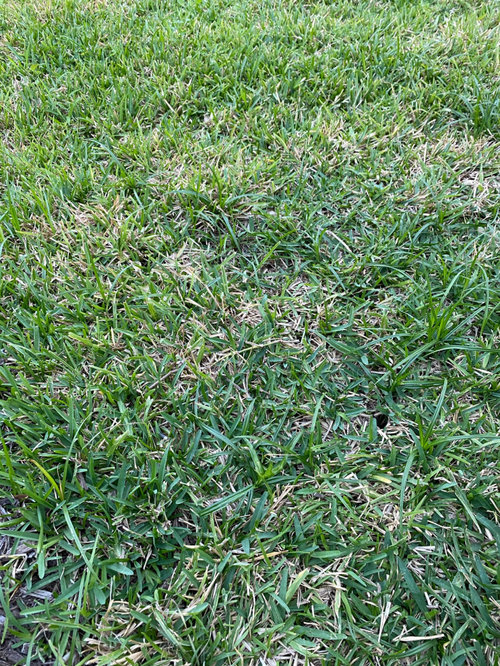
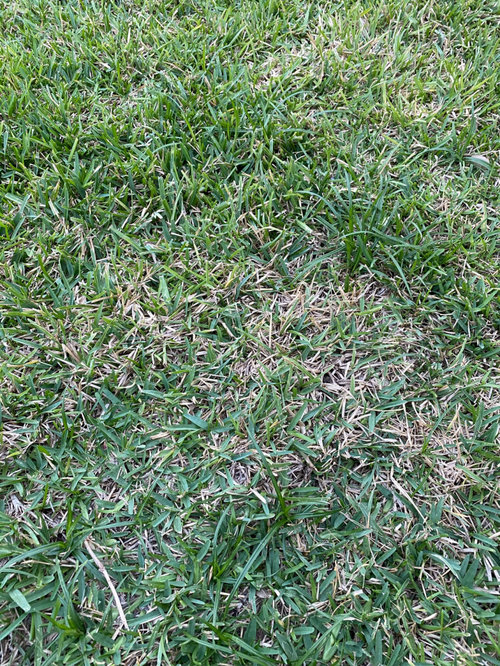
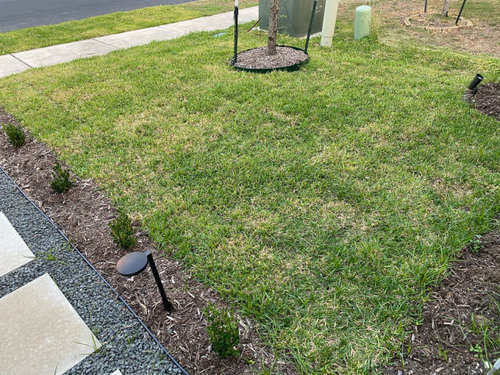
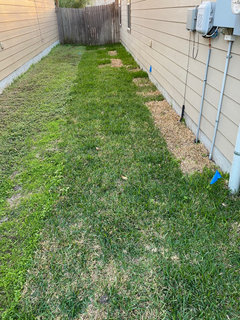
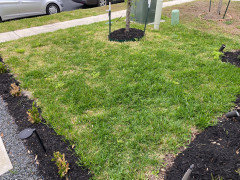
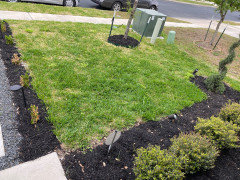
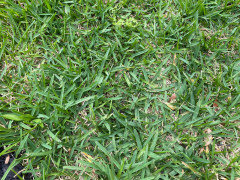
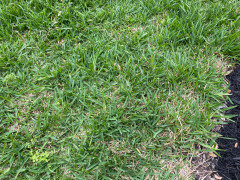
Hello, I recently just laid St Augustine sod September 14, 2020. First time home owner and new to lawn care. I am worried about my newly installed sod dying during winter and am wondering if the browning in my front yard is normal. The side of my house the dead patches have not been replaced and do get sun, but I don’t think very much sun all day, maybe the minimum 3-4 hours of sun that is needed. I did not put anything for the weeds and do have weeds seeping through the grass. Any suggestions will be greatly appreciated to help with winter and weeds. Thanks.

Comments (22)

  • 5 years ago

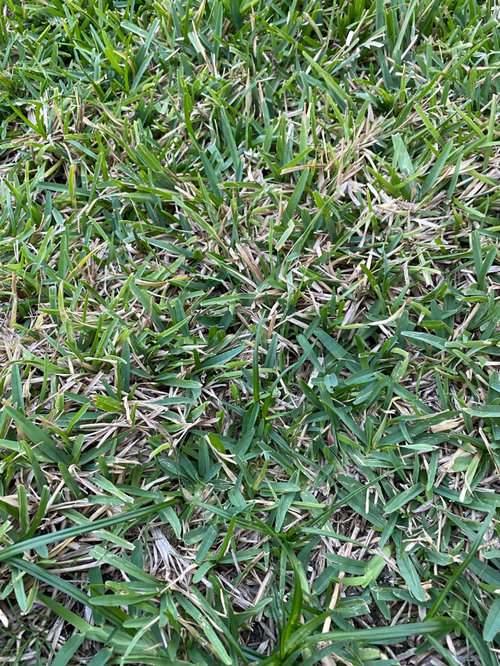
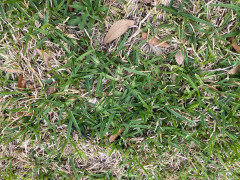
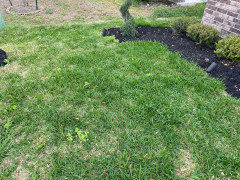
    These are pics from the side of my house that does not get as much sun

  • 5 years ago

    I'm guessing you did not get your sod from Milberger's Nursery (1604 and Bulverde Rd). They don't sell dead pieces of sod. The pull them off and trash them. So when you replace those pieces, get them from Milberger's. I just threw away my receipt, but I think they are $1.29 per piece. You have to be there in the morning to get sod. They sell about 7 pallets before noon every day, so it is always fresh grass.

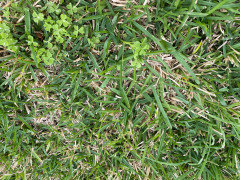
    I see nutgrass/nutsedge in your pictures. That means you're watering too much. Nutgrass loves swampy conditions, so it's a great clue that you're over watering. Once you back off on the watering that stuff will go away without spraying. If you absolutely feel the need to spray it, you have to use a sedge killer, not a normal herbicide.

    By now you should be skipping multiple days between watering. My sod went down Oct 8 and I'm now watering every 3-4 days hoping to stretch that to every 5 days very soon.

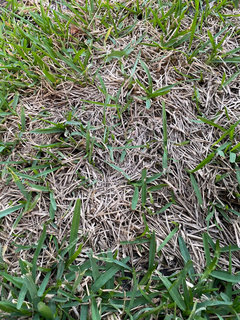
    St Augustine is very likely to go dormant in the winter. It might look dead, but you already have an example or real dead grass. It won't look like that.

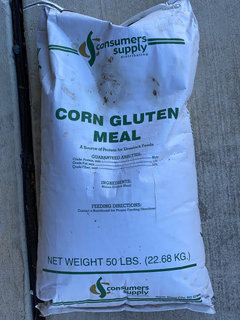
    The gray colored grass in your side picture is dying from a fungal disease. Again, too much water. WAAAAY too much water. I always recommend using ordinary corn meal to treat that. Tell me what side of town you're on and I can direct you to a place to a feed store for corn meal in 50-pound bags. Application rate is 20 pounds per 1,000 square feet. I would suggest doing the entire lawn for 2 reasons. One is you probably have the disease elsewhere, and two is that the corn meal will turn the grass deeper green, so doing the entire lawn avoids spotty looking grass. The corn meal takes 3 full weeks to show results, so don't get impatient and spray it with a chemical fungicide.

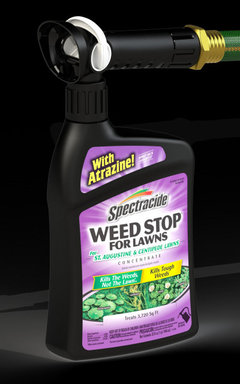
    By next April you're going to notice the weeds your neighbor has will have spread into your St Aug on the side. The herbicide that works for me is this one, available at Walmart or most anywhere else (during the season).


    That stuff does not work against nutgrass or bermuda, but the bermuda will go away by itself as the St Augustine takes over. Always mow the lawn at the mower's highest setting and the bermuda doesn't stand a chance.

    The light green/brown color in the front is another sign of overwatering.

    Since you are new to lawn care, here are the basics (tuned up for your lawn in your area)

    1. FOR MATURE TURF Water deeply and infrequently. In Bandera I use an oscillator sprinkler and water for 4-6 hours every 10 days. If we get a lot of rain, I will not water again until the grass starts to look dry. We're supposed to get an inch of rain this week, so I don't plan to water again - maybe not for the rest of the year. The new grass will be on a weaning program of watering, but I still will watch it after the rain. Generally deep watering means 1 inch all at one time. Generally infrequently means once per week during the hottest heat of summer (again, I do it every 10 days). During cooler weather I back off week by week until when temps are routinely lower than 70 degrees I water once a month.

    2. Mulch mow at the mower's highest setting all the time. You can weld it in place.

    3. Fertilize with organic or chemical fertilizer on Memorial Day, Labor Day, and Thanksgiving. Easy to remember. Don't get tempted to fertilize early just because all the marketing tells you to. I always use organic fertilizer at 15 to 20 pounds per 1,000 square feet. My favorite is alfalfa pellets (rabbit chow). And don't feel bad if your lawn is not the first to awaken in the spring. Every yard is different.

    4. Spray weeds in mid April and late September.

    Never use weed n feed products. Those are one of those too good to be true products. Some people get them to work, but I would never suggest them for a beginner.

    Don't get excited about dethatching, aeration, or anything fancy. St Augustine doesn't need it. If someone convinces you that you need it, please come back here so I can talk you out of it and give you an alternative. St Augustine is a really low hassle lawn.

    Side tip: your little tree out front is buried in mulch. If you're going to have a ring of mulch around it, you should pull the mulch away from the bark so it can breathe. You should dig down until you hit the roots flaring out. That's low enough. It will look like a crater.

  • 5 years ago

    dchall_san_Antonio, I live over here on 410 and Sinclair. In between 410 & Rigsby/ 410 & Southcross ,Sulphur springs rd. Should I put down the cornmeal ASAP?

  • 5 years ago

    Should I fertilize with organic or chemical fertilizer starting this Thanksgiving?

  • 5 years ago

    Ful-O-Pep must be the feed store you’re talking about, I pass by it all the time. I will try the organic alfalfa pellets for fertilizer this Thanksgiving, and I will lay down the cornmeal this coming weekend. Thanks for the tip about the tree. Thanks!

  • 5 years ago

    Don't ask for organic alfalfa pellets. Ask for rabbit chow. The word organic would throw them off. And rabbit chow tells them you want the small pellets and not horse cubes or a bale of alfalfa. You might mention it is for the lawn. They have a cheaper version of the same thing if you are not specifically feeding bunnies. Their bunny food is fortified with vitamins, which are not bad for the grass, but slightly more expensive.

    Have you been to Fanick's Nursery on Holmgreen? That's one of the best nurseries in SA and it's right near you.

  • 5 years ago

    No. I just looked up Fanick’s Nursery and it’s very close. Just by looking at the website and reading the reviews I know my wife would enjoy a trip to Fanick’s. I’m going to ful o pep after work to get some corn meal.

  • 5 years ago

    And the rabbit chow.

  • 5 years ago

    We live in Bandera now and half our plants are from Fanick's. We love that place.

  • 5 years ago

    This is the only they had, I hope it’s the right one, lol.

  • 5 years ago
    last modified: 5 years ago

    Sorry, that is not the right one. That one is an EXCELLENT fertilizer; however, it does not work against the fungal disease. What you want is ordinary, whole ground corn meal. Cost should be under $10 for 50 pounds. Call Jupe Mills (210 649-1649). They are at the corner of 1604 and Hwy 87, South. (12237 US Highway 87 South, Adkins, TX 78101). They seem to have things that Ful-O-Pep doesn't have. If they don't have it, Lubianski's Feed Store in St Hedwig might. Their number is 210 667-1145. I used to drive 30 miles out of my way to go to Lubianski's.

  • 5 years ago

    I'm curious how your lawn is looking after the freeze and now that most San Antonio lawns are greening nicely?

  • 5 years ago

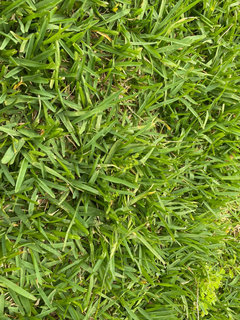
    Hi dchall, was going to reach out to you here soon. I’m really concerned about my lawn. Here are some pictures and hopefully you can point me into a right direction to make my lawn healthy.

  • 5 years ago

    Here are more pictures

  • 5 years ago

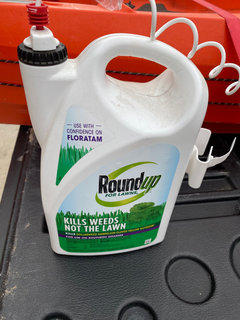
    I just sprayed the yard with this.

  • 5 years ago

    I saw that in the store the other day. It does say it is for Floratam, but I'm skeptical because of the 2,4-D component. Since you used it, please let me know how it worked for you. With such a small yard it would be tricky to keep the spray off of other plants. It should take care of the clover looking plants (oxalis) for sure. The question for me is whether it damages the St Augustine.

    I have not watered yet. We keep getting the petite rains which keep it all moist without flooding. Otherwise we're all waiting out the awakening from the big freeze. The wild prairie grasses look great. I try to nurture those in the lawn until the St Augustine moves in. Then I nuke it with Spectracide with Atrazine. For now I still have spots that look totally dormant and spots that never turned tan. Maybe the mid 90s temps this week will help.

  • 5 years ago

    Hey dchall, I think you’re right about the weed killer that I pictured above, I sprayed the yard and none of the weeds died with the exception of two. It doesn’t look like it’s harmed the grass in any way. I willing definitely be buying the weed killer you suggested in the picture above and see how that works out for me.

  • 5 years ago

    Give that other one a chance. The one I suggested takes 3 weeks on some weeds.

  • 5 years ago

    I’m really nervous to use that spectracide. I’ve read reviews on how people have killed their entire lawn, I’m guessing they didn’t follow directions very well.

  • 5 years ago

    Try it on one weed where you know where it is, so you can follow the progress of the grass and weed death.

  • 5 years ago

    Ok. Sounds good