Software
Houzz Logo Print
mwj_90

Sanitizing Laundry

5 years ago

Hello all, I have a question about sanitizing my laundry. My wife and I just had a water softener installed. Due to this, I'm trying to avoid using warm and hot water cycles as much as possible to save on our energy bill. With that being said, what's the best way to sanitize my laundry in cold water?

Comments (24)

  • 5 years ago

    MiMi, as always I'm so appreciative of your helpful information :-) it's always good to see you on here.

    I want to clarify that I don't plan to exclusively use cold water washes. I definitely will continue to use Warm water here and there, just trying to cut back on it a bit.

  • 5 years ago
    last modified: 5 years ago

    Cold water should be the here-and-there, ONLY when required for a specific fabric.

    I never wash anything in tap-cold water.

    85°F to 95°F for "cold."

    105°F for lukewarm.

    115°F to 122°F for warm.

    133°F to 140°F for hot, always for the bath & kitchen linens and socks.

    Chlorine bleach for sanitizing, always on the bath/kitchen/socks load.

  • 5 years ago
    last modified: 5 years ago

    Doing a quick Google research. Energy Star says you can save $66 per year on an average 300 loads per year using exclusively cold water washes. That boils down to 22 cents savings per load.

    Not worth it in my opinion based on damage done to your machine due to gunk build up.

    Do you have a front loader or HE top loader?

    They are already saving you money in water usage, water heating, detergent usage etc.

    I only use warm for colors and hot for whites.

    Sometimes I use the Sanitary (152 degree) or Allergen (131 degree) on a white load just to help keep the machine clean.

    I also use original formula liquid chlorine bleach (not scented or low splash, they are not labeled for sanitizing).

    You really need warm/hot water to lift oils not only from fabrics but from inside the machine where you can't see.

  • 5 years ago

    Georgect, I have a modern top-loader with an agitator. More specifically the Whirlpool wtw4816fw2 (at the time of purchase if I had known about the classic Speed Queen top loader model I would've picked that one in a heartbeat). I do an extensive cleaning of my machine every 3 months by using hot water with white vinegar for one long cycle and another long cycle with hot water and bleach. I do these back to back.

  • 5 years ago

    Should I do this more often?

  • 5 years ago
    last modified: 5 years ago

    My Electrolux front loader reminds me to do a clean cycle every 50 loads, which for me averages every three months (doing 3-4 loads a week). I do the clean cycle every time the washer suggests (even though I do two-three hot washes weekly and use bleach).

    If you are doing more cold water washes then I would do it every two months.

    When I had my top load direct drive Whirlpool washer I would just wash in hot (whites) with bleach weekly and NEVER did any cleaning regimen (it wasn't heard of). Another load would be warm.

    Whenever the repair man came and opened the machine up you can see how clean the outer tub was (the outer basket is semi-translusent) . Even he would comment how clean the washer was.

  • 5 years ago
    last modified: 5 years ago

    I have used vinegar in the rinse cycle of my 30 year old Maytag top loader for many, many years. No damage & clothes are clean, fresh smelling, no gunk in washer & no washer repair bills. I am not sure about vinegar being a sanitizer, however, people must be hoarding vinegar again, hard to find in the stores again.

  • 5 years ago

    During COVID times I add a capful of Dettol to any work or travel clothes, I don’t have hot water connection to my washing machine but the water is warm enough ( live in hot country) and I also find Tide works best with any water.

  • 5 years ago

    The only way to confirm there's no residue accumulation in a washer is via disassembly to examine hidden areas.

    As MiMi says above, white vinegar is acidic (pH of ~2.5) vs. detergent being an alkali/basic (pH of 10 to 11). Water is neutral (pH 7.0). Thus, vinegar functions as a laundry "sour" which balances the higher pH of detergent back toward neutral. It's often touted as a fabric softener but it contains no fabric lubricants, as do fabric softener products. Being acidic, it has a potential to deteriorate washer parts if left in contact for an extended period of time. Keep in mind that no washer pumps out 100% of the rinse water, a residual amount from the previous/last load remains in the pump and drain hoses until the next washday. It's even worse to put vinegar in the rinse agent dispenser of a dishwasher, which holds enough liquid for 20 to 30 loads, so the seals of the reservoir and mechanism of the dispenser is continually exposed to undiluted (acidic) vinegar.

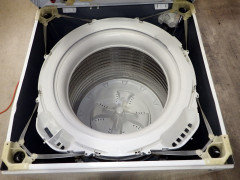
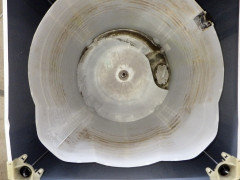
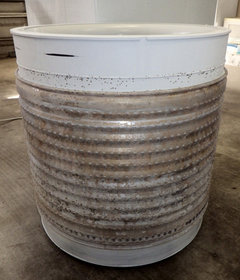
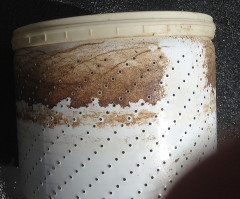
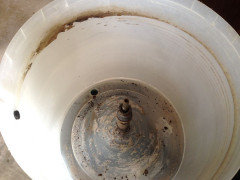
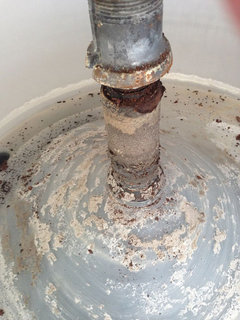
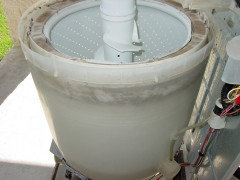
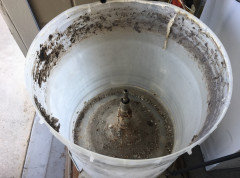
    Repeating a few dirty topload washer photos.

    Notice on this one that the interior of the drum is nicely clean-looking. Not so much the exterior and the interior of the outer tub. The area in the base of the tub from approx 11:00a to 3:00p is a "sump" around the pump inlet that's lower than the rest of the base and holds some water.


    Same for this agitator machine. The residue is greasy/sticky. Not detergent, it didn't cause any sudsing when wiped with a wet cloth.


    This is what GeorgeCT means about the outer tub being semi-translucent such that residue can be seen through it.

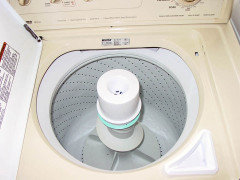
    The eight pics above are machines that I cleaned up/refurbed. This photo is someone else's that I saved from another discussion board.

  • 5 years ago

    dadoes, I cringe at these pictures you post from time to time. It scares me to think that my washer could someday look like this even tho it looks perfect on the inside. Is powdered Tide (with and without bleach) and washing 9 out of 10 loads with hot water enough to keep this from happening or is it just inevitable? I used to use vinegar from time to time but I haven't used any in this washer...I don't think :o

  • 5 years ago

    Why has laundry become so complicated? I keep seeing all these various laundry additives-sanitizers, scent beads, wash conditioning beads etc. I don’t use any of these. Is it really necessary to “sanitize” laundry? I use a sanitize cycle on my towels but I don’t necessarily think it is actually sanitizing anything. It just uses really hot water.

    We had a top load washer in our previous house over 15 years ago. I was always using cold washes with the cold water detergents they came out with. I didn’t know any better. The washer always looked clean. I always left the lid open when not in use. Then I started noticing black flakes and it started to smell. We opened up the machine and I was horrified at what the outside of the drum looked like. We had to take the whole drum into our shower to clean it. We now have an electrolux front loader. I only use cold on delicates and everything else I use warm. I do at least one or two sanitizing cycles a week on towels. I do not use bleach. We have very few whites. I do not use vinegar either. My washer has the washer cleaning cycle but I use a hot water cycle with an affresh tab every 2 months or so.

  • 5 years ago

    Sanitizing is reducing germs/pathogens to a minimal level at which the risk of infection/disease is greatly reduced. That's not the same as sterilizing, which kills all pathogens and requires very high (autoclave-level) temperatures for a specific period of time.

    "Vinmarks: I keep seeing all these various laundry additives-sanitizers, scent beads, wash conditioning beads etc."

    Marketing. And to help deal with the smutz and conceal odor that may result due to the push for COLD washing. One of my sisters who had an old-style 1984 Maytag toploader with a musty whiff from cold washing once complained that she couldn't find a detergent to make their clothes smell clean.

  • 5 years ago

    I have tried OdoBan with good results.

  • 5 years ago

    Dettol or Lysol Additive. Afresh every two months to clean the washer

  • 5 years ago
    last modified: 5 years ago

    Thanks dadoes for the "washer porn" (dirty pictures). :-) LOL They keep me washing laundry in HOT as often as I can with powdered detergents in the rota.

  • 5 years ago

    You should be using cold water washes sparingly. Most of your washes should be warm or hot. You're asking for trouble is you do most of your washes in cold water. Not only will there be gunk build up in your washer, but also your clothes. You need warm/hot water to dissolve sebum, which is a mixture of body oils, bacteria, skin cells and dirt, that's in your clothes and to keep it suspended in the wash water so it can be dumped down the drain and not deposited inside the washer.

  • 5 years ago

    I haven’t washed a load of laundry on anything but DAMN HOT since dadoes and Mama Pinky got hold of me. LOL. If it is delicate enough to need cool water, I wash it by hand and hang dry. So far, I have ruined nothing. And I still don’t think I’m getting my sheets bright enough. Periodically I go shopping for a new machine with a sanitize, or more preferably allergen, cycle. Rare birds, tho. We save electricity and energy ruthlessly in every other way, but I got tired of compromising my laundry.

  • 5 years ago

    Question: Can you use hot on colored clothing like cotton tee shirts, wicking shirts etc? I'm always afraid it will shrink or fade the clothing.

  • 5 years ago

    Oh my! MizLizzie MaMa Pinky would be so glad to hear you changed your wicked ways.... lol

  • 5 years ago

    @vinmarks, I haven’t faded or shrunk anything with my hot habits. That said, all my tees are from Life Is Good, and they are indestructible. I also wash the dh’s athletic gear, much of which is spandex and reflective fabrics, on HOT. I do NOT routinely wash silk or wool. My downstairs water heater is set, IIRC, at 130°.


    One of the reasons I use HOT exclusively is that I have found washing machines are deceptive, probably to meet federal standards, and that warm is – – in my opinion – – barely tepid. There is nothing in between HOT and WARM on the machine I am using now. I am waiting on a contractor to make some changes to my laundry closet that will enable me to install a set of front loaders with an onboard heater, and then I will be upping my game. I will do sheets and towels on SANITIZE. And dial back our regular laundry to a HOT-WARM setting.

  • 5 years ago

    @MiMi, after being educated by MamaP, I learned to recognize that air of body oil and perspiration that gets imbedded in your sheets over the years. I started going through my linen press and paying attention to the smell that wafted up when I pulled the drawers open. It is not an unpleasant scent. It is “our“ scent – – my husband is a pillow-sweater, but I do like the way he smells or I would not have married him. ;-). But as MamaP used to say, there should be zero odor in your bed linen after it is laundered. If there is any odor at all, it is simply not clean. And I believe that.

  • 5 years ago

    Tide powder or Tide with bleach. Do a search of Tide with Bleach and on page 2 scroll down to liquid chlorine bleach posted by Pat. Interesting discussion. I couldn't get the link to work.

  • 5 years ago
    last modified: 5 years ago

    You can also pre-soak in Lysol Laundry Sanitizer. I have had good luck finding it occasionally at Lowe's.

    http://rbnainfo.com/smart-label.php?productLineId=1833#features


    Item Benefits / Features

    0% BLEACHKills 99.9% of bacteria
    Suitable to use with both whites and colors
    Works in cold water
    Contains no phosphates. This bottle is made of 25% post-consumer recycled plastic.

    DISINFECTS the following Organisms during pre-soak conditionsContact TimeEnveloped Viruses

    Human Coronavirus5 minutes2009-H1N1 Influenza A Virus Strain A/Mexico/4108/20095 minutesInfluenza A Virus [H3N2]5 minutesInfluenza B Virus (Strain B/Hong Kong/5/72)5 minutesRespiratory Syncytial Virus (RSV)5 minutes

    Gram-Negative BacteriaPseudomonas aeruginosa15 minutesGram-Positive BacteriaStaphylococcus aureus15 minutes

    SANITIZES the following Organisms on laundry (soft surfaces)Contact TimeGram-Negative BacteriaKlebsiella pneumoniae15 minutes

    Gram-Positive BacteriaStaphylococcus aureus16 minutes