Software
Houzz Logo Print
ruthj98

This can't be good for trees

My city has strict rules about whether you are allowed to remove your own private tree. I do respect the environment and do agree that trees are important for survival. But you would not believe the difficulties people have with trees on their property and the city says "no" to removal.


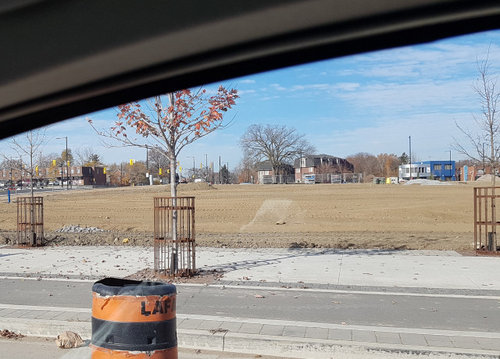
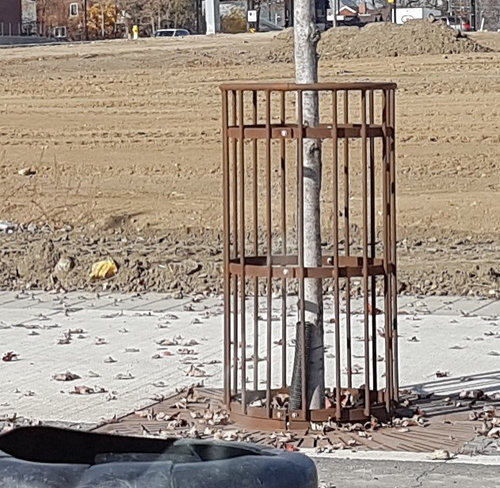
But the city's own rules do not seem to apply to them. For example, if I were to have to plant a replacement tree, I would have to plant a tree six feet from my neighbor's property, six feet from a sidewalk or driveway and about 20 feet away from another tree. But look at this photo. (I suspect condos will be built on the vacant land.) What happened to the rule about six feet from the sidewalk? Ticks me off. How can the city tell me how important trees are when they plant them like that? Do you think these trees will flourish?


The city doesn't usually have these cages around newly planted trees.


Comments (15)

  • 6 years ago

    We have laws here too in my NJ town, but not that vigorously enforced. We cut down DEAD trees and plant six more, so the town could care less. The climate is changing big time here, we have lost multiple maples in recent years (Sugar Maples and Red Maples), and they've been replaced with thriving Southern (evergreen) Magnolias.

    newhostalady Z6 ON, Canada thanked Phoenix Rising (Zone 7a/b, NJ)
  • 6 years ago

    That is actually a pretty standard planting for street trees. Many cities have a program that plants trees in very urban, even downtown settings for all the same reasons they encourage homeowners to plant trees or restrict the removal of existing trees. And yes, they do thrive!

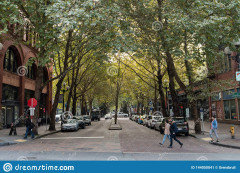
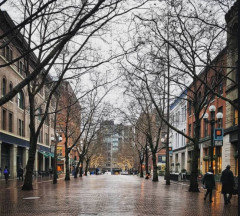
    This is an established planting of trees in the heart of downtown Seattle:

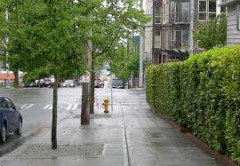
    And this is a more recent planting:

    newhostalady Z6 ON, Canada thanked gardengal48 (PNW Z8/9)
  • 6 years ago

    They work but they don’t last as long as a tree would in a park normally. That being said, they are finding ways to make the area better for them as time goes by and they learn new methods. The cage is to stop animals from destroying the bark until it’s older.

    newhostalady Z6 ON, Canada thanked Plant Love
  • 6 years ago
    last modified: 6 years ago

    Gardengal48, it must not be forgotten that trees are living things that change. A tree that was planted years ago, and has continued to grow, may pose problems to homes when they didn't when they were younger. The bylaw should protect trees, but also homeowners and their properties. Also, trees planted are not always planted in suitable locations for the size of the tree. If a city wants to make improvements by planting trees in, for example, in the downtown core, then they can only do so much as existing buildings and roadways are already there. In the picture I showed, the roads were changed and the land is being reused. So the city had a choice to plant the trees in the better spot but chose not to. If you could hear our city council debate a homeowner's case for removal of a tree, you would see how passionate some of the councilors are about trees, and how homeowners with legitimate complaints about trees on their property are disregarded. Planting the trees as they did in my picture doesn't show me that the city is doing their part to really care for trees. As for the cage, I was thinking it may be there to protect the tree from construction equipment that will be used to build up the area.

  • 6 years ago

    I wasn't trying to justify the practice :-) Every municipality has their own process for dealing with this issue.....some are better than others.

    And the cage is there is there initially to protect against mechanical damage - construction equipment, cars, vandals, etc.

    newhostalady Z6 ON, Canada thanked gardengal48 (PNW Z8/9)
  • 6 years ago

    Do you think these trees will flourish?


    ==>>> trick question.. right??? ... lol ...


    there is no reason they shouldnt ... per gals pic ...


    but i wonder things you might not have even thought of yet ...


    how about high speed snow plowing.. use of road salt ... crushing by construction equipment ... drunk driver [that cage isnt going to stop that... etc.. ad nauseum ...


    what i wonder.. is why this was the first thing done.. rather than the last thing done.. thats what doesnt make sense to me ... [or perhaps the city did it.. waiting on the private developer ... either way ... the city is probably going to be replacing them] ...


    ken

    newhostalady Z6 ON, Canada thanked ken_adrian Adrian MI cold Z5
  • 6 years ago
    last modified: 6 years ago

    Upon closer inspection of the Seattle downtown photo, it looks to me that the road and maybe sidewalk are made of cobblestone. That would allow water to flow down to the roots of these trees. It's very different if the road is paved and the sidewalk is cemented as it is in my photo.

    Should I have to replace a tree, I would have to plant 6 feet away from a sidewalk. I suppose, like Ken says, that would be to protect the tree from snow plows and salt. But the city seems to have different rules for themselves. But the sidewalk in my photo will only be plowed in the middle (?) due to the location of the trees. In addition I know my city advocates for trees that will grow large. It is a shame those trees have to be planted like that. The trees don't look like the city is making trees a top priority. But when homeowners ask to have a tree removed, it's a big deal, and often refused.

    What's the rush in planting these trees? That's a good question Ken. I'd really like to know the answer! Not sure I will ever find out. (By the way, I think these trees are on city property, so the city will have planted them.)

  • 6 years ago

    That photo is of Pioneer Square. The road is of old cobbles exposed when the asphalt/concrete was removed when the area underwent gentrification a couple of decades ago - sidewalk is concrete, as is the center planter.

    I am assuming that maybe the OP has not traveled very widely, as street trees planted in very urban areas in the midst of a sea of concrete are very, very common in many locales.

    newhostalady Z6 ON, Canada thanked gardengal48 (PNW Z8/9)
  • 6 years ago

    Yes, I do think those trees will flourish. They look like a pretty standard planting for street trees based on practices I see over here. We have street trees in my city which are a couple of centuries old and they thrive. The sturdy metal guards and the rain gratings look normal for urban trees. I’d just stop fretting and see how they get on.

    newhostalady Z6 ON, Canada thanked floral_uk z.8/9 SW UK
  • 6 years ago

    newhostalady, does your city have a website, through which you could ask the public works or planning department your questions? You might well be correct about future development of this site. A good plan would have taken future construction into account, and would have chosen trees able to thrive in city conditions. Maybe they got a good deal on the right trees at a good size to transplant. They look nice already.

    newhostalady Z6 ON, Canada thanked User
  • 5 years ago

    Gardengal48, "street trees planted in very urban areas in the midst of a sea of concrete are very, very common." One doesn't have to travel to see trees planted in concrete or around concrete, in shopping malls, sometimes inside shopping malls, around high rise buildings and in downtown cities. Often these planted trees are in the small category size. The trees planted in my picture are large sized trees in this restricted setting---more suited to smaller sized trees. That's why I wonder whether these trees (meant to grow large) will really flourish in that setting.

    I think it matters how much concrete around the tree there is. I found a picture of downtown Seattle similar to your picture:

    There absolutely is cobblestone. That would make a big difference to the trees as water will pass between the cobblestones.

    The area will definitely have condos built there. The spot is like an island with a busy four lane roadway surrounding it.

    When we had a city arborist come to view our tree, he said the area around the tree was not large enough (the tree is in our wood patio). But then you see how the city has planted the trees in my first picture. There really shouldn't be two sets of rules: one for the city and one for the residents. The city should be a model for the people who live there.

  • 5 years ago

    LOL!! I'm not going to argue with you.......I live there for heaven's sake and I know where there are cobbles and where there is concrete. You do not need to provide photos!

    Seattle is a very large city and while there may be a few streets in the old part of town that still have cobbles, 99% of the streets and sidewalks are concrete. And most have street trees planted exactly as your original photo indicates. I am a bit flummoxed as to why you are making such a big deal of this. It is the same with a great many other metropolitan areas. Street tree plantings are not the same as a residential tree planting so making comparisons between the two is pointless.

    Just be glad your city is making an effort to include trees in the urban landscape!

  • 5 years ago

    Stuff like that does adequately in my home city, but we tend to choose smaller trees downtown that don't grow too tall (there isn't much space to begin with; our city center is about 280 years old). In our case, we don't even have the nice dirt areas past the sidewalk to allow the spreading roots access to water and whatever nutrients they can access.

    Streets downtown are cobblestone, however (don't ask, none of us like it and it's not fun in January when I won't drive down there), so there's some access for water there.


    Out further, it's much more like that, where at least the root systems can spread under the short pavement to the more wide-open spaces. And roots of trees do spread, wide and far. So I think the ones you show will be absolutely fine. They only have a bit less than a half circle (oh, let's call it pi over 1.5 all things considered), but that's enough; the tree will simply grow more slowly.

  • 5 years ago
    last modified: 5 years ago

    The older Seattle planting shown here consists of hybrid planes which are genetically programmed to grow vastly larger than they are in the pictures. Time will tell how this will play out.

    When I was taking community college horticulture classes in this area during the 1970s it was stated that the hybrid plane plantings that were prevalent on some Seattle streets were intended as temporary municipal dressing for the World's Fair. And as might have been anticipated at the time did not actually get removed after the event. The City of Seattle Arborist had some occasional involvement with the college program then, as I remember it they were the source for this assertion.