Software
Houzz Logo Print
davidfromdetroit

pruning advice - Tulip Tree

5 years ago
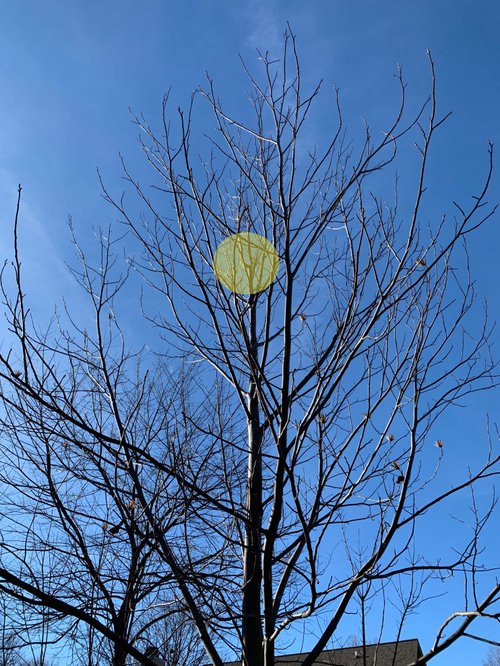
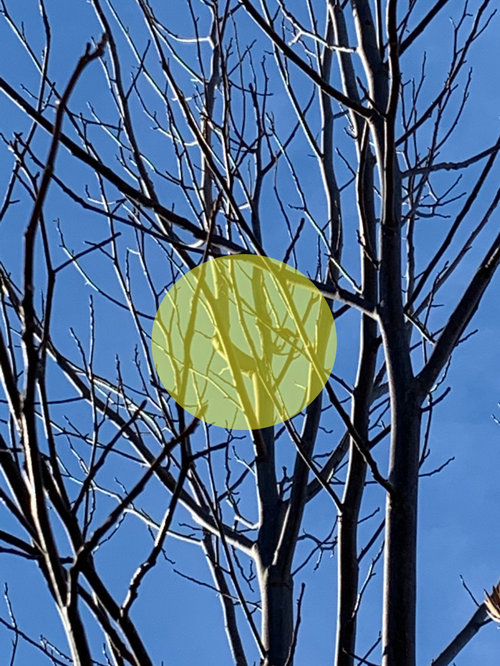
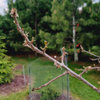
I have a tulip tree that for some reason had its main leader atrophy at the top (I don't think it's dead, just not growing vigorously) and so a branch near the top has dog-legged itself into a new dominant leader. My concern is the new leader (formerly a branch) is growing out and away from the main bole with a weird 90 degree turn. Cosmetically this is odd looking, and it also makes me wonder if it will be weaker there as the tree grows lager, and risk breaking during a storm some time in the future.


My question is - should I leave it alone, or cut the new leader off in the hopes that the original leader resumes its rightful place as the dominant leader?


Comments (21)

  • 5 years ago

    any idea how you would get up there??? .. and is it worth paying to have a truck with a cherry picker come do it???


    i cant really get a feel for how big it is ... more info.. or a pic of the whole ... is it actually big enough to climb up there????


    if it fails.. some time in the next few decades ... will it fall on anything important ... these tree grow pretty fast in MI ... and arent the best for small backyards ..


    though called a poplar they arent ... but they still are not hardwood trees ...


    ken

  • 5 years ago

    Once a decurrent tree reaches that size, having a prominent or defined leader is of no concern. Unless it bothers you significantly, I would just ignore it.

  • 5 years ago

    Thanks guys.


    To answer your questions Ken, the picture is deceiving. The tree is not THAT tall. Though it would stretch me to the limit of its range, my long pole cutter would actually reach the area in question. And no, there are no structures that the top would fall on, but I wouldn't want a tree with the top half lobbed off either because that would look ugly.


    Gardengal, I guess I thought Tulip Trees were usually excurrent (at least the ones I have seen around here). My thought is they look more attractive with a single straight leader running up the center of the tree so my post is largely one of aesthetics, versus health of the tree per se.


  • 5 years ago

    David, almost ALL deciduous shade trees have a decurrent growth habit. Once they are large enough to develop scaffold branching, the significance of any leader is moot. An easy way to remember which is which is that most (if not all) angiosperms (shade trees) are decurrent and most gymnosperms/conifers are excurrent. IMO, the focus many have on developing a clear leader through to maturity is misplaced :-)

    As far as aesthetics are concerned, once in leaf, would that secondary "leader" growth even be visible? To me, not a concern at all.....but it is your tree :-)

  • 5 years ago

    That makes good sense gardengal. Thank you. And to your point, I never noticed problem until the leaves fell off.


    I think I'm just OCD!!!!!! : )

  • 5 years ago

    David, is there another tree I see in the first pic? How far apart are they spaced?

    I had a tulip tree in my previous location and it was well over 150 feet. These things are giants!


  • 5 years ago

    Hi JoJo,


    Funny you should ask. There is a tree to its left (northern red oak) and a tree to its right (autumn blaze maple). They are each 20 feet apart from the tulip tree.


    The picture you shared is intimidating! I never knew they could reach 150 feet!!! But I'm thinking that must be over a hundred years old? That might be someone else's concern by then?


  • 5 years ago

    The thing is....people call 2 entirely different trees a "tulip tree"...one is a poplar and the other a magnolia. Which one do you have?
    I agree, leave it. a well scaffolded branch is much less likely to break than one with an unhealthy crotch.

  • 5 years ago
    last modified: 5 years ago

    David, I think it was planted in the early 1950s (the area was a wheat field before it was developed), so yes, it's definitely mature!

    My only concern is that it's a fast-growing, weak-wooded tree and there will be a lot of competition from the other trees that may weaken it more. I think I'm just overly sensitive because I was a bundle of nerves every time we had a storm because that tree could crush half the neighborhood. It did lose a few giant branches in hurricanes over the years that demolished the gardens underneath.

    And yes, I must confess I'm glad it's someone else's problem now!

    But when that tree was in bloom... it was all worth it! The flowers are not that conspicuous because of their color but still beautiful.

  • 5 years ago

    There is no "tulip tree" that is a poplar. Liriodendron - the tree in question here - is sometimes referred to as "tulip poplar" but it has NO relationship to poplars at all. More closely related to magnolia.

  • 5 years ago

    Yes, mine is the Liliodendron Tulipifera

  • 5 years ago

    scroll thru these and look at future potential: https://duckduckgo.com/?t=ffcm&q=Liriodendron+tulipifera&iax=images&ia=images


    twice it has been suggested the are fast growing weak wooded trees ...


    based on the pix.. imo.. it should be 50 to 75 feet from any house... anything it might threaten in the long future ... on my 5 acres ... mine is 150 feet from the house ... im no longer in metro detroit.. lol ...


    when my tree was smallish..and finally mature enough to flower.. at about 1`5 feet tall .... i enjoyed the flower show ... two years later.. at 30 feet ... i miss the flower show most years ... im not impressed .. or not paying attention like i used to ... probably the latter ....


    ken

  • 5 years ago

    Thanks Ken. I think mine is about 15-20 feet. It does flower now and they are beautiful. But no worries on the house. The house is more than 75 feet away!

  • 5 years ago
    last modified: 5 years ago

    Example in last photo has the mature habit, one asked about looks like it is still in the youthful, conical, height building phase. (Which it would be at only 20' tall, unless on a site that had very stunting conditions). Where a dominant central leader that persists long enough will be needed for it to produce an elevated crown with a single trunk of some length beneath it. Or running up some distance through the center of a low branching crown.

    The classic manual The Pruning of Trees, Shrubs and Conifers by George E. Brown (Second Edition 2004, Tony Kirkham. Timber Press, Portland) says (among other things) about Liriodendron

    The best form to grow this is with a strong central leader

    and

    Specimens that are left to branch low without a central leader, reach a stage when each limb carries considerable weight and weakness may develop in a crotch with disastrous results


  • 5 years ago

    embothrium - I think what afflicts my tree is not so much a "crotch" so much as it is a "dog-legged" leader. If you examine the area I highlighted with the yellow oval, you will see the leader travels up through the branching canopy until it reaches a more dominant branch that makes a sharp 90 degree turn toward the sky. At that point the original leader seems to taper in size and energy. In essence, as the tree matures, the leader on this tree will travel up to about 15 or 20 feet from the ground and then dogleg a bit to the side. Not sure if that presents the same risks as the "low branching" that Tony Kirkham references.


    Perhaps more importantly, if I did remove the doglegged branch, what confidence can I have the the original leader will resume its place as the dominant leader? That is really my greatest question I think.

  • 5 years ago
    last modified: 5 years ago

    Although your pictures do not show the entire crown it can still be told that the specimen has at least one significantly sized competing leader originating from much lower down. And which should have been removed some time ago. With the second shot showing multiple branches that are all trying to replace the one in the center, the one that got killed back by something. Any associated narrow or otherwise structurally deficient forking can result in future breakage, with trees of this nature.

  • 5 years ago

    Makes one wonder what might have killed back the original leader when all the other parts of the tree grow with vigor and health


  • 5 years ago

    "There is a tree to its left (northern red oak) and a tree to its right (autumn blaze maple). They are each 20 feet apart from the tulip tree."

    IMO 20' spacing is much too close for 3 species that will all grow quite large.

  • 5 years ago

    It is I know. But my efforts are to build a grove with a canopy that hedges.

  • 5 years ago

    "almost ALL deciduous shade trees have a decurrent growth habit. Once they are large enough to develop scaffold branching, the significance of any leader is moot."


    There should be a PSA explaining this to many landscapers and homeowners. For me, elm and honeylocust are the worst when trying to keep them to a single, straight central leader.

  • 5 years ago

    If it was my tree I would cut the new leader.

Sponsored
Peabody Landscape Group
Average rating: 3.5 out of 5 stars8 Reviews
Columbus' Reliable Landscape Design & Contracting