Software
Houzz Logo Print
planteb18

Help with mango seedling

5 years ago
last modified: 5 years ago
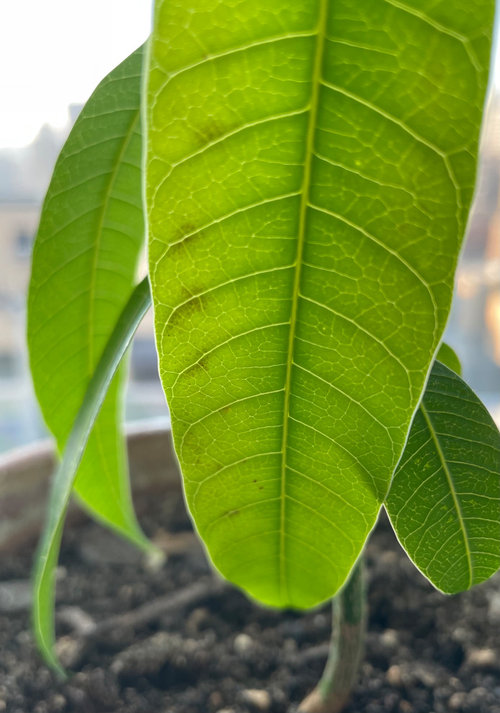
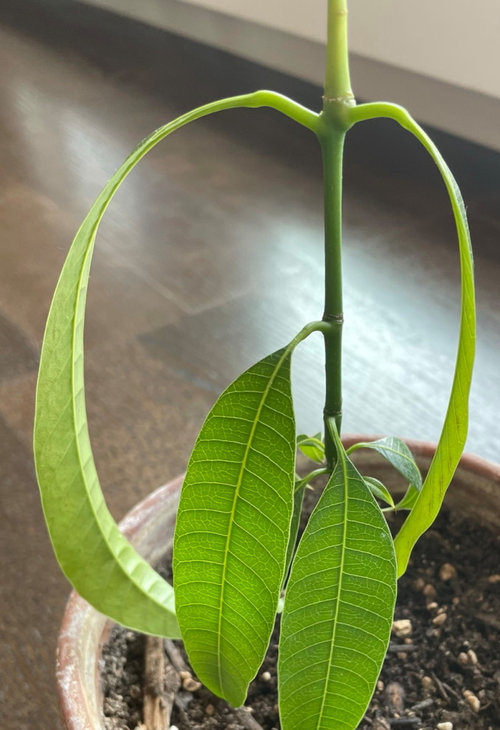
My mango seedling has been growing slowly but steadily these past few months. However, today i noticed that two leaves are starting to brown slightly around the veins. One of the leaves is also drooping (it used to ”stand” like the other).

It’s in a windowsill. maybe it’s been too cold? Night temperatures probably drop to ~40-50 degrees F in that spot. But I’m not sure how to guarantee adequate sunlight if it’s not in a windowsill. Thoughts?


Comments (15)

  • 5 years ago
    last modified: 5 years ago
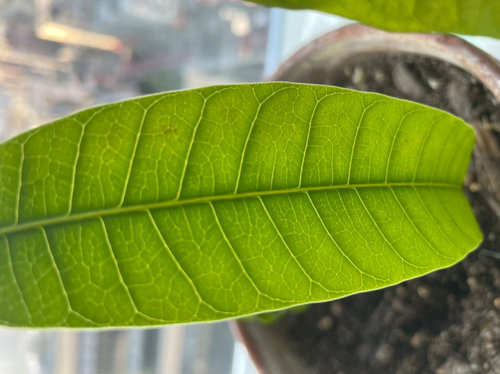
    How are you fertilizing it? Winter is not a good time to feed, but the leaves in your pics show nutritional deficiency (it definitely needs nitrogen). What fertilizer are you using?

    Mango needs warmth and lots of light to thrive, so growing it in the house is a challenge. Can you invest in grow & heat lights? There are many people on this site who will be happy to recommend something (there is a dedicated forum for that).

    I'm also curious -- why mango? Is this just a fun project? It's not really a houseplant, so it may live but will never thrive indoors. There will always be something to fix -- it's not a trouble-free undertaking.

  • 5 years ago

    i would move it out of the window at night ... if its on a sill ...


    or put it on a table in front of the window.. and close the drapes at night ...


    what if any fert are you using ... in winter.. the best i might suggest is a VERY WEAK water soluble every time you water ... i used to keep a gal jug of water under the plants stand with quarter strength fert ... or even less ... someone once told me.. so it barely changes the color of the water ... very weak.. key term there ...


    as noted.. dot try to overcome the fert issue in winter ... too fast ...


    anyway.. i think the drooping is due to cold ... thats the place to start ...


    ken

  • 5 years ago

    oh... as to a heat lamp.. it might depend on where you are.. how you heat your house.. and how low you keep your house temp at night ... all of which you dont tell us about ...


    but i agree completely.. that growing trees as a houseplant is very hard ..


    and for fruit production.. they all need full direct sun to ever get that far .... and of course.. how big this tree will be by the time it gets to fruit bearing age .... one indoor light isnt going to get very far ...


    all that said.. learn all you can.. its a great experiment ... and have fun ...


    ken

  • 5 years ago

    @JoJo (Nevada 9A) Thanks! I've been using a 10-15-10 liquid fertilizer once every few waters these past few weeks (the bottle recommends adding it every time, but I thought that would be too much). Mango because it's a fun project! Started around June/July but growth has been mediocre.


    @ken_adrian Adrian MI cold Z5 thanks. will try to grow this one as long as possible

    I'll move it out of the window and use 1/4 fertilizer maybe every other water to try to overcome the nutritional issue..

  • 5 years ago

    If you are fertilizing, then the issue is with the plant not taking it in. This happens during cold and wet conditions. As Ken said, have fun but be prepared for a struggle to keep your mango healthy indoors.

  • 5 years ago

    IMHO mangoes go dormant during winters. Your plant looks healthy enough for this time of the year. What you see as drooping leaf may just be the natural progression, the longer older leaf is going to be less perky. Regarding cold temperatures, I know people think that tropical plants are always in warm surroundings but that's not necessarily true. Mangoes grow very well in North India where temperatures go down to 34 at times and there are at least a couple of months of Temps between 30s and 50s. In fact, good winter is part of the life cycle of the tree, triggering blooms in spring. Bottom line, unless your windows are getting to freezing temperatures it's ok. Of course, as a seedling it might make more progress in warmer temperatures. I am growing an ataulfo and a Kent from seeds. I know the Kent is probably a lost cause being a monoembryonic, it will probably never bear fruit but we shall see. I am growing avocado from seed and they take longer than mango to bear fruit from seed.

  • 5 years ago

    I have a mango plant that I bring indoors every winter. It spends time in my plant room with supplemental lights. It does get quite cold in the room during the coldest months of winter - Jan/Feb. Nights can easily be 45 or even lower and day time it gets around 60F sometimes a bit higher if it is sunny/warmish outside. It loses some leaves while indoors. I do fertilize at 1/4 strength every 3 weeks or so.

    The plant is 15+ years old now grown from seed. Never had any fruit and that is probably because I keep it pruned to about 4-5 feet high. Couple of times it flowered but no fruit. I have held on to it just because it is such a nice looking plant and reminds me of all the mango trees that I grew up with in India. So far I have not found it be a fussy plant except that it wants to be a gigantic plant.

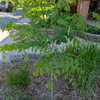
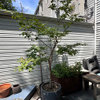
    This is a pic from 2017. I do not have a recent one handy.


    All (sub)-tropical plants will slow down in cold weather. They do not go dormant in the normal sense (like going through a physiological change) but go through a rest period of minimal growth.

  • 5 years ago

    Nice looking tree. Why not try to get it to bear some fruit, not prune it for a couple of years? Do you know what kind of mango seed you used? I am counting on the fact that polyembryonic mangoes can fruit sooner. Mine is less than year old and I am going to start hoping to see some blooms when it is 3+ yrs. :)

  • 5 years ago

    I have no idea what kind of a mango it was. In those days mango in grocery stores was a rare commodity. I think it was from Mexico. Also think it needs to be quite big to fruit. Like citrus, mango will likely to need reach a minimum node count. Given that mango likes to produce long internodes I doubt I can achieve that within a reasonable height. I had been thinking of trying to graft a mango scion instead and see if that works. But I think it is just better to buy a grafted dwarf mango tree instead.

  • 5 years ago

    I have seen and read of mangoes growing in pots on small shrub sized trees in as little as 3-5 years. I will post some links later. Grafting isn't such a bad idea considering you want to keep this tree. I have never grafted anything ever and would like to give it a try someday.

  • 5 years ago

    getgoing: Beautiful picture of a potted mango. Now if I can get to half of that size with just even one mango I will be elated.

    Mango is a tough plant. I almost lost it in 2018. I repotted it completely and removed all the dead/rotten roots. I ended up with this:


    Actually I pruned the roots event more after this. And planted it in the same sized pot ( a 4 gallon pot). And it has been doing great since.

    With that little bit of root the plant made a fully recovery. I was quite surprised how tough it is.

    Although not quite obvious, it lost one of the two big branches. The plant was just a stump, devoid of leaves as of spring 2018.

  • 5 years ago

    Wow. I guess if you didn't prune it for a couple of years potted up as the roots grow to may be up to 7 gallon you might have what have some mangoes. If you see the forum discussion I linked and other threads on that forum, many Aussies appear to be getting mangoes to fruit from seed in anywhere from 2 to 5 years. If they can do it we can do it. I will update on May ataulfo and Kent seedlings as they progress

  • 5 years ago
    last modified: 5 years ago
    Yes I did look up the Australian forum link you posted and interesting that some got fruit in 2years. But they are growing it outside in pots in ground year round. Makes a lot of difference. I would have thought it would still take 4 years growing outdoors.

    For me space is limited . I would have to cull out something else. And also provide better lighting both from top and sideways for it to do well indoors.

    Another method to accelerate to reach fruiting stage is to take a cutting from the top and let it grow to say 6 ft high. And perhaps do that once more. Effectively one can fool the plant into a higher node count without increasing height. In my case, I had been reluctant since I do not even know if this is true to type. I strongly suspect it is not since I clearly remember getting only one seedling out of the seed.