Software
Houzz Logo Print
thefof

The Eden Project

Guys and gals

Recently, I spent an afternoon in the Tropical Rainforest Biome at the Eden Project (Link)

Fabulous!!! Apart from the plants, it was the first time, since I came back from Australia, that I actually felt WARM :-)))))

Here are a few pics, before I ask for IDs on the plants I am stuck with.

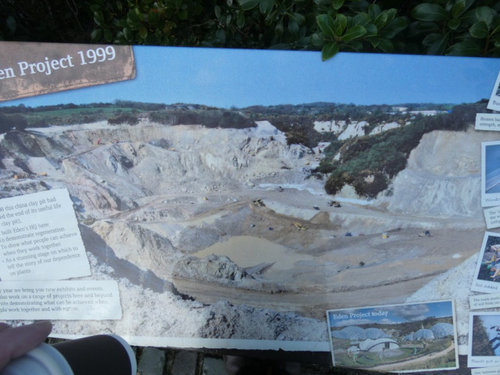
This what the site looked like in 1999, a disused china clay pit.

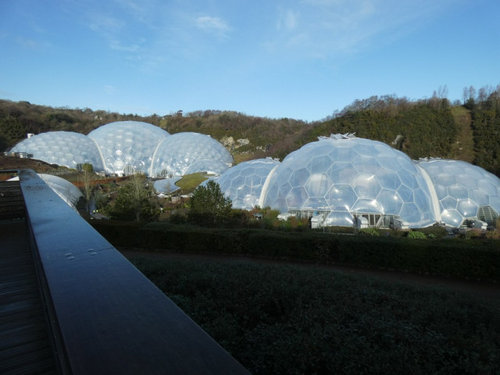
Today. Rainforest biome on left and Med biome on the right.

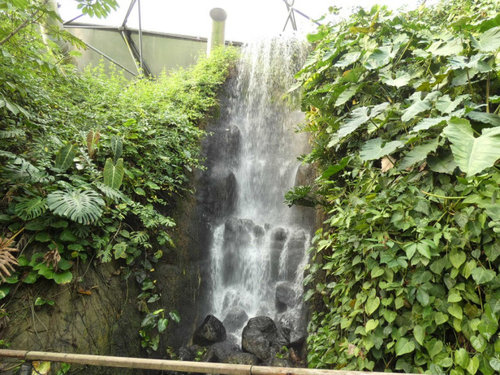
Waterfall

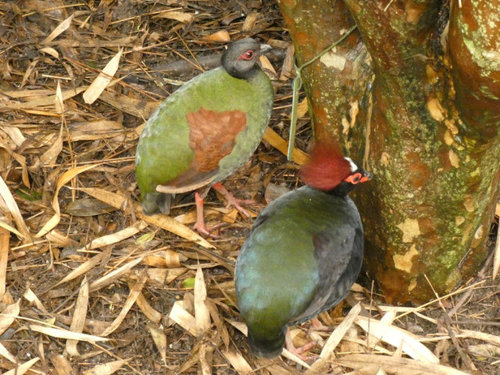
Rain forest residents, Roul-roul male & female


Fof


Comments (11)

  • 5 years ago

    Seems you got there just in time! They’ve had to shut because of the land slip.

    I visited a good few years ago before the plantings had really got going.

    thefof Zone 8/9 UK thanked floral_uk z.8/9 SW UK
  • 5 years ago

    I saw on there website that they had closed, for a couple of days, because of flooding.

    Hadn't heard about a land slip.

    Nasty.

  • 5 years ago

    Bad idea, they should've just planted natives and left out the plastic rainforest bubbles...


    The Biosphere 2 project was created as a research tool for scientists to study Earth’s living systems, and it allowed scientists to play with farming and innovation in a way that didn’t harm the planet. One of the most profound discoveries made by the scientists had nothing to do with a cure for some new disease or a new way of farming land. Rather, the discovery had to do with the wind’s role in a tree’s life. The trees inside Biosphere 2 grew rapidly, more rapidly than they did outside of the dome, but they also fell over before reaching maturation. After looking at the root systems and outer layers of bark, the scientists came to realize that a lack of wind in Biosphere 2 caused a deficiency of stress wood. Stress wood helps a tree position itself for optimal sun absorption and it also helps trees grow more solidly. Without stress wood, a tree can grow quickly, but it cannot support itself fully. It cannot withstand normal wear and tear, and survive. In other words, the trees needed some stress in order to thrive in the long run.

  • 5 years ago

    We have some lovely native plants but the number of species is not huge compared with many parts of the world and most are not impressive enough to interest or encourage visitors. The Eden Project is a visitor attraction, a garden and a research facility. It doesn’t pretend to be a natural area. And it was built on an old industrial site. Natives can be wonderful but if you have a restricted native flora, as the British Isles do, a garden using only native species would be a very boring place indeed, especially in winter. We have been plant collectors for centuries and our gardens are the richer for it.

    thefof Zone 8/9 UK thanked floral_uk z.8/9 SW UK
  • 5 years ago

    blakrab

    I am sure I am going to get flack for this, but I don't give 2 monkey's, so here goes.

    I will repond a) in a personnal capacity and b) generic.

    a) I have been very fortunate in my working life, in electronics, to been able to visit Tropical, sub-Tropical, Temperate and sub-Arctis environments, in multiple countries. Believe me, when I say I have taken every opportunity to visit as many of the natural habitats, on offer, as I could.

    My life has been very, very greatly enriched by the experiences.

    Now I have retired, and returned to the UK, I can more appreciate the British environment.

    As floral-uk states, Britain, has a relatively, small number of native species. I cannot be 100% sure of my figures, but I believe that an awful lot of our "native" plants are actually plants that have been introduced, over the centuries, by the Romans, Viking, Normans, etc. The climate, compared to Texas, is not 100% conducive to enjoying the joys of Mother Nature.

    To be able to go to somewhere, like the Eden Project, and experience an environment that is totally alien to the majority of the population, is magical.

    b) The Eden Project is situated in the county of Cornwall, which is and has always been, a bit of a backwater. Historically , Cornwall has been a world leader in mining and the production of mining equipment, as well as in social deprivation.

    The site is one of hundreds of abandoned mines, scattered across the county.

    The people behind the project deserve praise for the foresight to see what a disused china clay pit could be transformed into.

    The Eden Project has transformed a "blot on the landscape" into:-

    a world leading Botanical Garden,

    a major educational establishment, that in conjunction with local universities, offers undergraduate programmes (HNC, HND, FdSc, BSc) and postgraduate programmes (MA, MSc, PGCE)

    a source of employment in the area

    a major tourist attraction that has brought, much needed, billions of pounds, into the local economy.


    It was NEVER envisaged as a replacement or follow on to Biosphere 2.


    There endeth my rave. I am sorry, balkrab but you are 1000% wrong in your premise.


    Fof

  • 5 years ago
    last modified: 5 years ago

    Interesting, floral_uk. Only around 1,000 species total? Here in Oz we have more that 1200 Acacias alone, and almost that many Eucs. Are you including the lichens and fungi?

    "The flora of Australia comprises a vast assemblage of plant species estimated to over 20,000 vascular and 14,000 non-vascular plants, 250,000 species of fungi and over 3,000 lichens."

    I think the quote in blackrab's post only emphasises what most of us already knew, ie that trees need to be able to bend in the wind to build up trunk and root strength...

    thefof Zone 8/9 UK thanked shaxhome (Frog Rock, Australia 9b)
  • 5 years ago

    Native higher plants. I’ve seen various figures but all fewer than 1500. And falling.

    thefof Zone 8/9 UK thanked floral_uk z.8/9 SW UK
  • 5 years ago

    Interesting indeed. My natives total about 10% of Flora's country wide total in my 1 1/2 acre yard!

    thefof Zone 8/9 UK thanked dandy_line (Z3b N Cent Mn)
  • 5 years ago

    Hmm, interesting... But what about all the natives right across the English Channel in mainland Europe? How much native biodiversity do they have...and wouldn't that be relatively close enough?

  • 5 years ago

    Ummm. If they‘re from mainland Europe, and don' already grow here, they’re not British natives!


    plenty of nature reserves and national parks where we can see our native s

    thefof Zone 8/9 UK thanked floral_uk z.8/9 SW UK
Sponsored
Whisler Home Improvement
Average rating: 5 out of 5 stars9 Reviews
Franklin County's Committed Home Improvement Professionals