Software
Houzz Logo Print
upperbaygardener

"Do you remember the first time" - yes I do LOL

5 years ago
last modified: 5 years ago
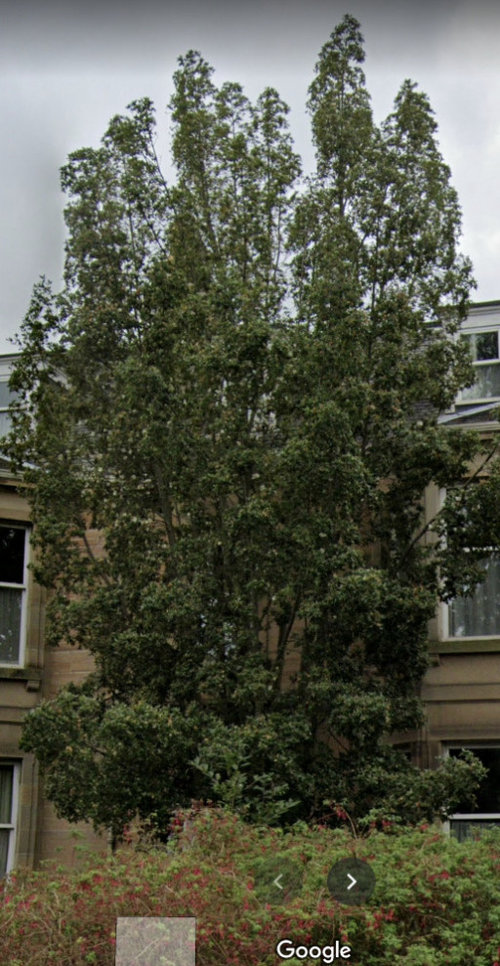
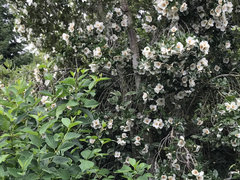
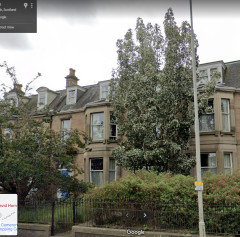
This was my first close encounter with a very special tree of maritime climate gardens. In the mid 1990s in the UK where I was doing a research project at a university. Seeing it come into bloom was thrilling. It's like when I saw my first fire tree in full bloom in Queenstown, NZ in 2016: there are some horticultural sights you will never forget! It's still there...just found it on google streets from from a picture within the last year. It's a lot bigger now.


Apologies to Pulp - I was listening to a lot of them that summer, including going to one of the big UK music festivals.


Embo, Gardengal and floral will probably recognize the branching structure at once...so I'm not prohibiting them from answering, I'm just requesting they give anyone else a sporting chance!


Comments (20)

  • 5 years ago

    I can't recognize any familiar branching structure, and it's too far away to make out any leaf shapes, on my phone anyways. It looks like the undersides of the leaves might be much lighter colored than the tops. Can you try to describe in as much detail as possible what the flowers were like?

    UpperBayGardener (zone 7) thanked Jay 6a Chicago
  • 5 years ago

    I'm pretty sure I know.......but will let others respond first :-)

    UpperBayGardener (zone 7) thanked gardengal48 (PNW Z8/9)
  • 5 years ago

    Yep. My dad had a smaller one in his garden. The fuchsia hedge is indicative of the climate it likes.


    Clues for Jay: white flowers, four petals, lots of stamens, evergreen.


    I'm playing the id the area game. The stone’s distinctive. I want to say South Wales or Devon. But probably wrong.

    UpperBayGardener (zone 7) thanked floral_uk z.8/9 SW UK
  • 5 years ago

    There are several of these in the plantings at my local library. I posted of photos of them in bloom a couple of summers ago :-)

    Also, the largest and oldest specimen I've seen in the area is at a nearby college campus.

    UpperBayGardener (zone 7) thanked gardengal48 (PNW Z8/9)
  • 5 years ago
    last modified: 5 years ago

    Jay - Floral gave you some good clues. Other clue is it's in a plant family that _only_ occurs in the Southern Hemisphere.

    Floral...the answer you seek is: EH16 5PS! I still remember that all these years later!

  • 5 years ago

    Is this one of the S. American spps?

    UpperBayGardener (zone 7) thanked thefof Zone 8/9 UK
  • 5 years ago

    Gosh. Hence the stone. I was way out. I had no idea the climate up there was soft enough for Fuchsia hedges and that tree. I suppose it’s the proximity to the water.

    UpperBayGardener (zone 7) thanked floral_uk z.8/9 SW UK
  • 5 years ago

    Here's another lead: it originated at Nymans in West Sussex.

    UpperBayGardener (zone 7) thanked Embothrium
  • 5 years ago

    I have no familiarity with this species, but it's kind of bizarre whenever I discover some tree species in the Oxalis family. Of course embo would know this one oh firebush. Just curious embo, have you ever actually visited Chile? I haven't, but I have tree geek friends who have, and they grow Chilean trees and shrubs down in Tennessee and Alabama.

    UpperBayGardener (zone 7) thanked Jay 6a Chicago
  • 5 years ago
    last modified: 5 years ago

    I've never been south of California and Florida. I have seen the Washington State Champion specimen of the mystery tree and the neighborhood just shouts "Banana Belt Location!". (With there being a former Garden Web participant located near the site of the tree that liked to post photos of tender plants they were growing outdoors on their own site and talk about them). Nevertheless some large examples of the same tree were also produced in at least a few Seattle locations in the past but these were taken out by the notorious 1955-56 winter. And none of the subsequently planted individuals in or around that city that I have seen myself appear to rival in size what was described to me as being present before '55.

    UpperBayGardener (zone 7) thanked Embothrium
  • 5 years ago

    Jay I would dying to know what Chilean trees are surviving for them in TN and AL. I have tried pretty much all the various Eucryphias from PNW nurseries over the years. They either die in the summer, or if they for some reason make it through a summer, they die in winter. But as I've seen with ungrafted 'Nancy Evans', the reason they aren't making thru winter is PRIMARILY simply aren't growing enough in the summer. Cause I'm talking even pretty mild winters. Alas, with a weirdo southern hemisphere plant like this, there's no heat resistant rootstock to graft it onto! Grafted 'Nancy Evans' SEEMS much hardier than ungrafted simply because it is growing a strong root system during the summer!


    However as I learnt with Chusqueas it pays to keep trying. C. culeou and and I think I tried a C. andina at some point, decline pretty rapidly in summer here. I suppose because of its broader native range, C. gigantea had no problems with hot humid summers and continued to grow through them. It was also at least as winter hardy as my poor old Thamnocalamus tessellatus, that has gotten pretty big during strings of mild winters only to be cut down during cold years. Alas, the damn things flowered in 2020! Just as it was getting established! I didn't bother collecting seed because I worried about getting quality plants with such a narrow gene pool. Hopefully Ian at Desert Northwest offers it soon from fresh seed. (all bamboos of a species flower in the same year in case anyone doesn't know this)


    Floral - 95/96 had been a very cold winter in Scotland although the owner of a large UK nursery told me it wasn't in the south, so you might not remember it as such. Supposedly got down to the mid single digits F...around -15C. Anyhow, the Eucryphia X nymansensis 'Nymansay' in that picture was a little big singed on its northern flank but it didn't stop it from blooming profusely. It was probably 1/2 as big then. But it looked much better than the Cordylines. All of them in town were burnt down to the lowest 3' of trunk if not the ground. Same at the presumably slightly milder St. Andrews. OTOH I saw big undamaged cordies at Culzean Castle on the milder west coast of Scotland.


    The nice thing about this view is because this is a major thoroughfare of Edinburgh you can see the street views all the way back to 2008, and witness the slow but steady expansion of the tree.
    My bedroom was the room in the leftmost of the 4 buildings, above the blue door. Check out August 2019:


    THANKS FOR PLAYING!


  • 5 years ago

    If you ever get a chance (and like honey), do yourself a favor and try some Tasmanian Leatherwood honey. That is what Eucryphia is best known for down under. ;o)

    UpperBayGardener (zone 7) thanked User
  • 5 years ago

    Couple more things - Jay - yes, I love how "things become trees in the southern hemisphere or tropics" that do not "up here". For example - currently being tortured in my garden is this https://en.wikipedia.org/wiki/Melicytus_crassifolius - a shrub in the Viola family! It isn't growing much but is at least tougher than Eucryphias because it has lasted several years now. The only Chilean BLE I have read has any chance of surviving in the southeast is Azara microphylla.


    The other thing striking me about seeing this tree 25 years later is...how did I even know what it was. There wasn't much of an internet as a source of info back then. I had to think for a moment: had surely seen Peter Seabrook gushing over Eucryphias during some travel segment of the Victory Garden. I'm so lucky I got to see those - really fostered my fascination with exotic plants. Then I would have looked it up in my trusty Wyman's Encyclopedia. Then I saw a labelled but not in bloom one at Kew in 1993. The one at David Horn house hadn't been on my radar until I saw the flowers starting but I instantly knew what it had to be. It was probably in peak bloom just as I was leaving.

  • 5 years ago

    Amazing how much in common! I have to say I prefer both Lucida and Carousel over this x nymanensis, and to grow them both together would be spectacular. This hybrid would only be hardy in the extreme, deep south, and I wonder how it would deal the their high humidity. I think I've only tried growing a couple things from Chile like Trapaeolum ceurulea and T. speciosa, and Ecremocarpus ruber, and had no germination with any of them. Maybe I can dig up some nice photos from that banana belt area. I was in Seattle in the 90s, but back then I wasn't into plants, as much as I am now, so I didn't seek out those places like I would today. One more question, how well do Wollemi pines do in the PNW? The tree they were growing at the Birmingham Botanical Gardens started turning brown and looking sickly. I'm thinking too much humidity. Dave, I'll get back to you about your question.

    UpperBayGardener (zone 7) thanked Jay 6a Chicago
  • 5 years ago
    last modified: 5 years ago

    augment - thanks for the tip, I would love to!

    I remember buying a little jar of 'lilly pilly' jam at the garden shop in Olinda. Tasty! It's cool that your flora provides these unique food items.

  • 5 years ago
    last modified: 5 years ago

    Jay - yeah, the only Wollemia that is probably going to be a long term plant in the SE US was one that a former poster here, who was a college professor, grafted onto a more heat tolerant Araucariaceae. They come from a place with summers roughly as cool as England, or maybe a little warmer: https://en.wikipedia.org/wiki/Katoomba,_New_South_Wales

    And being a relict with little genetic diversity, don't stand a chance again the hot moist soils and cosmopolitan water moulds we have to contend with. The ones I saw on my SE AU trip looked better when they were growing in places with cool nights, even there. Remember, when you hear about AU's blazing heat waves, it is a dry heat, at least. Even Brisbane isn't quite the prolonged steambath in summer that say, Mobile Alabama is.

    If you correspond with someone with the initials HJ in Alabama, it was I who grew his Araucaria angustifolia from seed about 20 years ago LOL.


    "had no germination with any of them" I can only wonder if they need stratification and then cool germinating conditions. The South African forbs have posed similar challenges to me in the past.


  • 5 years ago

    Actually specific timing of flowering of bamboos varies with species. With not all being gregarious bloomers. For instance it has been stated that there is an individual moso plant blooming somewhere most of the time.

    UpperBayGardener (zone 7) thanked Embothrium
  • 5 years ago

    Dave, I was in error when I said some southern friends were growing Chilean plants. They've tried but failed because of the high heat and humidity. They grow Brazilian and Asian plants from their travels, and I just wrongly assumed they were also growing Chilean trees, because they visited there too. Where are you at in zone 7?


  • 5 years ago

    Tropaeolum are like that too. I finally abandoned my desire to grow them after buying tubers that failed miserably. Garden Nasturtium are doable for some reason.

    UpperBayGardener (zone 7) thanked Jay 6a Chicago
Sponsored
Hope Restoration & General Contracting
Average rating: 4.7 out of 5 stars35 Reviews
Columbus Design-Build, Kitchen & Bath Remodeling, Historic Renovations