Software
Houzz Logo Print
originalpinkmountain

Tomato starting "pots" that are peat or cardboard

5 years ago

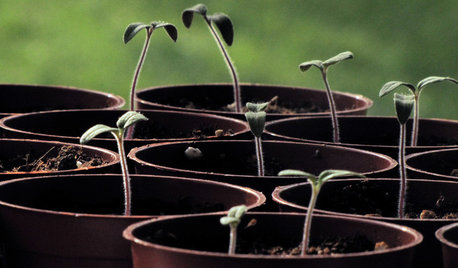
Getting ready to do tomatoes right/correctly this year. Last year I just sowed them all in big pots because I had no idea on germination and also hadn't prepared. This year I'm going to save yogurt and cottage cheese containers and also use up some peat pots I have. That's for the larger plants before putting in the ground. However, at the seed starting stage, they are usually started in plastic "flats" of small cells. I have a few of those I can re-use, but I don't want to buy any new plastic stuff. Has anyone ever used cardboard egg cartons successfully? I have a TON of those. Also wondering about pre-made peat flats. How does one water them? I'm seeing online where they suggest watering from the bottom. Doesn't that do an awful number on the peat or cardboard pots? Do they hold up long enough?


I could just start them in the yogurt and cottage cheese cups I am saving and not transplant. Any disadvantages to that? A little messy and scattered would seem to be one issue but I could deal with that by packing them fairly securely in trays. I have both plastic and aluminum trays to use for that . . .

Comments (12)

  • 5 years ago
    last modified: 5 years ago

    Egg carton cells are VERY small. After just a week or two the seedlings will need to be transferred into something larger, making work for you. I use 9oz paper cups. Cheap in bulk. Those will get you all the way from seeds to four-inch plantout-ables. Be careful about peat pots. Most of the wisdom around here (and my own) says that they aren't good. The peat does not degrade quickly enough, and you end up with root-bound plants still encased in buried peat shells.

  • 5 years ago

    When I've used the peat pots in the past I've wetted them and tore the pot away from the plant, because my experience too was that they didn't decompose. That experience came from digging in the garden at the end of the year and finding them intact around the dead annuals and also how long they lasted in the compost pile. Now I'm seeing online some conjecture that tiny root hairs form around the peat pot interior and tearing off the pot could disrupt that. Seems like the plant could get over that . . . I was thinking perhaps of paper cups but I'm now thinking using recycled yogurt and cottage cheese pots would be similar . . . depending on what you get. We use Activia and Breakstones single serving ones, which seem about the right depth.

  • 5 years ago
    last modified: 5 years ago

    The way to think about it is how big you want to the plants to be when you plant out. I go for four inches. For that size plant, you pretty much need four inches of root space. Not sure yogurt cups or cottage cheese containers will get you there. But it's up to you.

    I suspect that's right that peat pots are permeable enough that roots could start to grow into them. All the more reason to be using cups with solid sides that pull away from the root ball with no damage.

  • 5 years ago

    I've used the 4 inch peat pots a lot. A rootbound plant or one with tiny root hairs grown into the pot, pick your poison. Timing is everything. But I've never buried the pots, always kinda knew that was a bad idea. Paper cups cheaper, just as compostable probably . . . Saw online video on using toilet rolls. I have a lot of those . . . deep enough but not very wide.

  • 5 years ago
    last modified: 5 years ago

    I have to wonder why you'd want to use the peat pots at all. If they did really decompose in the soil, they'd be great. They absorb moisture, which I guess could be said to be helpful in keeping the soil moist, but because they are permeable, they just invite root development inside of them, such that you're ripping roots when you remove them. Watering at the top of a hard-sided cup never leaves any of the soil dry, though. The way you avoid root bound seedlings is just to use pots that are sized optimally to your plant-out size. When I pull 4-inch plants out of my 9oz paper cups, there are roots at the periphery of the root ball, but they aren't wound around it.

    I have to say that real paper cups aren't that easy to find. I used to collect them from the coffee bar at my gym before they stopped that in the COVID era, but if you go in the stores, most of what you see are plastic, foam, and maybe waxed paper cups. So much for compostability.

  • 5 years ago
    last modified: 5 years ago

    I think I'm just going to start collecting 4 inch pot sized stuff. I'd prefer to buy as little stuff as possible. I looked at my half and half carton this afternoon and realized it was the perfect size. Also the plastic containers that hold "sanitizing" wipes that my husband is addicted to. Both can be cut down to size.

    Considering this was my set up last year, the only direction I can go is up. I thought disturbing tomato roots in transplanting was a no no, but I disturbed the heck out of them and they all survived. Plus my soil was only marginally sterile. Something tells me it was beginners luck.

  • PRO
    5 years ago

    I start my tomatoes, peppers, and some other seeds too in 4 inch pots. 3-6 seeds of anything is usually plenty, and by the time the seedlings should be repotted, I can use more 4 inch pots to do it. Or for tomatoes, I like to bump up to solo cups because they are deeper. I reuse my pots and cups for years.


  • 5 years ago
    last modified: 5 years ago

    Well, you can stick a cutting from a tomato in the ground and, chances are, it will grow. So you can cut off all the roots and be successful. I wouldn't worry about disturbing tomato roots in transplanting!

    That's a good point that solo cups are deeper than the square-form 4-inch pots.

  • 5 years ago

    lpink, if you want free pots, flats, cell trays, etc., check with the caretaker at your local cemeteries. People leave so much of that stuff behind after cemetery planting, that they usually store a decent amount in case someone wants it.

  • 5 years ago

    I start my seeds in the larger planting pots filled with bagged soil.... plenty of root-room. Long ago I learned to cut - with a scissors - the sides of these pots in at least 4 downward cuts; that lets the roots grow out of the pot without disturbing the soil too much. The plastic container works well for me too. One other thing I learned was to either cut-off or bury the top of the container or it will wick the ground moisture away into the air.


  • 5 years ago
    last modified: 5 years ago

    That's a smart idea about slicing the sides of peat pots, but it sort of begs the question. Why use peat pots at all? I guess if you can bury the pot, one could avoid root damage. But when I slide the plants out of my cups, they come out in one piece. No flopping roots. I think that's because the soil is moist, and also because my potting mix has compost in it with vascular bundle strands. The veins of the leaves in my compost. That tends to hold the whole mass together. A more sandy mix, or one that was heavily chopped up, would just disintegrate when removed from the cup.

  • 5 years ago

    That's how my tomato bed got so overgrown last year. I planted some broken stemmed plants with barely a root left because of damage trying to separate them out of those big pots I started them in, and figured only about half or less would survive. I think I lost one. And then after they survived all that . . . I didn't have the heart to tear them out and kill them. So I sort of gleaned what I could from my wild tomato jungle. This year I hope to do better. I have seeds saved from last year from a whole other set of tomato types, they came in the mail to late to plant in 2020. I'm going to make a new raised bed at least one, for tomatoes. I am not going to plant them in the same spot as last year. I'm collecting a set of little pots for the tomatoes. That's about all I think I will be starting indoors. Maybe some peppers too. Not really needed for much else. The rest of my seeds are stuff like bush beans, beets, carrots, lettuce, etc. Although I am intrigued by the idea of starting peas early. Last couple of years the mild summer weather hasn't lasted long, so I can see some advantage of starting them indoors so that they have more time to reach maturity before the "too hot" weather sets in. I have never grown peas successfully . . . although I've only tried twice.