Software
Houzz Logo Print
lhatthesea

Help drying subfloor with no direct access

5 years ago
last modified: 5 years ago

I just noticed water dripping into my basement from above. The majority was leaking out of the HVAC ductwork. There were also small drips coming from the subfloor in a few places. It appears the problem was with the water line going into the fridge. I had the fridge worked on 3 weeks ago and they pushed it back VERY firmly (there are panels on each side of the fridge and a pantry besides it so it's a tight fit). We just moved the fridge and could see the leak was where the hose was screwed into the water line that is recessed into the back wall.

I just had the entire house remodeled last year, so I was able to get the original HVAC (hot air) guy back over to take a look. He pulled one piece of the flexible ductwork down which was filled with water. It appears there's a vent under my kitchen sink (odd because there's no toekick opening). The water was coming through the vent and leaking where the ductwork connected to the trunk. Water was also coming through another vent which was on the other side of the fridge in a bedroom.

We got the water shut off and I can see the finished flooring under the fridge is completely dry. When my HVAC guy looked up into the boot from below, he said he could see water coming in through where the screws are. He is recommending that I keep running the heat to dry out the space. I can see his point where the heat is virtually trapped under the kitchen cabinets, but I'm not sure if that helps with the water that was leaking on the other side of the fridge (in a bedroom). I'm certainly no expert, but I was thinking if we could remove the duct boot that's in the bedroom and I got a heavy duty fan blowing air from below in the basement, that might dry the space quicker

So, my question is: am I missing a better way of drying out the area? I'm open to any and all ideas!!! Thanks so much for your input.

PS Unfortunately, I had been keeping my heat very low and using my gas fireplace most of the time which kept the heat from running a lot while the leak was occurring.

Here's the kitchen layout.


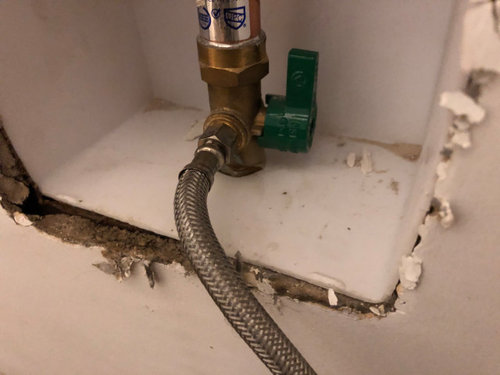
This is where the leak occurred


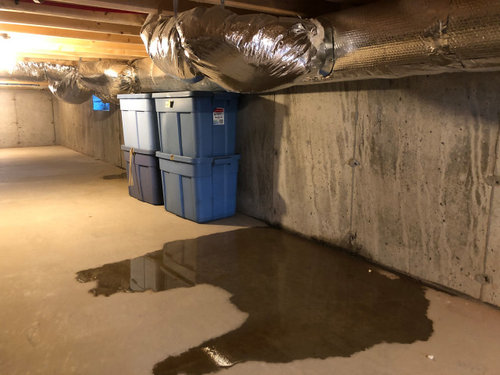
This is the view from the basement


Comments (17)

  • 5 years ago

    I'm not sure what your question is. Is the valve in your second picture the one for the water line to the refrigerator, and is that what was shut off? Is it still leaking?

  • 5 years ago

    Hi mtvhike - I buried my question in the title. I was looking for recommendations on the best way to dry an area that I don't have direct access to.

  • 5 years ago

    When you say you got the water shut off, is it permanently shut off, or just until you fix the leak? The water leaked into the ductwork; did you find the source of that water, so now your only question is "how to dry out the sub floor?

  • 5 years ago

    The water is temporarily shutoff until I get a replacement hose, so the leak has stopped. The question now is how to best dry out the sub floor given that I have such limited access. Thanks!

  • 5 years ago
    last modified: 5 years ago
    This is an insurance claim. Your subfloor may be completely compromised. Don't do anything else until you call your insurance company first thing Monday morning.

    I had something similar happen to a home we sold two years ago. I had an ice maker serviced prior to putting the house on the market. We didn't normally run it. The service man failed to reinstall the drain hose into the drain. We kept the unit running and the water draining out the unit very slowly started to drip onto our wood floor and into the subfloor. We only discovered it when we walked across the floor barefooted. The floor had warped and cupped. (We discovered this the week before closing.) There was water in our crawl space below where the water had dripped out of the subflooring.

    Anyhow, the proper course of action is to call your insurance company and make a claim. They will send out a remediation company who will use professional equipment designed to suck the water out of the flooring and subfloor along with dehumidifiers and moisture meters. They will make an assessment if they can prevent mold and mildew.

    What happens next depends on the extent of the damage and the type of materials in your house. It may require a complete tear out and replacement.

    The tradesman who serviced the unit will have insurance for this situation. The two insurance companies will fight it out between them.

    In my case, I had real heart pine plank flooring. It took two weeks for them to dry it. Then another week for it to settle back in place. Then, they had to sand and refinish almost 5,000 sq. ft. of heart pine flooring. There were no natural breaks in the flooring where they could stop the sanding and make it match up. It was almost $20,000 worth of refinished flooring. We got lucky because the way the water ran the kitchen cabinets weren't affected. Otherwise, we would have had to remove built-in refrigerators, move a 48" range, cabinets and countertops. It would have been really expensive to do that. The new homeowner was really good about it. They got beautiful, new floors and a new ice maker with a properly installed new drain line for their trouble.

    Call your insurance company. This is an insurance claim.

    Laura thanked homechef59
  • 5 years ago

    ^good advice. Don’t really have any. But wanted to say my heart goes out for the headache you have.... and that your kitchen is beautiful!!! Hope you enjoy it!!! Good luck

    Laura thanked HU-187528210
  • 5 years ago

    Thank you for your replies @HU-187528210, @homechef59, @millworkman and @mtvhike. You've convinced me that I need to involve my insurance company. Fingers crossed that they can dry it out without too much destruction. @homechef59, I have the same situation where the same hardwood runs throughout the entire downstairs without a break. I can' even comprehend if they have to take out the cabinets. I've only been in the house for 4 months after an 8 month renovation.


    I'll post an update once I have an idea of next steps. Thanks again!!!

  • 5 years ago
    last modified: 5 years ago
    You said that you have only been back in the kitchen for a little while. Refrigerator supply lines are huge leak sources. Also, it's a good possibility that one of your workmen put a screw or nail into a line. It took a while for it to do enough damage to be noticed. It's going to take a little detective work to figure out the source of the leak. Don't do anything else until the insurance company sends out their people.

  • PRO
    5 years ago

    Get a dry/wet vac, vacuum and dispose of the water, and put a floor fan, it will dry-up in no time.

  • 5 years ago

    GN Builders, The remediation companies also have some really cool plastic mats that they tape to the wood floor with a big suction device that draws the water out faster. You can watch the water come up through the hoses. Makes a hell of a racket, but it does the trick.

  • PRO
    5 years ago

    @homechef59 I know they do, I thought they trying to DIY and dry the area in the basement in the last picture with the puddle.

    If they had a flood upstairs they should call someone like servpro remediation company to dry everything upstairs to make sure there is no mold under cabinets and flooring.

    Laura thanked GN Builders L.L.C
  • 5 years ago

    Hi - I wanted to provide a quick update. I called the insurance company and they sent out someone to determine how wet the area was - using some type of moisture meter. Not good news. Pretty much the length of the full 'L' shape cabinet area is wet. In fact, the moisture reader was still beeping 3' high in the corner panty. Floor is starting to warp in the pantry and back bedroom (which is on other side of range wall). Nothing has been set in stone yet, but there was talk of having to remove the kitchen cabinets as they believe the walls will be wet and replace parts of the floor (which would then involve stripping and re-staining the entire downstairs). It's so hard to believe that there's this much damage.

  • 5 years ago

    Making me wonder about the standard $5k deductible policy we carry!

    Laura thanked worthy
  • 5 years ago

    Sorry to hear this. This is exactly what I was referring to when I related my story. I got lucky in that the water ended up in a crawl space and migrated to the center of the room rather than to the wall. Plus, we had real wood plank flooring that could be salvaged by sanding once it dried and settled down.

    You are in for a long slog. Stick to your guns and make the insurance company do this right and not take any short cuts. I had a very expensive insurance company that came through for me. I used them because I knew some of the finishes in my house were very expensive to replace. Most people won't have my experience.

    If you get a bad feeling from how your insurance company is dealing with the situation, look up public adjuster. You may need the extra help to get what you have been paying premiums for all these years. It's better to be prepared than be a victim twice.


    Laura thanked homechef59
  • 5 years ago

    Get your own public adjuster. I didn't for a fire we had and I think I would have been better off with one!

    Laura thanked kathyg_in_mi
  • 5 years ago

    A few years ago I had a freeze-up and all the radiators split, along with a lot of the other plumbing. Fortunately, I discovered it before the thaw, so was able turn off the water and prevent the flooding, but my insurance paid the entire $25K for the damage.

    Laura thanked mtvhike
Sponsored
Urban Upkeep LLC
Average rating: 5 out of 5 stars6 Reviews
Columbus High Quality Painting Expert