Software
Houzz Logo Print
alameda_gw

Lady Banksia Cold Hardiness

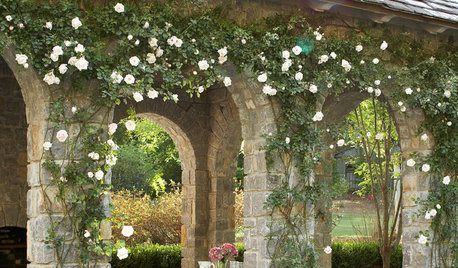
I live 2 hours NE from Houston and just survived the polar vortex. I was looking at my once lovely avenue of yellow Lady Banksia roses along my fenceline and they look really rough. I am not sure they survived. I am wondering what the cold hardiness is on these roses.....can they take 3 degrees without dying? I will of course replace them but was wondering if they are a southern rose or can they survive this onslaught of snow and ice we just had? Thanks......

Judith

Comments (9)

  • 5 years ago

    Like you, I live in a Zone 8 climate, and have had Lady Banks roses (double white and double yellow) in the ground since about 2004. In early 2018 we had the coldest weather I've experienced since moving to Italy, with temperatures dropping below 10F. The Lady Banks roses did what they had never done before and froze back hard, one, the younger double yellow LB, dying to the ground. All three roses came back. Your freeze may have lasted longer than ours did, and with lower temperatures. But I were you, I would prune away the dead growth and then wait and see whether your roses resprout before replacing them. If they're well established, and are still alive, they'll come back fast. Good luck!

  • 5 years ago

    Ouch! I'm sorry, Judith! You may have lost the above ground growth, but I would bet they will explode back from the roots. Banksiaes grow in Tehachapi, CA, in the mountains, where water pipes freeze at a foot in the ground and they LIVE and they FLOWER. Tehachapi is at 3,970 feet elevation in the Tehachapi Mountains, between Mojave and Bakersfield. Per Wikipedia... "Tehachapi has a subtropical mediterranean climate (Köppen Csa).

    Tehachapi is known for its four-season climate.[19] The wet season is generally November through May, although thunderstorms are common during the summer, especially over the nearby mountain peaks. Average temperatures range from 88 to 58 °F (31 to 14 °C) in July to 52 to 29 °F (11 to −2 °C) in January. The area typically collects 15 to 20 inches (38 to 51 cm) of snow each winter. There are an average of 31.1 days with highs of 91 °F (32.78 °C) or higher and an average of 94.8 days with lows of 31 °F (−0.6 °C) or lower annually." Hopefully, yours weren't caught insufficiently hardened off for the brutal weather y'all endured. But, if they thrive in Tehachapi, my bet is they should come back for you.

  • 5 years ago
    last modified: 5 years ago

    Three degrees will definitely be tough on the top growth, though mine, when I still had it, would would occasionally be hit with temps down to zero. But if they are mature plants, I'm with Melissa and Kim in thinking they will survive. I'm in zone 7 (lows here typically reach 5-10F most winters), and had a huge LB for many years, and only lost it in the Polar Vortex in the early 80's when it got down to -24F. Yes, that's minus, lol.

    How much will you lose? A lot will depend on how long it was that cold, how large the canes were, how ripened/mature they were, what the temps were in the weeks preceding the freeze, even how damp the ground was. I wouldn't "borrow trouble" for now (see my post on the subject, lol). But don't hesitate to whack the tops down once you see how much has died back. LB is a tough girl, and will probably throw multiple new basals to replace what's lost.

    Best of luck!

    John

  • 5 years ago

    Sure hope you all are right! We had a week of bitter cold, one night was 3. Others were 12, 19 and in the 20's. What worries me is that I saw some splitting of canes and didnt see any kind of green on them. They are established bushes and line my driveway, just fabulous in the spring. But if they are alive at the roots.......and will return maybe all is not lost. I also worry about my glorious Crepuscules too. I have been pruning roses, starting with ones in pots. On most, I can see about an inch of green cane.......they are just nubs [and I have waited until I am sure the other cane is dead]. People in the north keep telling me they will come back......it is just hard to look at these pitiful things and believe they can become a bush with blooms again.


    I will say I am pleasantly surprised at this - the David Austin roses every one seem to have green canes.......esp. Mary Rose. Even a small potted Vanessa Bell. I have been amazed at the cold tolerance of these roses. Emily Bronte is the only one that looks like it will have to be taken back to 1-2". The wonderful Bucks of course are every one thriving. And a new one, while I am at it, I would recommend is a small landscape shrub called Coral Miracle - new last year. The cold didnt touch the canes on this little beauty. I like it in pots.....it came through like a champ, pretty color. Ya'll try one if you can find it for sale.


    I will just leave the Lady Banksias alone for now......going to really hurt to cut off that beautiful arching growth but if the roses are alive, as you all have given me hope for, they will grow fast and bloom next year. I may be able to find some one gallons with buds and plants those beside the big pruned roses just to see these gorgeous primrose yellow blooms.......thanks ya'll for the help.

    Judith

  • 5 years ago

    I shared your comments about Coral Miracle with its "daddy", Judith. I know he'll be delighted to hear how it's performing for you. Surprising it would be so happy with the freeze, knowing it was born in Rancho Mirage, out by Palm Springs, isn't it?

  • 5 years ago

    Kim, who developed this rose? Its not on HMF. It was sold by Certified Roses in Tyler, got my first one at Lowes. The color is a bright but not garish coral. It looks just great in pots and blooms all the time. I have some in 1 gallon pots that I want to circle a birdbath with - now I know they can handle the cold so well, I want more for pots, smaller flowerbeds - and think they will be great for edging. It has very small canes but I it did not have any dead wood to cut back, unlike the rest of the roses. I think this should be a really popular rose!

  • 5 years ago

    Hi Judith, Robert Rippetoe bred Coral Miracle, along with Miracle on the Hudson and Pink Miracle. Certified is working on the patent, so little is being shared about it yet, though they did foul up and release it early. Supposedly, Coral is hardy to Zone 4, while MOTH and Pink Miracle are good to Zone 3! Plus, all three have proven themselves quite disease resistant. There is this video out there about them. Don't worry, I inquired what could be stated about them due to the patent issue and he provided this information. https://www.youtube.com/watch?v=LPWPmvwqfdc

  • 5 years ago

    Regarding the yellow Lady Banks, I agree with everyone above who advised waiting to see how much of the foliage is dead, and then pruning it back to live growth. Don't worry about the ability of mature plants to re-grow fast. We have 1 (one) yellow Lady Banks growing up our 3 story house (it reaches the roof, and is about 15-20 feet wide). We had to cut it way down once, because the house was going to be painted. So, we cut it down to about 3 feet tall. Within 6 months, it was 10 feet high, and after another year, it had regained ALL of its height and size.


    Jackie

  • 5 years ago

    We frequently under estimate the momentum of massive root systems. A friend who moved to Northern California years ago, messaged me to ask where he could find a plant of Montecito. That's a MASSIVE species hybrid which is reportedly Brunonii X Gigantea. We both fell in love with it at The Huntington decades ago and he took it with him move after move. This time, deer really cut it down and he feared it would be lost. I advised just to keep it watered and stand back. Yup. It EXPLODED back from the ground with a vengeance! Years before we were both Huntington volunteers, another volunteer had planted a Mermaid in a small planter between the chimney of his small bungalow and the driveway at his home in Hollywood. The plan was for it to cover the chimney. It reportedly didn't take long until the plant was pretty much covering that end of the house and blocking the drive and front walk. He had it cut down and dug out, or so he thought. It came BACK. The third time he had it removed, they reportedly excavated nearly ten feet of soil from the open area to insure they got it all. I never heard what finally happened, but I can well imagine herbicides had to finally be employed. Big plants have big root systems. They WANT to live and Nature has given them the ability to withstand a multitude of indignities.

Sponsored
Mary Shipley Interiors
Average rating: 4.8 out of 5 stars34 Reviews
Columbus OH Premier Interior Designer 10x Best of Houzz