Software
Houzz Logo Print
webuser_157279988

Advice on Purging Air from Boiler System

5 years ago
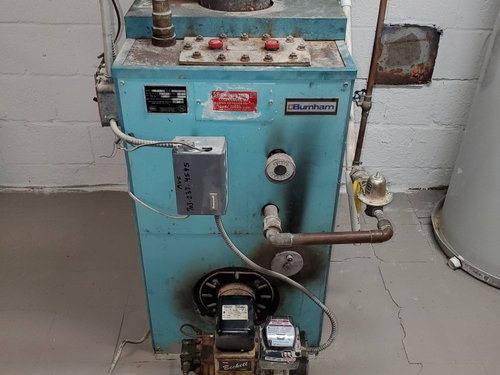
Hi there. Any advice or recommendations are most welcome! We are looking to fully bleed the air out of our Boiler System.


Quick summary: We just bought a new home with secondary baseboard heating for cold days. When we went through inspection, the oil boiler was not turning on. We called in an HVAC tech to inspect it and he got it working in a few minutes. The only problem was that the previous owner had turned off the incoming cold water valve (the home was empty / under construction for a year prior to us purchasing). The HVAC tech did not check the incoming water supply and thought that the pump was just in need of replacement, since the pressure was low and none of the baseboard radiators were heating up.


I did a bit of poking around after closing and noticed that the incoming water was shut off. Opened the valve it on and the system auto-filled up to around 12 PSI and immediately started producing heat when turned on. I had to bleed each radiator to get maximum heat, but at this point I can raise the heat in the house very quickly with just the secondary heat turned on.


My only remaining issue is that the radiators still sound like Niagara falls with audible water rushing through them. I've flipped the system on/off and bled the radiators several times but cannot seem to get all the air out. I can literally hear the air pockets traveling from room to room in the system. At this point I'm hoping to flush the system with street water.


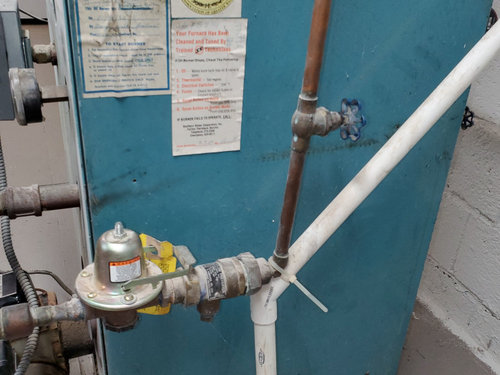
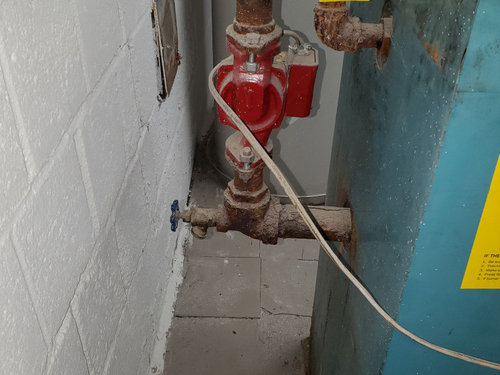
I've watched countless youtube videos, but can't seem to find an optimal approach for my unit. It's a single zone Burnham boiler with two valves. One for the automatic filler and another right below the return. What I cannot find is a lever or anything to open the zone before flushing water through. Should this be as easy as attaching the hose, opening the return line valve and switching on the auto-fill override? Here are a few pics if helpful.


And yes this thing is very old!! We're quite aware we're on borrowed time before this thing goes.


Comments (9)

  • PRO
    5 years ago

    I know exactly what you mean, I had that issue in my old house when I did an addition and added a few more zones. My boiler was a bit newer in comparison to yours and we tried to purge the system a few times with no success so I end up having my plumber put bleeders @ every baseboard location and that solved the issue.

  • 5 years ago
    last modified: 5 years ago

    An old boiler sitting after being drained for a year or so can easily have problems. Bleeding the radiators won't remove all the air because a lot is dissolved in the water and hard to purge it, and In addition any makeup water added will contain dissolved air in it. Air is removed through an automatic Air Separator and believe yours is not working. Corrosion from sitting could have seize the float valve in the separator, but whatever the reason it's not doing the job. I think it's the bell shaped device in the second picture and it may also collect dirt/scale and may need attention. Find the name and model number, look it up and see if you can find any maintenance information on it. Worst case would be replacing it.

    Since it sat so long without water I'd also confirm your expansion tank is still working. There should be a small tank above the boiler on the cold return line. It's purpose is to store water as the heat expands the water, to maintain a constant pressure, prevent a pressure relief valve from blowing and prevent water hammering. They have an air bladder inside and when old bladders dry out they can crack and leak so give it a check also. On the tank is a little air valve similar to a tire valve, give it a quick little push in to see if air comes out. If no air comes out or water comes out the tank is shot. The bladder can be charged with a pump if the pressure is to low, (rare) to factory pressure settings. The tank may have a PSI label on it and if not they're usually set to 12 psi cold.

    I'd also suggest cleaning the burners when you have time this summer and also change the oil filter and check to see it the inducer fan motor has oil cups, and if so oil them. I can't say your HVAC guy checked the air separator or expansion tank but if I played the odds and bet he didn't I would win. Your old boiler can last many more decades with good maintenance so don't be to quick to condemn it.

  • 5 years ago

    “Borrowed time” - It looks more like “Time’s Up”!


    I would advise investing in a proper, complete evaluation to determine what’s involved in a new 21st Century efficient hydronic system taking into consideration a source (HP or boiler) distribution (new, effective piping with zoning) and emitters (radiators fan coils etc) - even modern hydronic cooling and DHW.


    If you don’t like what you hear, consider all other types of system, mini-splits, central forced air, etc.


    Think Energy Efficiency, Zoning & Comfort!


    IMPO


    SR

  • 5 years ago
    last modified: 5 years ago

    I think the short term answer is the Air Separator that @outpaientzero mentioned. However, I'm pretty sure the bell shaped device in the second photo is a pressure reducing valve, not an air separator.

    Longer term, @fsq4cw is right...

  • 5 years ago

    Thanks for the insights everyone. The bell shaped device is the automatic filter where street water comes in. I wasn't able to find an air separator on the unit anywhere.


    Luckily this is only a backup system for cold days, so it only kicks in when it's really cold.
    We have central forced air throughout each room as our primary heat source. Another option we've been looking at is adding heating strips to that electric air handler and capping off the radiators. Although the heat they generate is so much more comfortable than forced air.

  • 5 years ago
    last modified: 5 years ago

    Note that the original post says that the hot water baseboard system is the secondary heating system used for cold days. That may mean the house already has heat pump heating or it could be something else with less oomph when needed.

    While boilers can last a long time, the soot marks on the front are not confidence inspiring. Follow the advice of the comments above from those with knowledge of such systems. If you're coming to the end of winter, you may have some time to deal with it before you need to rely on the supplemental heating source next winter.

    My exposure to radiator heating is limited, one 3 year stretch with such a system and no problems to deal with. It was an ancient oil burner that worked fine. It was so old, it didn't even have pumps and relied on basic physics for circulation - hot water rises and cold water falls. It started slow from a cold start but once the water started moving, it continued and worked efficiently.

  • 5 years ago

    Exactly our thought. It's 75 degrees here in Virginia today and winter is coming to an end quickly, so we have a few months to decide....and we knew this when buying the house. We held back some funds for a big expense in case we want to replace the boiler with something modern. But it would be nice to get one more year out of it, understanding the reality that it's 40 years old.


    We do have a electric HVAC system for AC that reverses to provide heat, but it doesn't have heating strips yet. HVAC tech quoted us about $1500 to run the new power lines and install them.

  • 5 years ago

    Thanks for the advice everyone! I ended up purging the whole system by connecting a hose to the boiler drain valve, opening the valve and running cold water throughout by moving the auto-fill lever to manual. After that I drained the expansion tank and bled each radiator manually. This seems to have solved just about all of the noise I was having in the radiators.