Software
Houzz Logo Print
viktor_mukhin10

Ginkgo with no leader

5 years ago
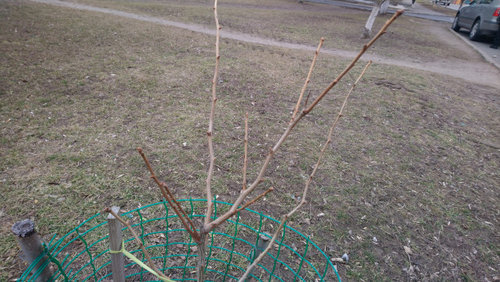
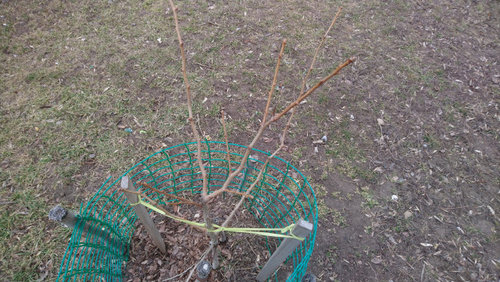
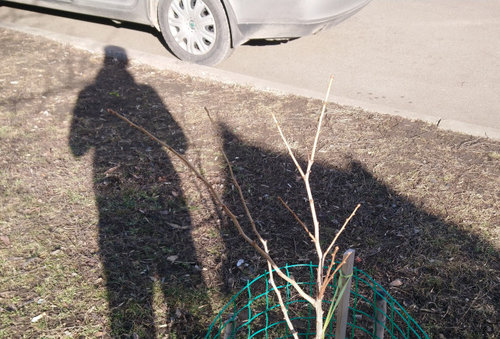
The central leader was broken at the beginning of last summer. This is how ginkgo looks like at the momemt. What is the best way to form a new central leader? What would you suggest to do? Thanks for your advice.


Comments (6)

  • 5 years ago
    last modified: 5 years ago

    See what tree does on its own about leader replacement over the next few years. Then if nothing seems to be happening spontaneously select a new leader yourself and keep it tied in to a firm vertical support until it appears to be moving in the desired direction on its own.

    Top pruning reduces overall size increase so I wouldn't be in a big hurry to start snipping at adjacent shoots that might otherwise compete with the replacement leader at some point. With side branch retention being particularly significant in regard to development of young small trees.

    Otherwise if this is a normal habit, full sized ginkgo and not a smaller growing horticultural selection it's kind of close to the street. Unless it is intended that it will grow out over it in time. And of course it is desirable that it be a cloned male and not a random seedling that could be female because the fruits of these are considered obnoxious (except by those who eat the seeds). And would be problematic falling onto the street.


    Viktor Mukhin thanked Embothrium
  • 5 years ago

    nearly straight down pix are weird ... hard to see whats going on.. how about a pic or two from the side ...


    i agree on giving it another year or two.. to sort itself out ... tree time is counting in decades ... so another year or 2 means nothing to it ...


    all trees releader without our help ... but we often help guide them ...


    why is it caged and still staked?? ... when was it planted??


    is it a named cultivar ..???


    i claim.. in my cold winter MI .... that they arerather slow growing ... other in more moderate climes claim they are not slow ... where are you.. big city name.... just so we might get an idea of the future ...


    the extra pix plz ... but most likey ... find something else to work on .. and let the tree be ...


    ken


  • 5 years ago

    There are two reasons to snip (not hack back) the side shoots: to avoid leader competition and to control caliper size. But waiting to see what tree does on its own is certainly a reasonable strategy. I never tie the new leader to a stick - I let it work its way to vertical on its own. But there are several strategies that work.

  • 5 years ago

    Yes: pruning back side branches of small young trees retards trunk enlargement. (Just as any version of crown reduction slows growth of the plant in general). How this would be desirable in most situations escapes me.

    Staking of a selected replacement leader is used to encourage it to take on that role. In an instance where the specimen is not generating one on its own.

  • 5 years ago
    last modified: 5 years ago

    No - I worded that a bit too vaguely. Pruning back - very slightly - the larger laterals retards THEIR growth vis a vis the trunk. So when you have a young tree with a lateral that is dangerously close to 50% of the trunk caliper, you can either cut it off, which is generally not advised since that retards trunk enlargement, as you note, or tip it back slightly, and keep it tipped back. That will slow it down and let the trunk develop. This works like a charm and is an accepted practice in arboriculture. One of my arborists is a bit more aggressive about tipping back than one of the others, but they advise essentially the same treatment. I buy a lot of unusual trees that I can only get in #1s and so I have had many occasions to work with young specimens.