Software
Houzz Logo Print
hartcm08

Mass planting areas

5 years ago
Hello everyone!


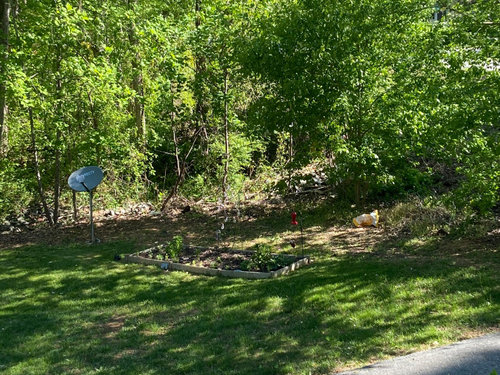
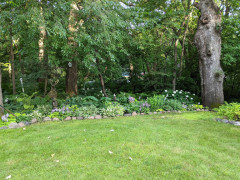
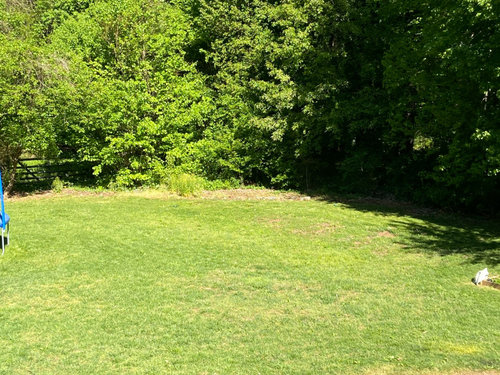
We have two areas on our property I would like to incorporate some perennial mass plantings. Something lovely that does not require an abundance of maintenance and water & that can handle some shade during the day.Behind the gate is a cow pasture. In the past, this area can get quite weedy so we have kept the weeds trimmed low, this area has never been taken care of but is older farmland.

I was considering

-Russian sage

-Salvia

-Black-eyed Susan

-Coneflower

-& any other suggestions you may have.

I prefer a more relaxed cottage country look for this area if possible.


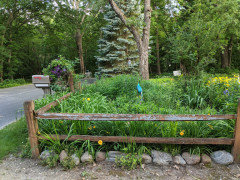
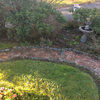
We are also hoping to have a similar look here,


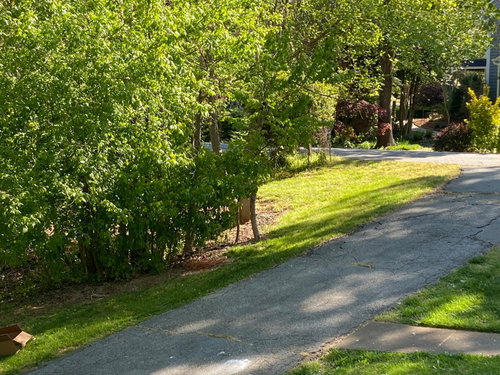
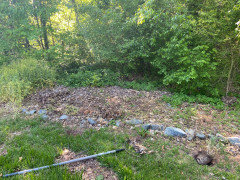
This area is closer to the front of our home but tucked away to the left in a spot that gets afternoon sun and dappled morning shade. In the raised bed we plant annual cut flowers. Last year I planted an abundance of Zinnia and sunflowers in the patch which was lovely but time-consuming.

Attached is another photo showing what's a bit to the right, further up the driveway.


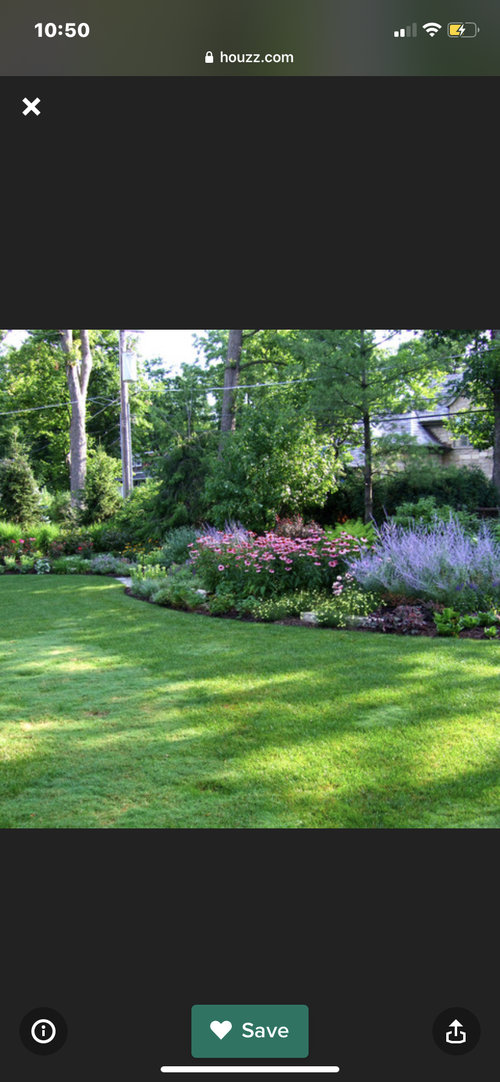
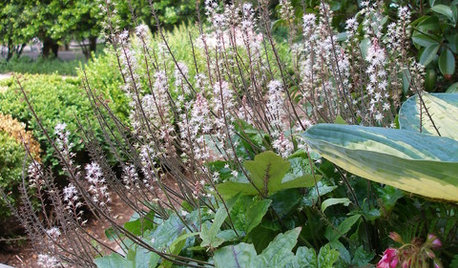
I looked at a few photos and I did like this photo for some inspiration but I worry the Russian sage would flop in the nook closer to our home.


Inspiration photo.


Because this is such a large area I don't mind if things spread a bit as this is a large patch of unused land. Thank you for any feedback.

Comments (30)

  • 5 years ago
    last modified: 5 years ago

    Depending on what your specific concept of "abundance" is in this context your goal of

    does not require an abundance of maintenance

    is not likely to be met by putting in herbaceous borders of much size. Think instead about what you might be able to do with combinations of low growing flowering shrubs. In particular ones with dense spreading habit that serve as ground covers. Commercially prevalent examples include particular cultivars of Japanese spirea and shrubby potentilla for instance. With what you might be able to grow there being determined by wherever "there" is.

    hartcm08 thanked Embothrium
  • 5 years ago

    Planting perennials native to your area would be easier to manage and great for the pollinators. You can use this or other websites to search for the best plants and most will re-seed and spread. You may also find local native plant sales this time of year. https://www.audubon.org/native-plants

    hartcm08 thanked brdrl
  • 5 years ago

    We have some spirea that we love. Hostas and heucheras are favorites at our house. They're all hugely low maintenance. We like lamium groundcover a lot. Nothing much seems to bother it. Just depends what zone you are in, what you like, and what will grow best out of those lists where you want them and the soil you have in those places.

    hartcm08 thanked Midwest (4b IA)
  • 5 years ago

    Look up Roy Diblik and Know Maintenance Gardening if you want to learn about lower maintenance perennial plantings. https://youtube.com/playlist?list=PLQ1vBJWvx8iQsRj9VEBbIfCWFyqYd4ekF 

    Larry Weaner's book Garden Revolution is a good primer for tackling large areas like this by seeding, planting, and utilizing and understanding what is already present. Here's one of his talks https://youtu.be/z6PF6h7cNCc 


    hartcm08 thanked Skip1909
  • 5 years ago

    Thank you all for quite a bit to look into. I should have mentioned I am zone 7a/b Nc triad area.

  • 5 years ago

    Is Russian sage a safe plant to plant with the Astribe?

  • 5 years ago

    Russian Sage/Salvia yangii self sows and gets larger than Astilbe, so in time without intervention it would choke out the Astilbe, but pulling up young RS seedings once or twice a year would prevent problems with not much effort. I think there are 2 types of Russian Sage. One that grows upright and the other that looks floppy and messy.

    hartcm08 thanked Jay 6a Chicago
  • 5 years ago

    Russian sage--Perovskia does not seed but it does sucker some, some cultivars--there are several--more than others. Also, it prefers full sun. Astilbe wants more shade.

    hartcm08 thanked laceyvail 6A, WV
  • 5 years ago

    Thank you both this is a great help, the back patch gets more sun than the front.

  • 5 years ago


    Astilbe need water to thrive. With your tree line I am not so sure coneflower/SUN perennials will thrive. My front beds get the most sun on my property and it's been a challenge to find flowering perennials with staying power due to sun need. I have something flowering from March-frost but having full flower beds requires annuals. My beds phase through phlox/tulips and Daffodils/iris-three varieties-day lily/peony/ clematis/perennial geranium/Impatient plant/gas plant/cone flower/Maltese cross/fox glove/garden primrose.....the rest of my beds are hosta/astilbe/ferns for the most part. I have a few wild flowers thrown in and some spring treats like bleeding hearts etc. You might look into hydrangea varieties. They have phases of different visual interest as the growing season develops. Keeping the weeds at bay will be a forever war but it does help to have spaces full so they are shaded out. Where there are trees there are seeds so saplings are forever trying to establish themselves. I figure if I threw in the towel and didn't put at least a few hours a week into my beds it wouldn't take three years for the woods behind my beds to take over and cover up all my work.

    hartcm08 thanked arcy_gw
  • 5 years ago

    Thank you, Christopher, I have some black-eyed Susan and Lunaria seeds :) I will research the other plants and draw up a plan.

  • 5 years ago

    With the exception of Joe Pye weed all of Christopher's suggestions have the benefit of being mowable at the end of the year. Just set the height to a higher setting and run the mower through and your winter cleanup is done. Just a thought if your aim is low maintenance.

    hartcm08 thanked katob Z6ish, NE Pa
  • 5 years ago

    Thanks, everyone today I will clear out as much as I can limb up what I can

  • 5 years ago

    prep a nursery bed.. to grow some plants for planting in your new beds in fall ...


    and then take all summer building the beds you should have built last year ...


    trying to do both in the same spring season is incredible back breaking labor.. that runs contrary to your low maintenance dream ..


    build them right.. then plant them right ... and in the mean time.. grow them in the nursery ...


    life became much easier.. labor wise.. when i figured this out.. after 20 years of trying to do it all in one 5 week spring period.. lol ...


    ken


    ps: the nursery bed.. can be part of a larger bed to come .. it is not written anywhere .... but in your dreams.. that it all has to happen immediately .. short of checkbook gardening.. and all the power to ya.. if you can do that ...


  • 5 years ago
    last modified: 5 years ago

    Lasting success with artificially created wildflower meadows depends on the site chosen not being one where site conditions promote subsequent taking over by grasses. So how such an effort would work out for you depends on what the grass growth situation is on your particular plot.

  • 5 years ago

    😳 oh my.


  • 5 years ago


    Prep work is needed.

  • 5 years ago

    When choosing species, it's important to know what they look like when young, and when established. It's also important to understand what weeds are in the area, and which are worth really battling to keep out. For example, if you have anything classified as an invasive species, it will be really important to keep that under control. I should note, some of the species that have been suggested to you are themselves invasive in my zone. I agree with the commenter that suggested you look into native species and also check out the Know Maintenance resource. You'll be wise to approach the project knowing it will be a fairly large time investment up front to prepare the site and get the plants in the ground, and then a decent amount of time each spring to do regular weeding & monitoring. I'm not sure if there is really such a thing as a maintenance-free perennial bed that looks as attractive as your inspiration photo! Good luck.

  • 5 years ago
    last modified: 5 years ago

    Laceyvail, Salvia Yangii most certainly does self seed.🙄

    https://homeguides.sfgate.com/russian-sage-reseed-garden-75307.html

  • 5 years ago

    Hello all,

    Upon further investigation, it looks like this area is badly taken care of drainage area. We've decided not to plant here bc during heavy rain excess water pools back here. We have instead decided to clean the area. This will take years to do properly. In the meantime, I'm going to do a raised bed in front of this area that allows ample space to maintain this back area. It's a large patch of property that's not been taken care of in over 20 years. I did not realize how deep back it goes.

  • 5 years ago

    That just makes it a rain garden and will slightly change the plant species that will grow there. Clean it out. Mow it all down once a year in the winter. That will favor the herbaceous plants many of which will be wild flowers.

    hartcm08 thanked Christopher CNC
  • 5 years ago

    I began cleaning the area out and started removing limbs from trees. I found that the trees were all covered by a huge vine that was covering them all. It was wrapping up the base of several trees. Once icut the vine it started leaking water drops for a long time, I began cutting it to remove cut branches and found the mother of poison oak, ivy, and some other monster looking weeds ice never seen. A lot of these small trees self-seeded and I began removing them. Some sort of thorny vine is in the mix and wow is all I can say. There is a run-off drain to the right of our yard that is rocked and full of debris which leads to the water build-up in this area. While we do not technically own this lot it's apart of our area we maintain and keep up our neighbors own it and have no access point to it without entering on our property. They have said we can do whatever we please and even they did not know they owned this until we had it surveyed a year ago at move on. We considered purchasing it but this is not our forever home and my list of things to do in this large home and property is growing by the minute. This pales in comparison to another shady beast I'm working on this year. 😞😳I didn't realize this was so bad.

  • 5 years ago

    You should identify what you are removing before you remove it. Take pics of leaves, flowers, bark, and branches. The Name that Plant forum on this site is helpful, and there are some apps like Seek and PictureThis that can ID plants. Some thinning is probably good but if you can leave desirable species that is less planting you have to do.

    hartcm08 thanked Skip1909
  • 5 years ago

    Identifying what is in there as you cut it all down is perfectly fine, but the underbrush needs to be cut down and cleared out or left to rot. If it is a vine of any sort, go for as much root as possible,.

    What is more important is to identify what comes back up. That is the plant palette you will be working with. Guarantee it comes with fully adapted flowers.

    Mow it all back down next winter. Keep doing that. Hopefully you don't have a lot of poisoned ivy.

  • 5 years ago

    I have a TON of poison ivy. It was growing up trees and covering them. There were multiple vines. Ivy mixed with poison ivy and oak. I still can't get past the vine climbing up the tree that leaked some sort of liquid. Hairy vines as well. It needs to be cleared, some we will leave to rot- we will remove as much as we can. The city has already picked up limbs, etc so moving it to the street, for now, will have to wait. You are right it will return and we need to stay on it before even considering preparing beds. We tried to clip at roots and spray what was visible. Some sort of thorn thicket vine was covering trees, once removed we saw huge gaps of space.

  • 5 years ago

    It's spring. The sap is running. All kind things are going to drip when you cut them and rustle around in there.

    hartcm08 thanked Christopher CNC
  • 3 years ago

    Cardboard or sheet mulching. Plant native and you will help the pollinators as well as be beautiful!

  • 3 years ago

    Since this is resurrected two years later--any updates? How did it go? Day Lilies have done the trick for me.

  • 3 years ago

    Yes, I'd be interested in any updates too! Have you had a chance to make any headway?


    :)

    Dee