Software
Houzz Logo Print
abdullah_masudi

Lawn Treatment Help Needed - Southern Ontario

5 years ago
last modified: 5 years ago
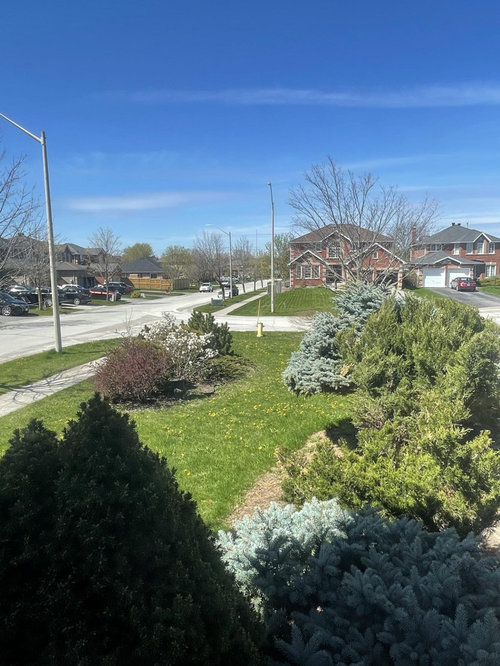
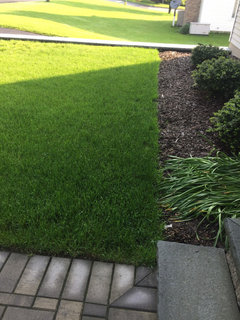
My family is very new to lawn care. We moved into a new house recently with a lawn bigger than anyone of us has dealt with. We've never gone as far as to work with grass seeds, aerating, fertilizer, etc. In the fall when we moved in, we admittedly put aside lawn maintenance either due to being busy or not being sure how to deal with it. Come spring, our lawn is the only one on the block being overrun with dandelions and I figure we have to do something before its too late. All we have is post-emergent herbicide left by previous home-owners and a basic electric lawn mower. We don't want to hire a lawn service unless absolutely necessary. I believe our lawn consists mostly of Kentucky blue grass and ryegrass. We live in southern Ontario and it will be raining intermittently for the next two weeks at least. Taking weather into account, what should our course of action be?

Comments (17)

  • 5 years ago

    If you can still edit your title, add "Southern Ontario" to get climate-appropriate comments.

    Abdullah Masudi thanked apple_pie_order
  • 5 years ago
    last modified: 5 years ago

    Congratulations on your new home❣️
    I live in northern New Jersey. I love Scott’s Lawncare products. I use the their turf builder weed and feed in the spring and their turf builder winterguard fall weed and feed in the fall. I apply it with a Scott’s rotary spreader. That combination keeps my lawn looking good. You don’t need a lawn service as you can easily apply Scott’s products yourself.
    I get my Scott’s products at a Home Depot with a 10 % military discount as I am a retired Captain of the US Air Force.
    Best of luck in your new home.


    Abdullah Masudi thanked kculbers
  • 5 years ago

    The way to prevent dandelions in a lawn is to go back in time and apply a weed killer last fall to kill the dandelions that were there then but not blooming. Seriously though, there is no preventative for dandelions and other broadleaf weeds. By treating with a broadleaf herbicide in the late spring and again in the early fall, you will eventually have fewer weeds coming up. Surprisingly, the best time to kill dandelions is after they have gone to seed. That is when the plant is weakest due to the energy expended to create the flower. Don't worry about the seeds. They're everywhere anyway.


    The backbone of any lawn care program is to apply fertilizer, primarily nitrogen, 4-6 times a year. Also, the magic ingredient in the summer time is water. Water every day when it is hot and dry. Most lawn issues, not counting weeds, arise in the summertime when the grass is drought stressed. The stress increases the number of disease problems. The thinning due to dormancy and disease can give weeds room to grow. Not everyone wants to spend the money on water in the summer, but just realize that the lawn will suffer if you don't water.


    It is important to recognize that it is a long term project.

  • 5 years ago

    It looks like Ontario banned weed and feed combinations, but still allows some broadleaf herbicides for liquid application? Nope, looks like all truly effective products have been banned. There is no scientific justification for this. https://www.thespruce.com/canada-bans-weed-n-feed-products-3969993

  • PRO
    5 years ago

    IMO a healthy lawn id how you get rid of weeds and a good lawn mintenace company can get you on your way. I hate grass and IMO it should be the last choice for landscaping, get a good landscaping plan in place and slowly add large perennials beds and have less grass , the bonus is abeautiful flower garden that can be easily maintained with some work in the fall and spring and all natural upkeep. Ther eis a reason all those horrible chemicals have been banned and hopefully some day so will grass be the last choice.

  • 5 years ago

    Patricia Colwell, A healthy lawn will do nothing to get rid of weeds. If you start with a weed-free lawn then you may be able to keep it reasonably weed free for a while. I agree that there are alternatives to lawns but they can be more costly to put in and are not always so easily maintained. Did you ever wonder how it is that the "horrible chemicals" applied to lawns do not have any bad effect on the grasses? The broadleaf weed killers work on broadleaf weeds because they mimic certain plant hormones that affect the way broadleaf plants grow. They make the plant grow too fast which kills it. Grasses have a different physiology and so are not affected. People and pets have a vastly different physiology compared to weeds or grasses which is why they are safe to use. Like many everyday products and even foods, they can be harmful if you ingest massive amounts. The only reason they have been banned is due to ignorance.

  • 5 years ago
    last modified: 5 years ago

    I live in Montgomery County, MD, a suburb of Washington, DC.

    Weed and Feed products are banned here - banned for private individuals and also commercial services.

    It's seemingly not just Canada.

  • 5 years ago
    last modified: 5 years ago

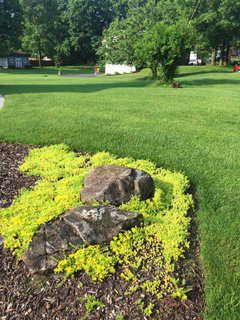
    @abdullah-masudi it looks as if you have a corner lot with lots of grass, both your own and the median between the sidewalk and the road. That's a big property to take care of. It's not realistic to replace all your grass with other plants.

    I have been a gardening home-owner for many years and haven't put chemicals on my lawn since my children were small, many years ago. I couldn't justify having a lawn that I didn't feel comfortable having them roll around on. Other neighbours had more weed-free lawns but it didn't feel right to me. I used to ask my kids and their friends to pick the blooms off the dandelions - they liked doing that LOL.

    Weeds in the lawn are just a fact of life for us in Ontario now, and honestly, it's not a tragedy. You're not growing anything poisonous or dangerous! The dandelions are the only ones that really show, and they only bloom in the mid-late spring. They're the only ones I even try to dig out but I have much less grass than you. Just do your best and enjoy your lawn.

  • 5 years ago

    I'm assuming the Ontario you live in is the one in CANADA, and not one of the hundreds of other Ontarios dotted around North America.

    Greg posted a paragraph on watering where he suggested watering daily during the summer. I could not disagree more. If your temperatures get into the 90s F (30s C), then you should be watering deeply, 1 inch (2-3 cm), all at one time, about once a week. If that really doesn't work, then water deeply once every 5 days. NEVER water every day unless you are trying to sprout new grass seed. Coincidentally, weed seeds need daily water to sprout, too, so if you want to sprout weeds, water every day. Also it is perfectly acceptable to allow your lawn to go dormant in the summer heat. It will spring back when it rains again.

    Mow at your mower's highest setting and do not collect the clippings. Let them fall back into the grass and decompose in place. Tall grass has some deterrent effect against certain weeds.

  • 5 years ago

    dchall, I posted a lengthy explanation of my watering recommendations and the reasoning and research behind it in the other thread. Watering once a week is a recipe for a horrible lawn in the summertime. When the temperatures are 85 and above, you will be putting the lawn in repeated drought stress which results in higher incidence of disease and insect problems. Daily, light watering maintains a consistent moisture level and keeps the grass green and healthy. Weeds are always more of a problem with a lawn that has thinned due to dormancy where there will be lots of room for summer annual weeds to crop up with your infrequent watering but not enough to bring the lawn out of dormancy. Many people choose to save on water bills and allow the lawn to become dormant, which is understandable, but sometimes large patches of the lawn die and do not recover when the rains return.

  • 5 years ago

    Thanks Greg. I'm afraid we are unable to convince each other. I used to be in your camp, but changed my mind about 15 years ago after a lengthy 'discussion' here on this forum. Deep and infrequent is the mantra for watering. Frequent watering is the recipe for weeds, disease, overuse of fertilizer, and can lead to swampy soil conditions.

  • 5 years ago

    I know people who "smuggle" banned products over the border. Can't right now. Keep your lawn and landscaping clean and trim and don't worry about the "Jones's". Healthy environment and more bees.

  • 5 years ago

    dchall, The exact opposite is true and I see it every year on my customer's lawns. I don't know what your background or experience is in this field, but you could not be more wrong in this matter. Deep and infrequent watering works well for many landscape plants and trees, but it is absolutely the wrong approach for lawns.


    No one is talking about watering to the point of swampy conditions. 20 minutes a day will not do that unless you're watering with a fire hose. In which case, shorten the time. Watering in the middle of the day means that the grass does not stay wet for a long time, which helps to minimize the chances of diseases. The high evaporation rate at that time also cools the plant which lowers the stress. Like most organisms, stress in one form or another is a primary cause of disease.


    On my own lawn I have to use timers and sprinklers so I sometimes miss an area for a few days. In only a few days, it will develop brown patches and thinning that is a stark contrast to the lush green lawn area right next to it that has been getting daily watering. I have sent pictures of this to my technicians because customers will often complain of brown patches in the summertime, and they will assure us that they are watering, but they are inevitably following an erratic program of once or twice a week. That is just not enough.


    This watering schedule has been researched and recommended by one of the top lawn disease experts in the country. Every one of the points you have made about potential problems with such a program is absolutely false. Show me a golf course that only waters once a week during 90 degree weather. They might be able to get away with every other day with longer watering periods, but there is no way to maintain a healthy green lawn on a once a week watering schedule.

  • 5 years ago
    last modified: 5 years ago

    TMac My son had an elderly neighbour whose sister smuggled the stuff to him. His lawn had not one single weed. It actually looked sort of weirdly artificial - we've gotten used to a more natural look. And he didn't follow the package directions either, just dumped it on. You could smell it from down the street when he used it. Thanks goodness they moved away - to a condo because he didn't want to do so much lawn maintenance LOL!

  • 5 years ago

    Scotts says, "When watering an established lawn, it’s typically recommended to water until the top 6 to 8 inches of soil (where most turfgrass roots grow) is wet. Most lawns need 1 to 1.5 inches of water per week—either from rain or watering—to soak the soil that deeply. That amount of water can either be applied during a single watering or divided into two waterings during the week. Just be sure not to overwater your lawn."

    But what do they know?

  • 5 years ago

    Obviously Scotts has not updated their advice in a long time. They also have marketing reasons for wanting to keep their watering advice as simple to follow as possible. Watering daily before the onset of drought stress means that the soil will stay moist to the depth of the roots. Lawns dry out from the top down. There is no reason to water deeply if you water frequently. The effect is the same, except that infrequent watering means more stress on the plant and more diseases. Disease prevention is what prompted the change in watering advice. The research at Michigan State showed dramatically lower disease incidence with a daily watering regimen.

Sponsored
Whisler Home Improvement
Average rating: 5 out of 5 stars9 Reviews
Franklin County's Committed Home Improvement Professionals