Software
Houzz Logo Print
webuser_412631568

Too much toe-kick lighting?

5 years ago

I thought I had an original idea when I asked if it was possible to put some sort of low light output rope lighting or something similar under toe kicks of cabinets. Hardly. My builder said it's a common request they do for master bathroom vanities.


I like the idea of subtle night lighting thru house - if we get up late at night, minimize turning on overhead lights and further disrupting sleep cycles by keeping things dark-ish if possible...


Would it be excessive to put toe kick lighting virtually 'everywhere' e.g. in:

  • Master vanity (not visible from bedroom)
  • Kitchen island (inside side facing wall/oven away from living rm)
  • Service counter opposite mud-bench at garage entry
  • Guest bathroom vanity


And afterwards I might come back and replace the light switches with photocell switches or smart/home automation switches for some sort of dusk-dawn operation.


Too excessive? Any cons or potential issues with toe kick lighting?


Comments (6)

  • 5 years ago

    Too excessive to put everywhere? IMO, yes! What would be the purpose? To highlight the dirt and debris that accumulates there in the kitchen and entry? To keep my toes from hitting the toe kick? I haven't had that problem in 65 years, so far. When I walk into a kitchen or garage entry, I don't care about seeing the toe kick, I'm interested in what's above that, from 3 or 4 feet on up. I can see some purpose in putting it in a bathroom for night lighting, but I'd probably cut the light out put to 1/4 or 1/3 of normal, just a glow will be sufficient in the night. Next, you'll ask how to do that. You gotta drop the current to 1/4-1/3 of normal, which requires a certain value resistor of the proper wattage, and a soldering iron.

  • 5 years ago

    If your current lights and dimmable and not controlled by a dimmer you could do the following:

    1. Replace the switch with a Lutron MACL-153MR Maestro dimmer switch.
    2. Program the switch to turn on the lights to a low, "nighttime" level.
    3. When a user enters, say, the bathroom he presses the switch once to turn on the lights to nighttime level and presses it twice to turn it on to full brightness.

    If most users are like me, they'll use the default, nighttime brightness most of the time. How bright does the room need to be to use the toilet or take a shower?

    If I were going to install LEDs in a bathroom for nighttime use, I'd attach them around the toilet bowl and skip the toekick. Ha ha!

  • 5 years ago

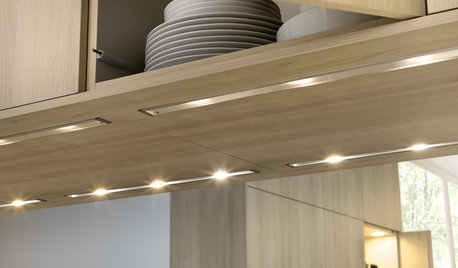
    Legrand sells outlets with lights and just plain nightlights. We went from divided sink to single bowl and opted for no disposal. I retained the gang for the disposal by changing it to the Legrand full nightlight. I have the outlet version in a bathroom and the outlets in the upstairs hallway. They all have multiple light levels including off. I’d suggest doing undercabinet lighting vs. toekick, and just add a few of these little lights in some spots where you’d use them most.

  • PRO
    5 years ago
    last modified: 5 years ago

    I have used it as accent lighting under wall-mounted vanities that sit @ 8”-12“ above the floor (deeper than a toe kick).

    ETA - it is not difficult for the electrician to do, just need a small low voltage transformer and water resistant LED tape. Sometimes waterproof LED in wet areas

  • 5 years ago

    Basically if/when we wake up at night - our eyes are already pretty well adjusted to darkness.


    While plug-in night lights quite functional, simple and cheap - we're wanting to design house w/ more integrated night lighting.


    We want some low levels of light already on in certain locations to act as 'night lights'. Definitely low and not enough to 'wake you up' like the effect of turning on an overhead light in the middle of the night...


    Preferrably lights would turn off in high ambient lighting for longer life. (like during daytime)


    Prefer lights in most cases to be low, closer to floor, showing pathways and potential tripping hazards and if possible indirect lighting vs direct night lighting.


    Locations include bathrooms, kitchen and hallways/paths but not in bedrooms (or close enough to shine in thru open doors)

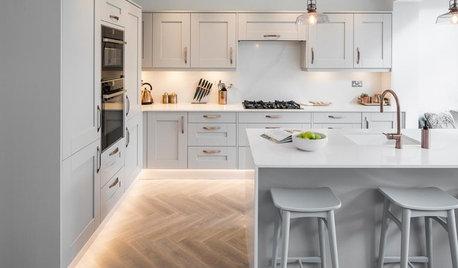
    • Master bath toe kick light w/ soft dimmable rope lighting
    • Master water closet with lighted switch on wall
    • Kitchen toe kick on island only - facing towards inside - range/fridge (away from adjoining living room)
    • Lighted sockets as shown above in a couple spots in hallways
    • small service counter at garage entry door opposite mud bench (@ mid point of dark hallway)
    • Optional: Guest bath and powder toe-kicks.


    Independently of this, I'll swap in backlit light switches - just the kind that allow you to find light switches in the dark - not the kind that actually provides night lighting.


    I do need to find a light switch with photocell switch integrated in preferrably.

  • 5 years ago

    Though I wouldn't do this, the Lutron MSCL-OP153MH is an excellent sensor-dimmer switch that I've used in hallways.