Software
Houzz Logo Print
kay21_utahzone5

Staking & Pruning a Young Bur Oak

5 years ago
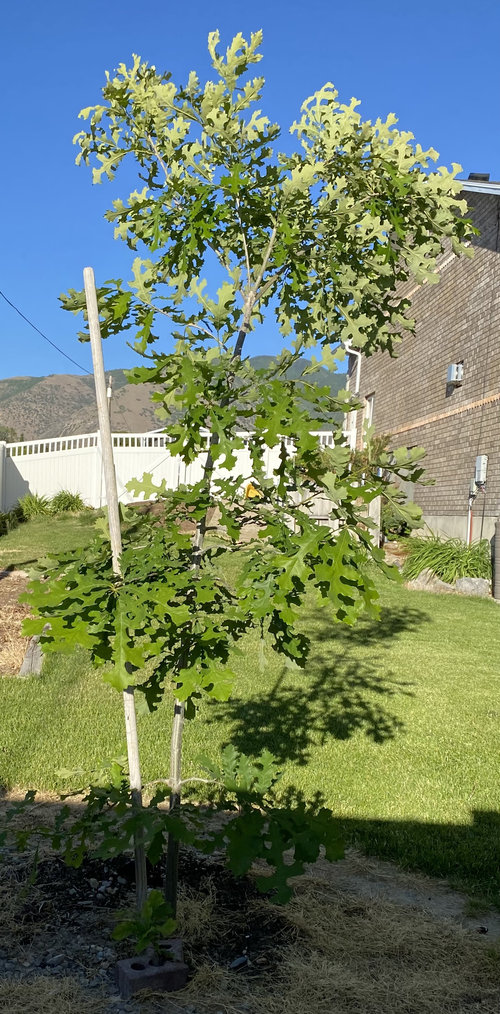
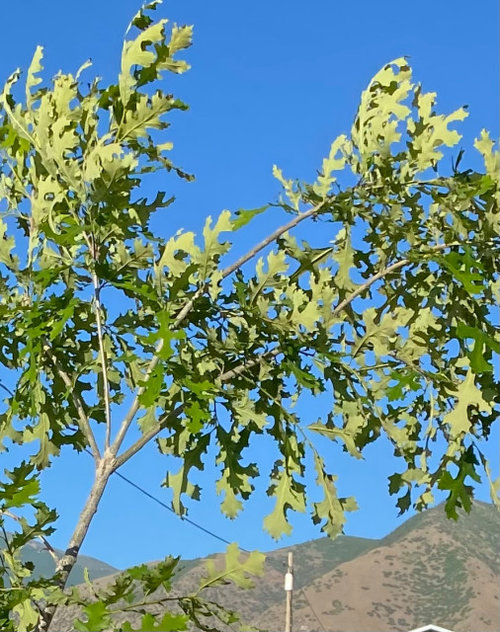
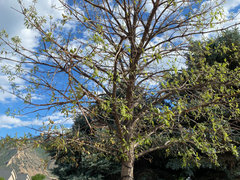
I’ve had this Bur Oak, Quercus macrocarpa, since it was an acorn. I potted it up, out from under the mother tree in 2016. In 2018 planted it here when it was still less than a ft tall. In 3 yrs it’s grown 12’ and this spring it started branching out at the top and has gotten top heavy. There was barely a breeze the day I took this picture.

Should I tie it back to the stake or anchor it in some other way? If I do nothing will that help it develop a stronger straighter trunk?

Also, do I need to prune any of these branches where the Oak has forked?

This kid holds great sentimental value. I’m looking forward to guidance to help it develop well.

Kay


Comments (17)

  • 5 years ago

    first pic. wish the bottom of the tree wasnt in shade... id probably remove those lower branches ... do you know about branch collars and how to prune ...


    not sure on the timing.. hopefully someone else can hit that topic... if not.. call your local county extension office and ask if there are any special burr oak pruning rules ...


    e.g. .... in my MI ... there is a beetle.. and you are supposed to prune when the beetle isnt active... on certain oaks ... no clue if that has any application in UT ...


    i would use some old fashioned COTTON clothes line to tie it to the stake... its large so its easy to retie when necessary ...


    the tree will never need fert.. ever.. and if you fert the lawn.. it will get more than enough ...


    i like the distance you planted it from the house .. good decision there ...


    ken

  • 5 years ago

    oh.. the fork... at some point you wont be able to worry about such due to height ... and since this is already probably at the limit of a common house ladder.. why worry about it now.. if it were 3 foot off the ground.. that would be another story ...


    and get it in your head.. it a tree.. not a kid.. treat it like one.. and dont love it to death.. it doesnt need feeding.. nor clothes.. nor an education ... its a tree ... benign neglect is the usual state of things..


    ken

  • 5 years ago
    last modified: 5 years ago

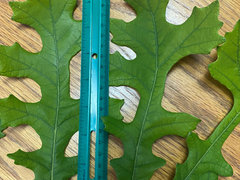
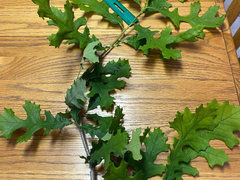
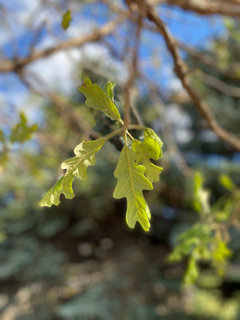
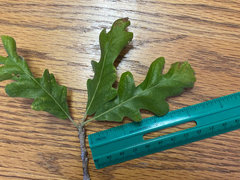
    Not sure that is a burr oak. Take a closeup pic of a leaf/stem & post for us to look at.

  • 5 years ago
    last modified: 5 years ago

    Bengz

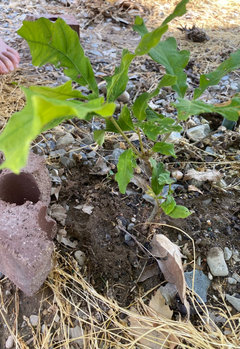
    I‘ve kept meaning to prune off this branch. Since you asked for a photo it made me to think grab pruners on my way out there.

    These leaves are 8-9 in long. If you agree it’s a Bur Oak: Are the leaves often this long and skinny or are these this way because of our excessive heat and drought? Sprinklers are on x2/wk and we give it occasional - very sporadically occasional - deeper waterings.

    Kay


  • 5 years ago
    last modified: 5 years ago

    Ken

    Thanks for the tip on pruning timing; I'll check with our extension service for whatever issues I should consider.

    I'm not an expert but do know the pruning basics. I've read your mantra enough about leaving hosta leaves for photosynthesis. I applied that principle here and haven't pruned up the trunk to help this Bur Oak to establish itself. Haha - I guess it is time to start pruning.

    As for that 4-way fork: you don't think there will be issues with splitting down the trunk years down the road if I leave it as it is?

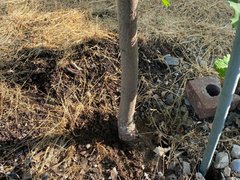
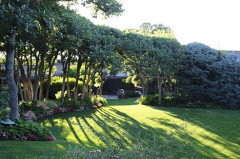
    Here's the bottom of the tree. It does need to be pruned up some. I think the branch you're seeing is the little Oak next to it. At planting in 2018 I planted 3 of my seedlings together and planned to keep the strongest if more than one survived. One did pretty well and I couldn't destroy it so we carefully dug it up and transplanted it - it's only 4' tall but we'll see how it does. This little remaining one keeps dying and every late spring I discover some growth there. I think the root just sends up new growth to replace the one that died. Could that be true? These guys get so big that I'm having trouble finding a friend who has room for it. No, I can't kill it - too much sentimental history attached. I'm trying to not love them to death! It helps that I don't have the time I'd like to work in the gardens. (Included a photo of the little one just for fun.)

    Thanks for your responses!

    Kay


  • 5 years ago

    While it seems you are doing most things right, I question the area you are trying to grow this tree. It looks like it is completely out of its natural habitat. From the pictures it looks like that you are living in the western areas of the country that tend to be dry. From the pictures it looks like it is in a semi desert area.


    The trees natural habit is the North West territories and in the Mississippi valley

    https://www.fs.fed.us/database/feis/plants/tree/quemac/all.html


    This is an area were water is rarely a problem.


    While in this current time period, you may not have any moisture problems with the trees, in the years to come in may not be able to withstand a drought of the type that may be possible.

  • 5 years ago

    It's not a burr oak, my best guess would be Shumard or scarlet oak. Either way, it should be possible to grow it there but it'll need supplemental water (as it seems you're doing). You could tie it rather high up on the pole to straighten -- I had to do that on a top-heavy pond pine & that eventually worked after a few yrs of trunk thickening. How long a tree that's not adapted to your climate will live is a question of course -- obviously there are better adapted trees for your area.

  • 5 years ago

    The picture with leaves and blue ruler is most likely Quercus lyrata (overcup oak).

    https://www.missouribotanicalgarden.org/PlantFinder/PlantFinderDetails.aspx?kempercode=e717

  • 5 years ago
    last modified: 5 years ago

    Viburnam

    Thank you for the photos. Such an impressive tree!

    I will entertain you with photos of the parent tree - as soon as I can get there. I think the acorns looked like the ones above but it's been a few yrs so I can't be sure. I know they were big acorns though. I'm certain there aren't other oaks very close by, other than the 4 (what were labeled as) Bur Oaks on the property. I'm not sure how large the vicinity is that you suggest for possible cross pollination ... but it seems bees can travel pretty far.

    Utah is usually considered to be too alkaline for oak trees so, other than Scrub/Gambel Oak (Quercus gambellii) oaks aren't very common here. Hmmm - it's possible someone in the area has landscaped with Scrub Oak.

    I'll get some photos of the mother tree - hopefully you'll check back. I'm curious what you think of a possible Gambel Oak influence here. Thanks for your input!

    Kay

    ------------------------------------------------

    Krnuttle

    Utah is a harsh climate and I understand why you feel it wouldn't be friendly to Bur Oak. Apparently it's pretty versatile and "grows well on fairly dry upland sites," as well as the lower wetter sites. Our local extension service includes Bur Oaks on its list of non-native trees for Utah and says it is one of the best introduced trees for planting in most parts of Utah This climate doesn't have much in native trees once we're off the mountains, so we go looking for others. Poor us! For some reason I've loved oaks for my whole life ... I have to grow one here or move some place else.

    Thanks!

    Kay

  • 5 years ago

    I won't contest whether the Kentucky trees are the true champions or not but I've seen the trees at Big Oak tree State park in se Missouri. The so called champion is or was 142 foot tall and a circumference something like 16 feet. Regardless, quite impressive as are viburnums pics.

  • 5 years ago

    By the way, in Utah's Arches National park, I've seen Q. welshii no more than 2 foot shrubs in contrast to the Bur oak.

  • 5 years ago

    I live in Utah but haven't been to Arches in years!

    Here's an example of Scrub Oak in a Northern Utah garden.

    I believe there is a lot of thinning and pruning involved to get this look. It's really nice though.

    Kay

  • 5 years ago

    Bur oak is a perfect fit for Utah. And that tree looks like bur oak to me.

  • 5 years ago

    We will await images of the parent tree of your Bur Oak, kay21_utahzone5b. You could let us know the location (city, state) of the parent tree, for reference.


    As additional information, oaks are generally wind-pollinated, producing pollen on their drooping catkin structures which then are blown onto receptive female/pistillate parts elsewhere on the tree - or other trees, as Quercus are well-known to be promiscuous.

    kay21_utahzone5b thanked ViburnumValley central KY Bluegrass z6
  • 5 years ago

    I should have them up on Sunday. :)

  • 5 years ago
    last modified: 5 years ago

    Hey Viburnum

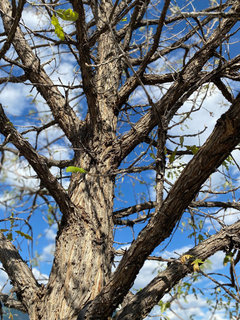
    I don't have much to show; in fact the parent tree is gone - so glad I pilfered my seedlings! These were at a business we built then opened 21 yrs ago and sold 5 yrs ago. Currently the new owners are expanding and the building and grounds are under construction. They cut 4 of the 5 Bur/mystery Oak. They transplanted the remaining "Bur" Oak ... a 21 yr old Bur Oak! Is that even possible? I mean, we'd expect it to look bad right now but what are the chances it will survive? I took pictures anyway but foliage is very sparse and the leaves are small. "Buds, bud scars, leaf scars, stipules" ... well, I don't know exactly what to look for and not much is present now anyway. My hub remembers the leaves there looking just like the oak we've been discussing and we remember the acorns were quite large, but not as hairy looking as the Bur Oak acorn pictures. The 5 oaks were ordered together by the landscaper.

    The location info is Utah, a mountain bench of a suburb south of Provo and very close to the mountain, so elevation is aprx 4,700 ft. Zone 5-ish, maybe pushing Zone 6 with the recent climate changes.

    Anyway ... I've done some digging and learned in the 1960's there was a Scrub Oak hybridizing program at UofU. Then I found that there is a BurGambel Oak (Quercus macrocarpa x gambelli). I don't know how hybridizing works. VV - You said you think my little oak is mostly Bur Oak. I assume a hybrid isn't necessarily split 50-50, right? Do you think BurGambel Oak or some Bur x Gambel hybrid may be the answer to this oak ID conversation? Here are some pictures - I don't know if they're useful, given the damage/extreme stress with the transplant.

    Kay