Software
Houzz Logo Print
omar_ainza

Finding Kashmir Cypress?

5 years ago

Howdy! I have been trying, with no success, to find a kashmir cypress for years now. I live in Arizona so noone here has it and noone has it listed online, other than seeds. Does anyone have any leads as to where they may have seen some in the states? Would need to be mailed so 1 to 5 gallon size preferred but will drive to nearby states if needed (I am determined to have one someday!)
Thanks in advance <3

Comments (54)

  • 5 years ago

    Thank you again for the second viewpoint, David. Yeah I definitely think I will end up having to grow from seed as it is a longterm goal of mine to introduce conifers into our gardening palette here. Someone has probably already done it, and failed, but I am determined!


    To answer location, I am in Tucson, AZ which we list at zone 9 elv. 2500ft. We do get hard freezes occasionally (nothing frost cloth and lights cant fix) and I would say summer is the worst part of the year. June into July always feels the worst as we wait for our rainy season. Highs of 110+ for days on end are the norm.


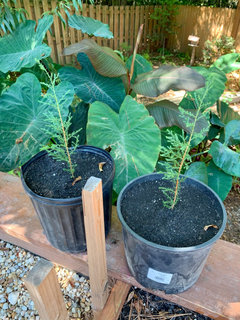
    That said, I AM a gardener and will go out of my way to baby the thing. I don't know how well it would do in a container but I would probably live in a 24-36in pot. I am also testing blue spruce, redwood, and firs (i cannot fot the life of me find abies firma seedlings)


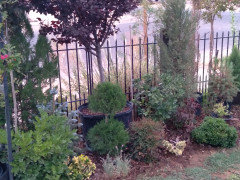
    Here is a blue spruce (btm left) for additional hope! So far so good


  • 5 years ago

    the trick to find things.. is to take the latin name.... add price... and in this case i added US and potted ...


    https://duckduckgo.com/?q=Cupressus+cashmeriana+us+price+potted&t=ffcm&ia=web'


    this is the first real link


    https://store.devilmountainnursery.com/inet/storefront/store.php?mode=showproductdetail&product=20045


    we note its a wholesale operation.. so we would continue the search on for a retail store they service ... if you scroll down.. they list many locations... you will have to take it from here ...


    its nbd.. to order a tree now.. for delivery in the next proper planting season ... of which.. its usually not july nor august .... see planting link below.. section one ...


    but that doesnt mean you cant get your hands on one.. potted.. and hold it over until the next proper planting season ...


    and if it doesnt fully fit in your car.. buy smaller.. or have it mail ordered ... i dont know why you are fixated on a road trip ... a smaller tree will get over stresses faster.. grow a mature root mass faster.. and usually outgrow a larger transplant in 5 to 10 years ... think in tree time.. there is not much instant gratification in tree growing ...


    keep us posted on how it works out ....


    ken

    https://sites.google.com/site/tnarboretum/Home/planting-a-tree-or-shrub


    Omar Ainza thanked ken_adrian Adrian MI cold Z5
  • 5 years ago

    Hi Ken. Thank you for the Input and your help with links! I manage a nursery here in Arizona so I do have wholesale/resale licensing and I could try this route as well!


    I dont mind a smaller tree, actually. As my own research and everyones' educated opinions have suggested, it is SURE to die! I would rather not invest a couple hundred in a specimen if I don't have to, but I will if necessary for the sake of my experimental garden :)


    That said, I have seen too much mixup with the botanicals torulosa and darjeelingensis because people cant make up their mind. I don't know if I could distinguish a seedling of true cashmeriana. I think a one gallon+ plant would be much easier to discern true form. The same reason I have not ventured into seed because, or until davids post, I have not been confident of a seedsource from a reputable seller.

  • 5 years ago

    Thank you for sharing your thoughts, Sara! This is valuable, first hand experience and very encouraging <3

    I'm definitely picking up what youre putting down :D

  • 5 years ago

    I would rather not invest a couple hundred in a specimen if I don't have to, but I will if necessary for the sake of my experimental garden :)


    ==>> buying a babe on the cheap [relatively speaking] ...and growing your own specimen is the most cost effective way to experiment .... imo ...


    plus the justification on spending the savings on MORE PLANTS >>>> lol ...


    keep us posted ...


    ken


    ps: cant believe i found one of sara's plant pushers [drug dealers ...] from MI .. lol ...


  • 5 years ago
    last modified: 5 years ago

    Let's duly note though, that Sara's Sonoma County Cali climate is a lot (summer) milder than Tuscon! 99/74 averages versus, I would guess, roughly 80/56?

    I could better imagine the weeping cypress settling in, in a climate like this one. I actually wouldn't have known anywhere in AZ had a summer month with > 4 inches avg. rainfall, much less 2 months! But it's in the SE of the state, closest to the plume of Mexican moisture. (which actually mostly comes from the Gulf, I believe). And at elevation, of course.

    https://en.wikipedia.org/wiki/Bisbee,_Arizona

    I actually don't think that should be called a "Mediterranean" climate at all, but whatevs.

    But hey find a spot with afternoon shade and see what happens! Glad u can order from a wholesaler.

  • 5 years ago

    You are correct David. Bisbee would probably be ideal and so many other surrounding towns as well since they have higher altitudes and have a drastically lower "urban heat island" effect. Luckily, I am on the outskirts of Tucson and do get cooler nights than most of the midtown gardeners. We do record at least 8 inches of rain yearly, many times 12+ but it happens all at once during our summer monsoon and a lesser but significant amount in winter. Kinda wierds people out when they come here thinking its full-on death valley and find that almost all the skyline trees are aleppo and afghan pines.


    I would love to be able to order from them but theres no way I could make a minimum order and I couldnt justify trying to sell anything not adapted to the region without being properly experienced myself!


    I will be checking some of the SoCal nurseries next month when I am in LA.

  • 5 years ago

    My first two C. cashmeriana were a 12" box and a #5 can. They came on so vigorously that I got #1s when I added more. And yeah, I'm nowhere near as hot as AZ but I figured that the dry air was a similar characteristic.


    And Ken, that is pretty funny.

    Omar Ainza thanked Sara Malone Zone 9b
  • 5 years ago

    @Sara Malone Zone 9b

    If you are ever able to set me up with a one gallon, let me know!

  • 5 years ago

    Haven't seen any in a while. You might try growing from seed - lots for sale on various sites. San Marcos has it in stock in #5.

  • 5 years ago

    Perfect! Thats who I figured Id end up being able to get it from. I sent an email to Armstrong Garden Centers to see if they could special order one for me

  • 5 years ago

    I would love to be able to order from them but theres no way I could make a minimum order and I couldnt justify trying to sell anything not adapted to the region without being properly experienced myself!


    ==>>> good for you ..


    but you can contact the wholesaler.. and ask who they might supply relatively locally .. and then follow thru with that .. perhaps even order one in with their next delivery ....


    ken

  • 5 years ago

    @Omar Ainza I don't recommend kashmir cypress for Tucson, way too hot in the Summer, it will be dead unless you can put an air conditioner on it at night between May and September. They can take some heat but only with significant overnight cool downs like in California. Deodar cedar is not a good indicator plant for the survival of kashmir cypress. Deodar cedar is unusually adaptable to hot dry, this is not the case for kashmir cypress. Cupressaceae in general do have some desert lovers but kashmir cypress isn't one of them. If you do decide to push the boundary, be aware that unfortunately most of the seeds sold in the US originate in India collected in areas where cupressus lusitanica was planted and thus you end up with lusitanica. So the only way to get actual true kashmir cypress specimens is to get ones that were vegetatively propagated from known positively true to form specimens.

    Omar Ainza thanked Axel
  • 5 years ago
    last modified: 5 years ago

    There does seem to be a issue with mis-IDed seed coming from India. Like the couple of us who started what we bought as Picea smithiana but got chir pines instead!

    Thanks for your post - seems the OP knows he is very much experimenting and knows not to have high expectations. Conifers do often have a kind of resolve to soldier on that other plants lack. I have a Juniperus coxii that clearly doesn't like my summers or winters, but it is still limping along. Like Omar I knew I was experimenting.


    Omar Ainza thanked UpperBayGardener (zone 7)
  • 5 years ago

    @Axel thanks for the deodara insight! definitely good to know that there are tolerance variances within the same climate zone! i have been getting brave to try other conifers mostly because i have kept a blue spruce alive through the summer now. granted it is in mostly shade with plenty water. kashmir cypress is indeed just an experiment!


    that said, you know exactly why im hesitant to order seed because of the mislabeling of this particular species.

  • 5 years ago

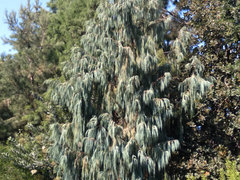
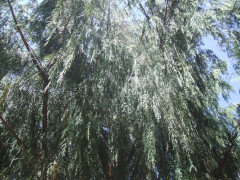
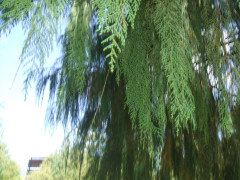
    i just came back from SoCal and wasnt able to locate one :( bummer. i did snap a beautiful specimen tho! i fell in love all over again 😍


  • 5 years ago

    yep, it can be such a bummer when you can't find a plant you want.

  • 5 years ago

    @Omar Ainza I have several trays of kashmir cypress if you need any.

  • 5 years ago

    @Axel oooo yes please!

  • 5 years ago

    if you both enable messaging on your member page , you can communicate easily

  • 5 years ago

    @plantkiller_il_5 i didnt realize there was a block on messages. just went to check my settings and there was nothing to indicate otherwise ¯\_(ツ)_/¯

  • 5 years ago
    last modified: 5 years ago

    omar , if you go to my page ( by clicking my name )

    you will see a message button to right

    you can email others thru that

    but you have to enable in your settings & save

    ron

    I don't see a button on your page

  • 5 years ago

    @plantkiller_il_5


    i think i fixed it! kinda hard to navigate this thing tbh

  • 5 years ago

    Now you can message outside the forum

    but you have to remember to check

    but if you want to tell Axel your address ..etc

    ron

  • 4 years ago

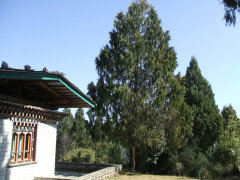
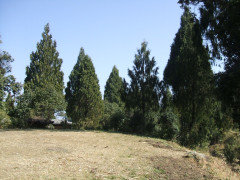
    Cupressus cashmeriana does not grow in Bhutan, but in Arunachal Pradesh, in India East of Bhutan. The Bhutan Cypress is called locally Tsenden and is a Cupressus tortulosa. Most cypresses sold under C. cashmariana are not that species.

  • 4 years ago
    last modified: 4 years ago

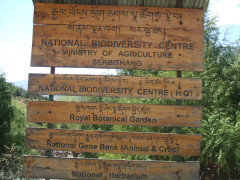
    No, you are wrong. This is a long argued debate, but the Bhutan Dept Agriculture has settled upon C. cashmeriana, and that's good enough for me.

    Cupressus cashmeriana, the Bhutan cypress[1] or Kashmir cypress,[2] is a species of evergreenconifernative to the eastern Himalaya in Bhutan and adjacent areas of Arunachal Pradesh in northeastern India. [ Now in vulnerable category, IUCN list retrieved in 2006 ]. It is also introduced in China and Nepal.[1] It grows at moderately high altitudes of 1,250–2,800 metres (4,100–9,190 ft).[3]


    Gymnosperm Database

  • 4 years ago

    The Cupressus articles from Misters Grimshaw et al. are a bit maddening to read: http://treesandshrubsonline.org/articles/cupressus/cupressus-cashmeriana/

    The taxonomy of much of the genus seems somewhat muddied.


  • 4 years ago

    davidrt28, I'm pretty sure I've seen Kashmir cypress in the National Arboretum in DC. Do you know?

  • 4 years ago
    last modified: 4 years ago

    it must have been something else...no way they would survive the winters, and even the summers might have challenges. Although I find evidence of them in being planted in a couple botanical gardens in FL and SC...I feel like, for example, when I was in New Orleans I hardly saw any if at all, and there's probably a reason for that. Either prone to root rot or Seiridium canker gets them. I've never seen a picture of a Florida garden featuring them...if they are there they are uncommon but welcome a correction from a Floridian!

    According to their plant explorer, the only Asian Cupressus they have is C. chengiana. Which I grew in my first garden, and as memory serves me, is essentially indistinguishable from the C. duclouxiana 'Eric's Form' that I have in my current garden. IIRC the former had come from Heronswood, the latter from Lazy SS Farms.

    https://www.usna.usda.gov/abe/

    I worry the plant is going to bring me heartache over the next few decades. Very few parts of China have much snowfall at all, and because of the Siberian high pressure system in winter, NONE of it has heavy wet snow and our "nor'easters". C. duclouxiana is beautiful but it has thin, wispy, steeply ascending branches...heavy snow and ice have already done a number on it, twice, and required some pruning to fix broken branches and re-establish a leader. It seems like the worst possibly branch structure to survive our winter weather. Time will tell if it will "toughen up with age!" It was totally undamaged by PV-I & II so at least hardiness is not going to be a concern.

  • 4 years ago
    last modified: 4 years ago

    The National Arboretum, US Botanical Garden AND Smithsonian have a history of tender conifers in huge planters that they roll out for summer...that's where you might have seen that.

    When I was a young lad I fell in love with a stunning 15' or so Podocarpus henkelii that was placed in the Haupt Garden by the Smithsonian. The box was huge...at least 4' X 4' X 3'.

  • 4 years ago
    last modified: 4 years ago

    Well, it looks like we have an ad autoritatem fallacy. As far as I know the Bhutanese Department of Agriculture did not publish any scientific study comparing the Tsenden with C. cashmeriana. The most recent molecular study implying two specimens from Bhutan and one from Arunachal Pradesh shows that they are three distinct species. Previous morphological studies comparing the Isola Madre tree and the French cashmeriana (described by French author Elie-Abel Carrière) showed that they are clearly different. For instance the seed cones of C. cashmeriana are up to 30 mm long and up to 14 scales, which is never recorded for the Tsenden. I will trust people who visited both trees in Paris and on Isola Madre.

    The Wikipedia description is wrong on several accounts. Same with the gymnosperm database. Young seed cones are not green, but blue and mature seed cones are not dark brown, but light brown. A Tsenden was measured in Bhutant to 91 m (and not 95 m). And so on.

    Both species are easily reproduced by cuttings. Grimshaw’s article also shows several errors. The tree wrongly labeled C. cashmerianaat Kew previously in the greenhouse was a cutting from the Isola Madre tree brought to England in the last years of the 19th century, while the C. cashmeriana of the Jardin des Plantes in Paris was there a few years before Carrière described it in 1867. The photo of the two other Tsenden on Isola Madre: the one on the left is (or was) labeled C. funebris. The one on the right comes from Hillier’s nurseries. The Isola Madre tree is a glaucous cultivar with a very thin foliage, while C. cashmeriana is naturally glaucous. The Tsenden is usually green like the Isola Madre sister tree. One photo shows a second tree from a cutting planted at the foot of the old tree to hide the bark.

    At Kew, there is a Cupressus lusitanica labeled C. cashmeriana. And so on.

  • 4 years ago
    last modified: 4 years ago

    Thanks for noting such detailed observations, pseudosequoia. I wonder what the old owl pineresin would have to say about all of this!

    I have been lucky enough to see the Isola Madre tree but only marveled at its beauty and did not analyze any of its taxonomic intricacies. This is of course subjective but I still say if there's one place in the world to go to see gardens, it is Lago Maggiore!

    Just curious - is what I think you are saying is the true C. cashmeriana in Paris...planted inside or out? I'm going to guess it's in 'un serre' as they call them! Paris has had some cold winters.


  • 4 years ago

    Hi David,


    Outside. against a building and between buildings. Not a public area. Afair, one specimen was uprooted in 1972 by a tornado, but as it is easily reproduce by cuttings, it was no problem to plant another one. In Lyon it was kept inside a greenhouse (see photo on the French article of wikipedia), but now this specimen is gone. Geneva BG received a cutting from Lyon. Outside it withstood the cold wave of February 2012 (2 weeks frost with a minimal temperature of -19°C). It suffered and all seed cones opened under stress. Unfortunately this specimen was cut for no obvious reason after it had recovered. Lyon gave another cutting to Geneva BG. Once established it is more hardy than usually thought. The Tsenden is even hardier.


    C.cashmeriana is also present in a few BG in the South of France and one is more than one century old. It was described by Silba under C. pseudohimalaica. So that this last name is a heterotypic synonym of C. cashmeriana. At one place there are a Tsenden and a C. cashmeriana planted side by side. Impossible to even think that they are the same species. Pollen release periods are also different and not overlapping.


    My guess is that the people who put the Tsenden into C. cashmeriana never saw the trees growing in France. It was introduced only recently by K.Rushforth into England and I am not even sure that it began to produce seed cones.

  • 4 years ago
    last modified: 4 years ago

    I can't see a definitive answer to this question. But I must note that there is no such plant recorded with the name C.tortulosa.

    The American Conifer Society and the hallowed RHS both recognise Tsenden as C. cashmeriana.

    And to further muddy these waters...


    Full Article

  • 4 years ago

    When people only copy the errors of others without checking anything you will find the same errors all over the places. It proves nothing but ignorance of the facts.


    Nobody cares to verify, let alone because they do not have access to the original material studied by Carrière.


    About C.tortulosa, this name by Griffith was unearthed by Silba. Then Farjon proposed to reject this name because he could see no difference between the Tsenden and C. cashmeriana. (Farjon constantly cannot distinguish C.lusitanica from C.torulosa. There are two C.lusitanica at Kew with the label C. torulosa, and the colour illustration in his C.torulosa article in Curtis's Bot. Mag. is a... lusitanica. Same with the photo of a C.torulosa in his Handbook: it is a lusitanica). The Nomenclature Committee chose to consider the name tortulosa as an orthographic variant of C. torulosa. Unfortunately they did not study Griffith's manuscripts, and thus their decision is only a matter of their opinion without a document base. Which Latin name(s) for the Tsenden is now secundary, as there could be two (and even three) different species growing wild in Bhutan. And even one possibly already extinct in the wild (the most accessible grove having been cut).


    There is the case of the cypresses of Sichuan and Gansu. Once treated as one species (Cupressus chengiana), now treated as three different species from three separate valleys. This splitting is confirmed by molecular and morphological analyses.


    In Bhutan too, the different wild populations are separated in isolated valleys, but material is lacking for study. Most of the wild populations are difficult to access. That is their best protection. Usually material is collected from cultivated trees, but this material is not reliable. Some C.cashmeriana could well have been planted around dzongs or monasteries. There is evidence that the Tsenden introduced in Italy in 1862 was collected in eastern Bhutan.

  • 4 years ago
    last modified: 4 years ago

    "In Bhutan too, the different wild populations are separated in isolated valleys, but material is lacking for study. Most of the wild populations are difficult to access. That is their best protection. Usually material is collected from cultivated trees, but this material is not reliable. Some C.cashmeriana could well have been planted around dzongs or monasteries.

    I totally agree with this, and is the reason that there is no definitive answer to the discussion. If so many authoritative sources cannot agree on a species, who is the final arbiter? A circuitous puzzle at best.

    Tashi Delek.

  • 4 years ago

    Hello Omar,

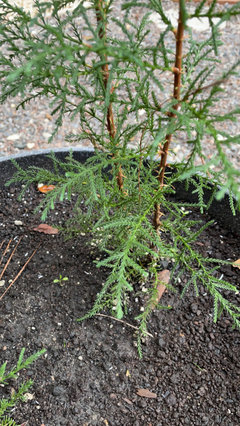
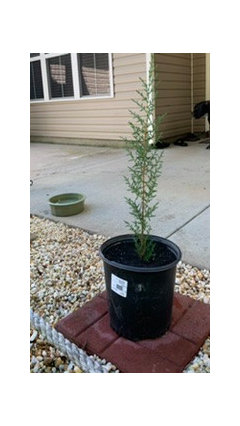
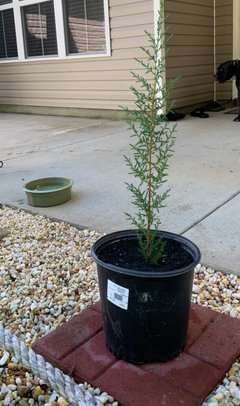
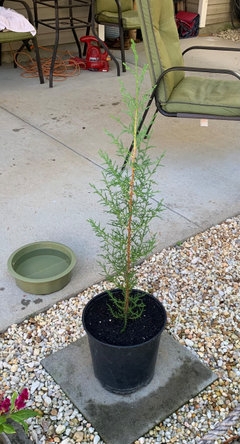
    Did you ever find any trees? I have 8 Kashmir Cypress (Cupressus Cashmiriana) trees that I have been growing from seed (from verified/trusted seedbank) for my own projects but i had too much success. I have four plants betwen 8inches and 24 inches tall that i could part with. Just let me know if you are still searching.


    Omar Ainza thanked Jody Starr
  • 4 years ago

    Hi @Jody Starr. That is really awesome! Unfortunately, I was not able to track one down. I'm definitely interested in your offer :) Let's chat in our inbox

  • 4 years ago

    Sorry, but the seedlings on the photos are not Cupressus cashmeriana.

  • 4 years ago

    Pseudosequoia , what makes you say that?

  • 4 years ago
    last modified: 4 years ago

    The overall shape, the leader, the shoots, the needles.

  • 4 years ago

    Okay. Well I’m not sure your qualifications, but I have checked these against other trees their age and they seem on par. Those photos are from late August, and now in November they are beginning to take on a more blue color and the needles a more delicate texture.

  • 4 years ago

    Also the specific name used for the seeds was Cupressus darjeelingensis, cashmariana and from what i have read is that these plants may differ depending on where they were sourced. As I understand it this isnt a varitey/cultivar that is stays small or more decorative unless grown that way purposely.


  • 4 years ago

    While the debate rages on...Jody, can I just ask out of curiosity what part of the country are you growing these? I assume you intend to landscape with them?


  • 4 years ago

    "Also the specific name used for the seeds was Cupressus darjeelingensis" aka C. lusitanica from the specimen used to describe this fake taxon.


    Then this cypress is quite likely a Cupressus lusitanica introduced on the first hills of the Himalaya by the British during their occupation of India. The Indian merchants collect seeds in these orchards of exotic conifer species planted by the British. They will not care to collect on wild trees. All cypresses labelled "torulosa" or "cashmeriana" from such "sources" are fake specimens, eventually also hybrids.

  • 4 years ago

    David, I am growing these In East Georgia. My growing zone is 8a. I am actually growing these from personal bonsai projects. That is why i chose to grow specimens from seed. Kind of gain a better appreciation for the process. I have lots of trees growing right now.

  • 4 years ago

    Psuedo,

    I am aware of Mexican Cypress. I didnt know they turned blue. Have you grown the trees from seed yourself? I admire your passion for trees, but I’m a bit taken aback at your aggressive nature to proove someone is wrong. While meaning well Im sure, your approach is debatable. My source was sheffields, and they list many alternative names for these trees.

  • 4 years ago

    @Jody Starr,


    Sheffields gets its "cashmeriana" seeds from India. The Indian seed merchants are not at all reliable. My first "cashmeriana" were glabra and my first "torulosa" were lusitanica with some odd specimens which are likely hybrids. And "funebris" also being lusitanica. All seeds collected in orchards because it is so easy.


    C. cashmeriana does not turn blue, the seedlings are a very light blue. And yes I grow them as well as the C. tortulosa and the C. torulosa. At the same time to compare their respective growth rate and shapes. Who has done that? No one. And it is not the first time I am doing it, as it is each time an opportunity to learn more about these cypresses. And yes, their growth rate is different. And the observations are not about a few seedilings, but a few dozens.


    It happens that I am tired to read so much crap and confusion about that cypress. Again: who has studied it? I mean the live plant. Nobody. At Kew there are two C. lusitanica labelled "C.cashmeriana" (and they do not even have a pendulous foliage) and three other lusitanica labelled "C.torulosa".


    Take for instance the article published by the ACS mentioned above, It is full of errors. For instance the young seed cones are not green, but blue. This species was not described by Royle but by Carrière alone. Royle has nothing to do with the description or with the name. The description in that ACS article fit C. tortulosa not C. cashmeriana which has much bigger seed cones (to 31.8 mm). Number of bracts is ludicrous even for tortulosa. There are not 36 ways to say that something is wrong. Sorry.


    And by the way it is not about passion, but about observations, studies and knowledge. For instance in the so-called references given by shaxhome you will find nothing about the pollination periods of these Himalayan cypresses. If they don't release their pollen at the same time (they don't) it is a strong evidence that they do not belong to the same species.