Software
Houzz Logo Print
nevermore44

Yellowwood tree leaf color

5 years ago
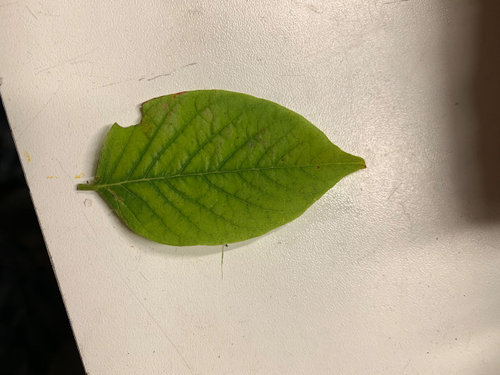
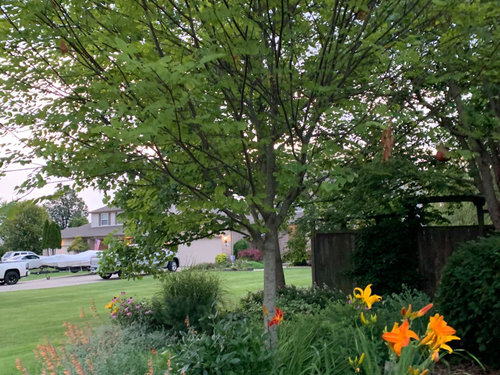
So i planted a yelllowwood 4 years back and its gotten to about 14 feet tall and nicely wide. my soil tests out at a pH of 8… and reading that yellowwood can take higher pH without issue … i thought it would do well. Last year the leaves seemed smaller and not a nice green. This year its worse. Looks chlorotic.


I mulch heavily with leaf mulch each year and actually do apply elemental sulfer around its drip line (along with some other flower beds)


Any other ideas besides chlorosis? i would hate to have to remove it


Comments (19)

  • 5 years ago

    you would remove it for a little off color leaf issue??


    it looks otherwise rather good ...


    how much has it grown since you planted it???


    big city name ..


    ken

  • 5 years ago

    It's grown about a foot a year at a guess. I"ll try and get color correct photos... the phone is adjusting it some. The overall color is "sickly" and you see as many branches then you do leaf canopy. The tree was formerly dense and grass green... which is what bugs me.


    I did find one web site that says that yellow wood is tolerant of high "but you might see some chlorosis".... ugg.

  • 5 years ago

    I do also have really high Mag in the soil..


  • 5 years ago

    These are such great trees. I'd get a soil test and see if there are trace element issues.

  • 5 years ago

    Not a tree I know, but you say "my soil tests out at a pH of 8… and reading that yellowwood can take higher pH without issue".

    You then say "I mulch heavily with leaf mulch each year and actually do apply elemental sulfer". Both of these will LOWER the pH, making the soil more acidic.

  • 5 years ago

    That is correct. whats you r queation?

  • 5 years ago

    Not a question, just an observation.

    If your Yellowwood is Cladrastis kentukea, this appears to grow in an area of limestone, which will have a soil that is naturally alkaline.

    By adding leaf mould, and especially sulphur, you will be making your soil more acidic, which MAY be your issue.

    As I say. Just an observation

  • 5 years ago

    That's certainly true, but 8 is way higehr than neutral (logarithmic scale) and leaf mould is organic so breaks down slowly so I doubt that that is the issue. Leaf looks more like a trace element issue to me. Mine are in roughly neutral to slightly alkaline soil and are fine, just as one data point.

  • 5 years ago

    Agreed that the leaf mould on its own, is neither here nor there, but elemental sulphur applied along the drip live could acidify the soil where the roots are most active.

    I am not precluding anything but, to me, applying sulphur like that, to a lime loving plant, could well cause issues.

    That is all I am saying.

  • 5 years ago

    I have basic soil test but it doesn't give the micro nutrients on it. Ill look into the complete test.


    The tree is suppose to be "tolerant" of a higher PH... but apparently does better in a more neutral soil.

  • 5 years ago
    last modified: 5 years ago

    Applying a moderate amount of sulfur to the root zone shouldn't hurt & might help. But other, different issues can cause this...

  • 5 years ago

    I'll be getting the complete test here at some point to micro-nutrients. The issues being the chlorotic looking leaves, and each leaflet on the compound leaves are getting dimensionally smaller for the past few years.... leading to a much less dense canopy.


    My existing soil test reads:


    pH: 8

    Phosphorus: 15 ppm

    Potassium 140 ppm

    Magnesium 357 ppm

    Calcium 4542 ppm

    CEC 26 (meq/100g)


    % of Exachangeable Bases

    K: 1.4

    Mg: 11.4

    Ca: 87.2


    Organic Matter: 3.7

  • 4 years ago
    last modified: 4 years ago

    Hi, chiming in a little late, but I'm browsing through threads and saw this. I've got a large Yellowwood (50+ years) planted by the previous owner and numerous younger ones of various ages growing around the yard, as it reseeds rather prolifically. It borders on weedy! They flower approx. every other year, and grow very well in this well-drained sandy loam without any care whatsoever (here in Mass I think the soil tends to be a bit acidic.)

    Your tree looks pretty good overall. Only thing I would suggest from a superficial glance is perhaps thinning out some of the branches from the canopy, to establish some strong main branches. It looks very "branchy". Has yours started to flower yet?

    I would also stop with the sulfur, and just mulch the tree, but that might not even be necessary as in my experience this is a very drought tolerant tree.

  • 4 years ago

    The tree has flowered lightly for a handful of years but never set seed. i dont know if it can self polinate or not. i dought there are any near me.


    ill have to see id the sulfer from this year does anything or not. i alos have some chelated iron taht i cam test on the leaves to see of its the iron or not

  • 4 years ago
    last modified: 4 years ago

    You seem to have some strong rooted perennials that are right next to the trunk. Perhaps they are affecting the Cladrastus feeder roots in that area, or altering the micorrhizae in the soil that legumes depend on to make nitrogen? I'd keep about a 3 foot area plant free next to the yellowwood. The feeder roots are very important. Yeah no more sulphur.

  • 4 years ago

    How close is that other tree which we see just beyond the Cladastrus?

  • 4 years ago

    Theres a poplar 20 feet behind and then some yews 8 feet to the side. yellow woods are understory trees i beleive so id not think it e an issue

  • 4 years ago

    A yellowwood in a Bedford, PA cemetery.


  • 4 years ago

    Yeah there are some realiy nice ones out in the open but also hugging a larger tree lines. they are all in much much older parts of town that have a more neutral or acidic soils

Sponsored
Peabody Landscape Group
Average rating: 3.5 out of 5 stars8 Reviews
Columbus' Reliable Landscape Design & Contracting