Software
Houzz Logo Print
ardore

Evergreen growth over time...worries for distant future

5 years ago
last modified: 5 years ago

Hello. We are wanting to plant some evergreens along the side of our yard. We do not want a tight wall of trees, but rather something staggered to allow for growth over time. My concern is how large trees like Norway Spruce, Eastern White Pine and Green Giants may get over time, like 30 or more years down the line. I think a maximun height of 40-50 feet is what I'd prefer, but is it silly to be worried about them getting bigger than this when that will happen so far ahead from now and they will likely stay within the height range I prefer for much of the nearer future? Thanks.

Comments (40)

  • 5 years ago

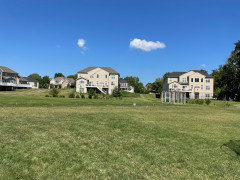
    Knowing where you are and pix of the area would help. How wide can they be?

    tj

  • 5 years ago
    last modified: 5 years ago

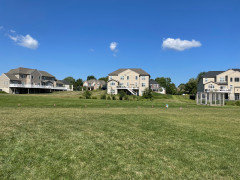
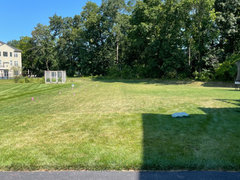
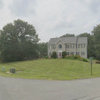
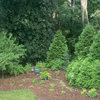
    Good suggestions. We are in southeastern PA. I should probably also mention we get a fair amount of wind especially in the winter. The little flags are the general area where we would plant. First two pics show side yard view (neighbors homes and backyards). Last pic shows facing back of our yard / existing trees. thanks!


  • 5 years ago

    Oh, and width, I don’t know. The backyard is probably a quarter acre or a little larger and that side yard is longer than the other side due to an irregular shape.

  • 5 years ago

    Don't see any little flags?


  • 5 years ago

    First and second pix…and they are small.

    tj

  • 5 years ago

    contact your local COUNTY extension office.. and ask them about things that are NOT advised for you area ... e.g. in my MI ... white pine is having a hard time .. same with blue spruce...

    you are very wise to be planning ahead ... everyone here does .... thankfully you found us...

    trees grow in tree time.. and that is counted in decades ... so planning decades ahead is the way to go ...

    smaller transplants will get over transplant faster.. and usually outgrow very large.. instant impact transplants ...

    here is a primer i like ... note section one.. and then commit the rest to memory ....

    https://sites.google.com/site/tnarboretum/Home/planting-a-tree-or-shrub

    the only fallacy i see in your thoughts.. is that you want all of one thing.. why? .. diversify ... just in case in the future something wipes one out.. odds are.. the rest will live on ... plant all of one... and you could be starting over decades out ...

    just skip picea pungens.. blue spruce ...

    ken

    BTW: sight blocks are planted to block the sight line.. as close or as far apart as you wish .. young trees planted at the same time.. will grow together faster if closer ... and it will take longer if further apart.. that is your design decision .. not really a tree decision ... but i dont think you are really going after a sight block.. due to the gentle hills the further houses are on ... unless you hope to see that when you are 80 ... lol ..

    ALSO ... diversifying plants also gives you a diversity of the color green as well as leaf texture etc ... and i always think that is a plus ... who needs a plain green repetitive curtain out there ...

    FINALLY: ... [great post structure here.. lol] ... a visual block will be made fastest with trees in the lawn.. dont get caught working ONLY at the property line ... it looks like you have a huge lawn... what do you need it for.. your helicopter.. plant some deciduous trees closer to the house .. relatively speaking.. not real close .... and inside 5 to 10 years.. those houses behind will start disappearing ...

    ardore thanked ken_adrian Adrian MI cold Z5
  • 5 years ago

    man i would love to know how i made that in bold type... perhaps another houzz mystery ... it was something with the mouse ...

  • 5 years ago

    I agree that you are wise to plan ahead. Yes, the width is often underestimated and can become a huge problem especially in a residential lot. Even a graceful kousa dogwood can get 20' across before you know it. Look through a good website like the Missouri Botanical Garden for detailed plant information. DO NOT let people tell you that things can be pruned. It's rare to see a mature good looking shrub or tree where it was kept unnaturally small. Shrubs usually become woody and trees look hacked.


    The house we recently purchased was over-planted 40 yrs ago with fantastic specimens that may have been lovely then but are now a big problem. $20k of tree work would not thin out this property enough for air, light, and the health of surrounding plant material. We're on a large lot and even the enormous deciduous trees are way too engulfing.


    A large commercial nursery that grows their own material and serves both wholesale and retail may be able to give good advice. Beware of the well meaning 'landscaper' who may not have extensive education in arboriculture.


    (retired pro)

    ardore thanked TBL from CT
  • 5 years ago

    Thanks, Ken. The current plan includes all of those evergreens as well as some flowering cherries a little more into the yard and a few things on the other smaller side of the yard. Since we are planning a staggered look with fair spacing in between they will come into the yard quite a bit especially as they grow, but again that’s where I worry they’ll eventually be just too big. I had wanted some flowering shrubs (maybe lilacs or rhododendrons), but seems everyone talked me out of it saying it woukd require a larger bed / a lot more expense?

  • 5 years ago

    I am in northern Baltimore County, just below the PA line, and lost 5 mature plus one young blue spruce. Lots of them died in this area. So maybe don’t plant them.

    ardore thanked ShadyWillowFarm
  • 5 years ago

    TBL, yes its been a frustrating process with most landscapers telling me not to worry about this or that and eventually feeling like I’m just settling for things that aren’t what I envisioned.

  • 5 years ago

    Do you want or really need evergreen trees that tall? There is a whole world of conifers and evergreens that will mature out in the 25' range. Layered/staggered and given enough room, in 30 years they would be some awesome specimen trees. Chamaecyparis is a good genus to browse. If you have room for a spruce tree, you have room for a rhododendron. Leave it alone and pretend it is a tree.

    ardore thanked Christopher CNC
  • 5 years ago

    Thanks, Chrisripher. 25’ would be plenty fine. Any other recommendations? I think we need somethings that are at least decently wind and winter hardy. The furniture gets blown around our deck on the regular.

  • 5 years ago
    last modified: 5 years ago

    Holly is another good family to look at. Do they grow in your area? Winter wind is a potential issue. The spruce, pine and arborvitae are all going to have dwarf cultivars and different species to chose from than the three large common ones you mentioned at the start. There is fir and cedar and juniper. Yew and cherry laurel can be allowed to grow free. So many choices. The main thing you want to be looking for is the smaller cultivars of standard species.

    I would be willing to bet there is a good arboretum near you worth visiting. Go. Take names.

    ardore thanked Christopher CNC
  • 5 years ago

    What a fun project, a literal fresh slate! Ken brought up some very good points above. I'm in the PNW so I'm not familiar with PA natives, but below is what I would do to get this project started.


    The philosophy is this:

    • Stick to mostly native plants, but consider adding a few in from neighboring USDA zones (perhaps a few in wetter and a few in hotter zones or areas from your same zone?) as a long-term experiment. Pick a mix that will give you greenery or color throughout the year. I would start by searching for images of forests in your area for inspiration on what trees and understory plants and shrubs often occur together. Certain plants often are often found growing together (example for the PNW: Douglas Fir and Western redcedar).
    • Don't plant everything at once. Plant in stages, mimicking a sort of miniature "forest succession" plan. Sun-loving plants first, followed by more shade-loving plants in a few years. Forest succession looks at what plants would grow in which order if you were to start from scratch, which is basically what you're doing on a very small scale. Check out this link, page 2, for PA succession. In my area (PNW), Red Alder is typically planted to "start" a forest, because it not only loves sun (abundant if there are no other plants around) but it also helps enrich the soil.
    • Think about how much yard work you want to do or pay for! Some trees drop a PROLIFIC amount of organic matter (seeds, leaves, cones, needles) on the soil. If you like those trees, make that part of the look you're going for. That organic matter is a natural mulch. It protects microbes that help all the nearby trees. You can border all the trees with shrubs, which would catch that falling material instead of falling on the lawn. Which brings me to...
    • Border your trees with shrubs. Grass is very hard on trees and sucks a lot of moisture out of the soil. It also would help soften the look.
    • Consider mycorrhizal injections to get your first plantings established and defer to your extension forestry office or local nursery on what time of year shrubs and trees can be most effectively planted in your area.


    I can imagine that spot with a picnic table amidst a few fruit trees, shrubs, birch, maple and some conifers. I hope your project inspires your neighbors to do something similar.

    ardore thanked Anon Ymous
  • 5 years ago

    I am in Maine and my white pines are 60 to 80 feet tall. Maybe a fir or spruce would be a better choice. Your house and land are lovely.

    ardore thanked glirastes
  • 5 years ago

    Plant some fine deciduous trees--an oak for sure.

    ardore thanked laceyvail 6A, WV
  • 5 years ago

    Green Giants have a maximum height around 40’ and are really good at protection from snow and ice. I live in Indiana in zone 5 and have six of these in my yard. Very pretty trees and low maintenance. I heard they’re susceptible to bag worms but we have not had issues with that at all. I would plant them without concern in your yard if you zone 5 or up.

    ardore thanked Emily
  • 5 years ago

    Deer in the area?

  • 5 years ago

    We see deer less than a handful of times a year.

  • 5 years ago
    last modified: 5 years ago

    "Stick to mostly native plants"

    Why? We don't really have many quality 'screening evergreens' native to the lower elevations of SE PA, which is presumably where the OP is. Juniperus virginiana would be native to disturbed sites, but only select cultivars, now hard to obtain in the nursery trade, make good long term large specimens. Most of them have a tendency to form split leaders, and turn an ugly brownish color in winter. White pine would be native to ridgetops in parts of SE PA, but can be problematic in garden settings because of its issues like limb breakage from ice, etc. American holly is probably the closest to an idea candidate...and anyone having a chance to compare them to Eurasian hollies or hybrids like the Koehne hollies would quickly see that the latter are aesthetically and practically superior in every way. Denser form, faster growth, bigger, brighter berries, and darker, glossier foliage. Huge flocks of robins have chowed down on my Koehne berries at the end of particularly cold winters - every last berry - and I have yet to see piles of dead robins because those berries are in some way unsuitable for them LOL. Honestly it's the same with the berries of my native opacas - they are clearly a food of last resort for most of the birds around here, anyhow.

    The last time I was at McLean Nursery in Baltimore he was a little low in stock but there are still plenty of nice hollies there; if the OP wants larger ones Patuxtent Valley Nursery in Howard Co. MD would have some. There are probably nurseries in SE PA that carry arboretum-grade material but I can assure you nothing like the reasonable prices and variety at McLean.

    I would plant a mix of suitable non-native and native, NON-INVASIVE species. Yes Juniperus virginiana may be native, but a mature one is going to be seeding all over your flower beds and there's a good chance you will regret planting them. The last thing you'd want would be a mono-culture of an absolute crap plant like leyland cypress, and it's relief to see that apparently, none of the neighbors have done that.

    Good large evergreen choices for SE PA would be:

    Cryptomeria 'Radicans' or 'Yoshino' - stay green in winter

    Thuja Green Giant

    Atlantic White Cedar - McLean Nurseries sometimes has rooted cuttings of an excellent form on their property

    Hardy Cedrus like Cedrus 'Shalimar' or C. atlantica/C. libani if you are patient ;-)

    Group 2,3 or 4 firs (notably - none native to North America would do well long-term in SE PA except maybe Abies concolor if the soil is just perfectly to its liking, and maybe Balsam fir if you are literally on top of a small mountain! Much safer to just plant a Nordmann fir!)

    Sure a white pine or two with understanding of their limitations

    The large Eurasian hollies like Koehne hollies...make sure to not let them go crazy

    'Murray Cypress' if you really want something that looks like leyland but is much better and less disease and death prone. This is a recommendation I have some reservations about but again, one or two in a mixed border would be ok. They will be hardy in the milder parts of SE PA but I'd be careful > 400 ft. or appreciably N & W of Philly. It's really Cupressus X ovensii but being called Murray Cypress by US resellers for some reason. No damage in my garden at 0F during the polar vortex winters, which damaged some leyland cypress up in Lancaster County...where it surely went below 0F. (update - now I see some vendors are flat out calling 'Murray' a leylandii - making me wonder if they are just slapping 'Murray' on whatever some moron thinks is an improved leylandii. So, be careful. A place like forestfarm would be selling the right thing: https://plantlust.com/plants/25357/cupressus-x-ovensii/ If you see the real X ovensii against X leylandii, they are quite different. No seiridium dieback or bagworms on ovensii here. It's an amazing testament to the greed and stupidity of the country's wholesale nursery industry that they can't even get the name of a better replacement for leyland cypress correct...but I digress!)

    Norway spruce is fine...PIcea orientalis is fine...DO NOT plant Picea pungens!

    ardore thanked UpperBayGardener (zone 7)
  • 5 years ago

    "is it silly to be worried about them getting bigger than this when that will happen so far ahead from now and they will likely stay within the height range I prefer for much of the nearer future?"


    How old are you? :)

  • 5 years ago

    Ha ha, cearbehaill. I’m in my early 40s.

  • 5 years ago

    If you have ANY deer, even if just passing by to say hello once a year, do not plant trees they would ever eat. All you need is one bad winter to wipe them out or permanently disfigure them.

  • 5 years ago


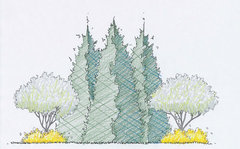
    I found this design on arborday. It is green giants with yoshino cherries and then forsythisa (planted 7-10 years later). I might choose a diffrrent flowering bush (lilac maybe or something else?), but would have time to figure that out. If staked properly first fee years would the yoshinos hold up to the wind? I know anyone can loose the flowers with a bad Spring storm, but generally want to know if they hold up through the winter winds.

  • 5 years ago
    last modified: 5 years ago

    PS: and would the size of these be more reasonable / not overwhelming over time?

  • 5 years ago

    Personally I feel that grouping is a bit too symmetrical. I think you should start by making a scaled sketch of your yard on some graph paper, and cutting out various pieces of colored paper in circles to represent the approximate mature size of plants you're considering. That should make it easier to decide on layout. Consider what your view would be looking out of your windows, walking through the area, etc. If you know that winds typically approach from a certain direction that should also inform layout... the green giants would face that direction and provide the buffer.


    This page has some suggested native shrubs at the bottom: https://extension.psu.edu/invasive-shrubs-to-avoid


    Consider the following native shrubs for your fall planting: red chokeberry (Aronia arbutifolia), witch-hazel (Hamamelis virginiana), winterberry holly (Ilex verticillata), ninebark (Physocarpus opulifolius), Virginia sweetspire (Itea virginica), inkberry holly (Ilex glabra), wild hydrangea (Hydrangea arborescens), bayberry (Myrica pensylvanica), silky dogwood (Cornus racemosa) and New Jersey tea (Ceanothus americanus).


    ardore thanked Anon Ymous
  • 5 years ago

    Do you see lilac locally? My recollection is that they are almost unknown near Philly, and I don't remember them near Lancaster either. If you don't see them, it's because they don't do well.

    Any kind of flowering cherry is very short lived. If we get 20 years from the Yoshinos, we are happy.

    Get thee to Longwood, and take notes.


    ardore thanked mad_gallica (z5 Eastern NY)
  • 5 years ago

    Also Wintherthur, Mt Cuba, Chanticleer, Morris Arboretum. You are in an absolutely great area for wonderful public gardens, chock full of ideas.

    ardore thanked indianagardengirl
  • 5 years ago

    Standard lilacs get disgustingly disfigured with powdery mildew where I live - right along the upper Bay. I'd always assumed it would be a little less of a problem in most of SE PA...but not sure. Not a plant on my radar whether healthy or not. Certainly, ardore would be better off planting the special cultivars that are mildew resistant.


    Another less serious problem with the old patch in my yard is they are a favorite plant of European hornets to use for building nests. They don't actually build in them, they just tear up the twigs for substrate that they use elsewhere, apparently. When I had an infestation of this invasive exotic in my yard (the hornets I mean, not the lilacs LOL), they frequently hung out around them making dangerous to be near them. The one time I was stung (most painful insect sting ever) was when I wondered too close. I destroyed the colony and they haven't been a problem since.


    ardore thanked UpperBayGardener (zone 7)
  • 5 years ago
    last modified: 5 years ago

    I like that PSU has that site and good that it was shared - but in my opinion it's missing a really bad one: Rose of Sharon. Invasive in my area and I've also seen it invasive in the immediate suburbs of Philly.

    But this thread opened with the OP asking for evergreens, and none of those are.


    ardore thanked UpperBayGardener (zone 7)
  • 5 years ago

    The PSU link was shared in response to ardore's comment above -- "I might choose a diffrrent flowering bush (lilac maybe or something else?), but would have time to figure that out."

  • 5 years ago

    Thanks for clarifying and apologies for the misunderstanding.


  • 5 years ago

    Thanks for all of the great suggestions. I’m going to try to go to Chanticleer or Morris Aborettum soon. I thought as a busy working mom with 3 young kids (incuding a baby) that we could count on a landscaping company as a one stop shop from design to implemetation, but now with hindsight, I’m wishing I thought of Houzz sooner. I’ll try to let everyone know what I come up with.

  • 5 years ago

    Don't Firs do well in SE PA? This is from memory, but I think the national Abies collection is at the Morris. I think I'd make room for a few of them.

    ardore thanked maackia
  • 5 years ago

    I think someone mentioned the Nordmann Fir, so I'm going to look into that.


  • 5 years ago

    I thought firs were heat sensitive.

  • 5 years ago

    Ok, got through that thread.

    So the OP needs to be very, very careful about firs, and even then they may crash and burn. It seems that Morris is basically running a science experiment about which firs last the longest for them. It's not a collection in the usual term.

Sponsored
Buckeye Basements, Inc.
Average rating: 5 out of 5 stars40 Reviews
Central Ohio's Basement Finishing ExpertsBest Of Houzz '13-'21