Software
Houzz Logo Print
webuser_48229996767

Home inspection finds

5 years ago

Thinking about buying a home the inspector came back with several issues. i really like the house but im worried that the ”insides” might be a dealbreaker.


some issues found:


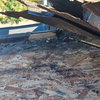
-imperfections on the roof. gap near exhaust

-mold in attic not too much

- 3 cracks in foundation. 2 have been addressed 1 has not

- main water line is being held by straps because there is a crack

-sumppump is installed incorrectly

- abestos in the crawl space


those are the major things. other things include a/c and water heater 10 years past life expectancy.


Can anyone chime in? family is saying take my hat and run.

Comments (25)

  • 5 years ago

    All of these are fixable with enough money. Some of them may prevent a mortgage from being approved until repaired or fixed by current owners (asbestos, mold). If you have time, money and a good realtor and real estate attorney, then see what the options are. Good luck! There are always more homes to buy with their own sets of issues.

  • 5 years ago
    last modified: 5 years ago

    Are you planning to ask the seller to take care of these problems?

    The two issues that "jump" at me are the main waterline being held by straps-- what the heck??

    and the asbestos.

    Asbestos abatement is expensive.

    If it were me, I'd move on.


    eta-- and these are just what the inspector found! There are many many posts about things inspectors missed. This may just be the tip of the iceberg. Just sayin'.

  • 5 years ago

    I would not want to deal with the asbestos issue - although it might be fine, I'd feel like it was a bomb waiting to explode, so I would want it removed, and that's an expensive and involved process. That alone would make me walk away, and the crack in the main water line is another issue I wouldn't want to fix, even if the price was knocked off of the purchase price. The hassle and time required to getting those 2 resolved would make me walk away.

  • 5 years ago

    I am sure if they are finding asbestos in one or two places, it is probably in more, that you cant see. The main water line repair, could be very expensive repair. Its up to you, how badly you want that house, but, to me, it sounds like a house that wasnt maintained, and could potentially be a money pit. I would take your friends and familys advice and walk away. There are better homes out there.

  • 5 years ago
    last modified: 5 years ago

    Move on. Yikes! Listen to your family and listen to me. That is the worst home inspection report I have ever heard! Asbestos, mold, sump pump, crawl space, A/C, water heater, roof?

    Or offer them $100,000 less than asking.

  • 5 years ago

    All problems are fixable with enough money. You def need specific inspections to get a better understanding of the major issues and cost to repair, then should ask for financial concessions to cover them if you are willing to take it on. Whether seller is willing will depend upon your local market, but once all these things have discovered the seller will be obligated to disclose to future buyers should you back out. FWIW my daughter recently bought a house. Contract price was $429k. She ended up getting $109k reduction in price after structural engineer inspection disclosed foundation issues- seller did not wish to go to the trouble to repair, and knew once that was known she would have a challenge to sell with that known defect. So if you want the house and have the stomach for the repair process, try to stay dispassionate, get the inspections, and ask for the concessions.

  • 5 years ago

    A seller doesn't have to disclose anything a potential buyer claims is a defect in the property. A typical home inspector isn't qualified render to a professional opinion on just about everything contained in the home inspection report.

  • 5 years ago

    Not sure of the specifics of this one: Sump pump installed incorrectly. But when I remodeled my first floor after living in my house for 15 years with no functional problem with the sump pump, the plumbing inspector would not pass the plumbing until the incorrectly installed sump pump was installed correctly even though it had nothing to do with the renovation. The problem was how it was discharging i.e. into the drain line vs. the front yard.

    Several thousand dollars later, it is now discharging to the correct place. So if that's the issue for you, don't let that one pass on to you to fix.

  • 5 years ago

    A seller has to disclose known defects and when an inspection is performed and shared with the seller, as it must be when proffered as the basis of a request for repairs or concessions, they are then known defects. I’ve bought and/or sold 15 properties of my own in the past few years so been down this road on both sides, repeatedly.

    “In all states, it is illegal to actively, fraudulently conceal major physical defects in your property. Beyond this, however, most states' laws require sellers to take a proactive role in making problems known to buyers, by making written disclosures about the condition of the property.”

  • 5 years ago

    Also take into consideration, the amount of money you're going to shell out for further inspections -- on a house you haven't even bought yet. AND if you don't buy it, you're out that money.


  • 5 years ago

    If I was a seller and a buyer was looking for a discount based on the findings of a home inspector, I'd simply ask for their final offer and move on. I wouldn't be "fraudulently concealing major physical defects" as a home inspector is not qualified nor does he find "concealed defects". It doesn't sound like you are very good at selling properties. Good luck in court...


    "Liability of the Seller

    But what if a seller does not disclose a defect? Can a buyer sue the seller for that failure to disclose? The short answer is yes, a buyer may have a cause of action for fraudulent concealment. But these cases can be difficult because of the proof required to win.

    A buyer must prove the following elements against a seller:

    1. the house has a concealed defect
    2. the seller had actual knowledge of the defect;
    3. the defect presents a danger to the property, health, or life of the buyer;
    4. the defect is unknown to the buyer; and
    5. the defect would not be disclosed by a careful, reasonable inspection by the buyer.

    Many of these elements can be hard to prove. For example, a buyer has to prove the defect was “concealed.” So, the defect must be hidden. If the defect is out in the open and easily visible, a seller has no duty to tell a buyer about that obvious defect. Similarly, a buyer also has to prove that the defect would not have been disclosed by careful, reasonable inspection by the buyer. So even if the defect is hidden, if the defect could have been found by a standard inspection, a seller is not liable for failing to disclose that defect.

    As another example, a buyer has to prove the seller actually knew of the defect. Arguing that the seller merely “should have known” about the defect is not enough. It must be proven that the seller had actual knowledge of the defect. That can be difficult.

    Finally, if a seller does disclose some aspect of a defect, it is then up to the buyer to make a full inquiry and inspection of that defect. For example, say a seller discloses there is some water damage to the house. After purchasing the property, the buyer discovers that the water damage is extensive. The seller is not liable for failing to disclose the full extent of the water damage. In such instances, courts place the duty on the buyer to fully investigate defects that are disclosed by the seller.

    All of this makes it hard to successfully bring claims against a seller for failing to disclose defects.

  • 5 years ago

    A great many homes built before the late 1970s used asbestos. unless you restrict your search to newer homes you will probably get a house with asbestos. unless the asbestos is unusual in some way or has been disturbed it usually is not a problem. people generally dont get it removed.


    in your list id be most concerned with the roof and attic mold (these issues are probably connected). you may need a new roof immediately. and the water main - can that be fixed?


    i personally wouldnt walk away until i had more info and an idea about costs to fix.

  • 5 years ago

    Ksc36, my real estate P&L is a far better measure than your opinion of how good I am at selling (and buying, renovating, managing)homes. I am an owner/investor, not a realtor. I would never fail to disclose, not only because it’s the law, but because it is the morally correct thing to do. And then….there’s karma. If one can’t make money in honest dealings, they shouldn’t be in business.

  • 5 years ago

    Maybe, but you clearly don't understand basic disclosure laws. The simple fact that a home inspector found the defects means they are have not been "fraudulently concealed" and are not subject to any disclosure laws I've seen.

    In my line of work, house flippers are the scum of the building industry and are usually morally corrupt (if they want to make money). Educated home buyers rarely go near a house flippers property.

  • 5 years ago

    Regarding disclosure, my husband usually handled all the major "house" things. After he died, I listed the house and answered "I don't Know" for the disclosure items. My husband handled that.

  • 5 years ago

    The issues on your list, OP, are enough to make me walk...no, run....away. It's not only about the money, it's about the grief associated with these types of repairs, especially water main and foundation.

  • 5 years ago

    Run away! Remember these discoveries are not necessarily all that will need attention. Sure you can repair defects but why invest in the unknown as a new homeowner. I guess you need to figure out for yourself why you feel so attached to a nightmare. Emotional attachment clouds good judgement.

  • 5 years ago
    last modified: 5 years ago

    ksc36 is wrong on so many counts with respect to disclosure requirements. I just Googled on Home Disclosure in MD and he has virtually nothing correct! Do your own search...

    Yikes!

  • 5 years ago
    last modified: 5 years ago

    Disclosure requirements are statutory issues and vary from state to state. However, in most states, items found on a previous inspection are not required disclosures. It is a very popular myth and many(most) real estate agents will tell you otherwise, but generally the courts have held that home inspectors are not independent third parties and the defects found by them are not required disclosures. However, there are some exceptions. If the inspection is done by a government agency, such as septic inspection, that becomes a known defect with the property. If the seller pays for the inspection then the defect must be disclosed as the inspector is then the seller's hired agent. Nor should the seller recommend an inspector that they have found satisfactory in the past (I would certainly argue that a recommendation qualifies as acceptance of expertise, but I am not sure there is precedent for this).

    Having said this, it is largely a moot point. It really doesn't matter whether or not the seller has a statutory obligation to disclose it. It matters whether or not they believe they have a statutory obligation to disclose it, and an overwhelming number of people will believe they do. As a real estate investor I have actually used that to my advantage a few times.


    ETA: This is actually a case I lost. Sellers were children of the homeowners, selling house after parents passed away. A previous buyer had the property inspected and found the house had previously had a massive termite infestation that had been treated by Orkin. On the lower level the termites had chewed the paper backing off a lot of the drywall as pieces were found laying on ground.


    The children paid someone to remove and replace all drywall on lower level walls. Their attorney argued they had no reason to know the cause of the drywall damage and repaired it because it looked bad. We argued the previous inspection with pictures had been supplied to them (which they acknowledged), so they were actively hiding the damage. The court sided with them. They were not required to disclose a report prepared for a previous buyer and acting to repair the damage didn't constitute an effort to hide it.

  • 5 years ago
    last modified: 5 years ago

    I'm in a state where there is a seller disclosure procedure. It is not a statutory mandate for omniscience - sellers aren't required to have experts do stem to stern investigations in advance. Rather, what's required is simply a good faith disclosure of what the seller knows, to the best of their knowledge and understanding. If a prior inspection the seller knows of disclosed a shortcoming that hasn't been fixed, that would be a required disclosure. The disclosures required are general, of known conditions, not of anything specific like a prior inspection. Failure to disclose known conditions are, I believe, viewed as fraud and are often required to be remediated after the fact, when possible, at the seller's expense.

    For a home I purchased recently, the preprinted form had a question about whether there were any noise, odor, or other nuisances experienced at the location. While not located in a landing or approach path for an airport, the seller indicated that sometimes aircraft fly over and a discernable but not loud noise may be heard. Fair enough. Now as the owner, I've learned that the disclosed condition is very infrequent and not very loud when it happens - usually helicopters flying high overhead or small planes that tow advertising banners above the beach.

  • 5 years ago
    last modified: 5 years ago

    Bottom line, would you conceal issues about the house you are selling, knowing full well that the repairs will be costly?

    If the answer is yes, then I hope you buy that "vintage Mercedes" for $100,000. only to find out it is a kit-car.

    Does deception equal fraud?

  • 5 years ago
    last modified: 5 years ago

    It can.

    Some think that lying and dishonesty only happen with something that's been written or with one's mouth open, that silence or passively withholding relevant or requested information is different. Usually, it's the same thing.

    I just looked at the form I got with my most recent property purchase, it's called a TDS (transfer disclosure statement). There are many questions and the sellers attest at the signature line that the information is true and correct to the best of their knowledge. The selling agent is required to make inquiries of the seller and to perform a "reasonably competent and diligent inspection of the accessible areas" and state that they found nothing further to disclose. And must also sign the form.

    But I'm never surprised by what some will do.

  • 5 years ago

    Every state is different I think. I've owned houses in 9 states and each time I buy a house, the disclosure list and requirements get longer and longer. When we bought in Central California, you had to disclose if you could smell dairy farm odors. Usually it was very obvious but I guess depending on the which way the wind was blowing, maybe not.

  • 5 years ago

    Odors would have been mentioned in the nuisance section.

    No slight intended to anyone but if you're referring to the Central Valley of Central California, I find much of that large area to have various kinds of nuisances. A difficult place to have to live.

    Were you at one of the military air or other bases in the area?