Software
Houzz Logo Print
michaelalt

Washing machine drain

4 years ago

Hello,


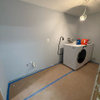
We are going to be starting a major renovation, which involves moving our washer and dryer up from the basement to the middle floor. The washer will be placed directly in the location where a shower/tub is currently. My thought was that would make for a good location as it already has a water supply and a drain (in case the washer busts a hose, etc). At the contract signing today the design/build firm said their plan was to cap off the drain and just put a tray under the washer. They said that if we leave a drain without having water in it regularly it will end up making the house smell, as the shower's p-trap needs to have water in it to keep the odors out.


I didn't think to ask about it at the time, but wouldn't they run the outlet for the washer down that drain, which would then keep it filled? If they had another plan for the outlet, then would I be fine with just dumping a bucket of water down the drain a few times a year? We have a guest shower in the house that gets used maybe every 4-5 months, and it has never smelled, that I am aware of. Where the washer is now there is floor drain that almost never gets water down it (maybe once every 8-10 years), and it has never smelled either.


I'm leery of putting the washer on the middle floor without a good drain, but I know nothing about any of this so am looking for any input. Thank you for your time and information.


Michael

Comments (3)

  • 4 years ago

    I think you get it, but not sure, so in case you didn't know a tub drain (that also has a showerhead) is probably 1 1/2", and a washing machine needs 2". Also, you need a standpipe for the washer. So you really can't use any of the tub piping. Also, a floor drain requires a 2", so ditto. Not sure how the pipes run and where they tie into the main stack, but that may be what they are referring to by saying "cap" the tub piping.

    You can certainly put a floor drain in a Laundry Room. It can not be covered or restricted by an appliance. A pan under the washer has to have an air gap when draining into the floor drain. So, many people do not want to step on a floor drain or even see one at all, or see any pipe crawling along the floor from the pan to the drain, or see the pan itself, since Laundry Rooms now have 'chic' decoration (meaning "fashionable," not "chick"=female!). Also, most upper level Laundry Rooms do not have sloped floors, so you would need to pipe the pan or water is free to go anywhere, not just toward a potential floor drain.

    A pan is good peace of mind, it can catch problems with the machine tub itself. However, most problems occur with the hoses and connections, and those leaks most likely won't occur over the pan. So they make "flood safe" hoses that auto-shutoff when a leak is detected. There are other more complicated systems available as well.

    As another peace of mind, you can lay Schluter Ditra on the floor for waterproofing. Assuming with that you will have ceramic/porcelain, you can also slope the floor to a drain as well, and use a metal decorative grate instead of PVC.

    So many options, just plan ahead what you choose so the details can be worked out.


    michaelalt thanked 3onthetree
  • 4 years ago

    Thank you for the in-depth reply. I did not know that drain sizes would be different, so that was all helpful to learn.


    The area will be pretty-much ripped out to remove the shower, and on the lower floor the ceiling is open in that area, and behind the current shower there is a chase with an access panel which they will be working in anyways. So it's pretty much a blank canvas with which to work.


    Can I ask how you would handle this, if you were to do it? We could pick almost any option, it seems.


    Thanks again for all of the help.

    Michael

  • 4 years ago

    Choices are hard! I assume you are asking about the pan/floor drain.

    I can say after decades of managing properties, I have never had a washer leak within or bust a hose. Some replacing hose gaskets at the shutoff, some lint buildup in the pump, but no 9-1-1. Having said that, for myself I am still considering putting in a pan/floor drain for a new Laundry, and likewise also debating putting in a pan for the Dishwasher (those I've dealt with a bunch of leaks and the accompanying floor finish headaches and subfloor mold).

    I'd say the Ditra should be a given, especially if there's a sink.

    If a floor drain looks to "utility" to you, but you want peace of mind, maybe it can be hidden somewhat. Code states a "permanent" appliance can't cover a drain, so that seems to be up to local inspector interpretation. Washer is hard plumbed like a sink, so I consider it "permanent" and even putting a drain behind the washer may not be allowed. Maybe it can go under the toekick of an adjacent cabinet (linear style) instead of smack dab in the middle of the floor.

    It seems now I am here along with you in this thread looking for some suggestions and ideas as well.