Software
Houzz Logo Print
need2seegreen

canker - is there a book on this?

Hi,


I tried to google search, without a definitive result. Does anyone know a good book with color photos, or a great thread here? Or elsewhere?


Before a couple years ago, I didn't know it existed - now I feel like I am seeing it everywhere. (And I am sorry to tell myself, but I am probably right.) I'd like to really know though.


Later I can put up photos if people are interested, but it is a little deflating. And who needs that?


Thanks.

Comments (21)

  • 4 years ago

    Thanks, roseseek!! I will snoop around there.


    Just in case anyone else has issues, for me the link didn't work until I cut it back to just the ".com" part - could be my equipment though.

  • 4 years ago

    In looking at photos online, I am wondering - would it make more sense to just assume that if my rose canes look bad, that they have canker? It seems to look rather different across plants and maybe I will never get to understand all the kinds anyway.


    I did take some icky photos, if anyone wants to see them though. Even I can tell that something is wrong.


    The sactorose photos were very helpful, and there is a good page on the rose dot org site too.


    I guess I will start focusing on prevention.

  • 4 years ago

    Most likely. As with all the other potential issues, focusing on prevention is usually best. It's a whale of a lot easier to prevent issues than have to constantly deal with them.


    Need2SeeGreen 10 (SoCal) thanked roseseek
  • 4 years ago

    Pictures are always welcome, Need.

    Need2SeeGreen 10 (SoCal) thanked Sheila z8a Rogue Valley OR
  • 4 years ago

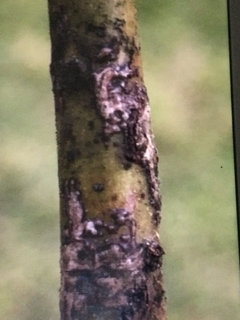
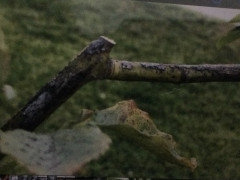
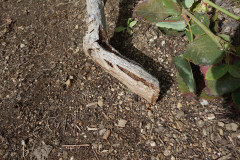
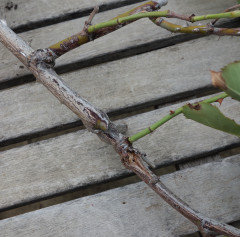
    Well, here are some pics. I did some snooping around online and while they don't look like a classic canker, I did see a few pics that looked sort of similar. So I guess that is what it is. This is on a rose tree that has always had problems. But, it used to be doing much better. I guess it will probably not survive the kind of hacking that is needed. Perhaps I should start cuttings, though it is the wrong time of year.


    Thanks for all input!


  • 4 years ago

    I would be very concerned, too, Need. You might get more input with these photos. Somehow rose trees seem harder to me, Need, because you can't just cut the plant back to get a fresh start.

    Need2SeeGreen 10 (SoCal) thanked Sheila z8a Rogue Valley OR
  • 4 years ago

    Need2See, regarding cuttings: I often have my best success with rose cuttings in the fall and winter and early spring here in Santa Barbara.

    Need2SeeGreen 10 (SoCal) thanked susan9santabarbara
  • 4 years ago

    Do you think that your soil is too acidic?

    Need2SeeGreen 10 (SoCal) thanked rosecanadian
  • 4 years ago

    Thanks, people!!!


    rosecanadian, you could easily be right - I have never checked the pH on anything - soil or water, and it is something I think I should learn asap. I wouldn't be surprised at all if it were a soil problem. I have been having a lot of trouble in recent years with many container plants. These rose trees were never very strong - but, they did used to bloom for me. I don't know what that means.


    susan9santabarbara - that is great news!!! This plant has quite a few little buds on it - I think I'll give it a go! I just last week moved it into a spot with better sun - trying to catch the last few rays.


    Sheila, thanks for looking!! It is gnarly-looking. I am worried for sure. There are still green leaves though. (Most likely, I will keep procrastinating for a little bit ... and study up on my cuttings techniques. Often I can get rose cuttings to root, but then something goes wrong and they don't make it. I've got to work on my follow-through.)

  • 4 years ago

    Maybe try putting a couple of teaspoons of garden lime on one potted rose and see if it helps. Wait a few weeks before you put more on. I made the mistake of thinking "oh, this isn't working." and putting more and more on.

    Need2SeeGreen 10 (SoCal) thanked rosecanadian
  • 4 years ago

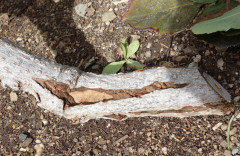
    It's probably not right, but I'll throw this idea out there, anyway -- something about that "gnarly-looking" tissue in your photo, green -- most of what's called canker seems smoother and sunken. Today I removed a rose (sadly, "San Leandro Dark Red Hybrid Tea" -- likely won't find that one again soon, if ever) that was infected with bacterial gall. The symptoms, noticed yesterday, were atypically subtle for crown gall -- no obvious rough knots or protuberances on the stems or at the base -- the stems, externally at least, looked smooth and regular -- just some new (i.e., over the summer -- weren't there last spring) fissures in the bark of several canes that, when I pushed and plucked on them yesterday, easily crumbled down to the underlying xylem -- to my surprise. This rose has been of moderate vigor, maybe less vigorous the last year or so (with the drought, that might be expected), but was putting out some new growth and flower buds lately, after taking virtually the whole summer off. So, not exactly lively, but not looking like it was on "its last legs", either. If I hadn't probed thoses fissures, I wouldn't have suspected anything was going on.


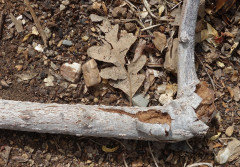
    When I dug it out today, there were remains of some relatively small, disintegrating galls just under ground around the base and that was all. Here are some photos of the cracks on the stems -- the cracks were narrow slits until I cleaned bits of bark and infected tissue out:


    This fissure was nearer the top and open.


  • 4 years ago

    @catspa_zone9sunset14 the bark splits and callus more closely resemble Flat Head Apple Borer damage. They penetrate through sun burned tissue and eat the cambium layer before exiting to pupate in the soil. The cambium surrounding the areas they eat then callus as seen in your photos. I, unfortunately, saw MUCH of that in Newhall. Baldo diagnosed it for me umpteen years ago.

  • 4 years ago
    last modified: 4 years ago

    @roseseek So, maybe two things going on there, Kim, given the more typical-looking galls I found underground. I see that the borers tend to attack less-healthy plants, which is where this plant was at, what with the drought, the gall, and all. I had a single, similar-looking patch on a branch on a tea that mystified me, as it did not have gall, so the borer may explain that, too. Good to know!

  • 4 years ago

    Our sun is so intense it can EASILY sun scald canes. You know once that occurs, it cooks the cambium layer in that area and the tissue above it fed by that area often dies due to lack of circulation. The borers begin eating there and can often make it all the way to the bud union or crown of the plant, killing it. My first casualty from them was an own root White Wings whose main cane was wrist thick. I had traveled north for several days and when I returned, the plant appeared to have been watered with gasoline. It was FRIED. No sap went above the borer damage as they had completely encircled the cane. The only other times I had ever seen anything outright die and look like that was due to gopher damage. This still had all of its roots. I grabbed the cane and shook it. It broke off at the ground.

  • 4 years ago

    I have seen this many times here since you described the borer damage on sunscald, Kim. This is very helpful information.

  • 4 years ago

    I'm glad it helps, Sheila. This is why citrus growers paint the tree trunks white, to reflect the sun's heat and prevent scald. I thought about using white latex paint on the standard trunks but never got around to it. The only real prevention is to maintain the thickest, heaviest leaf cover possible and that requires healthy foliage. It is also why I avoid sparsely foliated types as the greater the area of unprotected cane, the greater the potential for sun scald. It is only worsening with the increasing sun and heat intensities and dwindling water. You can quickly diagnose borer damage by lifting the split bark and probing under it. The borer "frash" resembles cocoa powder in color and texture. If you want to attempt to prune the borers out, it may require removing a large amount of tissue. You can often split the damaged cane and find them at the bottom of the damage. "Fun" stuff.

    Need2SeeGreen 10 (SoCal) thanked roseseek
  • 4 years ago

    Rose cane scald...I had no idea. Really interesting!

  • 4 years ago

    IXL was the stock used for decades to produce 4' and taller standards because it generates 1" thick whips in a season. It was discontinued because it sun scalded too easily.

  • Need2SeeGreen 10 (SoCal) thanked Stephanie, 9b inland SoCal
  • 4 years ago

    Wow - even more things I didn't know about!! ; ) I see that the rose game is all about persistence and daily practice (or as often as possible). Whereas I tend to get distracted.