Software
Houzz Logo Print
countingblessings

a code issue? cat door thru interior wall to basement stairs

We are planning to install a cat door leading from laundry room near the top of stairs to the unfinished basement.
We are getting tired of propping open the door at the top of the basement stairs. It lets cold air into our main living area. We would rather patch up drywall, rather than make a hole in the door, and have to replace it, when we plan to sell the house.
Is it a fire hazard to have the cat door in this way? How best to minimize the insulation loss?

Comments (25)

  • 4 years ago

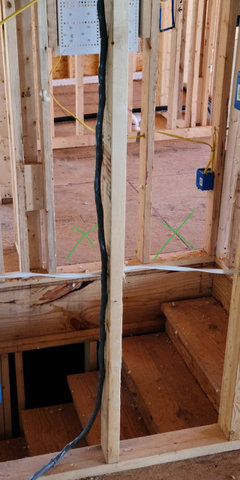
    Here are 2 possible locations marked

    with x

  • PRO
    4 years ago

    IMO ypu need to heat the basement anywahy and as for the cat door IMO still the best and easiest is a pet door in the actual door Get a cheap door and replace it when ready to sell IMO. I don't think it is any big deal for fire it is not a fire door to that space But an unheated basement is never a good idea wether you decide to finish it or not.

    countingblessings thanked Patricia Colwell Consulting
  • 4 years ago

    Patricia, why should I heat the basement?

  • PRO
    4 years ago

    Installing a pet door where you propose shouldn't be an issue. The small area of insulation you'll remove to install it is trivial compared with the area of the subfloor and the wall areas.


    You don't need to heat your basement, but you should control the relative humidity to minimize the potential for mold/mildew growth.

    countingblessings thanked Charles Ross Homes
  • 4 years ago
    last modified: 4 years ago

    There's nothing stopping the pet door in the wall. Nothing about insulation value either. FWIW the cold air from the 1st floor would cascade down the stairs, not the other way around. I agree that it is better in the wall, but an elderly cat may have trouble when you don't have a landing on the stair. When you get the house from the spec builder, your furnace will probably have one vent in a return branch and maybe 1 supply for the entire open basement.

    Edit: looking at the pic after I wrote (oops), if that's the washer box the pet door would be either next to or behind the washer?

  • 4 years ago
    last modified: 4 years ago

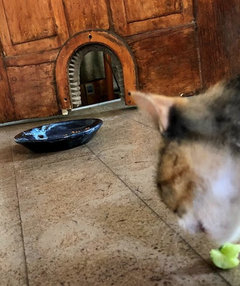
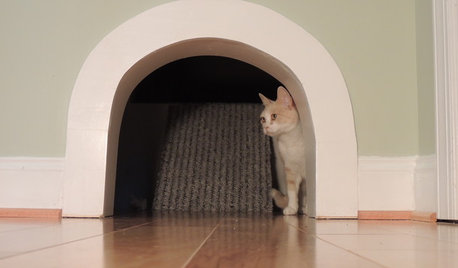
    I don't know the answer to your questions. Here's my cat door - from kitchen through basement door:

    (My unfinished basement is the same temp as the rest of the house - between doing laundry, cleaning litter boxes, retrieving tools - I prefer the basement heated)


    countingblessings thanked Carrie B
  • 4 years ago

    I think it is a good idea of putting the pet door in the wall instead of the basement door. Installing it in a 6 panel door is not going to look good. Most of these pet doors are made for exterior doors. There are some that are designed to be deeper for a wall installation. The heat loss is going to be minimum and I would not worry about it. In the summer the basement will be cooler than the first floor.

    If you think you may finish the basement in the future, then consider installing a 2-way switch at the top and bottom of the basement stairs. That is a code requirement in my area.

    countingblessings thanked mike_home
  • 4 years ago
    last modified: 4 years ago

    Thank you for the input. I appreciate the varying points of view.

    The wall shared with the staircase is opposite the wall with the washer and dryer connections.

    There is a cat5e network panel above the left X. I just appreciated a tiny pun there: cat door, cat5...

    We have two large dehumidifiers that we already had from a previous house. I will be putting those into service after I keep 2 or 3 weeks of humidity readings, and confirm the foundation walls are staying dry by themselves without humidity control (I plan on using the "taped foil on wall" technique).

    The builder used batt insulation on the basement ceiling. I imagine it was cheaper for them to insulate the ceiling rather than the basement walls.

    We plan on finishing the basement some day, but our circumstances won't allow as of yet.

  • PRO
    4 years ago

    Keeping the cat door near the cat5 panel makes good sense.

  • 4 years ago

    @Midwest (4b IA) that is so cute!!!

  • 4 years ago
    last modified: 4 years ago

    As the owner of 3 cats and 2 cat doors, I think you should go with the area near the first step. Even then, your cat won't be able to easily go in and out without the top stair having a short step or ledge near the bottom of the cat door. Any cat with physical or health issues would have a problem with an immediate drop after exiting the door. To make life easier for the cat, I highly recommend you buy a pet door with a flexible flap.

    Of all our homes we sold that had pet doors, not one buyer ever had an issue with them.

    countingblessings thanked annztoo
  • 4 years ago

    @annztoo a ledge is a great idea!

  • 4 years ago

    One thing I forgot to mention. Thru-the-wall pet doors usually have two flaps. Consider removing the exterior flap (stair side) which would also make access easier for the cat.

    Don’t know if you’you’ve already purchased the pet door

    but I can’t say enough good things about Hale pet doors. I have no affiliation with the company. :)

  • PRO
    4 years ago

    Any cold air from the basement will keep the first floor cold and force all your heat to the ceiling. Mold and mildew are a real probability.

  • 4 years ago

    @Carrie B @Midwest (4b IA) Love your cat doors! Looks like a mouse will pop out! You could add a little Banksy for Valentine's day.


  • 4 years ago

    Huh? Cold air sinks; warm air rises. In the winter, if you stand at the bottom of the stairs, you can feel cooler air cascading down the stairs when the door opens. None of this pertains to a cat door in an interior wall.

  • 4 years ago

    Unfortunately, Flopsy died a few years ago at the age of nineteen. I had made a private entrance for her to access her litter box, and to keep the dogs out. She had no trouble using it even after she lost her sight.. We still have the two crazy dogs.


  • 4 years ago

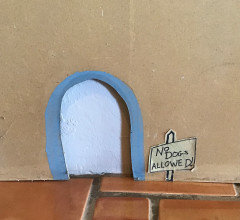
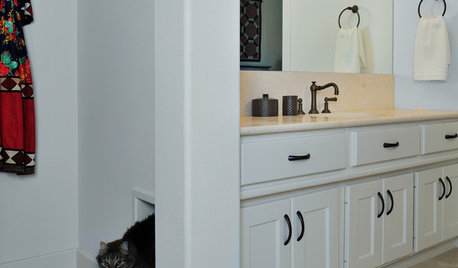
    Here’s our kitty door - into the mechanical room (hot water heater, etc.). I did not want to ruin a door - removing the trim and patching the sheet rock will be way less expensive than replacing a door (and who knows if we’d be able to match the stain/finish “whenever” that would be.

  • 4 years ago

    I met a woman who was renting a house. She contacted the landlord, and got permission to take off the original door and store it, and install a new door with a pet door in it. I did have a pet door in a six panel door, and returning it to its original look was not easy.


    No problem putting a pet door in the door, just not in a door you like a lot.

    countingblessings thanked c t
  • 4 years ago
    1. You could put it in the wall (under the blue electrical box} on the first step or in the door. All the homes I know or lived in the basement door opens to the first step down. . The height will be close to the same what ever way you go. . If a cat is able to walk up and down steps then their will be no problem for the cat to get through the cat hole. We always had the cat hole in the door, we didn't have a wall next to the steps that would look good with a hole in it. Not a bad idea putting it in the laundry room like you show it. Our cat holes were shaped in a cat's head.
    countingblessings thanked functionthenlook
  • 4 years ago

    Forcing a kitty to use a door that looks like a mousehole, unless there is a mouse available for kitty after kitty has used said hole, is kitty abuse. :)

  • 3 years ago

    Buy a cheap door, cut it up and use it. Put your good door in the garage and just screw it back on when you move out

  • 3 years ago

    When I had cats, I opened the lower sash of my double-hung window and put a blank panel under the sash. I then put the cat door in that panel and closed the window on it. Worked fine, even in the winter.

  • 3 years ago

    A cat door leading from the laundry room near the top of the stairs to the unfinished basement is not inherently a fire hazard. However, it's important to ensure that the door is properly sealed to minimize insulation loss. One way to do this is to use a door specifically designed for this purpose, which will have a tight seal around the edges to prevent drafts. Additionally, you may want to consider adding weatherstripping or a draft stopper to the bottom of the door to further reduce the amount of cold air that enters your living area.