Software
Houzz Logo Print
hzdeleted_5328044

Where to start?? Ok, DALLISGRASS.

4 years ago
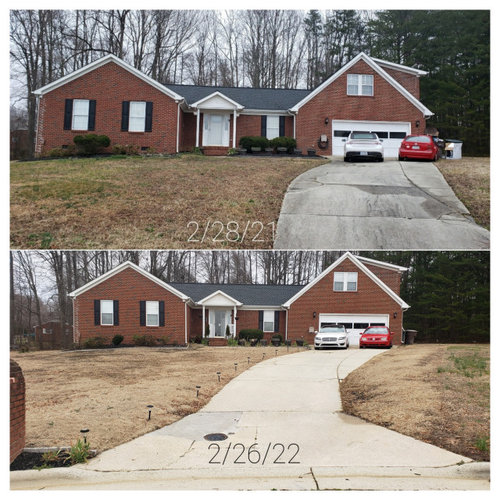
I spent all year last season spending $ '000 unsuccessfully on selective herbicides to kill dallisgrass (in my bermudagrass - Piedmont region). I finally gave up. By early August, I started using glyphosate on giant patches, fully aware it would kill everything in its path. I didn't care.
Fast forward to December, I hit the entire yard again with glyphosate to kill all the dallisgrass that was peppered into the (good, but pretty dormant) bermudagrass. These were patches i didn't want to kill back in August. Also had a huge henbit issue (despite fall preemergent? 🤷‍♀️) So I threw in some 2, 4-d for good measure. (Also heard later this can harm dormant bermudagrass. 🙈)
Fast forward to now, just sprayed prodiamine last weekend, and want to put some tenacity next weekend for little green sprouts I'm starting to see in all of my bare patches from the major kill off last year. There are a bunch!
My question is, how can I really tell if I've actually just killed my entire yard with the glyphosate last December, because now I'm hearing mixed reviews about using this method? (I know, too little, too late.) But I went to several areas for a "pull test" and all seems to be mostly intact and green stolons along the soil. But now I'm nervous. More chemicals only to possibly find out I may have killed it all last December??
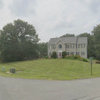
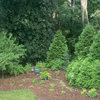
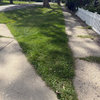
These pics are one year apart. You can CLEARLY see I have killed off so much of the terrible stuf....but so hard to tell what might be good stuff that is still left!?!?
All help appreciated. Thanks in advance...

Comments (15)

  • 4 years ago

    Its true, I don't disagree! The issue is my yard has been neglected for years (yes, also my fault). So here I am. I'm trying to grow aggressive natural turf so I never have to spend one more dime on chemicals. I get it. I remember you from my last post, so if you don't have anything constructive to add to the post......I'll just say have an amazing day! ὄB

  • 4 years ago

    The only way you are going to know how much of the Bermuda has survived the assault is when it gets warm enough to start growing again.

    That was the constructive part. In other words, Patience.

  • 4 years ago

    I mean thanks, I guess? ὤ4 Twice i have posted almost a year apart emphasizing my use of chemicals is because of my complete disaster of a yard (yes, my fault). I'm asking for help and TWICE you come in as judgy McJudgy-Pants about using those chemicals. Do you think I wanted to spend Over $900 trying to get an acceptable turfgrass? Yes, I get it. Time will tell. I hope it worked so I never have to ask for help on a public forum again. You're welcome.

  • 4 years ago

    Chuckle.

  • 4 years ago

    Who cares if your grass is the "right" grass. As long as it is green, just mow it. If whatever you think is appropriate grass doesn't want to grow in your lawn, so be it.

  • 4 years ago

    Your English is too good for you to be from Piedmont, Italy, so can you pick a Piedmont from the list so we can know where you live?

    Piedmont, Alabama

    Piedmont, Arizona

    Piedmont, California

    Piedmont, Kansas

    Piedmont, Missouri

    Piedmont, Ohio

    Piedmont, Oklahoma

    Piedmont, Portland, Oregon

    Piedmont, South Carolina

    Piedmont, South Dakota

    Piedmont, Virginia

    Piedmont, Washington

    Piedmont, West Virginia

    Piedmont, Mercer County, West Virginia

    Piedmont, Wyoming

    Piedmont, Nova Scotia

    Piedmont, Quebec

    I'm a little hazy on the question here.

    More chemicals only to possibly find out I may have killed it all last December??

    ...so hard to tell what might be good stuff that is still left!?!?

  • 4 years ago

    Kim, ...and, you could also be located in the Piedmont area of North Carolina. Lawn problems can be difficult and costly. I usually urge my customers to consult with several local lawn companies for professional diagnosis and treatment suggestions. It is the customer's choice as to contracting with them. Also, there is another lawn expert in town if you are a golfer. Head golf greenskeepers can provide helpful thoughts and many are finding ways to reduce chemical applications.


    Now, moving to a way-off subject which might be of interest to some. The above mentioned NC Piedmont area is about to explode with thousands of job opportunities that will need almost all the types of business you can think of. Anyone considering a 'change'

    could find this a golden opportunity.


  • 4 years ago
    last modified: 4 years ago

    Actually there's plenty of reason to care about having the 'right' grass, as some grasses are invasive and damaging to natural ecosystems: https://www.invasivespeciesinfo.gov/terrestrial/plants/japanese-stiltgrass

    However, as much as I use herbicides on my property - correctly, per label instructions* - I would wonder if the OP is in over her head and might want to consider getting a professional turfgrass restoration underway. If not, make sure you are following good instructions: https://extension.tennessee.edu/publications/Documents/SP642.pdf

    I have had a problem with an annual Paspalum and have gotten it (and stiltgrass) under control, mainly with use of pre-emergents.


    * and roughly 2/3 of this use would not be necessary if my neighbors didn't allow sections of their property to become giant brush piles of invasive weeds, but I digress.


  • 4 years ago

    Dallisgrass is prominent in the South. For small patches just trying to get a foothold, it can be killed using baking soda and some tricks. But for large areas I'd be afraid of too much sodium on the lawn. Also baking soda is harmful to bermuda, but does not seem to be too much for St Augustine.

  • 4 years ago

    dchall_san_antonio

    2 days ago

    ‘Your English is too good for you to be from Piedmont, Italy …”


    Professor Karpathy, after listening to Eliza’s English, told Henry Higgins that because Ms. Doolittle was such an excellent grammarian, she could not possibly be English - she must be Hungarian (and of royal blood).

  • 4 years ago

    She is a Princess!


  • 4 years ago

    First things first. Bermuda probably isn't dead,it's likly only dormant. Dead stolens will snap like a broom straw,dormant stolens flex and when torn,have a moist center. I was born on a farm and have used herbicides on pastureland (common and coastal Bermuda) for years and still have less than desirable results occasionally. I tend to agree about hiring a professional.

  • 4 years ago

    Im zone 8, north Louisiana and my grass is dormant in January and February.

    Three four years back Dallisgrass had its way with my lawn;probably, from my neighbors unkept lawn,lol. Anyway, Dallisgrass was green in January,my grass was brown and asleep. I hit the Dallisgrass with Roundup. Dallisgrass hasnt shown its ugly self.

    Hope it works for you.

    John

  • 4 years ago

    True story. Garden club awarded lawn of the month to a gentleman who mowed his Dallisgrass yard daily. If someone developed a varity which didn't send up seedheads they could sell it for 10x what people pay for traditional sod.

Sponsored
Hope Restoration & General Contracting
Average rating: 4.7 out of 5 stars35 Reviews
Columbus Design-Build, Kitchen & Bath Remodeling, Historic Renovations