Software
Houzz Logo Print
zoesierra

New (used) house, New Range and venting

4 years ago

We are purchasing a house with Kitchenaid appliances. None of them new. In our last house we had a Dacor pro gas range which we loved. I understand they’ve been sold and are not what they were. Anyway, the range is a 2006 gas downdraft and the vent goes the length of the kitchen (long ways, in a crawl space ) to exit outside. It appears that only JennAir and Kitchenaid make downdraft ranges and poking around I’m not getting good vibes on how downdrafts work with a gas range. Also we like the high BTU of the “pro” ranges.
The range faces an opening to the dining room, a “window” to the other room. So there’s no cabinets over it or a microwave, yay. But we will have to drywall the opening to put in a hood. It seems that we could run down through our new opening to hook into the existing ductwork in the crawl space, but I assume that between the walls would only be 4 inches which might not allow for the correct venting.
So.
Am I stuck with buying an OK downdraft range?
Is it reasonable to expect we can get a good hood strong enough for a pro range if we fill in the wall opening with the space constraints?
Can I forgo the “make up air” business when I’m changing to a pro range and the stronger hoods. It’s hard for me to buy that the fan will suck all the oxygen out of the house. But perhaps we’d need it in order to sell down the road.

Thanks for any input.

Comments (5)

  • 4 years ago

    In reverse order:

    A decent hood blower (internal or remote) is unlikely to reduce house pressure relative to the outside by more than a few inches of water column. At that point the blower is gagged and no air is actually flowing. MUA serves two purposes. The first, which should be obvious from the above remark, is to allow the blower to actually move the CFM needed for ventilation. The second is to ameliorate a safety hazard of low house pressure back drafting combustion appliances, if any, and pulling moisture and dust through wall crevices.

    You didn't address what is above the range location. You could run a duct to the roof, depending what is up there. You could use an island hood, or as you note, fill in the wall opening and mount a hood to the wall.

    Pro range effluent plumes are not going to be successfully captured and contained with a downdraft system when cooking anything involving hot (vapor point) oil or grease. The plume momentum will be too large to divert into going the other direction. Search this forum for "downdraft" for examples of negative commentary. "Pro" ranges require "pro" hood systems, plus MUA systems of some minor or major complexity.

    I suggest you sear some meat and see how well your existing 'ventilation' works at plume capture.

  • 4 years ago

    Sigh. The make up air we were told to install in our last house added 3500.00 to the cost of range and hood. And I believe that the 8 inch hole already in place had to become 10. It could have been 6 to 8, I’m not sure I remember. That’s why I mentioned that by adding drywall to the cutout, assuming that the studs are 2x4 that any ducting may be squished.
    There is a second floor above the kitchen but we could possibly duct up to the rafters and out the side of the house IF the rafters were going the right way.
    But I’m getting from you that you can’t get around the MUA. It sounds like we may have more expense ahead of us than we expected.
    I’m also understanding hat the high volume hoods aren’t going to suffocate us but could cause issues with something else in the house that has a pilot light? The gas furnace is in the crawl space and also one in the attic, so that might not be an issue.
    Thanks

  • 4 years ago

    Its not the pilot light, primarily, it is the use of efficient heat transfer that makes the exhaust gas nearly room temperature, and hence the appliance has very little draft. Very low pressure differences with the outside will cause the exhaust to be pulled into the house. This can happen at 0.03 inches, w.c. (1 inch w.c. = 0.036 psi) Fully sealed units with their own source of outside MUA, or those in areas exposed to the outside, will not be susceptible. I presume your attic is ventilated to the outside.

    Suppose you built out the wall somewhat to allow an 8-inch duct? Or you mounted a chimney hood to the 2 x 4 wall and put a chase (or cabinet) above the hood to cover its duct and allow room for a bend into the joist space. An 8-inch round duct transitioning to an 8 x 10 rectangular duct could probably tolerate a 90-degree bend rectangular duct section.

    In any case, once the hood configuration is determined, an estimate of the duct pressure loss, the baffle pressure loss, and the MUA pressure loss (you may be able to use a simple passive MUA system), will allow you to determine what blower to use to achieve the desired CFM at that pressure loss.

    Start with the range size, then the hood size, then the desired flow rate, then the duct size, etc. I may use Wolf Design Guide listed hoods for analysis, but you will find seemingly endless hoods exist for every niche and pocketbook. Just keep in mind that in the trade space of performance, aesthetics, and affordability, one either balances these or chooses two to maximize.

  • 4 years ago

    Photos of the location might help. Also, how often do you cook, what do you like to cook and plan on cooking? Do you entertain much?

    More: https://bamasotan.us/range-exhaust-hood-faq/


  • 4 years ago

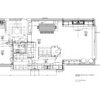
    We cook often. Mostly on the stove top. Searing, sautéing. Used our prior stove hood most of the time. If I scrambled an egg, no. But chicken breasts in panko, fried potatoes, often lots of steam etc. Moving to a new town so won’t be entertaining at least for a while, maybe a long while😊. We haven’t closed on the house yet, I do have photos from our inspection but I hesitate to post them when someone else is living there, but here is an edited photo from a prior listing for it. The opening over the stove goes to the dining room. 9 or 9.5 foot ceilings. If the rafters above run from left to right I may be able to go up and to the right out of the wall. It looks like I will have to get a kitchen person or contractor to check these things out once we have moved. As far as passive MUA I’m all for not throwing in another 3500.00 for the mechanism we had in the last house. Who knows if it worked? I assume it did but it’s nothing you can feel or see or smell etc. Seems like you could just open a window a crack. Thanks for the link.