Software
Houzz Logo Print
matthew_laplante34

Help! Re-occurring Chlorosis!

4 years ago
last modified: 4 years ago
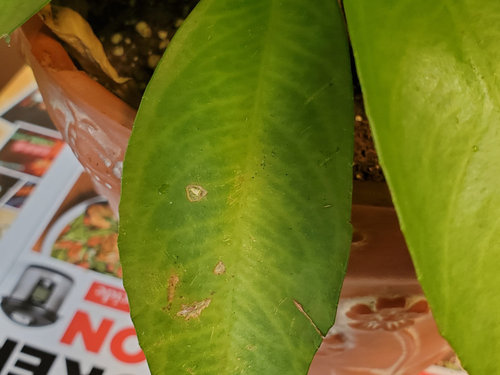
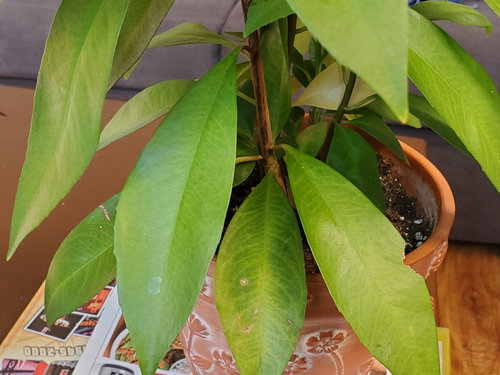
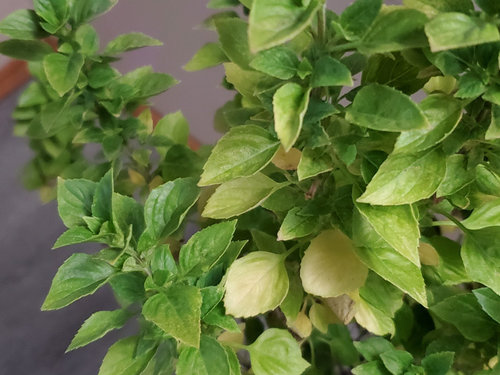
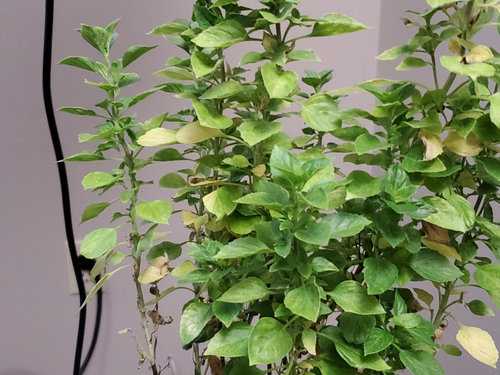
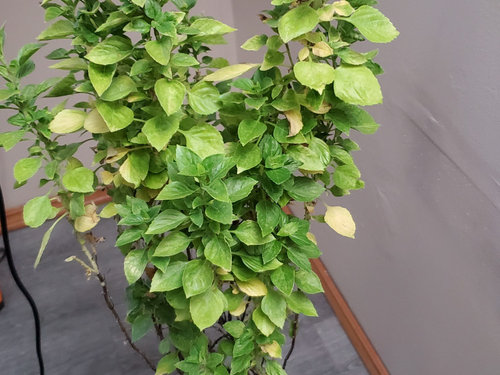
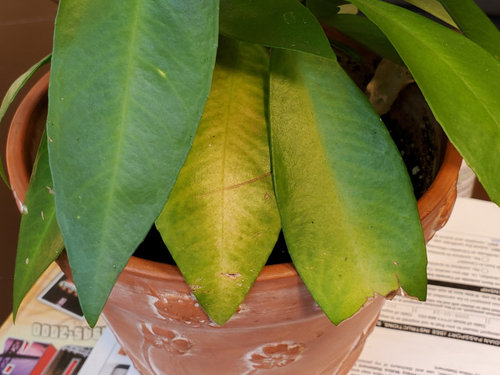
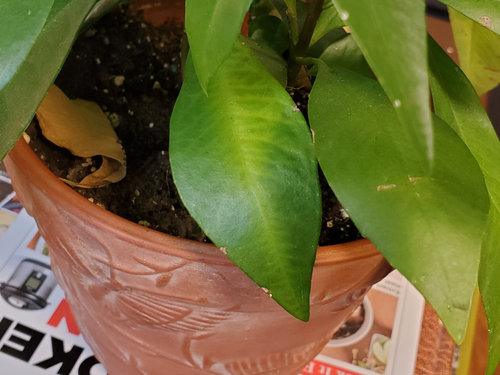
I'd overfertilized my plants several months ago. Overfertilizing symptoms didn't show up until later. The symptoms are primarily leaves yeyellowing/dying and stunted growth. It's the distinct "Yellow of Death".I leached the plants. Most responded well to it. Others were a very different story. They appeared to really improve and chlorosis hit again, despite the plants not being fertilized. I'd leach again and change the plants' soil. It'd occur again and I'd leach again.The question becomes is this due to overfertilizing or nitrogen deficiency? My wife brought up a good point by pointing out that the grow lights are on for much of the day when the plants are supposed to be dormant. I'd foolishly set up the light timings to those used in a certain plant.


A banana plant is also experiencing this. It goes through the same cycle. I will note that 9nce a plant has been leached they grow in a way that's almost steroidal, likely due to the grow lights.


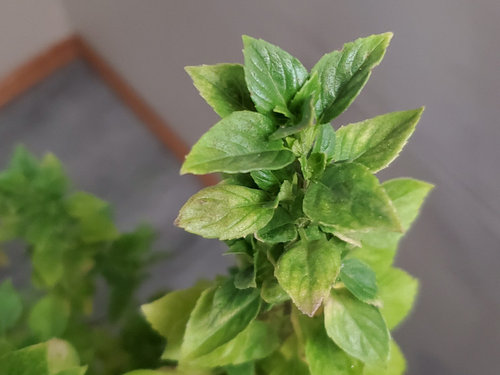
My columnar basil is in rough shape. It definitely has damage due to too much light and spider mites, but it's become quite stripped very quickly.I'm not a plant butcher! There was a time when I was quite adept with houseplants. Working 12 hour shifts has changed this!


Comments (7)

  • 4 years ago

    i never succeeded in using clay pots in the house for house plants .. and i wonder if that is part of your problems .. [unless your is plastic that looks like clay??? and if so.. never mind ]


    i do note one pot is heavily stained with what appears to be fert salts ...


    the base problem for me.. was the clay wicked water out of the media.. from the sides of the pot. and i could never perfect proper watering thru the whole pot ...


    historically... clay pots where very old school greenhouse pots ... where the ambient humidity offset the wicking issue.. or thats the best idea i could come up with ...


    i like the look.. but when i use one.. i use a plastic pot inside the clay... to make proper watering easier ...


    ken

  • 4 years ago

    Most of our pots are plastic. We were (and are) in a situation where we're even using grow bags to repot plants as we're out of all but the smallest pots.


    In addition to the fertilizer salts on the pots, the plants have quite a few mineral deposits. There isn't a crust of minerals, but a bunch of white mineral deposits in the soil. This is a major red flag and I've been removing them.


    I may have to go with leaching the affected plants like crazy. My concern with that is root rot. It often takes a while for the soil to dry. I could give them a high phosphorous root stimulator with their next watering to try to mitigate the risk of root rot.

  • 4 years ago

    Matt, I suggest that you do some reading regarding the persistent myth of "root stimulator" fertilizers.

    Here's one article to get you started. The Myth of High Phosphorus

  • 4 years ago

    I may have to go with leaching the affected plants like crazy.


    ==>>>


    in spring.. just bare root and repot your plants in fresh sterilized media ..


    how do you leach yet maintain proper watering .../???


    and use the best media you can buy or make ... most of us do not like MG stuff ...and dont use one that already has fert in it ...


    they are plants... not children... they do not need to be fed all the time.. nor clothed.. nor educated ...


    i fert my potted plants once a year.. whether they need it or not .. if you have accumulated fert salts.. you are over ferting.. just stop doing that .... after you repot in in fresh soil ...


    ken


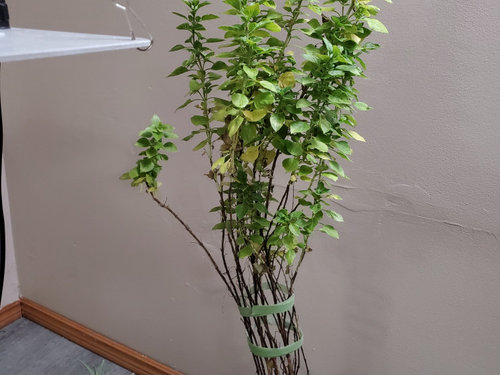
    ps: what is the huge plant in the large fabric pot... that you have bound up .. cant you propagate some smaller pieces.. and just get rid of the huge old thing .. or plant it out in the yard .... i mean really .. in another year or two.. youre going to have to build a new house to fit that thing into ... it kinda growing beyond the scope of a HOUSE plant ...

  • 4 years ago

    Thank7 you for the help! Our plants are in a hodgepodge of terra cotta, plastic and cloth. This is changing to as much terra cotta as possible.


    For medium, some have Pro Mix potting soil, others have Pro Mix tropical or succulent soil and MG potting soil with some whose soil was dumped due to overfertilizing.


    I've been using Marine Liquid Phytoplankton Soil Enhancer as a fertilizer. The affected place haven't received it. Prior to that, I'd use a weaker solution of MG. The overfertilization happened due to not being attentive as to how much fertilizer solution each plant was getting. Not one of my brighter moments. I'm normally pretty judicious with fertilizer and fertilize 1x/month. The non-affected plants were given a small amount of Cal Max iron, magnesium and calcium supplement. I'd used it as a foliar on a hibiscus with an iron deficiency, which has since been remedied.


    The more that I can learn, the better.

  • 4 years ago

    If, from our conversation you learn that getting to the point where you find yourself free of having to fight your grow medium for control of your plants' vitality, you will have taken the largest individual step forward you can take as a container gardener. It will also offer significantly more forgiveness when it comes to the ratio of air:water in the grow medium, and can instantly make fertilizing monkey easy. This can be achieved by basing your grow media on a very large fraction of coarse material (>80%) such as like pine or fir bark, calcined clay, calcined DE, pumice, scoria, Haydite, crushed granite or cherrystone or Manna-Pro Poultry Grit. The concept consists of starting with materials coarse enough to ensure that the spaces between the particles will not hold water, or hold precious little. From that point, you can add small amounts of finer material like peat, finished compost or composted forest products in order to adjust the amount of air and water the medium can hold. While this works well when you start with a large fraction of coarse material, it works poorly and often to the detriment of both plant and its keeper's growing experience. IOW, you cannot start with a large fraction of fine material and add coarse material to "amend" the poor medium; this, because the amount of coarse material it will require to increase air porosity in the would equal a % much larger than the % of fine material. Obviously, if you add a fraction of coarse material to a fraction of the fine material such that the coarse material represents >80% of the finished product, it would be as misleading to say I'm growing in fine material with >80% coarse ingredients as it would be to say I enjoy coffee with my cream and sugar or steak with my A-1 Sauce.

    My suggestion is to start with the basics, making sure you are using a medium that isn't inherently limiting and frustrating. From there, the watering and fertilizing part will fall into place with very little guidance needed. If that sounds reasonable to you, You Can Start Here, and ask questions at that thread, where you'll find many growers capable of providing reliable information, or ask them here on your own turf. Keep in mind that an understanding of the concept that drives air porosity and water retention will be forever more valuable than any basic recipes you find. It's sort of like that thing about when a man is given a fish, he eats for a day, but shown HOW to fish, he eats forever.

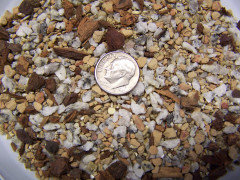
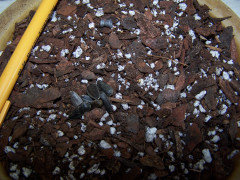
    These are the 2 basic media I make/use:


    Al

    ML thanked tapla (mid-Michigan, USDA z5b-6a)