Software
Houzz Logo Print
westes

What is Difference Between Aged Bark and Compost?

Can someone explain to me the main differences between garden waste compost and "aged bark"? Garden waste compost is made from the material collected by garbage companies in the green waste bin: yard cuttings, branches, and leaves. Aged bark is presumably a well-composted bark from conifers. A vendor for Clematis plants has a container soil that they insist should have a high proportion of "aged bark". When I explained that our local wholesalers sell well-aged garden waste compost - and aged bark is hard to find - they insist that compost is different than aged bark and has worse performance charateristics. Can someone clarify what those differences might be?

I assume aged bark is more acidic since conifer bark is acidic. But in terms of consistency, hydration, and soil performance characteristics, I would expect the two materials to be very similar. What are the important differences?

One thing I have noticed is that the garden waste compost I buy actually has a drying effect on soil mixes. Because it has small particles, it definitely does attract water on the surface of the many small particles. So right after watering there is a lot of moisture in the soil. But compost does not appear to absorb much of that water into its small particles. As a result, soil mixes made with the garden waste compost seem to dry out quickly. This is in contrast to peat moss, which seems to act like a sponge and absorb water deeply into the peat. If I have too much compost in a container soil mix, I end up being forced to add some peat to prevent the mix from drying rapidly. The need to balance these two ingredients can make things tricky, especially when I want to limit the total organic content of a container soil.

Yes, I understand the theory of perched water tables and the need to limit the total moisture that remains in a container soil. I measure these characteristics carefully. That said, some moisture-loving plants like Hydrangea really prefer a well-drained soil that retains a large amount of moisture.

Comments (35)

  • 4 years ago

    They are two entirely different materials and with very different properties. You cannot substitute one for the other and expect results to be similar. And when it comes to container soils, I'd omit garden waste compost (or any other form of compost) altogether as it tends to be detrimental to both drainage and aeration.

    I'd give a more detailed explanation but it's late and I'm too tired to bother. Sorry :-)

    westes Zone 9b California SF Bay thanked gardengal48 (PNW Z8/9)
  • 4 years ago

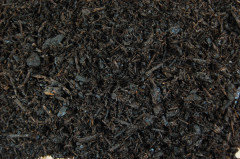
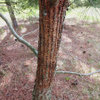
    @gardengal48 (PNW Z8/9) Here is a photo of aged bark. If you feel like giving more information tomorrow I would very much like to learn about this.


  • 4 years ago
    last modified: 4 years ago

    Bark comes from a sawmill that grinds the bark off logs before they go into the saw to keep the saw from dulling. Garden waste has everything you could think of thrown into a grinder. Old pallets that hauled who knows what chemical or radioactive wastes, who knows; along with stumps and chips from a tree surgeon.You don't want the garden waste on your property.

    Stick with the bark. There are two varieties sold here. Hardwood bark and softwood bark. Some areas may not have hardwood bark but that's the better product only because the softwood bark changes appearance in 3 or 4 months to a washed out dull appearance. Both are aged mostly because the saw mill runs all year and we mostly buy the bark in the spring.

    Avoid any dyed mulch or wood chips as they attract termites. Buy bulk mulch and avoid bagged products.The bulk is much cheaper and who knows what goes into the bags.

    westes Zone 9b California SF Bay thanked John D Zn6a PIT Pa
  • 4 years ago

    I apologize for missing the container gardening forum category; but stand by the rest of my comments. But on the other hand bark is not generally used in container gardening and that was the question in the title.

  • 4 years ago

    "But on the other hand bark is not generally used in container gardening"

    Oh, but it is!! In fact, it's highly recommended over peat or coir as a container soil ingredient.

  • 4 years ago

    @gardengal48 (PNW Z8/9) Do you have any guess on a typical pH range for aged bark?

    I would also expect compost that was degraded to sawdust-sized particles would be a swampy mess. But as I tried to say in the original post, my experience has been the opposite: it is an extremely drying ingredient to the soil and does not hold water long.

  • 4 years ago

    Does anyone know of a vendor in the South San Francisco Bay Area that stocks aged bark?

  • 4 years ago
    last modified: 4 years ago

    "Do you have any guess on a typical pH range for aged bark?"

    It depends on the source material and how long it has been aged but the data I found gave a range of 5.0 to 6.4 for unspecified source material aged at least 6 months. Pine bark fines, the most common type, tend to have a lower pH that is less influenced by aging...somewhere around 4.0 to 5.5.

    Check out South Bay Materials. They have a "mini fir bark" that looks like it would work well. But it appears to be fresh, not aged.

    westes Zone 9b California SF Bay thanked gardengal48 (PNW Z8/9)
  • 4 years ago

    @gardengal48 (PNW Z8/9) Mini fir bark is always "fresh" not aged.

  • 4 years ago

    How often will aged bark go by alternate names like "Soil Conditioner"? Obviously, you have to read the label to make sure this is 100% aged bark and not lots of other additives.

  • 4 years ago

    No reason you can't age it yourself :-)

    There is really not much of a market for aged bark fines in bulk. You will have much better luck finding a bagged product.

    westes Zone 9b California SF Bay thanked gardengal48 (PNW Z8/9)
  • 4 years ago

    Bark in bags is quite a crap shoot. From the Landscape yard it is always fresh ground, but from the garden center... HD has something they call 'Pathway Bark', which from the same vendor can be a very nice small bark all the way to something which looks closer to compost...


    westes Zone 9b California SF Bay thanked chadinlg Zone 9b Los Gatos CA
  • 4 years ago

    I presume there are many nurseries and greenhouse operations in and around your area given the size of the metro. Where do they get their potting mix? Do they make it onsite? If so, where do they get their ingredients? Or do they get it premade? In which case, who are they getting it from and where do THEY get their ingredients? There has to be somewhere nearby you can get what you're looking for.

    westes Zone 9b California SF Bay thanked toxcrusadr
  • 4 years ago

    @toxcrusadr As you say, the soil mixes that the wholesalers carry usually have aged bark as an ingredient. But it looks like they order these from manufacturers hundreds of miles away from the Bay Area, and they are probably bringing it in 25 cubic yards at a time to minimize shipping costs.

    I suspect big box stores like Home Depot could have this labeled as "Soil Conditioner" but you would need to read the label.

  • 4 years ago

    @toxcrusadr I contacted a composting association, and their opinion was that only companies in the Sierras or the Northern part of California would make such a composted product as composted fir bark. I guess that makes sense since those parts of the state have large supplies of conifers.

  • 4 years ago

    Thanks. Hope you find what you need!

    westes Zone 9b California SF Bay thanked toxcrusadr
  • 4 years ago

    @chadinlg Zone 9b Los Gatos CA If you have a URL to the exact product you have seen there it would help chase it down

  • 4 years ago

    HD Garden Time Pathway Bark

    Link

  • 4 years ago

    @chadinlg Zone 9b Los Gatos CA That one is clearly intended to be a fresh bark product. If it ended up being composted you would assume that was some mishandling of inventory or a production mistake.

  • 4 years ago

    Your experience with peat is the exact opposite of mine. When peat dries out, it forms a brick and is near impossible to get water into. Once a pot turns into hardened peat, I have to completely submerge the pot for a minute or so to get it wet again.


    Clematis aren't too particular when it comes to soil. Many of mine have grown fine with basic garden soil amended with compost. They don't like standing water for long periods of time, but they can take wet soil just fine. My best performing one is in an area that floods and can have standing water for hours before it completely drains. I really don't see a point in searching high and low for a particular potting medium.

    westes Zone 9b California SF Bay thanked charles kidder
  • 4 years ago

    This discussion is focusing on the best ingredients for a container soil potting mx, not for growing the same plants in the ground. Totally different approaches and purposes requiring totally different methodologies.

    westes Zone 9b California SF Bay thanked gardengal48 (PNW Z8/9)
  • 4 years ago

    @charles kidder I will teach you a secret for using peat moss in a container mix. Amend the soil with at least 10% Turface. There are published studies showing that the Turface helps dry peat moss to rehydrate, and it actually works. The first watering after peat has hardened hydrates the Turface, and then it slowly spreads that moisture to adjacent peat moss. By the third watering, it has rehydrated. Small amounts of Turface have very nice effects on many genera of plants.

    My question was on container soils, and all of your examples are for in-ground plantings. The hydration of container soil and ground soil is completely different. In a container planting, the main focus should be about particle size and controlling the perched water table that forms at the bottom of the pot. In a ground planting, the "container" is thousands of feet deep and wide, and the ground-level soil is inheriting the hydrology of that enormous in-ground container. In a ground planting, you can put very moisture retentive media in a raised bed above the ground, and that media will drain excess water into the ground soil without forming a perched water table in the raised bed. Things that would be the kiss of death in a container - like large amounts of sand and peat moss together - can often work well in a raised bed.

  • 4 years ago

    I understand it's for potting. But the clematis that goes in the ground is the same one that gets potted up and will flourish in similar environments. My point is you don't need to find a very specific potting mix since clematis aren't too particular. Any potting mix that works in general would do. Most potting mixes are made to keep microbial activity down. That why they typically have a lot of peat. It's sterile. Makes sense for young plants, but not for mature plants. Mature plants benefit from microbial activity.


    I never bought peat moss. I bought potting soils that have peat moss, so I've never added anything. I guess some of the potting soils have additives to keep the peat from drying out and some don't.

    westes Zone 9b California SF Bay thanked charles kidder
  • 4 years ago

    Regarding the original question of how aged bark differs from compost: I think that bark contains a hydrophobic substance called suberin that resists breaking down via microbial decomposition. The woody cellulose fibers of trees do not contain suberin, do not resist breaking down, and so are decomposed by microbes much faster. Therefore, bark particles can be expected to provide structure in a soil mixture for a long time. "Compost" is a label slapped onto any decomposed (or partially decomposed) material from plants. It could be mostly wood chips or sawdust, as often appears to be the case in my area (coastal SoCal). "Garden waste" compost is probably landscaping waste from landscaping companies and from residential green waste bins for city collection, and could include grass clippings, dead leaves from shrubs or perennials, hedge clippings which would have some leaves and a lot of woody fibers, etc, and maybe a small amount of kitchen waste from fruits, vegetables, moldy bread and leftovers, etc.


    So there is a huge difference between conifer bark and garden waste compost. Bark is ALL suberin-containing bark, while garden waste contains little to no bark, just a small amount on twigs or branch clippings, but mostly woody fibers which consume a lot of nitrogen when they are breaking down.


    Why does conifer bark need to be "aged"? I can't remember for sure, but I think because bark can contain volatile aromatic compounds that are best aged out before being used as a growing medium for plants' roots. I don't think that bark needs to be aged that long. If you can find fresh bark, open the bag, keep it moist, and let it age for a few weeks.


    Why not grow in pure compost? Well, I have not had the same experience you have had of compost not holding moisture, but if a material called "compost" contains a lot of wood chips or sawdust that hasn't fully broken down, in my experience plants grow VERY poorly in it. I think it is because the decomposition process consumes nitrogen, leaving the plants deprived. It is fine to use and even beneficial when used as a top-dressing mulch, where it slowly breaks down and then the resulting soluble nutrients are watered down into the roots of the plants.


    But even with my own homemade compost (which is far superior to most commercially sold compost because it contains a much greater variety of high-nitrogen plant material than just wood chips, and because I age until it is MUCH more decomposed), plants do not grow well if there is too much of it in the soil. I have read somewhere that soil should ideally contain 2/3 inorganic mineral structure and 1/3 organic matter like compost, and that guideline seems right IME. I think this is because well-aged compost is a source of nutrients, essentially a slow-release organic fertilizer, and too much of it probably raises the fertility too high. (BTW, my experience with compost is from growing in raised beds or directly in the ground, not containers.)

    westes Zone 9b California SF Bay thanked andersons21
  • 4 years ago

    @andersons21 I acknowledge that bark maintains structure. Then again, all of the delicate Euphorbia and cactus that I have lost after several years in gritty mix (i.e., 1/3rd each of sized bark, granite, and turface) has been because the bark broke down. So ultimately bark ends up in a similar place to compost.

  • 4 years ago

    My homemade compost doesn't contain any wood products, and some annuals can thrive in it, although it's not recommended. I improved this construction soil yard by building, then knocking down, finished compost piles---leaving a compost layer about a foot or more deep. I often would throw a tomato or a pumpkin into this straight yard and kitchen waste compost with great results. By the following season, other plants easily reached beyond the compost layer to the soil beneath, which gets worked by the huge worm population my compost attracts.


    I'm not necessarily a great gardener, but I'm a great composter, and I make great soil. I don't have a good gardening vision, but my plants are bold and healthy, once I get past the slug stage. I can't imagine how to garden without compost---real compost. If your compost repels water, there's something wrong with your product.


    Regarding peat moss: my gardening mentor, Thalassa Cruso, once wrote that unless peat moss is thorougly soaked with water in a wheelbarrow prior to incorporating into the soil, it will repel water forever. When I used to use peat, I mixed it in a wheelbarrow like a mason mixes concrete---making a peat slurry. If you don't pre-hydrate peat moss, you can encounter dry pockets of it, literally, for years.


    (The compost and soil forum hanging out with the landscape forum, by the way, is a contrast of visions.)


    westes Zone 9b California SF Bay thanked annpat
  • 4 years ago

    annpat, this discussion pertains specifically to container or potting soils, which differ fundamentally from inground soil for a variety of very sound reasons. Compost is a great additive for any garden soil.....it is a terrible addition to a container soil. Much of it has to do with particle size and how well that size is maintained long term. Compost will continue to breakdown, with the particles becoming smaller and smaller. Ditto with any peat. The smaller the particles, the more good drainage and aeration - key to growing anything in a container - are adversely impacted.

    westes Zone 9b California SF Bay thanked gardengal48 (PNW Z8/9)
  • 4 years ago

    @westes Zone 9b California SF Bay That's surprising to hear. I have had succulents and tropicals in gritty-ish mix for years on end without losing any, but maybe it's because I don't water them often enough? There is still bark in the mix years later. I used orchid bark to make those mixes. I wouldn't be surprised if that orchid bark is baked to sterilize it or something, making it even more durable.


    @annpat It sounds like your plants grew best when their roots reached the mineral soil layer (majority mineral structure) enhanced by a compost layer above leaching down into it, which is exactly what I would expect. My point to westes was that mixtures sold as "compost" can vary widely in their structure, nutrient composition, and quality. But here in my area in SoCal, it is usually woody material, composted but not really long enough.

    westes Zone 9b California SF Bay thanked andersons21
  • 4 years ago

    Yes, gardengal, I got off track from containers. I was responding to some of andersons's points about compost use in gardens. I grew tomatoes (three robust plants) in straight compost one year, andersons---but I was surprised---and another year in a rotting bale of hay. I often produce pumpkins in my compost bin---big fat pumpkins. The mixtures available to him contain more wood than mine does and presumably less nitrogen.


    But my main use compost is as a mulch, and yes, I do depend on the mulch to loosen and work the layers below---primarily by inviting worm activity. I would use deeper mulch than is recommended here, if I could, but I can't keep up with my needs as it is.


    I do a lot of container gardens---all planted in promix.

    westes Zone 9b California SF Bay thanked annpat
  • 4 years ago

    Compost is my go-to mulch, and so far all in-ground plants love it.

  • 4 years ago

    I have a lot of bark left over from splitting firewood, mostly locust, oak and maple. Any suggestion for how to reduce it to fines?

    westes Zone 9b California SF Bay thanked kitasei2
  • 4 years ago

    If your intent is to use the fines in a container, don’t. Bark fines in a container mix are fir and pine bark. All others decompose too quickly and soon inhibit water and air flow.

    tj

    westes Zone 9b California SF Bay thanked tsugajunkie z5 SE WI ♱
  • 4 years ago

    I make fine bark mulch by throwing bark into a chipper shredder. It requires owning a chipper shredder or knowing someone who owns one.

    westes Zone 9b California SF Bay thanked toxcrusadr
  • 4 years ago

    @annpat, if anything can grow in "too much" organic matter, it's pumpkins. My husband threw a few pumpkins from Halloween into the worm compost bin. The seeds do not break down. A month ago, we removed a batch of worm compost full of pumpkin seeds from the bin and put it into a thick plastic bag kept in the blazing sun in my community garden plot. There are now a bunch of pumpkin seedlings that have sprouted in there, in pure worm compost in a hot bag. Unbelievable.


    Homemade compost is definitely awesome as mulch, the more the better. Piling it on top of the soil surface has always been great for me, but planting directly in it, not so much.

    westes Zone 9b California SF Bay thanked andersons21