Software
Houzz Logo Print
webuser_93197382

need help planning a range hood and external venting system

4 years ago
last modified: 4 years ago

Hey Everyone,

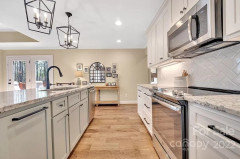
We currently have a 30 inch induction range with a microwave air filtering system

Would like to change to a 30 inch range gas top with 4 burners bluestar or wolf

Have read Mr Kaseki articles , can only fit a 30 inch dia hood , 28 wide and 30 inches over the counter surface

need about 400cfm range unit, will be using the burners on medium heat ----guessing 15000btu and will likely use 2 burners at a time total out 30000btu approx do i still need Passive or active MUA , too complicated for me to comprehend all the calculations

please simply and give me a rough blueprint

thanks all

Comments (24)

  • PRO
    4 years ago

    Well you need to talk to the person selling you the Blue Star IMO 4000CFM is pretty much useless with any gas range The venting needs to fit the range or cooktop wether you use all the burners or not and we need to see where this is going and how long the venting needs to be since long venting or venting with bends increases the need for more CFM.You certaily need a hood that is at least the same width as the cooktop .

  • 4 years ago

    Why would you buy a range like that and only use medium heat?

    Not a pro but I've looked into this a lot.

    There are three things: 1) What is required by code 2) What is recommended by the range manufacturer 3) What the BTU calculations will tell you you need.

    1) What is required by code? A ventilation system is probably required for gas but you need to check your local code. The CFM is likely not specified based on BTU in the code; only max CFM for no MUA. This varies in different parts of the country but most adopt the IRC which requires MUA for anything over 400 CFM. If you are really just going to get a 400 CFM hood then I'd suggest you look at a less powerful range. But either way you wouldn't need any MUA assuming your municipality's code adopts the IRC (my area further restricts the IRC and requires MUA for over 300 CFM). Passive vs. active MUA is likely also described in your jurisdiction's code. I have a 600 CFM hood and passive MUA. Although I wish it were active because having passive MUA in a northern climate is not ideal.

    2) What is required by the range manufacturer? Wolf has a handy ventilation guide that will tell you what you should get based on the range you buy. https://www.subzero-wolf.com/-/media/files/united-states/product-downloads/sub-zero-wolf/misc/ventilation-guide.pdf No wolf gas range/rangetop recommends 400 CFM. All of them are 500 or more.

    3) What is required by calculation? Honestly you can go down this rabbit hole if you want but it seems like there are too many "what if" statements/ways to reduce your MUA because "I'm only using the burners on medium heat" and "I will only use 2 max at a time". Seriously don't buy a powerful range if you don't want to use its power.

  • 4 years ago

    The primary function of cooking ventilation is not to capture the BTUh of the gas burners, but to capture the rising cooking plumes containing moisture and grease particulates, and with gas cooking, combustion products. So the hood is not driven primarily by BTUh, but by type of cooking and resulting plume CFM and upward velocity. Simmering bacon needs less hood CFM than wok cooking. The plume volumetric rates and upward speeds are greatly different.

    Also, all cooking ventilation requires replacement air, known as make-up air (MUA). Sometimes this can be provided by house leakage, but generally needs a specific means of supplying and heating the air. How necessary active (with blower) MUA is depends most importantly on whether combustion appliances are present (exclusive of the cooktop) and connected to the kitchen via some air path.

    Even if my writing is incomprehensible, you still need to supply a lot more information if you want me to confuse you further. For example, what is your most vigorous cooking condition? What is your combustion appliance situation? What does your cabinet layout look like (photo) that constrains your choice of hood. Do you have a limit on duct diameter and/or length? These and many other questions infest the many threads that I have commented in. In other words, we need to know what you know to be even slightly comprehensive in answering your need.

  • 4 years ago


    Thank you all,

    We are planning in removing the microwave and changing the induction range with a gas range or range cooktop hood ,since right know the microwave is the focal point of the kitchen .the space we have after we remove the slide in range is 30 inches wide by 28 inches deep. We mostly use the cooktop for braising type of cooking , and the oven for vegetables and chicken , we to not sear meat or use a wok on the cooktop-- hence medium-low flame


    we think by removing the microwave and placing a gas range, the kitchen may have a different look

    Please feel free to comment with ideas you all might have . We agree that we do not need a high BTU output burner

  • 4 years ago

    we would prefer a recirculating hood

  • 4 years ago
    last modified: 4 years ago

    We are doing the same thing. We are going with Thermador Pro Harmony 30" range with blue knobs :) Thermador recommends 300CFM. We are getting a convertible Zephyr range hood with 400 CFM.

  • PRO
    4 years ago

    If you are doing a recirculating hood then there is no MUA because you are not removing any air from the house. What is your appliance saleperson advising?

  • 4 years ago

    Our salesperson is trying to see the Zephyr 400 CFM undercabinet hood

  • 4 years ago

    Do not do recirculating with gas -- you will be slowly poisoning yourself. Many people are changing to induction for health as well as cooking reasons, but if you're going gas, be sure you are removing the combustion products from your living space to the outside.

  • 4 years ago

    It's a Zephyr Gust Model:AK7100BS-BF

  • 4 years ago

    If you get a recirculating hood you are not looking for external ventilation, nor do you need MUA.

  • 4 years ago

    Please don't do this. It honestly sounds like you don't cook that much. But even so, current research indicates that gas appliances harm indoor air, even when they aren't in use. If you install a gas range you really, really, really need to provide proper external venting.

  • 4 years ago

    what we have understood is that any type of appliance --induction ,gas, electric produce fumes -the best way to get rid of it is outside venting but honestly we don't have $10000 to get the hood , duct silencer blower MUA-- because that also has to be done right -- so something is better than nothing --my opinion

  • 4 years ago

    Well, that depends on what your "nothing" is. If we set "nothing" as your current induction cooktop with some kind of recirculating filter (assuming that's what your "microwave air filtering system" is), then moving to a gas range with any kind of recirculating hood is definitely WORSE than "nothing." Because now in addition to cooking fumes, you've got gas and gas combustion in the room. And that's not healthy. Don't pollute your home to get a "look." Keep your induction cooktop. Or get a new induction or electric range that has more of the style that you want.


    Note the bottom of this page, Wolf's advice on its own recirculating systems: "This type of ventilation will not remove ... combustion gases from the air."

  • 4 years ago

    thanx mcarroll -you nailed it we are going for the look-----now safety first

  • 4 years ago

    Sorry for climbing quite so high on a soapbox. I've got asthma that probably stems at least in part to the air pollution I grew up with, and I've been following the new, pretty surprising, research coming out on gas appliances and indoor air pollution. I just hate to think of people accidentally compromising their health, because the effects of gas ranges are not well known. FWIW, we've been living with induction and recirculating for several years. For our cooking style it's totally fine. Not ideal but most of us do have to compromise somewhere.

  • 4 years ago

    In this forum there are historical threads with gas cooking lovers dueling with induction cooking lovers. It may be useful to find and read them. Other than looking different, reusing older pans, and directly flambéing peppers or marshmellows, there is little that a gas cooktop can do that an induction cooktop can't do, and the induction cooktop can normally beat gas at bringing a given quantity of water to a boil. You would need to upgrade wiring if it is presently insufficient.

    As noted, induction is a better choice when doing recirculating "ventilation." So far as we know here, the Vent-a-Hood ARS system is the only one that has been well received and more helpfully reported on by its owner. However, there are likely to be offerings from Wolf and Broan/NuTone/Best to consider. See https://www.houzz.com/discussions/2347276/vent-a-hood-ductless-ars-range-hood-update#n=65

    On top of these basic issues is the hood size. If the hood front-to-back distance is enough to capture front burner/hob cooking plumes, it needs to be somewhat higher than 30 inches for good sight lines to the contents of back burner pots and pans, depending on the tallest cook's height.

    I recommend drawing a side view of the cooktop, counter, and hood and imposing a stick figure cook that can bend at the waist. Note sight lines and head impacts for various hood size and mounting height options. Your small cabinets above the microwave oven may need to be removed for some solutions. In particular, the ARS filter stack rises into that area.

    sam thanked kaseki
  • 4 years ago
    last modified: 4 years ago


    Which style ventahood ARS should we get the flat or the euro style --is one more effective than the other

  • 4 years ago

    Pyramidal may have slightly better flow uniformity over the baffles. Or the difference may be trivial. Cut-away views of each might hint at a difference, but otherwise I think the issue is mainly aesthetic.

  • 4 years ago

    The appliance guys came over to look at my space and said ducting to the outside should not be a issue , they said if we wanted to go with the ventahood lung system at 300 cfm and induction cookout -it is a good option , we get to keep the cabinet since the hood was a under the cabinet design with 22inches of depth which would cover the cooking area -- any thoughts

  • 4 years ago

    They said the lung system is easier to maintain that the ARS system

  • 4 years ago

    In light of these comments I can only add that if ducting is no problem, then any hood with internal or external blower should not be a problem. And if you want to keep the rated air flow at 300 CFM or whatever, then the selection of blowers and hoods can be thereby constrained.

  • 4 years ago

    Glad to hear you are keeping induction! Definitely go for external ventilation. Lots of options there.