Software
Houzz Logo Print
webuser_320599220

Centipede grass-help!

3 years ago
last modified: 3 years ago

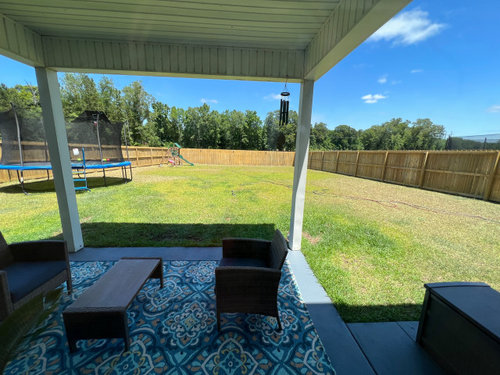
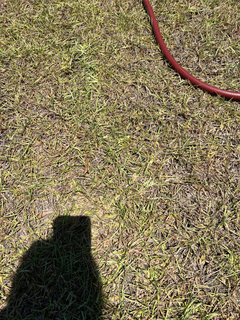
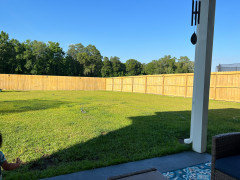
So about a little over a month we fertilized with milorganite. our grass started turning a grey, silvery color & up close it looked like a sage color. well part of it has improved but now i have some big spots that turned a different color. what could it be? also to add it is watered twice a week. we also have dark green spots from our dogs urine & have been giving them treats for it. We plan on dethatching next spring


Comments (18)

  • 3 years ago


    up close

  • 3 years ago

    Never dethatch centipede or St Augustine. Those two will die from dethatching.

    Where do you live? I need more than your zone. If you live in Orlando, say, Orlando.

    Do you know the pH of your soil? Centipede really kinda needs a low pH (acidic) soil to thrive.

    I'm sure your dogs love the treats, but they won't do anything to change the quality of their urine. Just enjoy the whispers of nature.

    When you water, do you know how many inches of water are applied? You can test it by placing tuna or cat food cans around the yard and turning on the sprinklers for the designated 20 minute dose. With my oscillator sprinkler, hose, and water pressure, it takes 8 full hours to apply 1 inch of irrigation. My neighbor has a high-flow in-ground system that takes 20 minutes to apply the inch. Your time will be somewhere in the middle. 1 inch is what you should be putting down, once per week. If you are putting down 2 inches, then the problem is too much water. If you are putting down 1/4 inch, then not enough. It really looks dry, but that can happen if the roots get soggy and there's no air in the soil.

    The Milorganite didn't hurt anything, but centipede can do very well with no fertilizer at all. The joke in the grass farming industry is they drag an empty fertilizer bag every other year and that's enough. The soil can always use the Milorganite.

    Jenny Almendares thanked dchall_san_antonio
  • 3 years ago
    last modified: 3 years ago

    @dchall_san_antonio Im in savannah ga. i had no isea dethatching can kill centipede. but ill have to test out how much water it gets, i have it on 20-30 min twice a week for now (maybe i should do it once a week?) we do have an idea with nice lucious green grass, im assuming maybe the ph is healthier there. Should i add seed?


  • 3 years ago

    Savannah, of course. Another question: would you say you have a red clay soil? sandy soil? or what they call Tifton which is a gray sandy soil (more nutrients than the sandy soil at the shore).

    Do your neighbors use a lot of lime in their yards?

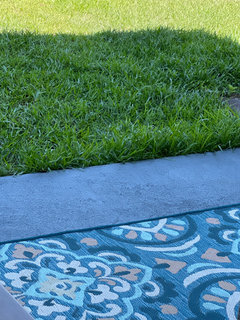
    That picture tells me the soil is fine. I suspect that green spot is getting enough water without getting too much. When it rains, does water seem to flow toward that spot or away from that spot?

  • 3 years ago
    last modified: 3 years ago

    @dchall_san_antonio I would say sandy soil, my neighbors dont have a lot of grass so they definatley dont do maintanence on it lol. i havent noticed much of a flow when it rains. to add, the green area is shaded & stays wet the longest

  • 3 years ago

    @dchall_san_antonio should i overseed those areas? also the thatch is real thixk in those areas. what wokld help with that?

  • 3 years ago

    There should not be a reason to overseed. That would bring in other issues with weed seed germination.

    What are you calling thatch? I don't see any in the 'up close' picture. I see the stolons (runners) criss crossing over the surface. That is not thatch. Those create the density you want when they are all alive. Those are the things you don't want to chop up with a dethatcher. Dethatching bermuda works because they also have rhizomes underground helping to spread and keep it alive, but St Augustine and centipede rely on the stolons above ground to transfer nutrients around.

    Here's something else you can do to help diagnose this. Find a straight sided jar (e.g. olive jar), fill it half way with soil, set it down and measure from the table to the height of the grass with a ruler, fill the jar with water and a few drops of shampoo or dish soap, cap it and shake/shake/shake like crazy until any and all clay particles are melted away. Set the jar on the table and wait 1 minute. After the minute measure the height of the soil (take a picture). After 1 hour, repeat measuring and a picture. Then tomorrow measure and photograph. What you measure after 1 minute is sand, grit, and gravel. After 1 hour it will have a top layer of loam with cloudy or brown water on top. After a day there may be a layer of clay or the water will still be cloudy with dissolved clay. If you can read something through the water in the jar, then you have essentially no clay. Once you have the pictures you can return the soil to where you got it.

    If you have no loam or clay at all, then there's a good chance you have a soil that drains so fast the roots never get any sustained contact with moisture.

  • 3 years ago

    @dchall_san_antonio you just gave me an idea for my sons science portion of home school 😂 ill try that this weekend, ty for your responses.

  • 3 years ago

    @dchall_san_antonio and i thought it was thatch because it looks dead and when i pull it it easily comes off

  • 3 years ago

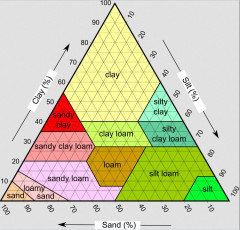
    Don't know how old your son is, but suggest he calculate the percentage of sand, silt, and clay if he's up to that much mathematics. Then there's this triangle chart to show you where your soil is.


  • 3 years ago

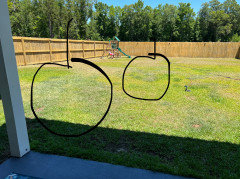
    @dchall_san_antonio i appreciate all your feed back. the last couple nights we have had cooler weather and i woke up to this the circled areas are now turning im stumped lol dormancy?


  • 3 years ago

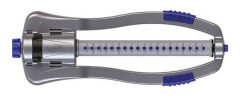
    I see you have a rotary impact sprinkler. I've tried every type of sprinkler, twice...or thrice. The rotary ones always throw water to a distant perimeter and leave the inside of the circle with relatively little water. They have fiddly adjusters you can try and make work, but they are far too much hassle for me. You'll be so much happier with one of these oscillator types with the turbo motor instead of the mechanical linkage.


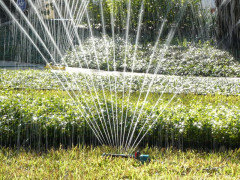
    They throw a very even, rain like, spray over a fairly large area.


  • 3 years ago

    @dchall_san_antonio i have one of those too in the farther end of the backyard. the reason i have the rotating kind there is because we found it hard for the oscillator to hit the sides.

  • 3 years ago
    last modified: 3 years ago

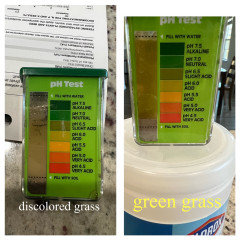
    @dchall_san_antonio dOkay I did a soil test on the greenest part and the discolored part.


  • 3 years ago
    last modified: 3 years ago

    Home pH test kits usually give you back the pH of the water that goes into the test. If you send the soil to a real test lab, like Logan Labs in Ohio, they take all that into consideration.

    You could call your county agriculture extension service office and ask the question, "for my neighborhood, about what pH does the soil run?" They should be able to tell you if it is appropriate for centipede. I suspect it is.

  • 3 years ago

    @dchall_san_antonio happy to say after a weekend of rain my grass is looking better. i guess it was so thirsty & my sprinkers werent cstching up


  • 3 years ago

    My wife still cannot believe it take 8 hours to water the lawn. She thinks 20 minutes should be enough.