Software
Houzz Logo Print
gregjmcquaid

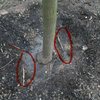
English Ivy infiltrated a Silver Maple

4 years ago

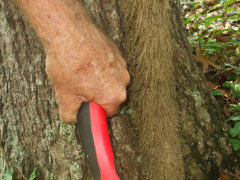
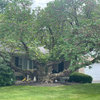
The previous owner planted English Ivy at the base of an 85-year-old Silver Maple and it has made it's way about 25 feet up the tree. I attempted/experimented with cutting the thicker ground-based roots of the Ivy and it survived, so it's evidently living off it's smaller connections to the bark. An arborist/tree company quoted the removal at $1000 and I find they very unfairly left the contract very open-ended saying "they would remove as much as possible" at $125 a man/equipment hour with zero guarantees it wouldn't grow back, which would require a new contract/payment down the line. Any thoughts/experience related to this would be very much appreciated.

Comments (20)

  • 4 years ago

    This sounds too dangerous for a DIY project. Get quotes from other tree companies and a better contract.

  • 4 years ago

    Not dangerous at all!! It is a very common weekend sight in my neck of the woods to see folks halfway up a tree pulling down the ivy :-0 But then I live in the English ivy invasive capital of the universe. It is certainly no more dangerous than pruning a tree of that size. Or climbing a ladder to clean out second story gutters!

  • 4 years ago
    last modified: 4 years ago

    25 feet up the tree is nothing. Just follow gardengal's instructions. Silver maples grow so fast that whatever you can't peel off will be pushed off by shedding bark in a few years.


  • 4 years ago
    last modified: 4 years ago

    "I attempted/experimented with cutting the thicker ground-based roots of the Ivy and it survived, so it's evidently living off it's smaller connections to the bark."

    It does take it a while to brown and decay away.

    But if you sever the stem and use triclopry concentrate on the freshly cut end it will kill it.

    We killed several even larger than this one but they all did die with just the one cut.


  • 4 years ago

    Another option is to cut down the tree. Silver maples are terrible trees IMO.

  • 4 years ago

    My experience is similar to cearbhaill’s. Cut at the base and it will eventually die. The upper part of the vine will ultimately release and you can pull it down. Might be a year or so later but it will come off. There are no quick fixes with ivy.

  • 4 years ago

    Not dangerous at all!! It is a very common weekend sight in my neck of the woods to see folks halfway up a tree pulling down the ivy :-


    Just because people do it does not make it safe. Stick to cutting the ivy at the base.

  • 4 years ago

    Oh, for heaven's sake!! There are implied risks associated with many things we do as homeowners and gardeners......like cleaning out gutters, de-mossing roofs, putting up Christmas decorations, pruning trees, even running a lawn mower. It is just a matter of understanding what that risk might be and preparing for it accordingly.

  • 4 years ago

    Hello cearbhail - If I apply this, must it only hit the Ivy stems, will it harm the tree if it hits any surrounding bark? Thank you everyone for your input, I've been moved in a direction of further removing it myself. Now I know about the invasive groundcovers..............

  • 4 years ago
    last modified: 4 years ago

    "If I apply this, must it only hit the Ivy stems, will it harm the tree if it hits any surrounding bark?"

    You will be using the concentrate triclopyr and painting it only on the cut portion, not spraying it.

    You have to apply it right when you cut- you have to have it handy and ready to go. When I started I used a shot glass and a small craft paint brush, but kept spilling it.

    Since then I have started carrying some in a dropper bottle and applying it that way, and have also put it in a syringe and dropped it out a drop at a time.


    But remember- you'll be using drops in rather small amounts, not a wide spray so it won't get on the tree, not that a drop would harm bark anyway.

    A drop or three immediately applied to the freshly cut portion of the root end stem.

  • 4 years ago

    Ability and speed of desired results my make this expensive. Sounds like if you want it all gone tomorrow it is going to either cost money or end up with you in a tall old tree.


    If you just want to kill the ivy and wait for it to fall out of the tree then you'll be able to do that yourself.

  • 4 years ago

    Toronado - Can you point out the most pertinent advice given so far or additional advice for killing it not yet provided? Thank you.

  • 4 years ago
    last modified: 4 years ago

    ALL the advice you have been give so far is pertinent (with perhaps the exception of the suggestion to cut down the maple). You just have a choice between a fast method or an extended method of removal. But whichever method you choose to get the ivy off the tree, you will still need to address the ivy roots, either by digging them out (a huge chore) or by applying an herbicide to the cut stems. Any piece of ivy root that remains alive will continue to grow and produce new plants so you will need to be monitoring the base of the tree for any new growth and addressing that as soon as it appears. It will likely be a multi-year project.

    The last issue is why your tree service could not guarantee 100% results with just a single visit.

  • 4 years ago

    It does not live off the connections to the bark. You have to sever all the vines coming from the ground, not just the big ones. My neighbors said they had tried with their fir and were not successful but it was only because they didn't get all the stems from the ground. It does take some time for all the ivy to die.

  • 4 years ago

    Hello, I will be following these procedures this weekend and wanted to know the recommended mixing ratio of the brushtox herbacide to water for most effective killing of the ivy vines. No water at all and pure herbicide? I appreciate your help.

  • 4 years ago

    U definitely need the maximum the label allows, which might be undiluted. Ivy is one of the hardest things to kill. I would also add a teaspoon per L or so of dish detergent to help it stick.

  • 4 years ago

    @Greg Joseph, I hope you have gathered from reading the previous posts that spraying ivy with a herbicide is a very ineffective way of dealing with it. The surface of ivy leaves have a very thick waxy coating (cuticle) that impedes penetration of the herbicide. You could spray weekly for a month or two and still not see much of a result except on the newest growth, as that needs some time to develop that coating. Or make sure you use a prescribed surfactant (not dish detergent) to help with penetration. Even with that, your results will be very slow.

    The most efficient way to kill it off is to cut all the ivy stems as close to ground as you can manage (3-4 inches or so) and then paint, not spray, undiluted herbicide onto the cut stems. It will still likely take multiple applications for full eradication. btw, a surfactant is not really necessary using this method.

  • 4 years ago

    Agree w/davidrt -- typically when needing maximum effect like on the cut end of a stem or trunk (say like ailanthus or a big, cut stem of trumpet vine), I just use undiluted herbicide applied w/a cloth.

  • 4 years ago
    last modified: 4 years ago

    Gardengal, I had for some reason assumed the current poster/bumper was going to cut and then apply. Not just try to use the herbicide alone. Agree with you it has to be former.

    I would disagree with you about adding supplemental surfactant, even for application to stems, and "dish soap" (actually detergent of course) is what most people have on hand. The stems of Ivy, like the leaves, are very "suberized" and hydrophobic, and any water-based herbicide that is applied (which I'm just going to wildly assume all consumer products are, although I've barely used them since I owned my current garden!) will run right off them without it.

    It's been SO long since I treated vines - and for me it's mostly been poison ivy which has the hairs. Triclopyr ester of course, has no trouble sticking without a surfactant. Commercial "3 way" amine, although water based, would stick because it's so concentrated. But I was guessing a more dilute solution of whatever, sold at big boxes for homeowner user, would need some help. I do remember, for example, that the year I moved here, name brand "Round Up" shed right off the leaves of things like Euphorbia peplus. They gave it the bare minimum of surfactants and that wasn't enough for some weeds. That was almost 20 years ago. Maybe today's formulations are better.


    *