Software
Houzz Logo Print
doriswk

Is this a Common Sumach ?

4 years ago
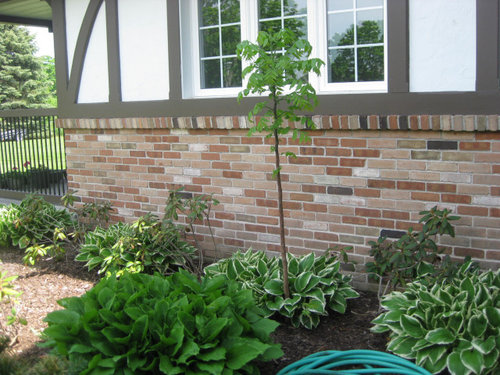
Wondering if this is a common sumach ( zone 5) and showed up via " self planting", or is a specimen planted by the previous owners. It needs to go because its in the wrong location, but we would plant it someplace else if its worth keeping. Any thoughts please ?


Comments (12)

  • 4 years ago

    Could be the annoying black walnut, but is growing more like a sumach. Hard to tell which species. Crushed walnut leaflets have a distinct smell.

    doriswk thanked bengz6westmd
  • 4 years ago

    those are huge compound leaves.. also making me lean toward nut tree ...


    regardless... if that is its spring growth rate .... wouldnt one think its planted 10 or 20 feet too close to the house ...??? .. it isnt ever going to start growing slower ...


    in other words... it doesnt matter what it is.. its got to go.....


    ken

    doriswk thanked ken_adrian Adrian MI cold Z5
  • 4 years ago
    last modified: 4 years ago

    A sumach would prb'ly have smooth bark at that age -- I seem to see roughness on the stem, which would suggest black walnut. Those come up everywhere on my lot and are pulled up on sight.

  • PRO
    4 years ago

    Crush a leaf and smell it. Sumac smells pleasant like lemons or lemonaid. Black walnut tends to smell more of earth, pine, woody spice, some lemon. If by chance you have a tree of heaven, those smell bad like old gym socks or rancid nut butter.

    doriswk thanked beesneeds
  • 4 years ago

    Thank you all for commenting. We know this has be removed, its way too close to the house. Just smelled the leaves, not a strong smell, but pleasant, light, perhaps like fresh grass ? Not earthy or woody at all. We went for a walk this morning in a forested area, saw sumach there, this looks very similar. Won't re-plant it.

  • 4 years ago

    Looks like black walnut rather than sumac. Sumac typically has a prominent terminal leaflet, while in black walnut the terminal leaflet is generally reduced or absent. Like beng I get lots of volunteers in my mulch beds (planted by squirrels) and have to remove them on a regular basis. If you don't get them when they're small they develop a pretty good tap root and have to be dug out.

  • 4 years ago

    Another comment, whether you like/want Black Walnut (Juglans nigra) or not: it is strongly allelopathic to many non-native species. It does not play nice, and plants like Hosta shown may start displaying annoyance at the walnut in their midst.


    I'd eliminate it sooner, rather than later. If one wanted walnut somewhere else, simply plant a nut in the fall like squirrels do, and you'll have as many as you wish.

  • 4 years ago

    Viburnum, black walnut may hurt some plants, but sugar maple laughs at it and then strangles it. The black walnut here was very poorly leafed.


  • 4 years ago

    No doubt, as Sugar Maple is a native species that co-evolved with Black Walnut. It's them furriners that have a hard time putting up with the juglone.


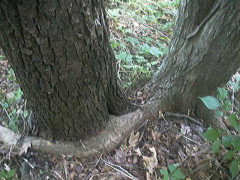
    Interesting projection of girdling root characteristic...

  • 4 years ago
    last modified: 4 years ago

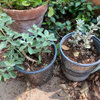
    Well, that tree is now gone, whatever it was. Thanks for the input. Looking at this picture I could not believe how much the hosta in between the rhododendron grow in the 10 days since I posted this....both rhodos were getting crowded out, so we took a hard stance with the hosta today.

  • 4 years ago

    It looks sort of like Ash

0