Software
Houzz Logo Print
lisas285

Soapstone issue/help

4 years ago
last modified: 4 years ago
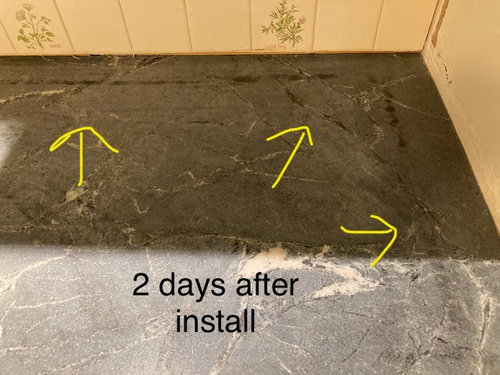
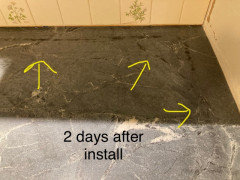
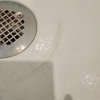
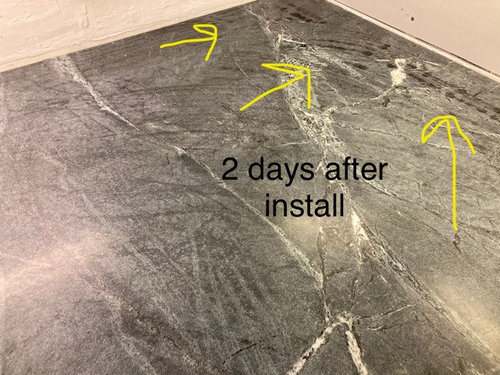
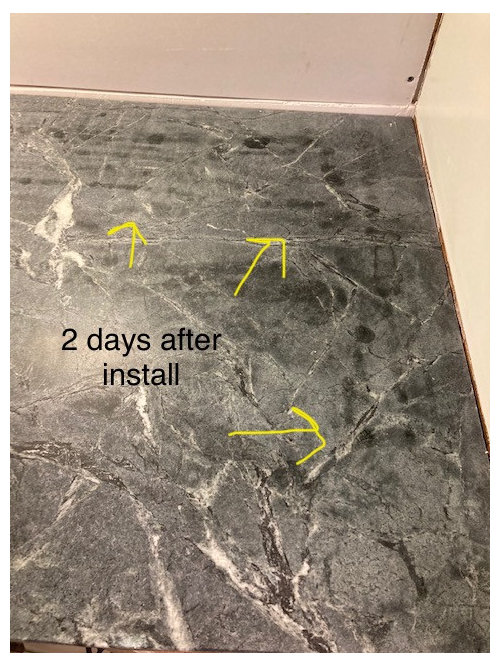
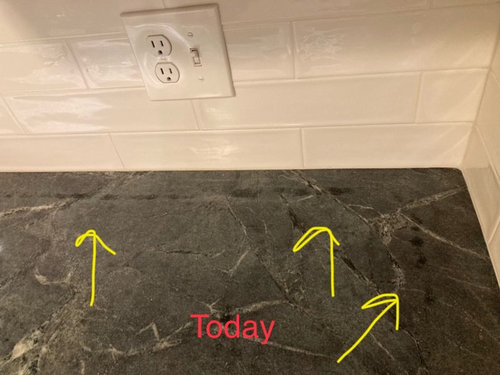
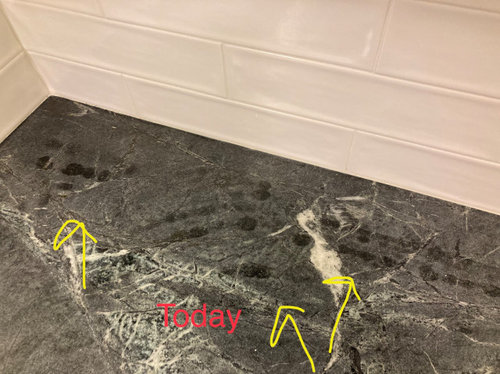
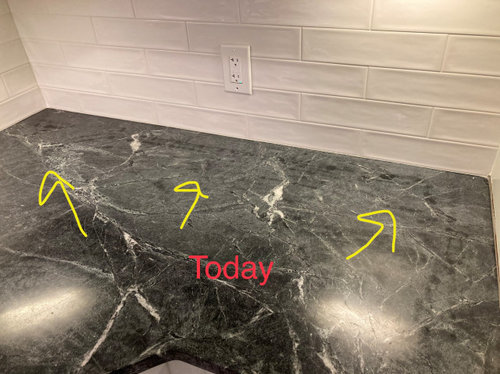
i need some help please. Last year I had soapstone countertops installed in my kitchen. when the installers had finished, i had to initial that everything was to my liking. it was, so I did. At that point, the installers immediately put a sealer on the soapstone and said not to touch it/it would be dry the next day. the next day came and I noticed the sealer had left behind these gritty marks. I waited a few days to see what would happen before snapping photos and reaching out to the company I worked with. i was told to not worry about it, let it go, soapstone is nonporous, it’ll fade. Well 11 months later, the marks are still here and look just as bad. I took new photos and sent them, along with the original, to the company and received a phone call. The woman I worked with is setting the stage of no accountability. She said again, its nonporous, the sealer could not have left those marks, and they have no clue what could have caused them/have never seen this before. She’s sending someone down in a few days to look at it, but didnt make any promises on a fix. I ended the call feeling as though I may have an uphill battle on my hands to get this taken care of. What are your thoughts on this situation? Do i have a right to demand a fix? If so, how do I handle it if they take no responsibility? I’ll have a hard time letting the issue go after spending $7,000+.

thanks for your advice!!


Edit: A thought came to mind, maybe during the slab cutting process at the quarry, the stone was burned by whatever tools were used and the sealer enhanced the burn marks?


Comments (22)

  • 4 years ago

    It's all uphill from here. 11 months is way to long to have let this go.

  • 4 years ago
    last modified: 4 years ago
    Soapstone should never have sealer. That your installer put sealant on soapstone indicates ignorance about the stone. But actually, the sealant is not that hard to remove. Use acetone - a small amount at a time, because a little goes a long way. You will be able to see how much or how little acetone it takes to remove the sealant. The windows need to be open to do this. After that wipe with clear water to remove all the acetone, since it is flammable you don't want any acetone residue. After that apply a beeswax coating - I prefer it to mineral oil. Try Clapham's Beeswax (available on Amazon); it will leave the smallest amount of shine which is just right, and it softens hands too.

    A soapstone finish is also a product of its fabrication. If the fabricator did not sand the surface properly, it will not be the silky finish it should be.

  • 4 years ago
    last modified: 4 years ago
    i was told to not worry about it, let it go, soapstone is nonporous, it’ll fade.

    Well, if they knew it was nonporous, then what the hell are they doing applying a penetrating sealer?? If the stone can't absorb, then a sealer isn't going to work. Same issue w/Absolute Black granite. you never apply a sealer on it because it will just sit on top, dry and discolor. which is prob what yours did.

    Anyone who knows stones and sealers would know this. That's on them. and since you've been told twice it's nonporous (please tell me you have this in a text or email?) then theres no getting around "they didn't know about the soapstone" excuse.

    That's the first thing I'd shoot back at them if they start to flim flam you. "Why is a professional stone company applying a penetrating sealer to a stone they know does NOT absorb? " IT clearly states on the bottle of the sealer, "do not let dry on top of stone".

    And why the heck are they using a sealer any way? soapstone gets oiled, not sealed.

    It's their error and they owe you to have someone come out and resurface it.

    back in the corners and close to the tile, that looks like an adhesive bleed through.

    This isn't a burn mark issue. I bet this is the pattern of the adhesive they used underneath the stone.


    Call in an independant stone refinisher (someone who does marble and such) and get their opinion.

    Also need to know what type of sealer they used.

    Did you ever talk to them about sealing it? was it ever discussed? was it in the contract?

    you signed off and THEN they applied it? And you let them or did you not know? that alone is really suspicious.

  • 4 years ago
    last modified: 4 years ago
    I'm so sorry this happened to you and your beautiful stone! You may want to message @karin_mt, a stone expert (geologist, I believe) and Houzz contributor. She has posted some very helpful advice here.

  • PRO
    4 years ago

    What Beth said. The whole reason for using soapstone is to have a stone that doesn't need sealer. And of course, because it looks great. Sorry you're going through this. Find every bit of information they gave you in writing. If they still won't budge, write a scathing review on social media. That might get their attention. If it doesn't, then call another fabricator and have them come out to re-finish. It will cost some money, but it might be money well spent to avoid the headache and hassle of taking them to small claims court.

  • 4 years ago
    last modified: 4 years ago
    "then call another fabricator and have them come out to re-finish. It will cost some money, but it might be money well spent to avoid the headache and hassle of taking them to small claims court."

    Hold on there, put the brakes on a bit. As I wrote above, all that is needed to remove the sealant is wiping with acetone. Why pay a new fabricator to refinish what may be perfectly good? This is getting way too excited on this thread. The OP's fabricator is ignorant, so just remove the sealant yourself, put Clapham's beeswax on it, and see how that goes before getting so worked up, calling a fabricator to refinish, and going to small claims court.

  • 4 years ago
    last modified: 4 years ago
    Miller, first we'd need to know what sealer was used. acetone doesn't work for everything. AND, if she screws it up and makes it worse, the fabricator/installer is going to be released of everything.

    I told her to call in a marble/stone restoration expert to get his advice (after she finds out what sealer was used) and to see if it can be fixed.

    Then I'd bring his findings, plus the fact a sealer should not be allowed to sit and dry on a surface that won't absorb, to the installer and have them foot the bill.


    Of course the person the company sends in to look at this stone isn't going to side w/the homeowner. In fact, I'll bet this person blames the homeowner for something she did.

    OP:

    (I wouldn't have waited 11 months. I know why you did, but that's going to come back and bite you in the behind)

  • 4 years ago

    @M Miller you don't have another post on this thread, or at least not one that is appearing. Maybe it would help the OP to describe the process (which you may have thought you did in your post that isn't appearing).

  • 4 years ago
    last modified: 4 years ago

    @missb_remodeling - my earlier post is appearing to me. I do not know why it was removed. Here is what I wrote:

    Soapstone should never have sealer. That your installer put sealant on soapstone indicates ignorance about the stone. But actually, the sealant is not that hard to remove. Use acetone - a small amount at a time, because a little goes a long way. You will be able to see how much or how little acetone it takes to remove the sealant. The windows need to be open to do this. After that wipe with clear water to remove all the acetone, since it is flammable you don't want any acetone residue. After that apply a beeswax coating - I prefer it to mineral oil. Try Clapham's Beeswax (available on Amazon); it will leave the smallest amount of shine which is just right, and it softens hands too.

    A soapstone finish is also a product of its fabrication. If the fabricator did not sand the surface properly, it will not be the silky finish it should be.

  • 4 years ago

    Had you done research before purchasing your soapstone, you’d have known that that soapstone doesn’t need sealing. In fact, it should never ever be sealed. Sealer prevents soapstone from acting as it should. This is what happens when you buy soapstone from a stone yard that does not specialize in soapstone.

    I’ve repeated this over and over on this site...soapstone should be purchased from a soapstone specialist, like M. Teixeira, Dorado Soapstone, Garden Soapstone, or Vermont Soapstone, to name a few. Soapstone is not finished like granite, marble or quartzite. It is sanded to a particular grit (I forget the number), so that the top has a silky, matte finish. Done properly, it will never be gritty, or shiny….glasses will never leave water marks.

    My soapstone, a very hard variety, Belvedere, was purchased from M. Teixeira, the largest soapstone dealer in the US. These guys know EVERYTHING about soapstone. Dealing with them was a pleasure.

    As for your problem…have your fabricator come back to your home, and strip off the sealer. Insist on it. The soapstone should have a silky, matte finish afterwards. If it doesn’t, that’s proof that it was not fabricated (sanded) properly...and you will be miserable if that is not corrected.

    You can always call M. Teixeira. They will answer any questions you have, even though you didn’t purchase from them. They are an amazingly friendly, helpful and informed staff.


  • 4 years ago
    last modified: 4 years ago

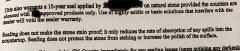
    This is from my warranty regarding their use of a sealer…

    i had questioned the use of a sealer, as I had done my research, but as I’m not an expert on stone, they convinced me that this would be beneficial


  • 4 years ago
    last modified: 4 years ago

    stone isn't a "one size fits all". some stones don't need sealers. Like the Absolute Black I mentioned. Soapstone can stand alone, or be oiled. I've never heard of anyone sealing soapstone. they obviously don't know their stones.

    (and there is no such thing as a 10-year sealer, unless it's some factory patented version. If they used a regular sealer that anyone can purchase, it doesn't last for 10 years".

    Just the fact they told you "soapstone is nonporous" , but they applied a sealer, should tell you enough about their lack of knowledge.

    Can you ask what they used? was it an oil? a penetrating sealer? a topical product? Lets find out that info first. If it's a regular penetrating sealer, then I'd ask:

    "why are you applying a sealer to a stone that does not absorb" ?

    Does Soapstone Need to Be Sealed? The Answer Explained

    Whether soapstone is used for a kitchen countertop, a sink, a backsplash or some other building project, sealing is not necessary. Because this stone is dense and nonporous, it comes naturally equipped with a barrier against liquids and stains. In fact, the stone is composed primarily of hydrophobic talc, which lends it amazing water-repelling properties! Thanks to its mineral composition and nonporosity, there is no need for soapstone to be sealed to keep moisture, bacteria and food particles from penetrating its surface, as is often required for porous stones such as granite and marble. This makes it a favorable option for homeowners wishing to skip sealing as part of routine maintenance for their countertops.

    another one:

    Sealers on soapstone:

    Over the years we have tried many different products on soapstone. Our recommendation is not to seal soapstone because sealers are inherently designed to penetrate and seal a surface. Soapstone is a nonporous stone and sealers will not penetrate it and therefore will not bond as effectively. What this means is that if you decide to put a sealer on your countertop you MUST maintain a strict reapplication schedule to keep the light look, i**f you lapse these treatments your countertops will start to spot in unpredictable places due to natural oils.**

    https://bcsoapstone.com/care-and-maintenance/

    **maybe this is why you have those blobs. either that, or the adhesive.


    Do you need to seal soapstone?

    We do not recommend sealing soapstone. Sealers are intended to seal porous stone like marble and granite which can stain. Soapstone is a very dense, nonporous stone which does not need to be sealed.

    https://www.soapstonecompany.com/soapstone-faq/


    In any case, it's on THEM. Show them every bit of evidence on soapstone and why it shouldn't be sealed, then have them take care of it for you. I'd call in a stone expert though. The people you hired are morons and would prob ruin the countertop.

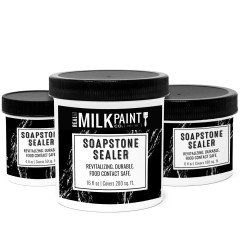
    once you get it handled, maybe try this. it's a type of wax.


    https://www.realmilkpaint.com/shop/waxes/soapstone/

  • 4 years ago
    last modified: 4 years ago

    I’m unfamiliar with how the adhesive used underneath would show through on the top, and appear only after the sealer was applied. Could someone please explain this? it sounds to me, of this is infact the case, this would be an error on their end, correct? as in they would be fully responsible?

  • 4 years ago
    last modified: 4 years ago

    yes, it would be their fault. after all this time it should have disappated. (just search "adhesive bleed-through on countertops" and you'll find tons of info. )

    But we don't know if that's the issue. is it just that one portion or the entire edging of the countertop?

    Did you read my last comment? Until you find out what they used, we're just spitting into the wind.

    You keep bringing up 'sealer', but we have no idea what they used!

    You've got the info you need to continue your own research. You're asking questions about things we can't answer because we don't know what was used.

  • 4 years ago

    Thank you everyone! This was educational and will help me have a more informed conversation with the representative this week.

  • 4 years ago

    A light sanding will remove anything, and give it the matte finish that its noted for. Because it looks to be polished to a too high grit as well. Not at all difficult to do.

  • 4 years ago

    Do you oil it, and if so, do the marks remain even when it is newly oiled?

  • 4 years ago
    last modified: 4 years ago

    Initially I did not want to oil, I loved the natural light gray. I eventually broke down and oiled it a few times to try and make the marks less noticible. Unfortunately, it didn't work. Ive I’ve heard that sanding soapstone is possible, but due to the size of area needed to be done, I do t want to chance making the surface uneven

  • 4 years ago

    The stone can be refinished with little mess or expense. The trouble is finding someone to do it. Do you have a soapstone specialist in your area?


  • PRO
    4 years ago

    If the acetone doesn't work or doesn't work well enough, abrade the top to refinish please. I doubt that's adhesive bleed.

  • 4 years ago

    "I eventually broke down and oiled it a few times to try and make the marks less noticible. Unfortunately, it didn't work."


    Oil will not work over sealer as the sealer seals the wood and the oil does not get absorbed the way is it designed to.