Software
Houzz Logo Print
omar_aftab

Please help us save our beautiful dogwood!

4 years ago
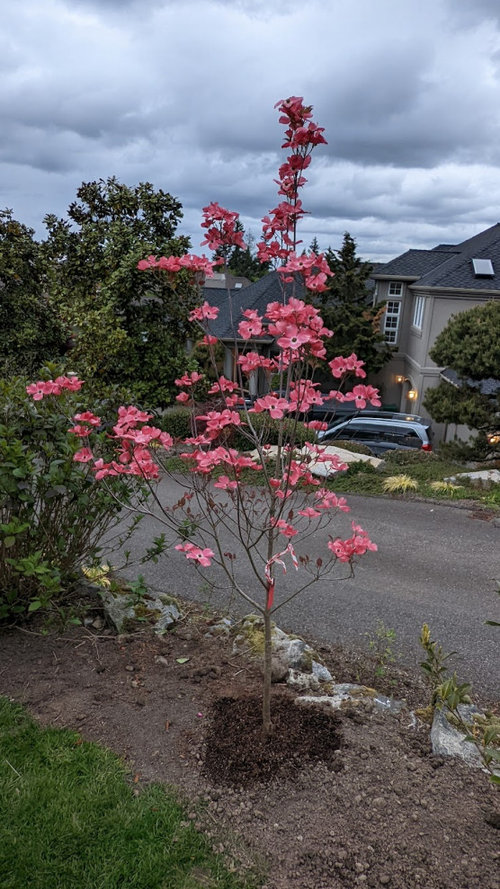
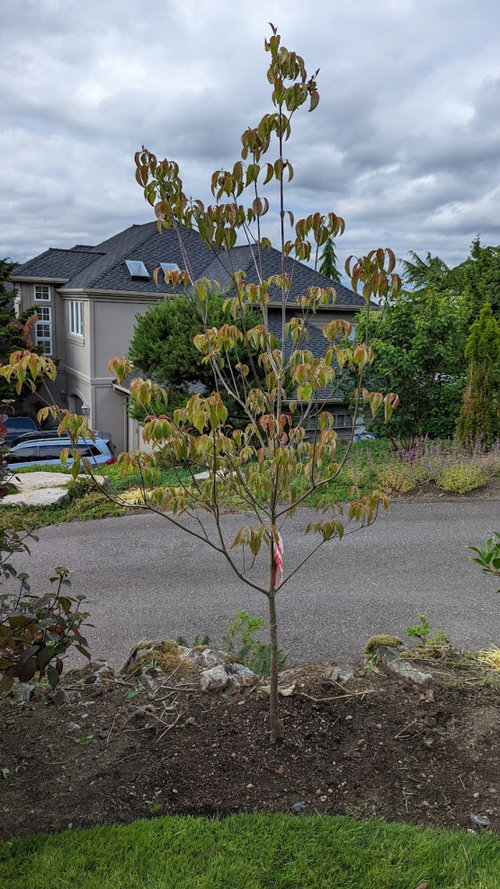
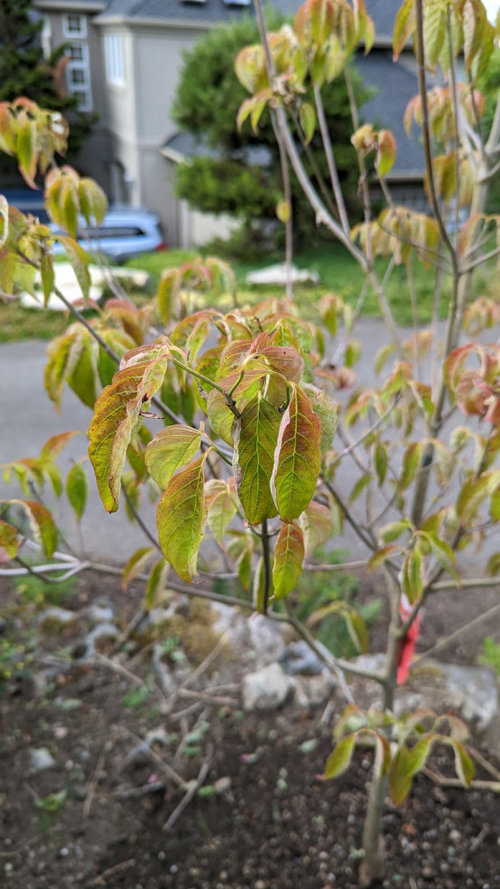
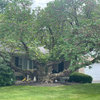
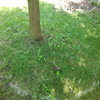
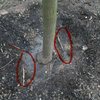
Folks - we planted a beautiful pink dogwood in April of this year in the Seattle area. It had huge pink flowers and no leaves at the time and was very stunning. It had a rootball when planted (see photos attached).


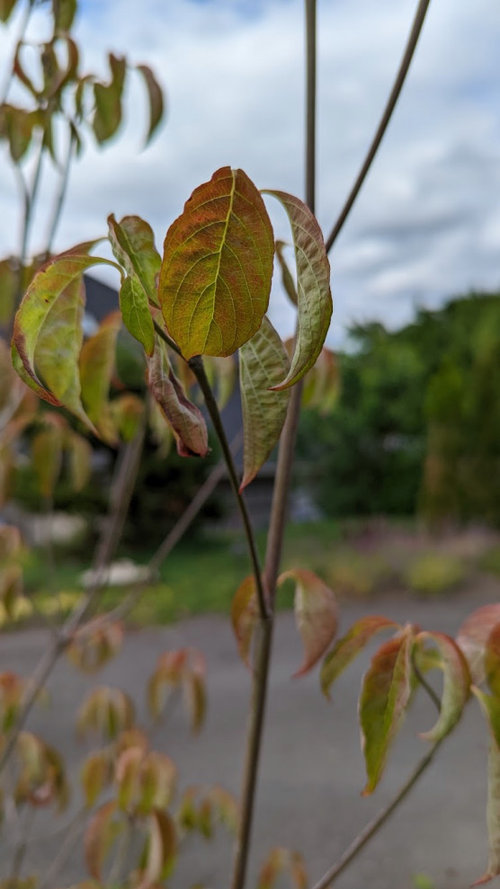
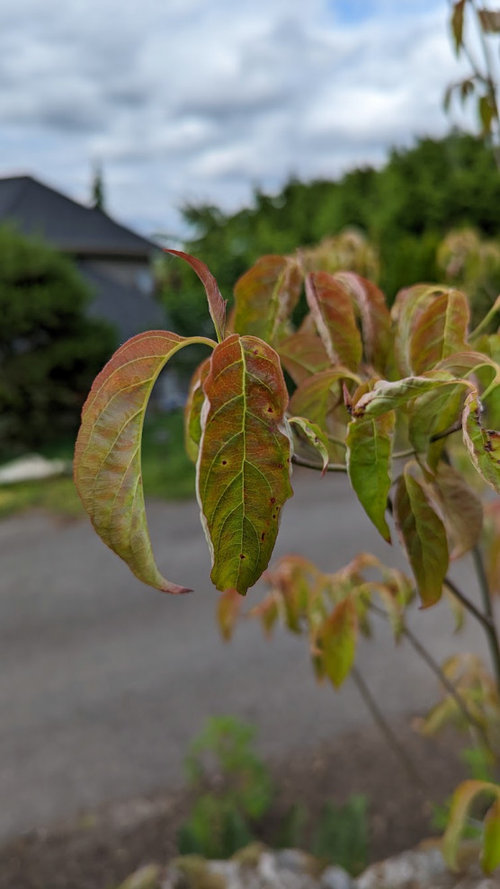
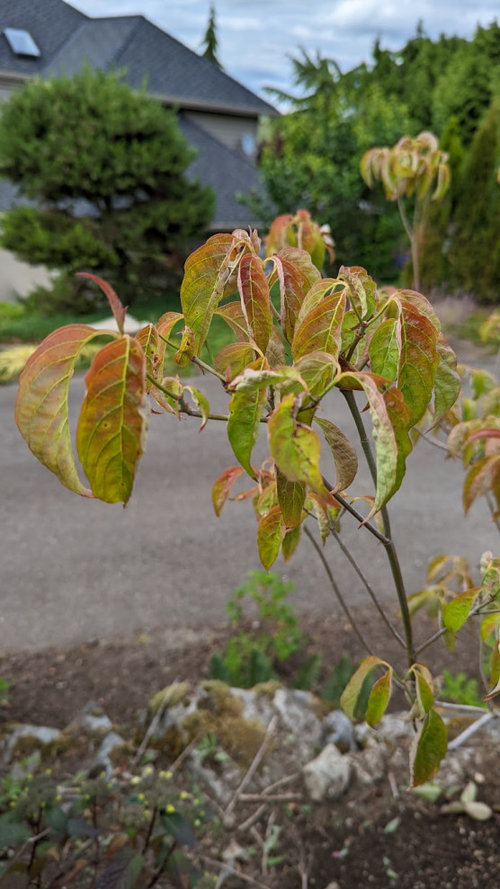
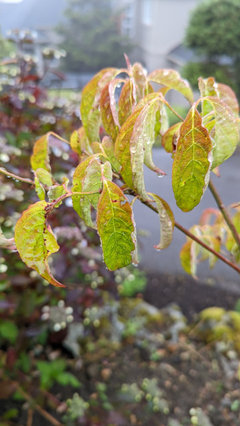
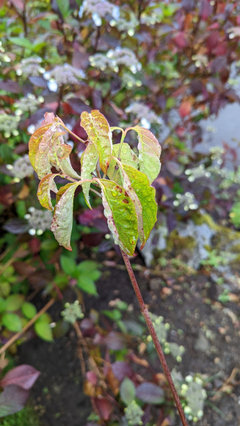
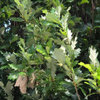
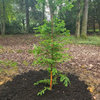
Leaves have come up, but the tree is obviously not happy. Leaves are oddly colored - reddish at the stems and the tips are green. It is well watered and the soil is not dried out. I am puzzled by this because all the pictures of dogwood leaf scorch various diseases show damage at the tips (brown tips) and the stems are still green. This is the opposite.


Would be very grateful for any advice folks have. We have had other dogwoods, but this is far prettier than our other ones and would hate for it to die.


Comments (20)

  • 4 years ago

    Have you dug down to check soil moisture at depth? Have you watered copiously since planting? It looks thirsty.

  • 4 years ago

    How deep did you dig the planting hole? If it is deeper than needed, the water will go past the roots.

  • 4 years ago

    take a hand trowel..and dig 3 or 4 6 inch holes around the tree.. in the gob planted.. and in native soil ... AND FIND OUT ABOUT MOISTURE AT DEPTH ..


    you have to have such at root depth .. surface water doesnt mean anything ...


    report back ...


    i have NEVER heard of a deep hole allowing water to move past the roots being a problem.. thats kinda the entire point of a well drained soil ... the only issue is planting too deep.. the root flare is supposed to be at the surface.. i cant tell from your pix ....


    your tree is severely stressed ..from digging.. moving.. transplanting etc .. but all you can do is water deeply and properly .... letting it near dry in between .. this should be all that hard in the PNW ...its not like here in my MI ... where weve been bordering on 95 for 2 weeks now ...


    since its stressed.. fert is not a response... its not hungry.. its stressed ...


    ken

  • 4 years ago
    last modified: 4 years ago

    Before digging the hole, 1) find the point where the top-most root emerges from the trunk (dig down next to the trunk to find this point), and 2) measure the distance between the top-most root and the bottom of the root ball. Dig the hole slightly shallower than this depth and as wide as possible (at least 1.5 times the width of the ball-dig a much wider and shallower hole in compacted soil). Do not dig the hole deeper than the root ball. Consider drilling holes below the root ball in compacted soil or rock to encourage some deep roots.

    https://hort.ifas.ufl.edu/woody/planting-hole.shtml

  • 4 years ago
    last modified: 4 years ago

    Sherry, your link talks about not making the hole too deep. Nobody disagrees with that. But it says nothing about the reason being that water will flow past the roots. The reason is that the root flare should not be buried.

  • 4 years ago
    last modified: 4 years ago

    Thank you so much everyone!


    (1) In the photo you can see a bit of the root flare at the bottom of the tree so it's not too deep


    (2) I had also thought that it needed watering, but when I dig, the soil is indeed wet underneath. It has been a very rainy and cool summer in Seattle (surprise) - I also watered it very heavily during the two 90F days of heavy sun we've had recently. (In fact, I'm worried a bit about over watering since water was pooling / not being absorbed quickly in the soil after my two recent heavy waterings)


    (3) I had bought some spectracide fungicide in case it was a disease of some kind (haven't applied any yet) but looks like folks don't think that's the issue?


    (4) The only other observation I made while digging to test the water level underneath is that the original root ball soil that came with the tree is very dense. My own soil in the hole around it is looser garden soil.


  • 4 years ago

    My link about being dug too deep has nothing related about the root flare buried, which it should not be. That is a different problem. It is the fact, that if you dig the soil out too deep, it will be loose and fluffy. The water will pour past the roots. Maybe where you live, it does not do that, but here, with our clay soil, it does. You can water every day and your tree or bush will die of thirst.

    You want the bottom of the root ball on UNDISTURBED compacted soil. It can and should be dug very wide, but not deep.

    The planting hole then acts like a pot and holds water around the roots until it is absorbed by the plant.

    The tree or bush WILL go out and down through undisturbed soil eventually.

  • 4 years ago

    There is no disease involved here so no spraying required.

    If the tree was sold balled and burlapped, then it will have a heavy clay rootball. If that rootball is not fully hydrated before planting then it is almost impossible to do so after planting despite how much you may water.

  • 4 years ago
    last modified: 4 years ago

    @gardengal48 (PNW Z8/9) - that may be the issue! The rootball indeed seems to be a heavy, dense clary rootball, I had noticed that when I was planting and also again when I was digging yesterday to verify moisture levels.


    Any thoughts on what I should do now?

  • 4 years ago

    Unfortunately it is too long after planting to dig up the rootball and soak it well before replanting. That would probably be the preferred method.

    What I would consider doing now is using some sort of metal spike or piece of rebar long enough to penetrate the clay rootball and carefully insert as far as you can, hopefully avoiding any major roots. Then when you next water, it will penetrate inside the rootball and hydrate it from the inside out. Repeat as necessary.

    Unless someone else has any other ideas, I think that's the best you can expect :-)

  • 4 years ago

    Try putting the hose, no sprinkler, right next to the tree and turn it on very slow. Let it run for quite a while. Repeat the next day, moving the hose to the other side of the tree.

    If it is running slow, it should soak down through to the rootball.

  • 4 years ago

    It is not the OP's soil that is clay - it is the soil the tree was grown in and then harvested as B&B with that very dense clay rootball soil intact. All B&B stock is grown in clay. Despite what others may speculate as an appropriate way to water, a dry clay rootball is virtually impossible to rehydrate once planted unless some sort of physical intervention is provided. Just creating a reservoir in the indigenous soil will NOT work. The water will percolate down but just slide off the clay (the soil interface issue), leaving the rootball dry but the surrounding soil adequately moistened. That is why it is always recommended to soak or water very thoroughly any B&B stock before planting!

  • 4 years ago
    last modified: 4 years ago

    That is also why I suggested the very, very slow watering, after making the holes as garden gal suggested.

    You have got to get that root ball moist.

    It would almost be better if the OP had clay soil, but he does not. Just the tree does.

    Please, gardengal lives in your area.

  • 4 years ago

    I don't dispute you, gardengal, but how does a clay rootball accept hydration before planting, but not after planting?

  • 4 years ago

    LClark, because you dump the tree in a pot of water!

  • 4 years ago

    "I don't dispute you, gardengal, but how does a clay rootball accept hydration before planting, but not after planting?"

    Its the volume of water....and the fact that (hopefully) the nursery never let the rootball dry out to begin with. A hose on trickle just can't provide enough sustained water flow to rewet the dry rootball. It only becomes somewhat hydrophobic if it is allowed to get too dry....like from sitting around a few days waiting to be planted :-)

  • 4 years ago

    Thank you all very much for your kindness and taking the time to advise. From carefully digging around the rootball, it seems it is not hardened clay as feared, and it does seem to be wet snd absorbing water. I have also made a trench as suggested and have watered heavily to allow soaking. Everything seems quite wet actually.


    I wonder if there is also some disease activity that is to blame. I see purple spots on some leaves, if you look carefully at the photo below you can see some spots on the leaves and also on the branches? Is this spot anthracnose or cercospora or something? @gardengal48 (PNW Z8/9) - it's been a very wet summer as you know, and this plant is new so it could have been infected when we planted it?


  • 4 years ago

    I still don't see anything more than transplant shock and a couple of abrupt weather changes causing some foliar distress. Just make sure it gets enough water as we move into our dry period. And it is much too soon after planting to be concerned about disease issues. I'd wait to see how it does the rest of the season and how it performs next spring before I got too concerned.

    Do you know the name of the type of dogwood it is? That could provide a clue as to how disease prone it might be.

  • 4 years ago

    Where I live, dogwoods don't do well in the sun. They do better as understory trees. When it's hot and sunny, they can droop like that regardless of how wet the soil is. In your case, the tree is likely even more susceptible since it hasn't had time to build out a good root structure. There are limits to what a plant can drink regardless of how wet the soil is.