Software
Houzz Logo Print
matthias_lang

Looking for Cornelian Cherry / Cornel Dogwood

4 years ago

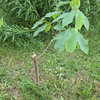
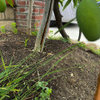
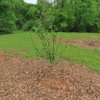
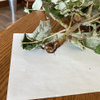
Anyone have a source to suggest? I lost 6 first year trees (twigs) overwintered in pots. The seller is no longer offering them.


If anyone here will have seed from a cornelian cherry / dogwood later this year, I would be pleased to buy or trade with you. Especially interested in seed that from tree that has produced acceptable fruit for eating.

Comments (14)

  • 4 years ago

    Obviously I can’t help, but I would imagine that if you want proven fruit quality it would be better to ask for cuttings rather than seed. Then you’d be getting a clone. Seed would be pot luck.

    matthias_lang thanked floral_uk z.8/9 SW UK
  • 4 years ago
    last modified: 4 years ago

    Raintree Nursery, a mail order source that specializes in fruits and edibles, carries multiple varieties grown specifically for their fruit. https://raintreenursery.com/collections/dogwood

    Unfortunately, they are sold out for the season but you can get in line for next year.

  • 4 years ago

    when looking for sellers.. it would be best if you researched using the latin names.. and i suspect you would have success at searching for the plant. ..


    ken


    ps: have you considered that the crop failed because of the seller.. and that is why he isnt selling them anymore??

    matthias_lang thanked ken_adrian Adrian MI cold Z5
  • 4 years ago

    Cornelian Cherry is an adequate name to identify this particular plant, especially if you want a good fruiting cultivar. Cornus mas is just the species, it doesn’t emphasise the fruit. Since it’s a large shrub I’m not sure how the crop could ’fail’.

  • 4 years ago

    I recall eating 'redstone' a few years ago. Definitely an improvement in flavor over sampling the fruit raw from plain species Cornus mas. This past winter I got to sample wine made from Cornelian cherry fruits. It was good. I see a lot of varieties out from Ukraine that were selected for their fruit quality. Not sure where you can find them all but Jung Seed Company in Randolph WI did offer a few of them in this years catalog. I do not recall if they were small bare-root trees or small potted trees.

    matthias_lang thanked Paul Schwabe
  • 4 years ago

    Thank you, all. Some of these look like good leads. One strikes me as a scammy outfit. Perhaps not surprisingly, it is the one that rose to the top of search results for me.


    I bought the bare root starts from https://oikostreecrops.com. I do not find blame in them; I simply left the tiny trees in pots too small, too exposed, too dry over winter. I have purchased other items from this company (hazelnuts, aronia, apricots) and was satisfied.. They changed the focus of their business so that they now sell primarily seeds. Cornelian cherry seeds are listed but noted "currently unavailable". Oikos Tree Crops is an interesting business. Check them out if you have time.

  • 4 years ago

    Hi matthias_lang:


    It would be good if you divulged where you garden; that helps in offering opinions and advice.


    Seeing Cornelian Cherry/Cornel Dogwood in the title of a thread turns my crank - almost like talking about Viburnum...


    Over my career, I have set about testing plants in my landscape so that I could competently discuss, advise, and/or design with these plants here in Kentucky. Cornus mas and its selections and relatives fall into that category of species that now populate parts of the premises.


    While horticulturist and landscape manager for one of the large thoroughbred horse farms here in the early 1990s, I was fortunate to steward a landscape designed by the late A. E. Bye. See Art into Landscape, Landscape Into Art for more about his work. Surrounding the modest parking area for the farm office were a handful of stately mature specimens of Cornus mas. I had started working there in September, and these plants were laden with maturing fruit - right in the line of procession from where you parked to walking into the building. Anyone who knew the plant would pluck a fruit or three as they passed.


    These were undoubtedly simply seedlings, as they were planted in the early 1980s when there were few to no landscape sized clones in production. I could be wrong. What it set off in me was the interest in seeing how the clones performed, at home, where I could observe them under similar conditions as they grew.


    I started with a half dozen 'Golden Glory' - 6' B&B extras from a job I planted. That was followed by a 5 pack of bare root 'Redstone' liners from Sjulin Nursery, arriving mail order from Iowa along with a half dozen Viburnum dentatum var. deamii. These were the trial plants for initial plantings.


    When I learned that Roy Klehm was propagating a slew of clones, I picked up a bunch more for the menagerie. This cohort added Cornus officinalis and some of its selections.


    Collecting and contributing seed would NOT be a challenge.


    The list:

    • Cornus mas seedlings from open pollination
    • Cornus mas 'Aurea'
    • C. m. 'Clydesdale'
    • C. m. 'Dripping Cherries'
    • C. m. 'Flava'
    • C. m. 'Golden Glory'
    • C. m. 'Pyramidalis'
    • C. m. 'Redstone'
    • C. m. 'Shumner'
    • C. m. 'Tricolor'
    • Cornus officinalis
    • C. o. ''Cheer'
    • C. o. 'Kintoki'
    • C. o. 'Spring Queen'


    Paul Cappiello at Yew Dell Gardens in Crestwood KY recently initiated a field trial of Cornus mas and Cornus officinalis on their grounds, to which I contributed some of these taxa. Stayed tuned for publication of those results. That institution may be an additional source for these (and other) selections.


  • 4 years ago

    Seeds of Cornus mas are not difficult to germinate but they require patience. Seeds first need a couple of months warmth followed by a couple of months cold. So if you sow in the autumn of 2022 the seeds will germinate in the spring of 2024. Artificial warm/cold stratification has not worked for me, seeds probably need natural fluctuating temperatures.


    In my experience Cornus mas plants are not very suited to pot culture. If the roots get too wet in the winter they will rot. This is especially true for young/small plants. Way easier to plant in the open ground.


    Cornus mas are very difficult to propagate through cuttings. It is not impossible but success rate is very low. Named clones of Cornus mas are usually grafted on 2-3 year old seedlings.


    In Europe, mainly in Poland and the Ukraine, a lot of worked has been done too improve fruit quality and weight of the fruit. A cultivar that tastes agreeable is 'Dublani' because it has a relative high sugar content. Another popular variety is 'Kasanlaker' from Bulgaria. Also well known is 'Jolico' from Austria but in my opinion too late ripening, especially in years with poor summer weather. 'Golden Glory' is a rich flowering variety and usefull for pollination. It is also reasonably upward growing (not fastigiate!) so suited for smaller gardens. Cornus mas has no problem with pruning and it is even possible to make a hedge from it.


    Some European cultivars might be available in the US but problaby have other names.


    A lot of cultivars taste reasonably tart and should not be harvested too early. Unfortunately the birds like the fruits when semi-ripe so harvest should be protected with nets etc.


    Cornus mas is self fertile but good harvests will be obtained when planting 3-5 genetically different plants in some proximity of eachother. Genetically different: plants propagated through seed or different grafted cultivars.

    Pollination: through bees and bumblebees + wind pollination. When the weather is bad (cold and wet) during flowering fruit set is usually significant lower than when the weather is good. I do not know if light frost during flowering has a negative impact on fruit set.


    Some usefull links:


    Cornus mas Poland


    Cornus mas Poland II


  • 4 years ago

    Woooa, nasty ice storm.

  • 4 years ago

    February 2003. It was a beaut.

  • 4 years ago

    I had not seen the post by @Dutch when I responded to @bengz6westmd. I also hope that we will learn where Dutch gardens and where these experiences occur.


    That is a lot of good information, and I'm heartened that I believed (without any supporting proof) that Cornus mas sets fruit better when there is a mix of plants instead of just one clone. My six big 'Golden Glory' set hardly any fruit for the 5 years when they were the lone Cornus mas here at the Valley. Since adding 'Redstone' and the other clones, fruit is far more plentiful across the selections present.


    I will state that NONE of my plants are grafts. All are on their own roots (from cutting propagation). I suspect that the process is subject to improvement over time, and that there likely is still a wide range in rooting percentages across the genetic spectrum - as well as across the age of the wood used in propagation.

  • 4 years ago

    I garden in The Netherlands. Climate somewhat similar to the PNW, these days solid Z8.


    The named varieties of Cornus mas that are commercially available in Europe are all grafted. Grafting is an expensive way of propagation so if cuttings would be easy named varieties would be propagated through cuttings and not through grafting. If someone knows a succesfull way of propagating named varieties through cuttings I would like to know how that is exactly done.


    I have the Cornus / Dogwood book by Paul Cappiello and Don Shadow. The information about Cornus mas and its cultivars is seriously lacking. Much better is Helmut Pirc, Enzyklopädie der Wildobst- und seltenen Obstarten. I don't think there is an English translation of this excellent book.


    On the Internet I found a very good descriptive list of many cultivars of Cornus mas. It is written by an American who is very interested in all things Cornus mas.


    Cornus mas cultivars


  • 4 years ago

    It's written by a fellow from Wisconsin (Sheboygan)!


    That's pretty cool. I may have to go visit this fellow.