Software
Houzz Logo Print
djacobz568sewi

Root rot on New Montana Aureomarginata??

4 years ago
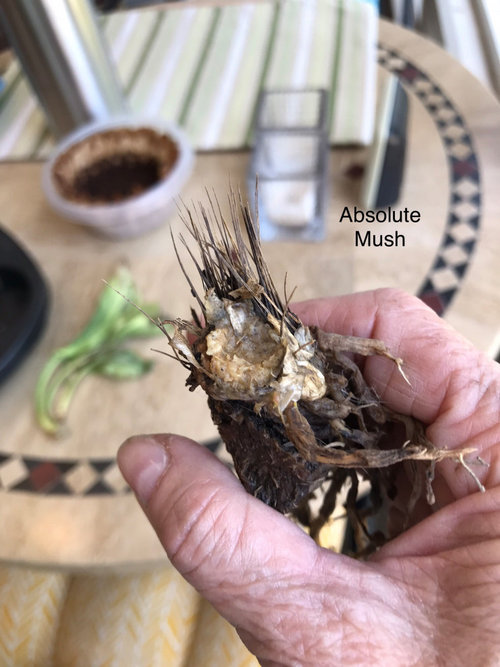
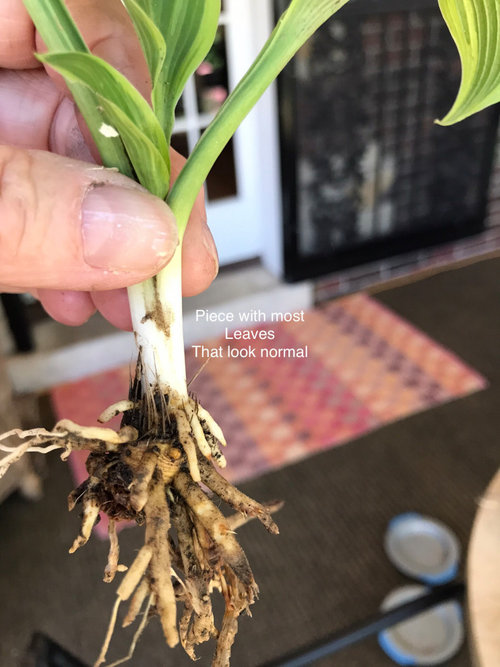
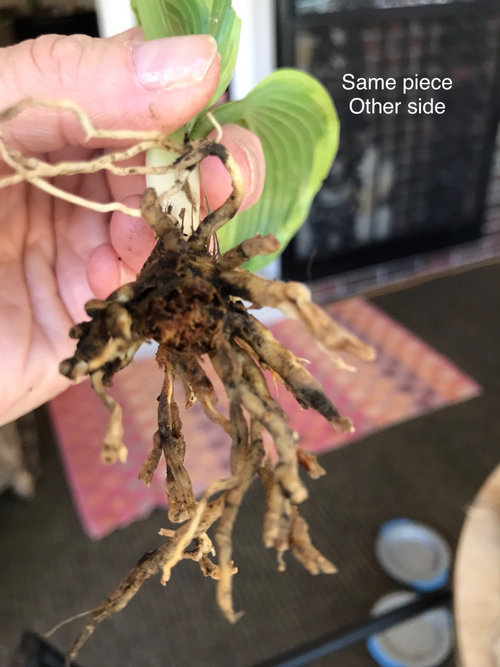
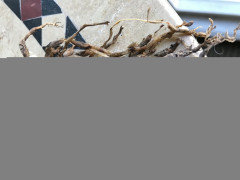
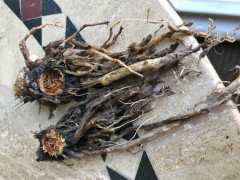
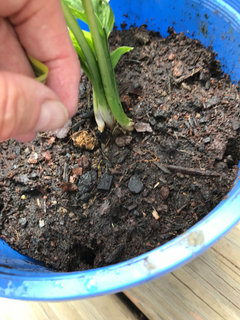
MA was not looking too happy…….kind of falling over, looking loose in the soil. Just having rot problem with Royal Wedding, I figured I better dig it out. Yikes! Here are some photos. I may have to go to comments to share photos. My question here, are any of the pieces salvageable?

Main piece


More in comments

debra

Comments (15)

  • 4 years ago
    last modified: 4 years ago

    Couple more pics:


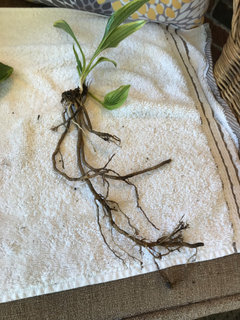
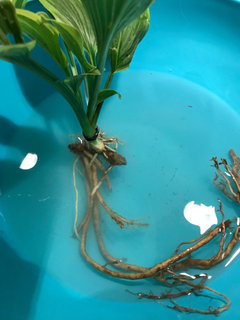
    Piece with longest roots


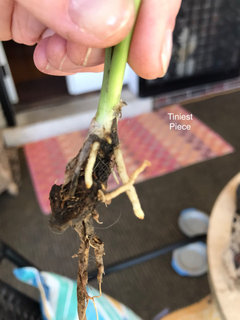
    pulled the mushy piece apart and got this


    Thanks for comment

  • 4 years ago

    Pulled the mushy piece apart and got


  • 4 years ago
    last modified: 4 years ago

    Take peroxide bottle spray and get spray of vinegar. Spray on cleaned roots where white shows. It is easiest creation of peracetic acid which used in food industry and is safe.

    They recommend 2 different bottles and not mix them in one.

    Peracetic acid is my go to to clean things naturally, mixture is unstable thus pain of having 2 bottles.

    Then I would plant it in a pot and give TLC with Osmocote and bone meal.

    djacob Z6a SE WI thanked lindalana 5b Chicago
  • 4 years ago

    First thing is to remove all rotten roots and soft crown and see what is left. If you have some firm crown or healthy roots, then you have a chance the eye will survive. I generally do a bleach soak, let dry and best to spray some fungicide (I don't always have that).

    I agree that the remaining pieces should be potted and placed in the shade. (And if it's really hot, maybe bring inside? I've lost plants that were struggling when left outside during hot weather.)

    Lindalana, could you tell me more about the peroxide and vinegar method? I am not understanding the use of both of those nor how to use them. What strength is the peroxide or vinegar? The use of those products seems easier than the bleach soak.


    djacob Z6a SE WI thanked newhostalady Z6 ON, Canada
  • 4 years ago

    “Remove all rotten roots”…….. those would be the black slimy ones? It may sound dumb, healthy roots are white and plump, generally speaking, Yes Yes?????

    (omg, andI call myself a hostaphile!)

    debra

  • 4 years ago

    It is not as simple as this article describes if you are a chemist but it does the job for households. There is peracetic acid bottle that can be sprayed in the garden on hostas too, I learned it from Rob Canning some years back think he was using to experiment on nematodes?

    I do not like bleach because of smell so this is my go to.

    https://homesteadandchill.com/sanitizing-seedling-containers-garden-supplies/

    djacob Z6a SE WI thanked lindalana 5b Chicago
  • 4 years ago
    last modified: 4 years ago

    Here’s what I did:

    pulled and picked mushy stuff and tossed. I was left with three viable pieces. I tied them lightly together with a twisty, then immersed roots and crowns in bleach solution. NHL I saw a post by you (I think) 5 years ago, where you surmised that your loss of hostas after doing the bleach soak, was due to the fact that your bleach was an 8.25% solution, higher than the normal 5.25%. So I accounted for that. My bleach, 6% solution so I bumped up the water accordingly. Here they are soaking:


    Now, outside drying and will be potted in the morning. I have my doubts about this, but I think two pieces are viable.

    I presume, once potted, keep them in shade and wet. (Directions from Ken regarding my Royal Wedding with dry rot.)

    debra

  • 4 years ago
    last modified: 4 years ago

    Lindalana, thanks for the article! I think I will get myself some peroxide! The downside to bleach for me is that it is only effective for one day after mixing it with water. I like the idea of using a spray bottle for the peroxide.

    Debra, the roots are looking much better! I am not sure from the picture, but you may need to cut off a bit more of the rotten roots? Squeeze the crown. If at all soft, scrape it with your nail to remove any soft areas.

    I am not sure whether leaving them outside overnight isn't too long to be without water. Hydrate them in water without making the crown wet before planting.

    All bleach is not created equal! I have found that to be true in regards to ammonia also. Good luck!

    djacob Z6a SE WI thanked newhostalady Z6 ON, Canada
  • 4 years ago

    Also, when you bleach the roots, if you can still see dark roots or spots, that is rot since the bleach makes the roots white.

    djacob Z6a SE WI thanked newhostalady Z6 ON, Canada
  • 4 years ago

    Thank you both! Linda, I did not have any vinegar believe it or not…..it got used up during the drenching. I bookmarked the article to read and will try to remember to always have vinegar gallons in storage. I always have H. Peroixde. So I had bleach and that’s what I used. I was doing this late last night, about 11:30 or so, I didn’t want to be doing it in the dark.

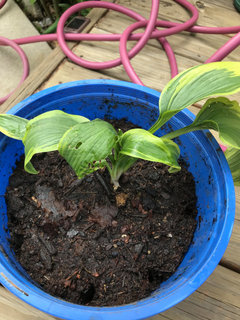
    This a.m. I went to plant it right Away. All the crowns looked dry, and the roots white. I had to find a decent sized pot, because the roots were so long on that one piece. Planted it in potting mix with some compost mixed in, 1:3 ratio. Watered it——- now the appropriate spot to locate it. I understand, shade and keep it wet.


    That piece of crown, is half gone, but had the longest roots.

  • 4 years ago

    Ratio 3 potting soil, 1 compost.

    debra

  • 4 years ago
    last modified: 4 years ago

    I am happy you were able to save some Debra. I hope your Royal Wedding is okay. You are having such a bad go of it this year. Your mobility seems somewhat improved. Are you feeling better?

    djacob Z6a SE WI thanked peren.all Zone 5a Ontario Canada
  • 4 years ago

    Mobility is still bad, still limping. I just had another MRI tonight………..we’ll see what that says. I have other physical issues I’m dealing with, but this is hosta forum afterall. I appreciate you asking……. :-)

    debra

  • 4 years ago

    Stay well, Debra!
    It looks like you handled the MA problem expertly. MA can be a difficult plant due to being an early riser. It gets a lot of frost damage in late winter and early spring, leaving it susceptible to disease in the warm weather.

    djacob Z6a SE WI thanked undertheoaksgardener7b