Software
Houzz Logo Print
licia_moone

Does anyone know what's wrong with this Begonia Rex?

4 years ago
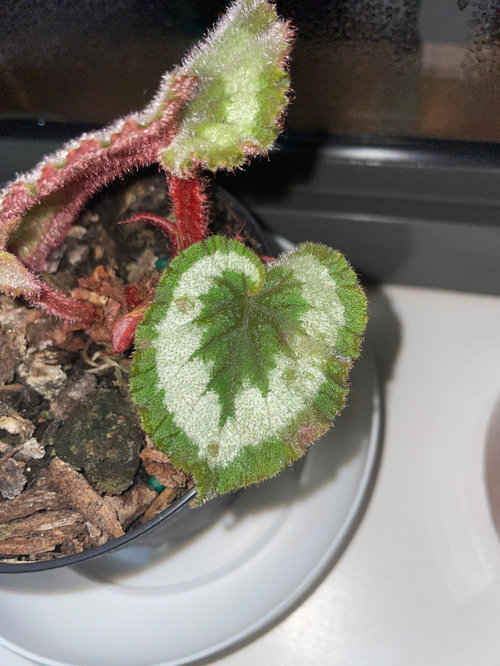


Can anyone tell me what this disease might be and how to best combat it on a small plant? If it needs to be sprayed, will it survive the winter if I cut out the spots for the meantime until it is able to grow and thrive again? The plant is begonia rex escargot. Any advice appreciated!

Comments (5)

  • 4 years ago
    last modified: 4 years ago

    You must be a big fan of Antoine de Saint-Exupery, yes? The Little Prince is my favorite book.

    We would need some history and a sense of what your care regimen has been like for the time you have cared for the plant. Things like how long you've had the plant, what you use for fertilizer, if the pot has a drain hole, how you determine when it's time to water, how much light it gets, what type of grow medium it's in, anything you can think of insofar as how the plant has been cared for can contain the hint that leads to the correct diagnosis. Unfortunately, there is always the plant is too far gone to pull back from the brink.

    I'll leave you a link to something I wrote about good growing practices. If you contrast the information I provide with the care the plant has received, something important might jump out at you as the potential cause of such steep decline.

    Overview of Good Growing Practices

    Al

  • 4 years ago

    Hi Al - yes, it's one of my favourite books too!


    Thanks for your reply - I've had this plant since December 2021 and it's been battling this disease since I bought it - unfortunately I didn't notice it at first as I've never had begonias before and wasn't familiar with this particular one's patterning, but I realise now that it's had these spots since then because of the funny look the shopkeeper gave me when I brought it up to the counter...


    It hasn't been fertilised since I bought it. It has good drainage in the nursery pot that I bought it in, and I either bottom water it or carefully water without touching the leaves. Not sure what growth medium it is as it's the stuff from the nursery, but it drains well and seems to have pearlite and bark just from looking at it. It's a very dramatic plant and so I water it when the leaves begin to sag ever so slightly, and the soil is dry at the top/pot is lighter. It gets lots of indirect sunlight next to my thriving poinsettia, and the humidity in my room is generally 50-60% in winter, and a little higher in summer.


    Since I started noticing these spots in January, I've cut around them or removed leaves to try to stop or slow it spreading, and the plant has always responded very robustly by producing new leaves straight away when old ones were pinched off, until now, in the middle of winter - the poor thing needs a break! It still seems oddly healthy despite the spots, but I'm afraid I just don't know what the disease is and I'm sure eventually it will harm the plant especially now that it's slowing down in the cold. I can't find any other pictures of spots that match these exact ones. Does anyone have an idea of what it might be?

  • 4 years ago

    Have you checked with a magnifying glass or jeweler's loupe for mites (most commonly found away from light on the undersides of leaves)?

    By "spots", are you referring to the discolored/necrotic lesions in the light part of the variegation and at leaf margins?

    Potting medium is generally an inhospitable home for micro and macroscopic soil life, which means that the soil breaks down very slowly, which means you shouldn't depend on breakdown of the hydrocarbon chains that make up the soil as your plant's source of nutrition. For best results, it's essential that you have a good nutritional supplementation program in place.

    If I assume the "spots" you refer to are what I described, you are probably not dealing with a biotic pathogen, like a fungal/ bacterial/ viral infection. It looks more cultural to me.

    Do you think the shopkeeper you bought it from might have propagated the plant from a cutting? If yes, could you make a call and find out if the medium contains coir or CHCs, and how much of each/either? Media with more than about 10% coir or CHCs presents a challenge to a number of plants.

    Watering from the top is best because it tends to encourage salts from tapwater or fertilizer solutions to accumulate in the medium, and that affects plants' ability to take up water. When you water, make sure you are wetting the entire soil mass and at least 20% of the entire volume used in watering the plant exits the drain hole, carrying any build-up of salts with it ..... and you're right to try to avoid getting the foliage wet as you water. I use a 2L Dramm watering can, fitted with a homemade nozzle (from a caulking cartridge tip) that gives me precise control over what gets wet and what doesn't.


    You mention the metric by which you determine when to water is 'a slightly wilted leaf attitude. By the time the plant is wilting, some f the finest roots will have died and the top of the plant will not grow until the lost rootage is regenerated. This cyclic death and regeneration of roots is a serious drain on the plant's energy reserves and is likely consuming all of the plant's current energy production. Plant's create their own food/energy through photosynthesis, so one thing you have going for you is, as days grow longer, your plant will have greater opportunity to grow. Cutting out that cyclic death/regeneration of roots would be a notable benefit to any plant. You can do that by A) watering from the top and making sure you are wetting the entire soil column, and B) Watering BEFORE the soil gets so dry the plant wilts. C) Using a 'tell' to tell you when it's time to water. See 'Tell' below.

    Did you read the link I provided? If yes, what contrasts did you notice when comparing what I wrote to your care regimen?

    If the suggestions I made and regular applications of fertilizer do not work, I suggest you bare-root and repot it. It would also be a good idea to lift the plant from the pot and inspect the roots for rot. Since the visual cues the plant offers are consistent with over-watering, I'm left to wonder how long (on average) the intervals are between waterings. Longer than a week is too long, from the plant's perspective.

    Al

    Licia Moone thanked tapla (mid-Michigan, USDA z5b-6a)
  • 4 years ago

    That looks like powdery mildew which is the bane of a lot of begonias including rexes, big polka dot canes, and the worst group of all - the Mallet class. Mildew can kill some begonias outright if you ignore it. Spray with a fungicide and repeat on periodical intervals (1 to 2 weeks). Spray under the leaves and especially the stems - leaves come and go but the stems take time to grow. Cut back on watering indoors when the begonia is not actively growing - it makes a huge difference.


    Escargot can be finicky and often a major frustration for beginners. Get the mildew under control and water as needed and it can be a beauty. Now that Costa Farms is selling this beauty for $3 or less at Walmart, pick them up cheap and plant in a big pot (3 would fill out nicely).


    Home Depot charges a little more than Walmart. Earlier this year it was around $5.


    My big bowl of it last September (3 plants in a 14" bowl) in partial shade.


    how it looked late December, 2020 in the basement.


    Licia Moone thanked hc mcdole
  • 4 years ago

    Try treating with Captain Jacks Copper Fungicide. Very effective!!

Sponsored